

Town on the Camino
Deba
Gipuzkoa, Basque Country, Spain
- places to stay
- 4
- Caminos
- 2
- Elevation
- 12 m
Deba is the last breath of sea air before the Camino del Norte turns inland: a small port town at a river mouth, with a church you don't expect here and a pilgrim hostel in the railway station. Tomorrow brings one of the hardest stages in the Basque Country, 23.5 kilometres to Markina with no stage town in between.
How long to stay?
An afternoon is enough, but use it to rest. You come from Zumaia or Getaria over the heights of Itziar and drop steeply to the river mouth. The hostel only opens in the afternoon, which leaves time for the church of Santa María, the beach and a look at the old bridge. You don't need more, because tomorrow you need your legs.
Deba in Ninja numbers
- 780.7 kilometres still lie between here and Santiago.
- 306 metres of descent on the last 3.5 kilometres down from Itziar.
- 1,127 metres of ascent on tomorrow's stage to Markina according to our data, spread over 23.5 kilometres.
- 8 euros was the donation for the pilgrim hostel in the station in summer 2026, towards its upkeep.
Arriving: down from Itziar to the river mouth
Beyond Zumaia the Camino del Norte climbs into the hills and reaches 267 metres at Itziar. The sanctuary of Our Lady of Itziar stands right on the way. The first records of the church go back to the 8th century; it was rebuilt in the 16th. Its image of the Virgin is one of the oldest in Gipuzkoa and is especially venerated by Basque sailors. In front of the entrance stands the steel sculpture "Amatasuna" by Jorge Oteiza. Then the path drops steeply, and below lies Deba at the mouth of the river of the same name.
In brief: a port and its church
Deba was once an important trading port; today pleasure boats lie at the river mouth. From its wealthy days comes the church of Santa María, built between the 15th and 17th centuries. It is considered one of the most beautiful and original churches in Gipuzkoa. The town hall dates from 1747. A bridge from 1866 crosses the river towards Mutriku; it has been closed to traffic since 2006 to protect it.
Between port and church: what to see
Deba is small; everything lies a few minutes from the station.
- Santa María: A hall church with three naves of equal height, Renaissance vaults from the 16th century and a cloister with Gothic rib vaults. The finest thing is the painted portal with its figures. For a long time it was dirty and damaged; it was uncovered between 1992 and 1998 and restored once more at the end of 2022. We have not found opening hours; ask at the tourist office, where you collect the hostel key anyway.
- The sanctuary of Itziar: Already behind you, but if you walked past without looking in, now you know what you missed: an unusually wide church without columns, a Plateresque altarpiece by Andrés de Araoz from the 16th century, and the sailors' Virgin.
- The old bridge to Mutriku: Built in 1866, closed to cars, a quiet view over the river mouth for anyone on foot.
- Santiago beach: Yes, it really is called that. One of Deba's two main beaches.
Honestly
- The hostel is at the station, and trains run at night too. Several pilgrims report noise from trains, traffic and neighbours. Earplugs help.
- You can't just turn up and move in. Registration and the key are at the tourist office, and the hostel itself opens from 16:00 to 20:00 according to the hostel portal, from about 15:30 according to pilgrims in summer 2026. Arrive early and you wait.
- No kitchen. The pilgrim hostel only has a fridge. Eat in a bar or buy something cold.
- Reviews are mixed. Some praise the friendly volunteers and the laundry, others found it dark and cramped.
Where pilgrims sleep
The pilgrim hostel Geltoki is in the station building on Plaza Arakistain. Deba's association of friends of the Camino has run it since 2014 with volunteer hospitaleros. It has 56 places in four dormitories, takes only pilgrims with a credencial, no reservations, and is open all year according to the hostel portal. It asks for a donation of 8 euros (as of August 2026). There are no blankets, so bring your sleeping bag. Washing machine 4 euros, dryer 3 euros. Otherwise Deba only has guesthouses and country houses; we have not found a second pilgrim hostel.
Ninja tips
- Tourist office first, then the hostel. You register and get the key at Ifar Kalea 4. From October to May it is open daily only from 10:00 to 14:00, and on Fridays and Saturdays also from 16:00 to 18:00 (as of August 2026). If you arrive on a winter afternoon, call ahead: +34 943 192 452.
- Pack for tomorrow before the shops close. Deba has a supermarket, bakery and pharmacy. On the 23.5 kilometres to Markina we have not found a reliably documented place to stop for food or drink.
- Set off early tomorrow. The stage to Markina has more than 1,100 metres of ascent, and the hostel in Markina opens at 15:00.
- Look at the portal of Santa María in the afternoon light. Since the 2022 restoration the colours of the figures are visible again.
Practical tips for pilgrims
- Stamp and credencial: At the pilgrim hostel, which according to the hostel portal also issues credenciales.
- Shopping and money: ATM, supermarket, butcher, bakery and pharmacy are all in town.
- Laundry: Washing machine and dryer at the pilgrim hostel.
- Getting here: Deba has a station on the line between San Sebastián and Bilbao, handy for starting in the middle of the Basque Country.
Onward: over the Arno to Markina
In the morning the way climbs from the sea to the Ermita del Calvario and runs through hills and woods to Olatz, the gateway to Bizkaia. Then it crosses the flank of Monte Arno; according to our data the highest point is at 495 metres after just under eleven kilometres. In total it is 23.5 kilometres with 1,127 metres up and 1,050 metres down to Markina-Xemein. There is no stage town between Deba and Markina. Plan for the whole day.
What awaits you tomorrow
Markina-Xemein, the little town of pelota players. In the north of town stands a hexagonal chapel built around three huge boulders. Whoever wants to marry walks under them three times, they say there.
Deep dive: The sailors' Virgin
A short read, in case you want to learn more about Deba. About three minutes' reading.
Up on the hill
Before you even see Deba, you pass a very old church. On the heights of Itziar stands a sanctuary of Our Lady, and the first records of this place go back to the eighth century. In the sixteenth century the church was renewed. It has only one nave, but it is unusually wide and has no columns. On the high altar stands an image of the Virgin counted among the oldest in the province of Gipuzkoa. The sailors of the Basque coast hold it in special veneration.
Down at the river mouth
Deba itself was once an important trading port. From that time comes a church that is larger and richer than you would expect in such a small place. Santa María was built between the fifteenth and the seventeenth century, as a hall church with three naves of equal height. Its showpiece is the painted portal. Over generations the figures vanished under dirt, and some were damaged. In the nineteen-nineties the province had the church restored, and the figures came to light again. In autumn 2022 the portal was secured once more, the colours consolidated, the cracks closed.
What Deba gives you
Deba is a place of transition. Up to here you have walked along the sea, often with the waves in view. Tomorrow the way turns inland, over hills and through woods, and the open sea will be behind you for several stages. The sailors who have their Virgin in Itziar knew the feeling of leaving something familiar behind in order to go further. It may be worth walking down to the beach once more this evening. It is called Santiago.
Where to stay in Deba
Places to stay in Deba.
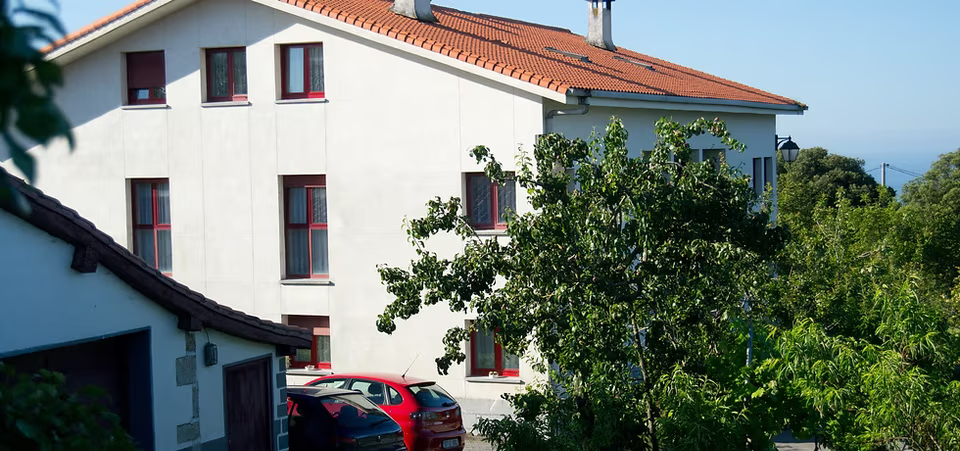 OpenReservations accepted
Donibane Nekazalturismoa
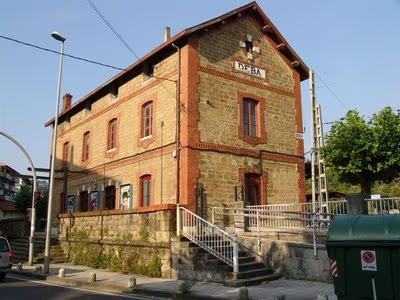 Open
Albergue Deba
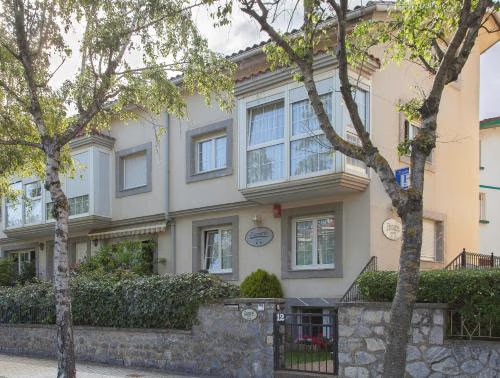 OpenReservations accepted
Pensión Zumardi
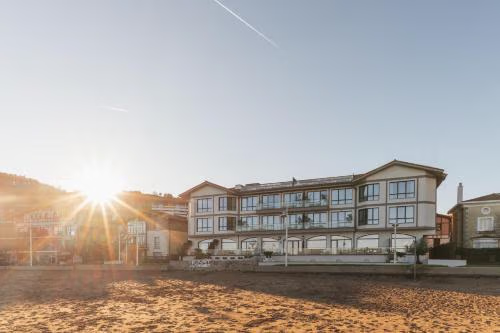
Services in Deba
What you can find in town before the next stage.
- ATM
- Café
- Shop
- Pharmacy
- Fountain
- Post office
- Train station
- Restaurant
Source: © OpenStreetMap contributors · updated February 2026
Town 8 of 49