

Town on the Camino
Markina-Xemein
Biscay, Basque Country, Spain
- places to stay
- 6
- Caminos
- 2
- Elevation
- 89 m
Markina-Xemein is the reward after one of the hardest stages in the Basque Country: a small town in the Artibai valley with a medieval street plan, a pilgrim hostel behind the Carmelite convent and a hexagonal chapel built around three huge boulders. Whoever wants to marry walks under them three times.
How long to stay?
An afternoon is enough, and you'll need it to rest. After 23.5 kilometres and more than 1,100 metres of ascent from Deba, you arrive tired. The hostel opens at 15:00. After that you have the energy for a stroll through the three lanes of the old town and out to the chapel of Arretxinaga. Markina doesn't offer more, and today you don't need to see more.
Markina-Xemein in Ninja numbers
- 757.2 kilometres still lie between here and Santiago.
- 3 quartz boulders form the roof over the altar in the chapel of San Miguel de Arretxinaga. Nobody has worked them.
- 6 corners has the chapel that was built around these rocks around 1740.
- 6 kilometres tomorrow to Bolibar, the village of Simón Bolívar's ancestors.
Arriving: from the Arno into the valley
The stage from Deba runs via Olatz, the gateway to Bizkaia, and over the flank of Monte Arno. According to our data the highest point is at 495 metres; after that the Camino del Norte descends through woods into the valley. Markina lies at 89 metres in the Artibai valley. You are now in Bizkaia.
In brief: two places, one town
Markina was founded in the middle of the 14th century. Later the town merged with the neighbouring parish of Xemein, hence the double name. The medieval layout is still visible: three long streets and one cross street. Until 2005 Bolibar and the monastery of Zenarruza also belonged to it; then they became a municipality of their own. Today around 5,000 people live in Markina-Xemein. The town is known as the cradle of great pelota players.
Between rocks and convent: what to see
Markina is small; you can reach everything on foot in a few minutes.
- San Miguel de Arretxinaga: One of the most unusual chapels on the Camino del Norte. Three huge, unhewn quartz blocks lean against each other and form a roof over the altar. The site is first mentioned in 1451; the present hexagonal chapel, with a dome made of six pieces, dates from the 18th century and was finished in 1741 according to the Basque cultural administration. Whether the rocks were once a dolmen is disputed; geologists consider them a natural formation. In the early 19th century they were credited with healing powers: whoever touched them would be cured. And whoever wants to marry within a year walks under them three times. The chapel lies in the north of town, where the Artibai and the Urko meet. We have not found opening hours.
- The Carmelite convent: The façade with the statue of the Virgin and the coat of arms of the Carmelite order stands on the main axis of the old town. The pilgrim hostel is behind it.
- Santa María de la Asunción de Xemein: The parish church is protected as a national monument of the Basque Country.
- The old town: Palaces such as Patrokua, Sortalekua (now the town hall), Andonegi and Ansotegi, plus the Antxia tower. A walk along the three long streets is enough.
Honestly
- You arrive exhausted. The stage from Deba is hard and has no stage town along the way. If you don't feel like walking the full 25 kilometres to Gernika tomorrow, you'll find a bed at the monastery of Zenarruza after just over 7 kilometres.
- The pilgrim hostel is only open in season. According to the hostel portal from late March to mid-October. In winter only private accommodation remains.
- No kitchen in the hostel. Microwave and fridge, yes; cooking, no.
- It can get crowded and noisy. Pilgrims report full, mixed dormitories. Earplugs help.
Where pilgrims sleep
The pilgrim hostel Convento del Carmen is behind the Carmelite convent, accessed via Calle Fray Bartolomé. The building belongs to the Carmelites; the hostel is looked after by the volunteer hospitaleros of Bizkaia. According to the hostel portal it works on a donation basis and is open from 24 March to 14 October, from 15:00 to 22:00, and in the morning you have to be out by 8:00. No reservations, pilgrims with a credencial only. Our data and the hostel portal differ on the number of beds and the price, so we don't give a figure here. There are also private hostels, guesthouses and holiday flats.
Ninja tips
- Walk under the rocks of Arretxinaga three times. Whether you want to marry or not: you don't stand under a roof of three boulders every day.
- Shop today for tomorrow. We have not found a documented shop in Bolibar or at the monastery of Zenarruza.
- Plan a short stop at the monastery of Zenarruza. It lies just over seven kilometres beyond Markina, right on the way, with a 16th-century cloister.
Practical tips for pilgrims
- Stamp: At the pilgrim hostel.
- Festivals: The Fiestas del Carmen take place in mid-July, and in October there is a livestock and agricultural fair. On those days the town is busier.
- Hostel season: Outside the season (mid-October to late March) book private accommodation in advance.
Onward: via Bolibar and Zenarruza to Gernika
The next stage is long at 25.1 kilometres, but kinder: 907 metres up and 974 metres down according to our data. After 6 kilometres you reach Bolibar, the village of Simón Bolívar's ancestors, and just over a kilometre further up the monastery of Zenarruza. The highest point, at 367 metres, comes shortly afterwards; then the way descends via Munitibar and Mendata to Gernika.
What awaits you tomorrow
Bolibar, a village of around 160 people with a museum about Simón Bolívar. The liberator of South America was born in Caracas, but his family came from here. Above it, on the slope of Monte Oiz, Cistercians have lived since 1988 in one of the oldest monasteries in the area, and they sell their own beer.
Deep dive: The rock beneath the roof
A short read, in case you want to learn more about Markina-Xemein. About three minutes' reading.
A chapel around a stone
Churches are usually built on solid ground. In Markina a chapel was built around rocks. In the north of town, where the Artibai and the Urko meet, three large blocks of quartz lean against each other. Nobody has hewn them. They form a kind of roof. A church is mentioned on this spot as early as 1451. The building you see today went up in the eighteenth century: a hexagon with a dome of six pieces meeting in the middle. The rocks stand inside it like a canopy over the altar.
Dolmen or freak of nature
Opinions differ on where the stones came from. Some authors have seen in them a prehistoric dolmen, a tomb that Christians later consecrated. Geologists, on the other hand, consider the formation natural, explained by the local rock. What is certain is that people here long credited the stones with a special power. In the early nineteenth century it was said that whoever touched them would be healed of illness. Such customs are known from many Basque hermitages: children who are slow to speak are brought there, and people lay their head in a hollow against headaches. In Markina they also say that whoever walks under the rocks three times will marry.
What Markina gives you
You have a hard day behind you, over a mountain, through woods, with no stage town in between. In the evening you stand beneath three stones that have leaned against each other for an unimaginably long time, holding one another up. Perhaps none of them would stand alone. Perhaps that is not a bad image for the people you will sit with in the hostel tonight.
Where to stay in Markina-Xemein
Places to stay in Markina-Xemein.
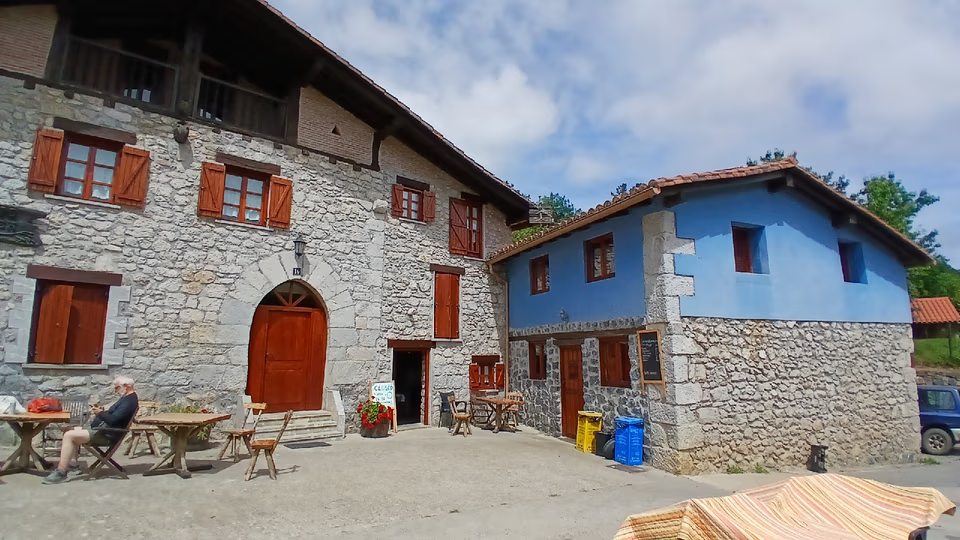 ClosedReservations accepted
Hostel Intxauspe in Markina
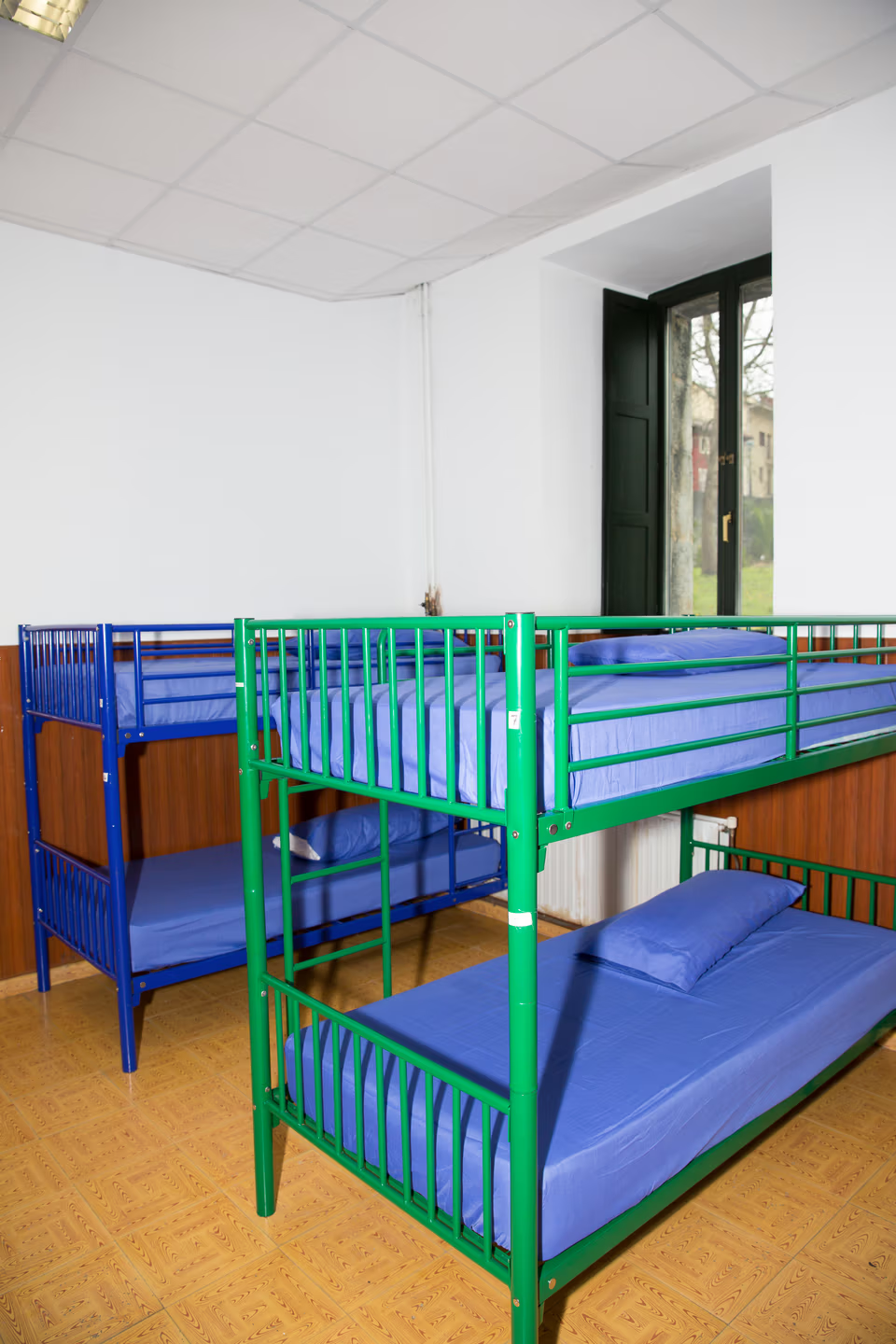 ClosedReservations not accepted
Albergue de Peregrinos Convento del Carmen
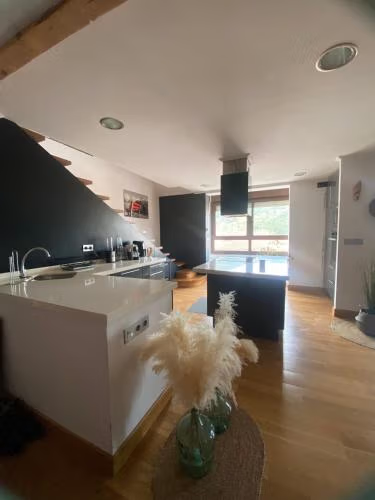
 OpenReservations accepted
Pilgrimshouse
Services in Markina-Xemein
What you can find in town before the next stage.
- ATM
- Café
- Shop
- Pharmacy
- Fountain
- Restaurant
Source: © OpenStreetMap contributors · updated February 2026
Town 9 of 49