

Town on the Camino
Esposende
Distrito de Braga, Região do Norte, Portugal
- places to stay
- 16
- Caminos
- 2
- Elevation
- 5 m
Esposende lies where the Cávado flows into the sea. An iron bridge from 1892 brings you into this small town, whose fort at the river mouth has carried a light since 1866. There is no pilgrim albergue in town; the nearest are in Fão and Marinhas. From tomorrow, the coastal route and the inland route part ways.
Right now in Esposende (as of October 2026)
- Bridge fully restored: The Ponte de Fão was restored for 2.5 million euros, and the work has been finished since July 2025. Older warnings about roadworks and dust on the bridge are out of date.
How long to stay?
An afternoon is enough. Esposende is a small town with a compact old centre, a seafarers' church and a fort at the river mouth. You can easily do all that on foot after you arrive. The rest of the evening belongs to the waterfront. We wouldn't take a rest day here; better to decide tomorrow morning, well rested, whether you stay on the coast or head inland.
Esposende in Ninja numbers
- 223 kilometres to Santiago from here on the Senda Litoral, according to Camino Ninja, and 204.5 on the Caminho Português da Costa.
- 267.6 metres is the length of the iron bridge over the Cávado, opened in August 1892.
- 16 kilometres of coast have been protected by the Litoral Norte Natural Park since 1987, and 85 percent of its area is water.
- About 4 kilometres beyond Esposende, in Marinhas, is the next public pilgrim albergue.
Arriving: through Fão and over the Cávado
The last kilometres before Esposende really belong to Fão. You pass the Bom Jesus church, walk along the avenue of the sanctuary and through the old village centre. Then you cross the Cávado on the Ponte de Fão, an iron bridge with footpaths on both sides, whose railings were raised during the 2025 restoration. At the far end you follow an old service road and a roundabout, then a cobbled street to Rua Narciso Ferreira, and past the cemetery into the centre. According to Camino Ninja it is 3.1 kilometres from Fão to Esposende on the Senda Litoral and 2.1 on the Caminho da Costa.
In brief: a town for the river mouth
People have lived here since the Old Stone Age, and in the Iron Age fortified settlements grew up on the hills. King Sebastião granted the town charter, the foral, in 1572. From 1699 to 1704 a fort was built at the mouth of the Cávado to protect the entrance to the river. The bridge to Fão came in 1892, the natural park on the coast in 1987. Esposende has been a city since 1993, and its feast day is 19 August.
Where the Cávado meets the sea
Esposende is a river-mouth town. The Cávado, which you crossed on the bridge, meets the Atlantic here. Everything in town has to do with it: the fort that guarded the entrance, the light that showed boats the way, and the seafarers' chapel in the Misericórdia.
The coast around the river mouth belongs to the Parque Natural do Litoral Norte. It has the longest and best-preserved stretch of dunes in northern Portugal, and around 140 bird species are counted at the mouths of the Cávado and the Neiva. Today you walked through the dunes on boardwalks. In the past, the Sargaceiros gathered seaweed here in June and dried it in the sun; in Apúlia, which you passed through today, a festival is still held in their honour.
At the river mouth: what to see
The small old centre also has the pillory, the eighteenth-century Casa do Arco and the Igreja Matriz, of which only the main chapel survives.
- Ponte de Fão: The bridge was opened in 1892 and was then called Ponte Luís Filipe, after the crown prince. The engineer Abel Maria Mota designed it, and a Lisbon company built it. It has been a listed monument since 1986. For you, it is the gateway to Esposende.
- Igreja da Misericórdia and Capela do Senhor dos Mareantes: The Misericórdia church, founded around 1650, is attached to the town hall. Inside is the chapel of the Lord of the Seafarers. It came about because a figure of Christ was donated at the end of the sixteenth century, and it is decorated with painted carvings. It has been protected since 1977. Mareantes means seafarers, and the name tells you whose chapel this was. We couldn't find opening hours.
- Forte de São João Baptista: The fort, built from 1699 to 1704, was meant to defend the mouth of the Cávado. In 1866 it received a light; the present tower dates from 1925. It fell into decay for a long time; in 2020 the town took it over for fifty years and renovated two buildings for exhibitions. We couldn't find out whether you can go inside; from outside, the view of the river mouth is worth it.
Food and drink
Pilgrims praise the restaurants and cafés near the waterfront. We didn't find a speciality unique to Esposende. Shopping for tomorrow matters more: on the inland route, lunch stops are further apart than you'd think.
Honestly
- No pilgrim albergue in town. In Esposende you sleep in private accommodation. If you want a pilgrim albergue, stay in Fão or walk about 4 kilometres further to Marinhas.
- The pilgrim hostel is out of town. Sleep&Go is 1.2 kilometres from the centre. Several pilgrims write that shops and restaurants are far away. Shop beforehand.
- The end of the bridge is noisy. There is heavy traffic at the Esposende end of the bridge. Stay on the footpath and take your time.
- Tomorrow goes uphill. If you choose the Caminho da Costa, after days on the flat you climb to about 140 metres, partly on stony, uneven paths.
Where pilgrims sleep
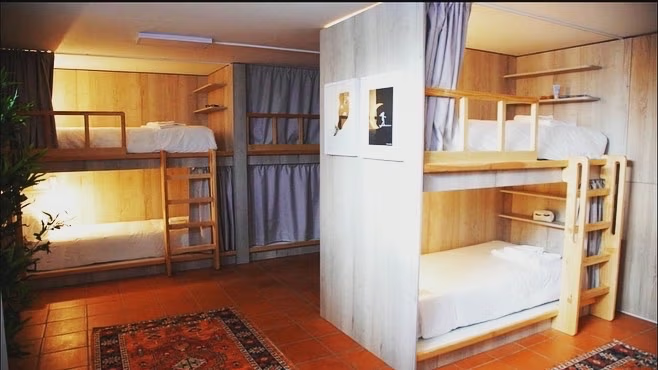
Esposende has no pilgrim albergue in the strict sense. The private hostels in the centre also take pilgrims; a dormitory bed costs about €14 to €25 (as of October 2026).
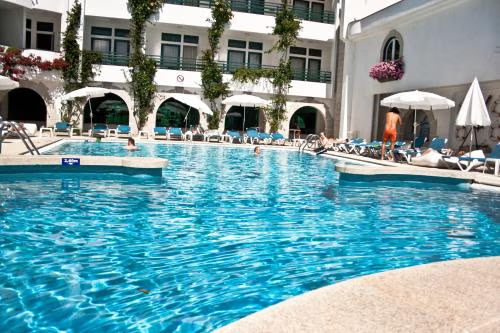
- Hostel Sleep&Go: a private hostel about 200 metres from the route, but 1.2 kilometres from the centre. Pilgrims praise the warm welcome, the laundry area and a small, cold pool. A dormitory bed costs €18 (as of October 2026).
- Pousada da Juventude Foz do Cávado: the youth hostel in Fão, before the bridge, open all year.
- Albergue de São Miguel de Marinhas: the public pilgrim albergue in Marinhas, according to Camino Ninja 3.5 kilometres further on the Senda Litoral and 4.6 on the Caminho da Costa, open all year.
Ninja tips
- Walk on to Marinhas: If you still have energy and prefer a public albergue, add the short hour to Marinhas. That also makes the stage to Viana shorter.
- New faces in Fão: In Fão you are joined by pilgrims who have switched from the Camino Portugués Central at São Pedro de Rates to the coast.
- Ignore old warnings: Comments about dust and roadworks on the Fão bridge date from before July 2025.
- Food for the inland route: On the Caminho da Costa, pilgrims take a break in Antas before the first climb, and lunch after that is further away than expected. Better buy bread and water in Esposende.
- Look out for the blue tiles: On the way out of town, blue tiles with a shell mark the Caminho da Costa alongside the arrows.
Practical tips for pilgrims
- Shopping: There are supermarkets within walking distance of the central accommodation. Not out at Sleep&Go.
- Holiday: Esposende celebrates its town holiday on 19 August.
- Booking: Since there is no pilgrim albergue without reservations here, book your bed in advance in summer.
Onward: coast or inland
Beyond Esposende the two routes part ways. The Senda Litoral stays close to the sea and leads via Marinhas, Mar and Castelo do Neiva to Viana do Castelo, 25.9 kilometres according to Camino Ninja. The Caminho Português da Costa turns inland: along cobbled paths past fields to Marinhas, then via Antas up to about 140 metres and down to the Igreja de Santiago in Castelo do Neiva. To Viana it is 26.3 kilometres on this variant according to Camino Ninja, with more shade and less wind than on the coast.
What awaits you tomorrow
At the end of the day, Viana do Castelo lies ahead of you; most Camino Ninja pilgrims end the next stage there. You enter over the Lima, on the long Ponte Eiffel. On the inland route you first pass a church in Castelo do Neiva dedicated to the apostle you are walking to.
Deep dive: The town at the river mouth
A long read, in case you want to learn more about Esposende. About ten minutes' reading.
On the bridge over the Cávado
When you step onto the iron bridge coming from Fão, beneath you lies the last stretch of a river. The Cávado comes down from the mountains inland, flows past Braga and here meets the Atlantic. The bridge you are crossing is 267.6 metres long. It was designed by the engineer Abel Maria Mota and built by a Lisbon firm; work began around 1890. It was inaugurated on 7 August 1892 under the name Ponte Luís Filipe, in honour of the crown prince. Today everyone calls it the Ponte de Fão. It has been a protected monument since 1986, and in 2025 it was restored for 2.5 million euros, with the railings along the footpaths raised.
The bridge links two places on two banks of the same river. Esposende is a town you only understand once you understand this river, its mouth, its sand and the sea beyond.
Fão, the village before the river
Before you reach the bridge, you walk through Fão, and this place deserves a look of its own. Fão lies on the left bank of the Cávado and is known for its masseiras, fields dug into the dunes and fertilised with material from the sea. On the way stands the church of Bom Jesus de Fão, built at the beginning of the eighteenth century. You can tell it was meant for pilgrims, with an avenue that you walk through.
Fão was also a place of shipbuilders. The most important shipyards at the river mouth were in Fão and in Esposende itself. And when the sand choked the mouth, for a time the entrance at Fão was the only one through which boats could get in at all. For you as a pilgrim, Fão matters for another reason: this is where pilgrims join who have left the Camino Portugués Central at São Pedro de Rates to head for the sea. From here on you're no longer walking only with those who set out from Porto with you.
Older than any charter
People have lived in this area since the Old Stone Age. From the fourth millennium before Christ more settled communities formed, and in the middle Iron Age people built fortified villages on the hilltops, the castros. One of them, the Castro de São Lourenço, can still be visited today. From the Middle Ages, what is known in Esposende is mainly graves. Not much more has come down from that time, and it is more honest to leave it at that than to invent a story.
Seventy to eighty large ships
Esposende enters the records late, and then as a port. In 1505 King Manuel the First noted that Esposende was not among the ports where ships paid dues to the crown. In 1552 a certain Nicolau de Almeida recorded fifteen ships in Esposende. Twenty years later, on 19 August 1572, King Sebastião raised the place to the rank of vila and so separated it from Barcelos. His letter says that Esposende had seventy to eighty large ships and many pilots and seamen.
Strictly speaking, this letter was not a classic foral, a charter of rights and dues. It only defined a small area around the town, about half a légua in circumference, and gave it its own administration. But for Esposende it was its birth certificate. The very next year a second letter set out how Esposende and Barcelos could use wood, water and food across the new boundary. In 1580 the Duke of Bragança appointed a certain Gaspar da Costa as captain of the vila, probably the first.
19 August is still the town's holiday today, the same date in the calendar as the letter of 1572. Opposite the Foz do Cávado municipal swimming pool stands a monument to King Sebastião, which the town put up for the four hundredth anniversary.
The king who never came back
The king to whom Esposende owes its independence is one of Portugal's tragic figures. Sebastião was still a child when he became king. In 1578, six years after his letter to Esposende, he led an army to North Africa and vanished in the Battle of Alcácer-Quibir. His body was never identified with certainty. In Portugal this gave rise to a long hope: people told each other that one day the king would return on a misty morning and save the country.
So Esposende owes its independence to a king whose return people waited for over centuries. If you pass his monument, now you know why he stands there.
A saint visits, and the churches of the seafarers
In 1560, before Esposende became a vila, a special visitor came: the Archbishop of Braga, Frei Bartolomeu dos Mártires. In 2019 Pope Francis declared him a saint. The town's church had grown out of a small hermitage, the Ermida de Santa Maria da Graça. In 1639 it was repaired, including the bell tower, and in 1648 a carpenter from Perelhal, João Domingues, did woodwork for 22,000 réis. The Igreja Matriz dates from the sixteenth century; only its main chapel survives.
More important for the seamen was another church. Around 1650 the church of the Misericórdia was founded, built onto the town hall. Inside it is the Capela do Senhor dos Mareantes, the chapel of the Lord of the Seafarers. It grew up around a figure of Christ donated at the end of the sixteenth century and is decorated with painted carvings. It has been protected since 1977. Mareantes are the men who went to sea. The chapel still bears their name.
Fires on the coast
Not only merchant ships came to this coast. In 1644 signal fires were set up, in Esposende and in São Bartolomeu do Mar, to warn of danger from the sea. At the end of the century King Peter the Second had a fortress built at the river mouth, from 1699 to 1704: the Forte de São João Baptista, meant to protect the entrance to the Cávado.
Later the fortress changed its purpose. In 1866 a light was placed on it, and in 1925 the present tower followed. A structure meant to keep ships away became one that guides ships safely home. For a long time the site fell into decay. In 2020 the town took it over for fifty years and restored two buildings. In 2022 it launched a competition for an information centre about the coast. What became of it, we haven't been able to find out.
The sand wins
The real story of Esposende is a fight against sand. Even on a map from around 1580 the port hardly features, probably because the mouth of the Cávado had silted up badly. In 1648 the cosmographer João Teixeira recorded only the entrance at Fão as usable for boats.
In 1795 the Prince Regent took an interest in channelling the river. The engineer Custódio José de Vilas-Boas was given the job, and his plan was published in 1800. It was paid for with a special tax, the Imposto de encanamento, the channelling tax. Its opponents mockingly called it the Imposto do enganamento, the deception tax, a pun that sounds almost the same in Portuguese. In 1809 a provisional government halted the works after complaints from Barcelos. Some 420,000 cruzados had been spent, it said, with no result. Vilas-Boas died in March 1809 and was accused of having embezzled money.
Even so, the port lived on. Between 1834 and 1839 around seventy merchant ships came in every year. They brought salt, fish, olive oil and metals and took away timber, oars, shovels and cork. In 1839 the vila itself had only 742 inhabitants. In the same year an official reported that the river was navigable as far as Perelhal but silted up, mainly because the bar could not get rid of the sand brought down by the floods. The shipyards of Fão and Esposende kept building, but around 1870 the number of new ships dropped sharply. New plans and repairs followed, in 1880, 1886 and 1892. As late as 1898 the president of the town council, Pereira Lima, sent a petition to King Carlos the First. But the sand stayed. In 1890 Esposende ranked twentieth of thirty-one Portuguese coastal ports, and in 1900 only twenty-second. While the bridge arrived, the port kept losing importance.
Signs on the chapel door, and a holy bath
Esposende also has a link with Póvoa de Varzim, where you came from today. The fishermen of Póvoa carved their family marks, the Siglas Poveiras, into the doors of chapels on beaches and hills, as a waymark or as a vow. Such signs have been found at the chapel of Nossa Senhora da Bonança and on the beach at Esposende. Fishermen from elsewhere who asked for luck here left their trace, just as pilgrims today leave their stones and shells.
North of the town, in the village of Mar, which the Senda Litoral passes through, lies São Bartolomeu do Mar, and it has a pilgrimage quite its own. The feast of Saint Bartholomew of the Sea includes a holy bath in the sea and a ritual with a black rooster. According to researchers, the pilgrims seek to drive out evil and regain a former purity, entrusting the body to healing. It is a very physical form of devotion, and it lies on the Senda Litoral.
Dunes, seaweed and birds
Since 17 November 1987 the coast around the river mouth has been part of the Parque Natural do Litoral Norte. It is sixteen kilometres long, and eighty-five percent of its area is water. Here lies the longest and best-preserved strip of dunes in northern Portugal. Around 140 bird species have been counted at the mouths of the Cávado and the Neiva.
In the past the sargaceiros worked on these beaches. In June they pulled seaweed from the surf and dried it in the sun. The seaweed became fertiliser for the masseiras, the fields in the dunes. In Apúlia, which you walked through today, a festival is still held in their honour.
Where paths meet and part
We know little about medieval pilgrims in Esposende. There is no hostel or hospital from the old days that we could tell you about with certainty. In 1985 Manuel Cadafaz de Matos studied the pilgrim roads in the area of Porto, Braga and Esposende, and today the town lies quite naturally on the Portuguese Way of Saint James. We don't want to claim more than that.
What can be said for sure: Esposende is a place where paths flow together and part again. In Fão, before the bridge, the pilgrims from Rates join. Beyond Esposende the way divides. The Senda Litoral stays by the sea. The Caminho da Costa climbs into the hills and passes a church in Castelo do Neiva dedicated to Saint James. Just beyond the town, in Marinhas, a signpost gives the number that matters: 208 kilometres to Santiago.
Esposende today
Esposende has been a city since 2 July 1993. At the 2021 census, a good 35,000 people lived in the whole municipality, about 9,100 of them in the town itself. In 1801 the municipality had a little over four thousand inhabitants; today it has more than eight times as many. People live from fishing, farming and tourism. On 24 June the town celebrates São João, on 15 August the Romaria de Nossa Senhora da Saúde, and four days later the town holiday. António Rodrigues Sampaio came from the municipality; in 1881 he headed the Portuguese government. In summer the beachgoers come, and all year round the pilgrims.
What Esposende gives you
Esposende is a place where the sand won. A port with seventy to eighty large ships has disappeared, a channelling scheme cost a fortune and achieved nothing. And yet the town has remained, has gained a bridge, a fortress with a light and a nature park in which the dunes are now protected.
Perhaps that's a thought for your evening here: not everything you fight against has to be defeated. Some things you can also accept and make something of. The river you crossed today stops being a river at its mouth and becomes part of something larger. Tomorrow you decide, coast or hinterland. Both ways lead to Santiago.
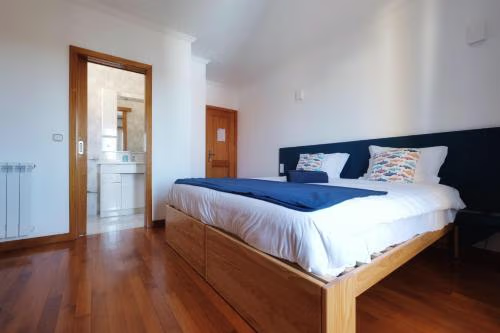
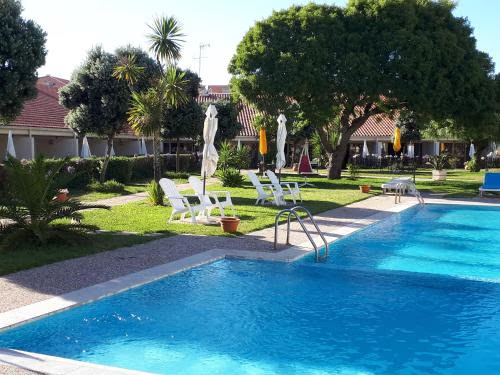
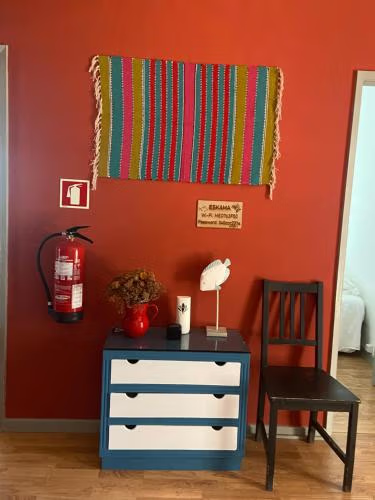
Where to stay in Esposende
The places pilgrims rate highest in Esposende come first.
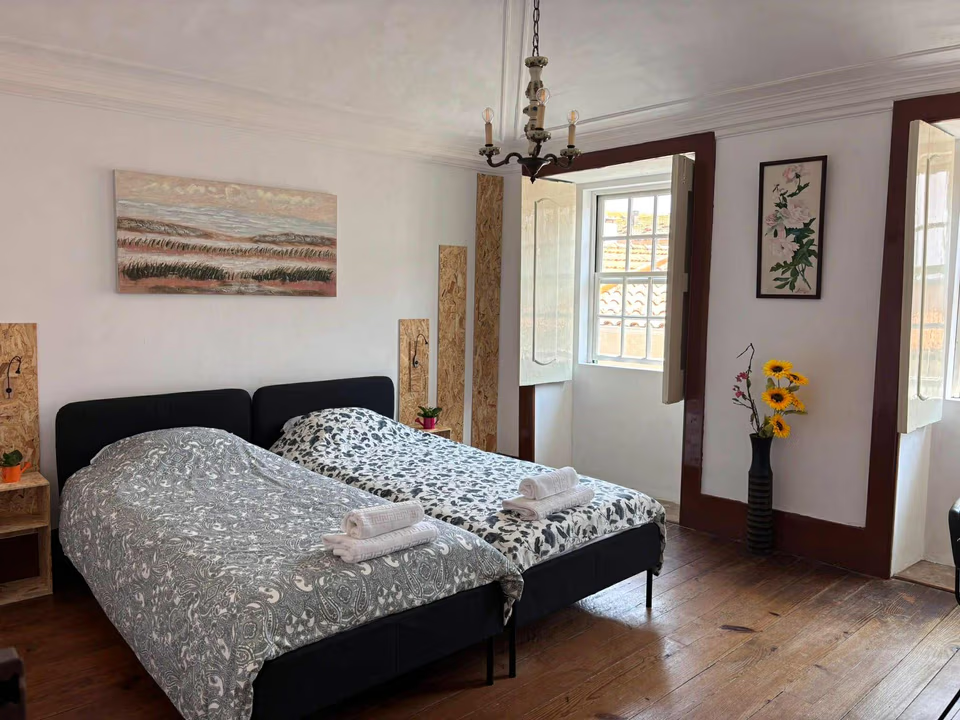
- Top #1
 OpenReservations accepted
Esposende Garden
- Top #2
 OpenReservations accepted
Hostel Eleven
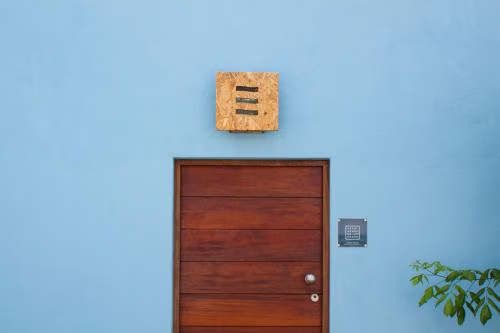
- Top #3
 OpenReservations accepted
Hostel Esposende GuestHouse

Services in Esposende
What you can find in town before the next stage.
- ATM
- Café
- Shop
- Medical clinic
- Pharmacy
- Fountain
- Post office
- Restaurant
Source: © OpenStreetMap contributors · updated April 2026