

Town on the Camino
Viana do Castelo
Distrito de Viana do Castelo, Região do Norte, Portugal
- places to stay
- 34
- Caminos
- 3
- Elevation
- 9 m
Viana do Castelo is the seafarers' town on the Coastal Way: you cross Eiffel's bridge of 1878 at the mouth of the Lima into an old town whose cathedral has St James dressed as a pilgrim on its portal. Above it rises Monte de Santa Luzia, where pilgrims celebrate the sunset. Santiago is still just under 200 kilometres away.
Right now in Viana do Castelo (as of October 2026)
- Elevador de Santa Luzia in winter: From November to February the funicular only runs from 10:00 to 17:00 and not at all on Mondays. In summer 2026 pilgrims reported several times that it was out of service or had already stopped in the evening. If you want to sleep at the top, plan to ride up early.
- Pilgrim albergue in the Carmo: It is open all year, but closed at Christmas, on New Year's Day and on Easter Sunday.
How long to stay?
Worth a rest day, but not on a Monday in winter. An afternoon is enough for the old town with its cathedral, Praça da República and the old pilgrim hospital. But Viana has more: the hospital ship Gil Eannes in the harbour, the fortress of Santiago da Barra at the river mouth and above all Monte de Santa Luzia, which you reach on a hundred-year-old funicular. If you sleep in the albergue at the top, you get sunset and sunrise high above the town. That alone is worth a day off. In winter the funicular rests on Mondays, and then the hill can only be reached on foot, by taxi or by Uber.
Viana do Castelo in Ninja numbers
- Around 197 kilometres to Santiago, according to Camino Ninja, on the Senda Litoral via A Guarda. If you turn up the Minho at Caminha and go via Valença, it is around 178 kilometres.
- 645 metres is the length of the Eiffel bridge that brings you into town. Cars drive and pilgrims walk on the upper deck, the train runs underneath.
- 160 metres of altitude are climbed by the Elevador de Santa Luzia over 650 metres of track, since 1923. The ride takes about seven minutes and costs €2, or €3 return (as of October 2026).
- 89,512 pilgrims arrived in Santiago on the Portuguese Coastal Way in 2025, according to the Pilgrim's Office. If you walk up the coast from Porto, you pass through Viana.
Arriving: over Eiffel's bridge to the Lima
On the Portuguese Coastal Way you come from Esposende. The last stage before Viana runs inland via Castelo do Neiva, without a single beach. After Vila Nova de Anha you pass a half-finished business park on the way to Darque, then follow the pavement of the N-13 to the big iron bridge over the Lima. The Senda Litoral reaches Viana closer to the coast, via Amorosa.
The bridge opened in 1878, built to plans by Gustave Eiffel's company. It has two decks: up top you walk beside the cars, and beneath your feet runs the railway. Before it there was only a ferry from Darque and a shaky wooden bridge. Right at the end of the bridge stands the pilgrim albergue in the Convento do Carmo. Turn left for the old town and Praça da República, where the stage ends.
In brief: a town at the river mouth
Viana was once called Viana da Foz do Lima, Viana at the mouth of the Lima. In 1258 King Afonso III granted it a town charter. In the sixteenth century Viana grew rich: sugar from Brazil came through its harbour, and its fishermen sailed as far as Newfoundland and Greenland for cod. The town hall, the Misericórdia hospital and the fountain on Praça da República date from that time.
In 1848 Queen Maria II made Viana a city and gave it its present name, Viana do Castelo. In 1878 the railway arrived over the new bridge. In 1944 the shipyard was founded, where the hospital ship Gil Eannes was launched in 1955. Since 1977 Viana has been a bishop's see, and the old parish church became a cathedral.
A town that went to sea
Viana looks out to the water, and you notice it everywhere. In the cathedral there is a chapel of the seafarers, the Mareantes, with a dead Christ bought in England in 1593. In the harbour lies the white ship Gil Eannes, which for decades looked after the cod fishermen in the North Atlantic. The fortress at the river mouth bears the name of your apostle, Santiago da Barra. And the town's great festival in August is dedicated to the Senhora da Agonia, a Virgin especially loved by sailors.
For you as a pilgrim, that is good company. Sailors and pilgrims have a lot in common: they set out without knowing what is coming, and they pray for a safe return. Since Porto you have been walking along the Atlantic. In Viana you see what this ocean has meant to the people here.
Between harbour and holy hill: what to see
The old town is flat and easy to explore on foot, with its lanes running parallel to the river. Only for Santa Luzia do you need the funicular or good legs.
- Sé: The cathedral was built in the fifteenth century and inaugurated in 1455. With its two crenellated towers it looks like a fortress. Take a close look at the Gothic portal: among the six apostles stands St James, shown as a pilgrim, plump and friendly. This is where you get your stamp. Inside it is decorated in Baroque style; in 1809 a fire destroyed its roofs. In the chapel of Senhor Jesus dos Mareantes lies the seafarers' Christ, and next to it a tombstone from 1404 with astronomical symbols. We could not find opening hours.
- Hospital Velho: The Gothic house on Praça da Erva was a hospital in the Middle Ages that also took in pilgrims. Today it holds an information centre about the Camino. For a pilgrim it is the right place to see that you are on a very old road. We could not find opening hours.
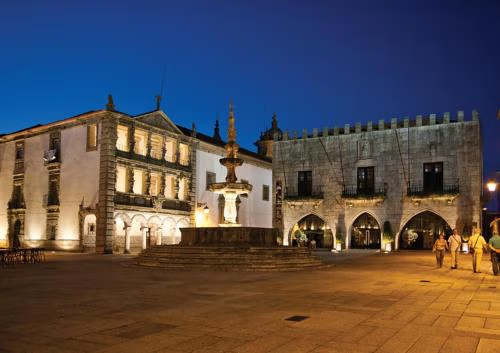
- Praça da República: The main square is where your stage ends. Here stand the old town hall from the early sixteenth century with Gothic arcades and battlements, the Misericórdia house of 1589, once a hospital, with caryatids on its façade, and the fountain made by the stonemason João Lopes o Velho in 1554. A good place to arrive after the stage.
- Navio Gil Eannes: The ship was built in Viana in 1955 and sailed as a hospital ship with the cod fleet to Newfoundland and Greenland until 1973. After that it lay abandoned in Lisbon and was due to be scrapped. In 1998 it was rescued and brought back to Viana, and today it is a museum. You learn how operations were carried out on board on the high seas, in a hospital for people on the move, like the pilgrim hospitals of old.
- Forte de Santiago da Barra: The fortress at the mouth of the Lima goes back to a medieval tower and was expanded at the end of the sixteenth century under Filipe I by the Italian engineer Filippo Terzi. It is dedicated to the apostle James. Today it houses a tourism school, and the Capela de Santiago is used for exhibitions.
- Santuário de Santa Luzia: The basilica on the hill above the town was begun in 1904 by the architect Ventura Terra, modelled on Sacré-Cœur in Paris, and completed in 1959. You can reach the dome by stairs or a lift. From up there you see the town, the Lima and the sea. In the evening pilgrims come up here to watch the sun set into the Atlantic, a foretaste of the end of the world at Fisterra. The Elevador takes you up (see box).
Food and drink
Viana lives from the sea, and here that means above all bacalhau, salt cod, and octopus. The town is also known for its sweets: manjericos, sidónios, fidalguinhos, sonhos, jesuítas, lenços, pastéis de Santa Luzia and the Torta de Viana. For bolas de Berlim, Manuel Natário on Rua Manuel Espregueira is the name to know. If you love chocolate, the old chocolate factory is now a hotel with a cocoa and chocolate museum. Close to the pilgrim albergue in the Carmo are the Pastelaria da Saudade and the Confeitaria Flôr.
Honestly
- The pilgrim albergue is strict. At the Convento do Carmo there are no reservations, the door closes at 22:00 and you have to be out by 08:00. There is no proper kitchen, just a microwave and a kettle. When the house is full, showers run short, and there are a lot of stairs.
- The albergue on the hill is an experience, but awkward. There is no shop and no staff at the top; you open the door with a code. If the Elevador is not running, you are left with a steep walk, a taxi or Uber. In September 2026 pilgrims complained about hot dormitories and thin mattresses.
- The official route out of town is tiring. Past the station it climbs steeply up Rua Portela da Cima, then goes up and down through lanes lined with stone walls. Lovely views, but tired legs. If you want it flatter, take the coastal variant (see Ninja tips).
- The youth hostel serves breakfast late. The breakfast buffet only starts at 08:00, too late for pilgrims, as several guests say.
Where pilgrims sleep
- Albergue de Peregrinos São João da Cruz dos Caminhos: The albergue of the Discalced Carmelites in the Convento do Carmo, right at the end of the Eiffel bridge, has been open since 2010. Pilgrims with a credencial only, no reservations, check-in from 13:30 to 18:00. A dormitory bed costs €15, a single room €35, a double room €60 with breakfast (as of October 2026). At 19:00 you can join the Carmelites' evening prayer and receive the pilgrim blessing.
- Albergue de Santa Luzia: The albergue of the Confraria de Santa Luzia has stood at the top of the hill next to the basilica since 2018. You sleep in eight-bed rooms, you can book ahead, and the breakfast buffet starts at 06:30. Depending on the season a bed costs around €20 to €40 with breakfast (as of October 2026). Pilgrims in the app almost all rave about the view, the sunset and the sunrise.
There is no donativo albergue in Viana. The Pousada da Juventude offers dormitory beds from around €23 with breakfast. There are also a few private hostels and guesthouses in the old town, with dormitory beds from around €20.
Ninja tips
- A stamp from the apostle: Get your stamp in the Sé and look up as you go in. St James stands on the portal, dressed like you.
- Pilgrim blessing with the Carmelites: At 19:00 the Carmelites in the Carmo invite pilgrims to evening prayer with a pilgrim blessing. Take the time, even if the day was long.
- Shop before the hill: If you are staying on Santa Luzia, buy your food down in town. There is nothing to buy at the top, and if you arrive late there is no funicular.
- Sunset on Santa Luzia: Even if you are not sleeping up there, the ride in the evening is worth it. Check the time of the last ride down, or you will be walking.
- The coast instead of the hills: Instead of the official route you can walk from Viana along the coast to Vila Praia de Âncora, along Avenida do Atlântico, past Praia Norte and the Montedor lighthouse. There are no yellow arrows, but you cannot get lost, and the distance is about the same. In Vila Praia de Âncora you rejoin the main route at the Forte da Lagarteira. Careful if you swim: the waves are strong.
- The old pilgrim hospital: Spend a few minutes on Praça da Erva at the Hospital Velho. Here you see that pilgrims were already passing through Viana in the Middle Ages.
Practical tips for pilgrims
- Stamps: in the Sé and in the albergues.
- Mass: The Carmelites in the Carmo celebrate Mass on weekdays at 08:00, on Saturdays at 09:00 and 18:00, and on Sundays at 08:00 and 18:00 (as of August 2026).
- Shopping: Viana is a good place to sort everything out: there are plenty of supermarkets, pharmacies and cafés. After this come smaller places.
- Getting here: Viana lies on the Linha do Minho railway, whose tracks cross the Eiffel bridge beneath your feet.
Onward: over the hills or by the sea
From Praça da República the official route leaves town along Rua de São Tiago, passes under the railway and climbs steeply to the church of the Santos Mártires. Then it follows the flank of Monte de Santa Luzia, through lanes lined with stone walls, to Areosa and Carreço, a little over 8 kilometres according to Camino Ninja. At the Café Central in Carreço pilgrims stick a pin into the map where they come from. Just before Carreço the path crosses the railway at a level crossing without barriers, so take care there. It is around 18 kilometres to Vila Praia de Âncora and around 27 to Caminha.
What awaits you tomorrow
Most Camino Ninja pilgrims spend the next night in Caminha, the last town in Portugal at the mouth of the Minho. You enter through the clock tower, the last gate of the old town wall. There you decide: by boat across to Galicia and on along the coast on the Senda Litoral, or on the Coastal Way along the river to Valença.
If 27 kilometres is too much, stay in Vila Praia de Âncora. Just a hundred metres off the path is the Anta da Barrosa, a Neolithic dolmen, with a shady resting area.
Deep dive: Between the Atlantic and the holy hill
A long read, in case you want to learn more about Viana do Castelo. About twenty-five minutes' reading.
At the end of the bridge
Most pilgrims enter Viana do Castelo the same way: on foot, across an iron bridge more than six hundred metres long. Beneath you the Lima flows its last few kilometres into the sea. Ahead of you lies the town, spread flat along the bank, and above it, on Monte de Santa Luzia, stands a domed basilica, as if someone had set a piece of Paris on a Portuguese hill. And sometimes a train rumbles beneath your feet, because the bridge has two levels. People walk and cars drive on top, and the railway runs below.
This bridge is a good place to begin with Viana, because it already tells you almost everything about the town. It tells of the river that meets the sea here and gave the town its first name. It tells of a time when Viana wanted to be connected to the world. And it tells of you, because today many pilgrims cross its footway, with rucksack and shell, heading north.
Before this bridge existed, crossing the Lima was hard work. There were boats, and from 1819 a wooden bridge linking the banks at São Bento and Darque. The old royal road from Porto to Viana ran across it. In November 1875 a tender was issued for a new railway bridge, and it was won by Gustave Eiffel's company. Work began in March 1877 and was finished in May 1878. On 30 June 1878 the bridge was formally opened in the presence of the head of government, António Maria Fontes Pereira de Melo, and the first train came from Porto. According to one source, around two million kilos of iron went into the girders that carry the decks.
Eleven years later the same Gustave Eiffel put up his tower in Paris. When you walk across the bridge at Viana, you are walking across an early work from his company. And if you stay on the Coastal Way and go via Valença to Tui, you will recognise it. The international bridge over the Minho was built a few years later to the same pattern. In 2019 the Portuguese state began the process of declaring the bridge at Viana a national monument.
Viana at the river mouth
Viana is much older than its bridge. People lived here as early as the Mesolithic, and on the hill above the town there was a fortified settlement in the Iron Age, the Citânia de Santa Luzia. Three rings of walls with towers and two ditches protected it, and archaeologists have found the remains of some 74 houses, most of them with round or oval foundations. The settlement was still inhabited in Roman times. Much of it is lost today. When a hotel, a church and the access roads were built on the hilltop in the early twentieth century, a large part of the Citânia was buried or destroyed. Only about a third of the site has been excavated.
Down by the river, the place that became the town grew up in the Middle Ages. The name Viana appears in 1253. On 18 July 1258 King Afonso the Third gave the place its charter, the foral, and called it Viana da Foz do Lima, Viana at the mouth of the Lima. The town itself says today that in this name the king already foresaw its seafaring destiny. Where the word Viana comes from, nobody knows for certain, and we have not found a reliable explanation.
The river mouth received its first fortifications under Afonso the Third. In the fifteenth century they were strengthened, among other things with a tower, the Torre da Roqueta, because pirates were active along this coast. If you had a harbour, you also had something to defend.
A harbour between south and north
In the fifteenth century Viana lay on one of Europe's great trade routes, between the Mediterranean and the North Atlantic. Cloth, fruit, timber and iron were shipped south. From the south came salt and farm produce that went on to the north. When Portugal settled Madeira and the Azores in the fifteenth century, Viana supplied cloth to the new settlements.
The truly great era came in the sixteenth century. Sugar from Brazil passed through the port of Viana, and merchants from northern Europe settled in the town. They traded in sugar and in grain from the Baltic. With the money came the buildings you still see today. On Praça da República, the square where your stage ends, the heart of the town has beaten for some five hundred years. The old town hall from the early sixteenth century stands there with Gothic arcades and battlements. In the middle of the square splashes the fountain that the stonemason João Lopes the Elder made in 1554. And beside it stands the Misericórdia building of 1589, a hospital in its day, with stone female figures on the façade, the caryatids.
In the lanes of the old town you will find more of this wealth, houses with Manueline façades such as the Casa dos Costa Barros or the Palácio dos Távoras.
The cod men
Around 1460 a man was born in Viana who is more typical of the town than any king. João Álvares Fagundes was a shipowner and explorer. Around 1520 and 1521 he sent ships across the Atlantic to Newfoundland and Nova Scotia, to the land that was then called the new land of the cod. He explored islands off the coast of Canada, and he named one group of islands after Saint Ursula and her companions, the Eleven Thousand Virgins. On 13 March 1521 King Manuel the First granted him the rights to everything he had discovered.
Fagundes wanted more than fish. He took families and couples across, most of them from the Azores, to found a settlement on the far side of the ocean. What became of it is unclear. Basque fishermen later reported that the settlers were still living there and asked for priests to be sent. When the French explorer Samuel de Champlain found an old, weathered cross on the coast of Nova Scotia in 1607, some historians took it for a trace of Fagundes's people. That cannot be proven.
What remained is certain: the cod. By the sixteenth century at the latest, Portuguese ships were fishing off Newfoundland and Greenland. They learned from the Basques how to preserve the fish with salt, and salted cod became bacalhau. It fed sailors on the long Atlantic crossings, and in the eighteenth century it was eaten in Portugal by common people and nobles alike. To this day the Portuguese call it their faithful friend, fiel amigo. If you eat bacalhau in Viana tonight, you are eating a piece of the town's history.
A church like a castle
In the middle of the old town stands the cathedral, the Sé. When you stand in front of it, you understand at once why people compare it to a fortress. Two square towers frame the façade, crowned with battlements, and the corbels beneath the battlements carry heads carved in stone. Between them sits a rose window in a delicate frame, and below it opens a great Gothic portal that takes up almost the whole wall. The style is late Gothic, but with strong Romanesque roots, as is typical in northern Portugal and in Galicia too.
It was built in the fifteenth century. In 1420 levies were raised to pay for the building. Some fifteen years later King Afonso the Fifth was asked for support so that the church could be finished. Around 1455 services were held in it. We do not know the name of its master builder. It was originally dedicated to the Divine Saviour, later to the Mother of God, and as a parish church it was called Santa Maria Maior. Many people still call it the Igreja Matriz, the main church.
In church terms, the land between the Minho and the Lima belonged for a long time to Tui, the cathedral city on the Galician side of the Minho, which you can reach in a few days. According to the description of the cathedral, that was the case until 1362. After that the area had its church seat briefly in Valença and, from 1444 to 1514, in the diocese of Ceuta, on the far side of the Strait of Gibraltar. That is how, in 1483, a bishop of Ceuta, Justo Balduíno, came to raise the church at Viana to a collegiate church. It became a cathedral in its own right only in 1977. On 3 November 1977 Pope Paul the Sixth founded the diocese of Viana do Castelo, and the old main church became the Sé.
The apostle at the portal
Stop in front of the portal for a moment and look closely. It has four arches stepping inwards, and three of them are decorated. The outer arch shows the Last Judgement, in an archaic, almost Romanesque manner. At the very top, in the keystone, sits the Saviour, with angels making music on either side. The other two arches carry tendrils and leaves.
On either side of the portal stand six stone apostles, stiff and serious, like guards. They are Peter, Paul, John, Bartholomew, Andrew and James. They were chosen precisely because they were especially venerated in the town and the region. The group of figures is regarded as a rare and important work of Portuguese Gothic. Their plinths were renewed in the middle of the sixteenth century.
For you, one of them matters more than the others. James stands here as a pilgrim. The Camino expert Antón Pombo describes him as a chubby, likeable Santiago Peregrino, and that is exactly how he looks: not like a gaunt ascetic, more like someone who enjoys being on the road and eats well along the way. Pombo gives pilgrims a clear piece of advice here. This church, he writes, is where you should get the stamp in your credential. So it is worth going in through this portal, past an apostle who looks like you.
What you see inside
Inside, the cathedral is a cross of three naves, separated by pointed arches on heavy pillars, five bays long. Everything you see in the way of furnishings either survived two great fires or was made after them. The first serious fire was in 1656. In 1809 a great fire destroyed the roofs, and afterwards the church stood abandoned for decades. Only in 1835 were services held here again. In the nineteenth century the ceilings of the naves were covered with painted plaster, which is still debated today.
The side chapels tell of the town's families and brotherhoods. Viana's nobility had themselves buried in the Sé, and you will find tombs with coats of arms, some with recumbent figures. In the chapel of the Fagundes family, also called the chapel of the Santo Cristo, lies the tomb of Cosme de Sousa with his recumbent stone effigy. The Senhor da Cana Verde chapel has a portal that Master João Lopes made in 1547. Another Renaissance portal by the same sculptor adorns the Fiéis de Deus chapel, whose rich woodcarving survived the fire of 1809. In the chapel of the Blessed Sacrament hangs a sixteenth-century panel of the Baptism of Christ, painted under Flemish influence. The chapel of the Melo Alvim family is built in the Manueline style, the typically Portuguese late Gothic with ropes and knots in stone.
For a town by the sea, the most revealing is the Senhor Jesus dos Mareantes chapel, the seafarers' chapel. It belonged to their brotherhood. On the outside it carries a stone slab with astronomical symbols and the date 1404, older than the church itself. It probably comes from an earlier seamen's chapel. Inside lies a dead Christ that a man named João Velho bought in England in 1593. With it are a gilded silver chalice from the sixteenth century, vestments from Milan that Gaspar Caminha Rego donated in 1620, and the model of a galleon that a member of the brotherhood brought from Hamburg to fulfil a vow.
A hospital for merchants, pilgrims and travellers
A few steps from the cathedral, on Praça da Erva, stands a Gothic house, the Hospital Velho, the old hospital. It was founded in 1468 by João Paes, known as the Elder. It was meant to help merchants, pilgrims and travellers, in other words everyone who was a stranger and on the move. In the sixteenth century the house was renewed. When the Misericórdia later built a larger hospital of its own, the old house remained a shelter for pilgrims. The company that designed the exhibition inside today calls it a symbol of the help that pilgrims to Santiago found here in the Middle Ages and in early modern times.
In 2018 the town restored and fitted out the building. Today it houses a centre about the Portuguese Coastal Way, with an old town map on a table, a projection on the town's history and a guestbook. When you go in, you are standing in one of the few places on the Coastal Way where you can still touch the fact that pilgrims were taken in here more than five hundred years ago.
The Misericórdia itself, the brotherhood of mercy, also belongs to this story. Its house of 1589 on Praça da República was a hospital. The Misericórdia church next to it dates in its present form from the eighteenth century.
An old way or a new one?
Anyone walking the Coastal Way sometimes hears the objection that it is not a real Camino at all, but an invention for tourists. The honest answer lies in between.
It is true that the great pilgrims from Portugal whose names we know did not come this way. Queen Isabel, the Holy Queen, made her pilgrimage to Santiago in 1325, and her route ran inland, through Barcelos and Valença. We have not found any named pilgrim from earlier centuries who went to Santiago via Viana and left an account of it. The official description of the route itself says that the coastal route only gained importance in early modern times, from the fifteenth century onwards. It was used above all by the people of the coast and by pilgrims who arrived by ship in the harbours.
But it is also true that the veneration of James was firmly rooted between the Douro and the Minho as early as the ninth century, says the historian José Marques. In the dioceses of the north, Viana included, he counted 125 parishes and 32 chapels dedicated to the apostle. On the way into Viana you pass through Castelo do Neiva, whose church Bishop Nausto is said to have consecrated in 862, shortly after the apostle's tomb was discovered. People there praise it as the oldest church of Saint James outside Spain. As early as the twelfth century the Arab geographer al-Idrisi described two routes between Coimbra and Santiago, one overland and one by sea. And in Viana itself there is a hospital from 1468, a fortress bearing the apostle's name and a James dressed as a pilgrim on the portal of the main church.
So the coast was never the pilgrims' main road, but it was never empty either. The section from Porto to Valença has only been officially recognised as a Camino for a few years, by a decree of 2022. The friends of the Camino in Viana formed an association as early as 2004. A pilgrim from the area, José Sousa, told a local newspaper in 2022 that he first walked the Coastal Way in 1993. So you are walking an old way that only the last few decades have filled again.
Santiago at the harbour entrance
At the mouth of the Lima, where ships sailed into the harbour, stands a fortress that bears the name of your apostle: Santiago da Barra, Santiago at the bar, the sandbank in front of the river mouth. At its core is the medieval tower, the Torre da Roqueta, which had been strengthened against pirates in the fifteenth century. In the sixteenth century construction of a proper fortress began.
It got its present shape at the end of the sixteenth century, at a time when Portugal had no king of its own. From 1580 to 1640 the kings of Spain also ruled Portugal. Filipe the First, as the Portuguese call him, Philip the Second in Spain, had the Italian engineer Filippo Terzi enlarge the fortifications. Antón Pombo writes that it deserves a visit, if only because it is dedicated to our apostle.
Inside stands a chapel of Saint James, which is used for exhibitions today. The fortress houses a school of tourism. And when you leave town tomorrow morning, you walk along Rua de São Tiago, Saint James Street. Viana sends you on your way with the apostle's name.
The archbishop with the donkey
In front of the church of São Domingos, completed in 1576, stands a monument that may make you smile: a friar on a donkey.
Bartolomeu dos Mártires was born near Lisbon on 3 May 1514, and his real name was Bartolomeu Fernandes. At thirteen he joined the Dominicans, and for two decades he taught philosophy and theology. In 1558 he was to become Archbishop of Braga. He did not want to. He only accepted the office because his superior in the order, the famous preacher Luis de Granada, imposed it on him under obedience. In October 1559 he made his entry into Braga.
Two years later he travelled to the Council of Trent, where the Catholic Church reorganised itself after the Reformation. There he made 268 proposals, worked closely with the Milanese cardinal Charles Borromeo, and had great influence on the decrees reforming the Church. Back in Braga he put these reforms into practice. When famine and plague struck his diocese, he helped the people and founded hospitals and shelters. His book on the duties of bishops, the Stimulus Pastorum, appeared in Rome in 1564.
Again and again he asked to be allowed to resign. On 20 February 1582 Pope Gregory the Thirteenth granted his wish. He withdrew to his order's convent in Viana, lived there in quiet and taught for a time. Pombo tells how he returned humbly to his convent, accompanied by a donkey. He died in Viana on 16 July 1590, aged seventy-six. Pope John Paul the Second beatified him in 2001, and in 2019 Pope Francis recognised him as a saint without requiring a second miracle. Since 2015 his figure has also been taken out onto the water in the town's great procession in August.
For pilgrims there is something familiar about this story. A man who held one of the highest offices of his Church lays it down and comes home with a donkey. At the end of a long road, you no longer carry much.
Monasteries that came and went
In the sixteenth and seventeenth centuries Viana was a town of monasteries. The Dominicans built their convent with the church of São Domingos to plans by Julião Romero. In 1612 the Franciscans came with the convent of Saint Anthony. In 1630 the Augustinians consecrated their monastery.
Not everything survived. When the railway came, the Augustinian monastery was torn down and its stones were reused. How much history still lies beneath the town only became clear recently. In autumn 2025 construction of the new market began in the centre, where the Prédio Coutinho tower block had stood until 2022. During the works, remains of the sixteenth-century Benedictine monastery of São Bento came to light.
And then there is one monastery that matters most to you: the Carmo at the end of the Eiffel bridge. Discalced Carmelites live there, and since 2010 they have run a pilgrim hostel. They named it after John of the Cross, the Spanish mystic and co-founder of their order: São João da Cruz dos Caminhos, John of the Cross of the Ways. Every evening at 19:00 the friars invite you to prayer and bless the pilgrims. More than five hundred years after the old hospital was founded, a house in Viana takes in people on their way to Santiago.
The fishermen's Madonna
Viana has a patroness, and she is not the Madonna of the cathedral. She is called Nossa Senhora da Agonia, Our Lady of Agony, and she lives in her own church on Campo da Agonia, close to the river.
Her story begins with a chapel of the Holy Sepulchre built in the late seventeenth century. The town gives 1674, another source 1678. From it grew a devotion first mentioned in writing in 1744, and it became above all the fishermen's affair. The church that stands there today dates from the eighteenth century. In 1772 a royal decree allowed a free market on 18, 19 and 20 August, and according to the town, seafarers from Galicia and the Portuguese coast gathered for it at the time. In 1783 the Church approved an annual solemn Mass on 20 August. Since then that day has been a holiday in Viana.
Little by little, the church feast became a popular festival. From 1861 people spoke of the Romaria d'Agonia, with singing and dancing. The very next year more than fifty thousand people are said to have come for the fireworks alone. In 1893 the giants and big-heads arrived, from the Galician tradition, in 1906 the costume festival, and in 1908 the first farmers' parade, which grew into the great historical procession. Today the Portuguese call the Agonia the queen of pilgrimage festivals.
The high point is still 20 August, and it belongs to the fishermen. Since 1968 they have carried their Madonna in procession out onto the river and the sea. Four figures go along, besides the Agonia also the Senhora de Monserrate, the Senhora dos Mares and Saint Peter, each, according to one source, weighing around 600 kilos, carried by fishermen. On the way back they carry the figures through the lanes of the Ribeira, the old fishermen's quarter. More than a hundred decorated boats accompany them. The night before, hundreds of neighbours lay carpets of coloured salt in the lanes of the Ribeira, according to a report from 2019 more than thirty tonnes, and flowers are added. People call it the night of the carpets, and the taverns are full of concertinas and improvised songs.
In 2019 a dispute threatened the procession. A floating wind farm was to be built off the coast of Viana, and around eighty fishing boats from Viana and Caminha were no longer allowed to fish in a strip around the undersea cable. They felt passed over in the compensation, and some talked of boycotting the procession to the sea. The mayor at the time, José Maria Costa, did not believe it would happen. He said: "There are higher values that rise up, such as faith and the enormous devotion to Nossa Senhora d'Agonia."
The procession took place. The wind farm went into operation in 2020. It is a story that shows how deeply this festival is rooted in the town. Even those fighting for their livelihood do not leave their Madonna in the harbour.
Gold on the breast
If Viana is recognised for anything, it is for its women in traditional dress. The town itself says its costume has become a symbol of all Portugal. The Traje à Vianesa is really the festive dress of the peasant women from the villages around Viana, worn from the middle of the nineteenth to the middle of the twentieth century. There are many variants, for everyday and for feast days, for work, for mourning and for weddings, and one of its own for the fishermen's wives. According to one description, unmarried women traditionally wear red, married women blue and those in mourning black. At the end of 2016 it became the first Portuguese costume to be officially certified. The town's costume museum, founded in 1997, shows it on Praça da República.
Gold belongs with the costume. The town lists the pieces like a poem: pendant earrings, chains, bows, earrings in the queen's style and fine filigree work. Filigree, jewellery made of gossamer-thin twisted gold or silver wire, has been worked in Portugal in its own forms since the seventeenth century. The most famous piece is the heart of Viana, the Coração de Viana, which appeared at the end of the eighteenth century. It is said that Queen Maria the First commissioned it, and it stood for devotion to the Sacred Heart of Jesus. Today it stands for love and fidelity, and it is usually passed down from mother to daughter.
You see all this most clearly at the Mordomia parade during the Agonia. Hundreds of women walk through the town in costume, and on their breasts lies the gold of their families. In 2025, according to reports, the thousand places in the parade were taken in less than three days.
The white ship
In the harbour lies a white ship named Gil Eannes. The name is old. Gil Eanes was a navigator from Lagos in the Algarve, a squire of Henry the Navigator. In 1434 he became the first to sail beyond Cape Bojador on the coast of Africa, opening the way south for the Portuguese. As proof he brought wild roses home.
The first ship of this name was a German merchant vessel, the Lahneck, which Portugal seized in 1916. In 1927 it was converted into a hospital ship and sailed with the Portuguese cod fleet to Newfoundland. This fleet was called the White Fleet. On 4 June 1944 a large shipyard, the Estaleiros Navais, was founded in Viana to renew the fishing fleet. There, on 20 March 1955, the new Gil Eannes was launched, almost a hundred metres long, built as a modern hospital ship.
But she was much more than a hospital. She sailed as flagship of the White Fleet to the fishing grounds off Newfoundland and Greenland, and on board was a naval officer who served as harbour master on the high seas. She carried mail, towed ships, broke ice and supplied the fishermen. Sick and injured men were treated on board, far from home. In 1973 she sailed to Newfoundland for the last time. Afterwards she lay abandoned in Lisbon and was due to be scrapped.
A television man saved her. The historian José Hermano Saraiva launched an appeal on his history programme in 1997, and at the last minute the ship was rescued from the breakers. On 31 January 1998 the Gil Eannes came back to the mouth of the Lima, to the shipyard where she had been built. Citizens, companies and institutions paid for the restoration. She has been open to visitors since 19 August 1998, and by 2019 more than eight hundred thousand people had come aboard. On board you learn how patients were treated and operated on at sea. A hospital for people far from home on the move: as a pilgrim, that is not entirely foreign to you.
The hill of Saint Lucy
Above the town rises Monte de Santa Luzia, and at the top stands the church you already saw from the bridge. Its history is younger than it looks. For a long time there was a small chapel of Saint Lucy on the hill, perhaps dating from the Middle Ages. Devotion on the hill goes back to 1743. In 1884 Luís de Andrade e Sousa founded the brotherhood of Saint Lucy, and it wanted more than a chapel.
The commission went to Miguel Ventura Terra, one of Portugal's best-known architects. He had studied at the École des Beaux-Arts in Paris and later built, among other things, the synagogue and a theatre in Lisbon. Work began in 1904. The descriptions name the Sacré-Cœur basilica in Paris as its model, and it is built in the neo-Byzantine style. Ventura Terra never saw it finished. He died in 1919. During the great flu of 1918, devotion on the hill grew. In 1926 the old chapel of Saint Lucy was demolished and her statue moved into the new church. The exterior was finished in 1943, the interior only in 1959. The church is dedicated to the Sacred Heart of Jesus, and it is known as the Santuário de Santa Luzia.
You get up there by a funicular that opened on 2 June 1923. It travels 650 metres and climbs 160 metres, and the town says it is the longest ride of its kind in Portugal. In 2005 the town renewed the funicular for 2.28 million euros. At the top you can climb into the dome by stairs or take a lift. From there you see the town, the Lima, the bridge and the sea.
Since 2018 the brotherhood has run a pilgrim hostel at the top, and a small ritual has grown up among pilgrims. In the evening they go up and watch the sun sink into the Atlantic. Antón Pombo calls it a prelude to the ritual that will be repeated at Cape Fisterra. Here you are still almost two hundred kilometres from Santiago, and already you are looking at the sea where many pilgrims only truly end their way.
Viana today
Today Viana is a medium-sized town. The whole municipality had almost eighty-six thousand inhabitants in 2021, the town proper about half that. The big shipyard that built the Gil Eannes ran into financial trouble after 2000 and was restructured in 2013. Since 2020 floating wind turbines have been turning off the coast, and in 2023 an American company announced a factory for electric motors. The town that once lived from cod is finding its place anew between the sea and industry.
And it lives with its pilgrims. In 2025 almost ninety thousand people reached Santiago via the Portuguese Coastal Way, and anyone walking up the coast from Porto passes through Viana. On 25 July 2022, Saint James's Day, around three hundred people walked a pilgrimage together in Viana. The Carmelites give their blessing every evening, the brotherhood on the hill lets you in by code, and in the old hospital on Praça da Erva there is a guestbook. According to one report, the Agonia counted more than a million visitors in 2024. If you come in August, you walk as a pilgrim through streets full of salt carpets, costumes and gold.
What Viana gives you
Viana is a town of people who set out. A shipowner from this town sent ships to the other side of the Atlantic. Fishermen sailed into the cold north, and a white ship sailed with them to care for them when they fell ill. The women still wear the family gold on their breasts, and every year in August the fishermen take their Madonna out onto the water.
You have set out too. Perhaps not as far, and hopefully not into such cold water. But by now you know the feeling of being on the road without knowing exactly what lies around the next bend. In Viana, people have built places for that for centuries: a hospital for strangers, a chapel for seafarers, a hostel in a monastery. And on the portal of their main church stands a James who looks as if he has just arrived himself.
When you stand on the hill in the evening and the sun disappears into the sea, you are looking in the direction this town has always looked. Tomorrow morning you go back down, along Rua de São Tiago and on to the north. The Atlantic stays at your side, and with it a little of Viana.
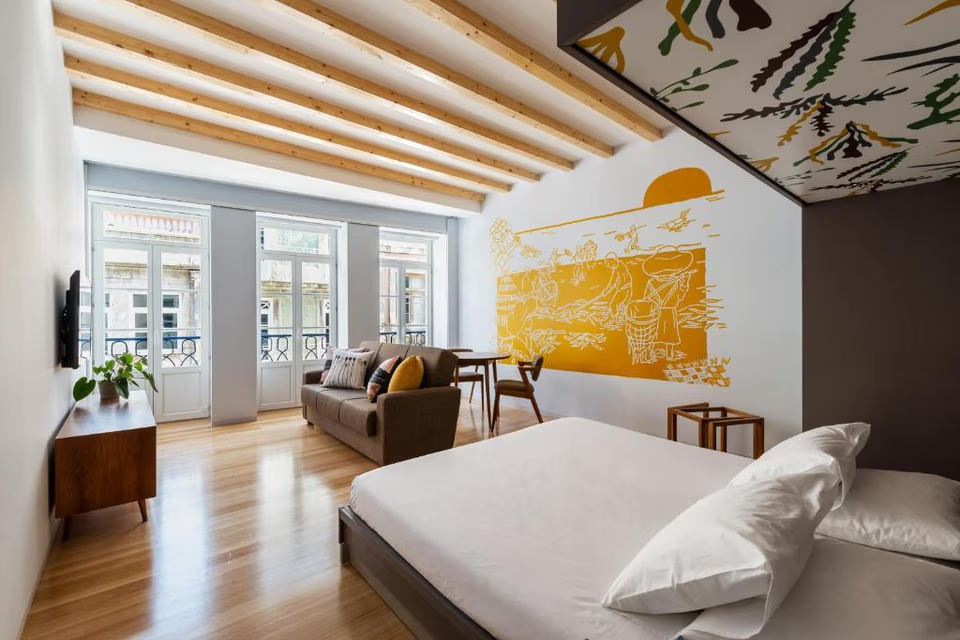
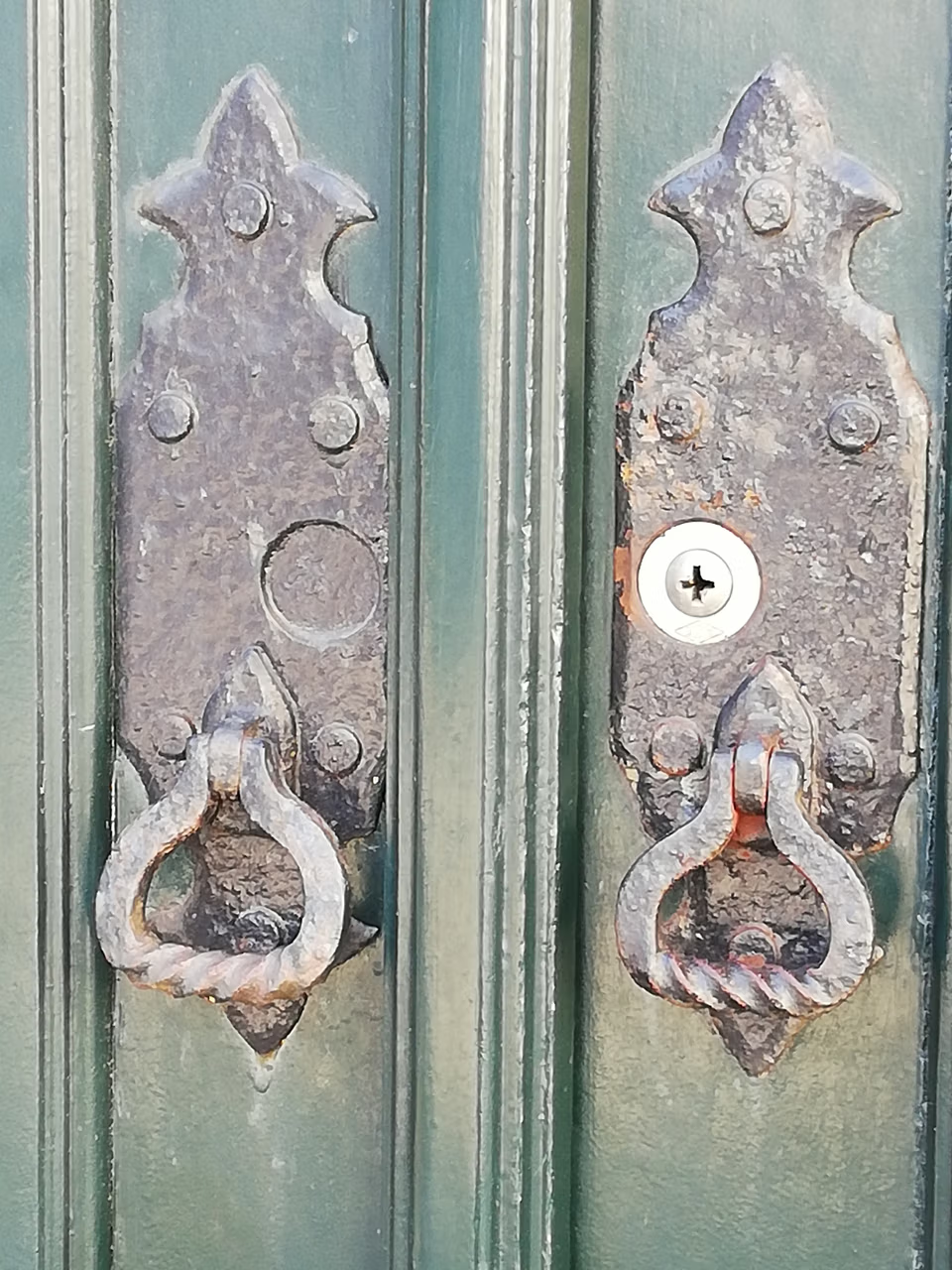
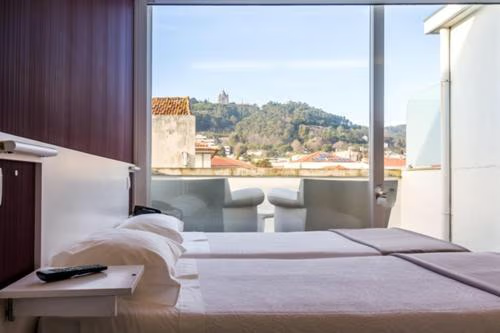
Where to stay in Viana do Castelo
The places pilgrims rate highest in Viana do Castelo come first.
- Top #1
 OpenReservations accepted
Albergue de Santa Luzia
- Top #2
 OpenReservations accepted
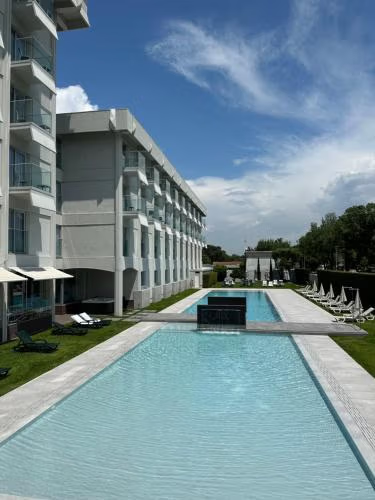
Hotel do Parque
- Top #3
 OpenReservations accepted
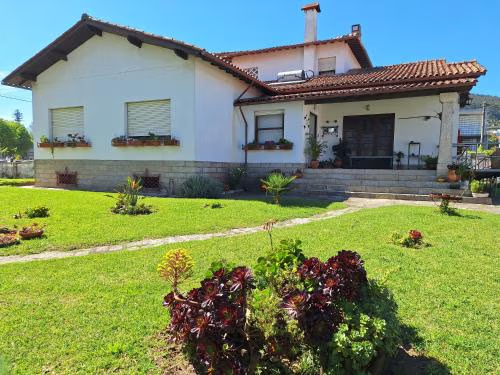
Enjoy Viana Guest House

Services in Viana do Castelo
What you can find in town before the next stage.
- ATM
- Café
- Shop
- Medical clinic
- Pharmacy
- Fountain
- Post office
- Train station
- Bus station
- Restaurant
Source: © OpenStreetMap contributors · updated April 2026