

Town on the Camino
Foz
Spain
- places to stay
- 7
- Camino
- 1
- Elevation
- 1 m
Foz lies where the Masma flows into the sea; the name comes from the Latin word for a river mouth. Once a whaling port with one of Galicia's great shipyards, today a small town with beaches, a fishermen's quarter and a church of Saint James right on the path. Nearby: the "oldest cathedral in Spain" and the legend of the bishop who sank a fleet.
How long to stay?
An afternoon is enough. At 39.4 kilometres from Ribadeo, Foz is a natural stage destination, and for the town itself you need no more than an afternoon: the church of Saint James, the murals at the harbour, a walk through the lanes of the old town and a dip in the sea at the Rapadoira. If you want to see the basilica of San Martiño de Mondoñedo, plan the detour already on the way here, because it lies before Foz and a good two and a half kilometres off the route. Foz isn't worth a rest day, but it is worth finishing early.
Foz in Ninja numbers
- 39.4 kilometres are behind you, according to Camino Ninja, since the start in Ribadeo, 9.9 of them from San Cosme de Barreiros.
- 19.4 kilometres remain, according to Camino Ninja, to Burela, and 232.6 to Ferrol.
- 10,329 people lived in the municipality of Foz in 2025.
- One of three: In the 16th and 17th centuries Foz had one of the three most important shipyards in Galicia.
Arriving: over the Masma
From San Cosme you walk along the ría, via As Eiras, Mañente and A Tellada, and then cross the Masma. Shortly before the national road N-634 and the way to the river, arrows are missing; stick to the track. Take care when entering the town: yellow arrows and the markers of the Camino de San Rosendo, which come from Mondoñedo, bypass the centre of Foz. A pilgrim who documented the way precisely recommends going into the centre. There, in the middle of the old town, stands the church of Santiago, and the Camino del Mar leads right past it.
In brief: river mouth, whales, shipyard
The name Foz comes from the Latin "fauces", throat or mouth, and means the place where the Masma flows into the sea and forms the Ría de Foz. In the municipality there are pre-Roman settlement sites, among them the Castro de Fazouro, which you pass tomorrow. In the 9th century the area flourished thanks to the bishop's seat of San Martiño de Mondoñedo, which was located here until 1112.
Under the Catholic Monarchs Foz kept certain privileges because of its importance for trade. In the 16th and 17th centuries it had an important port and one of the three most important shipyards in Galicia. Shipowners and fishermen hunted mainly whales. Fishing later declined, the seafaring tradition has remained, and today Foz lives mainly from tourism.
Bishop Gonzalo and the Normans
No story is told more gladly in Foz than this one: when an enemy fleet headed for the coast, Bishop Gonzalo went down to the sea with a cross and the people of the area and prayed. A storm rose, and one ship after another went down. He is said to have knelt on the Alto da Grela until the last one had sunk; today the Capela do Bispo Santo stands there. The attackers are usually considered Normans, another version speaks of Moorish pirates. Gonzalo was bishop in San Martiño from 1071 to 1112, was venerated as a saint and is buried there.
Foz keeps the legend alive: with the romería to the Bispo Santo in spring, one of the most traditional pilgrimages of the Mariña lucense, and with a Norman festival that re-enacts the attack.
River mouth and old town: what to see
The most important things in Foz lie on the path or just before it. The two great churches of the legend lie before the town, so already on today's stage.
- Igrexa de Santiago: The parish church is dedicated to the Apostle James and stands right on the path on the Rúa Paco Maañón. A church has demonstrably stood on this spot since the 16th century; the present building dates from the 18th century. Inside it is divided into three naves, with two side chapels in addition; the most important furnishing is a Rococo-style retable. We don't know the opening times; if the door is open, go in. For a pilgrim to Santiago it is the natural stop in Foz.
- The murals at the harbour: On the riverbank opposite the small landing stage, at the foot of the Santiago church, a large mural recalls the time when Foz was a fishing port. It shows half a dozen seamen and three shellfish gatherers, takes up a poem by Celso Emilio Ferreiro, "Deitado frente ao mar", and bears the stamp of Sargadelos ceramics. A second, almost hidden picture in white, black and blue ceramic shows two fisherwomen with a fish basket on their heads; it hangs at the entrance to the harbour car park.
- Basílica de San Martiño de Mondoñedo: About 2.6 kilometres off the route, at kilometre 36.8, so before Foz. In the 9th century there was a bishop's seat here, which is why the Romanesque church is gladly called the oldest cathedral in Spain. Inside, the capitals tell of the rich glutton and of the beheading of the Baptist; in the apse the oldest Romanesque frescoes in Galicia were found in 2008. Bishop Gonzalo is buried here. Guided tours are only available from Holy Week and from June to September, with registration by telephone (as of March 2026).
- Capela do Bispo Santo: About 1.4 kilometres off the route, at kilometre 36.9. The simple granite chapel on the Alto da Grela stands where Gonzalo is said to have prayed; next to it lies a large rest area with tables and benches under trees. Inside there is a Baroque altarpiece; when it is open, we don't know.
Food and drink
Around the harbour and the Santiago church lies the quarter where people in Foz go in the evening for tapas. A pilgrim paid 14 euros for a set lunch in September 2026. For shopping, the centre is the right address. If you come on 16 July, you experience the Carmen festival with a big sardine barbecue and a procession over carpets of flowers in the fishermen's quarter.
Honestly
- Foz has no pilgrim albergue. A pilgrim wrote in September 2026 that he would take the official way, "maybe, if there is an albergue in Foz". There is a private hostel, otherwise hotels and camping.
- The waymarking leads past the centre. If you follow the arrows stubbornly, you see little of Foz. Go in.
- The big sights are not in the town. San Martiño and the Bispo Santo together cost you a proper detour, and San Martiño is only open for guided tours in season.
- The way to Burela has a tidal trap. Beyond Foz you can no longer cross the beach of Peizás at high water.
Where pilgrims sleep
There is no pilgrim albergue in Foz, and along the whole Camino del Mar no public one. The obvious choice for pilgrims is the private Hostel Áncora on the Rúa Mestre Mateo, a hostel with common rooms and a terrace. In addition, Foz has hotels, holiday apartments and a campsite.
Ninja tips
- Get your stamp at the tourist office. They have a sello for the credencial.
- Decide for or against San Martiño before the turn-off. It lies just under three kilometres before Foz; if you only think of it once you are in town, you walk it twice.
- Phone ahead if you want to see the basilica from inside. Outside the season it's only by arrangement.
- Jump into the sea at the Rapadoira. The town beach lies near the old town, as does the beach of Llas.
- Check the tide table tomorrow morning. At Peizás the water decides whether you can walk along the beach.
Practical tips for pilgrims
- Stamp: at the tourist office; according to pilgrim reports also at an accommodation a good 100 metres from the path (as of September 2026).
- San Martiño de Mondoñedo: guided tours from Holy Week and from June to September at 10:45, 13:15 and 19:15, registration on 698 183 223; outside these periods by arrangement (as of March 2026).
- Festivals: Carmen on 16 July, San Lourenzo on 10 August; the romería to the Bispo Santo takes place in spring (in May in 2026).
Onward: along the coast to Burela
Beyond Foz it goes via Forxán and Peizás to the coast. At kilometre 46.8, about 770 metres off the route, lies the church of Santiago de Fazouro, one of the few churches on the way dedicated to the Apostle himself. At kilometre 48.0, only 100 metres from the path, the Castro de Fazouro awaits, a coastal settlement from the 1st to 3rd century, the only excavated and freely accessible castro on Galicia's Cantabrian coast. Then come Nois with its church right on the path and Cangas de Foz, where there is a bar and a small shop just off the coastal path. After 19.4 kilometres according to Camino Ninja you are in Burela. Shortly before it lies the Praia da Areoura, which one pilgrim called the most beautiful beach of the whole way. You stay on the Camino del Mar, which brings you to Ferrol and to the Camino Inglés.
Deep dive: The river mouth and the holy bishop
A short read, in case you want to learn more about Foz. About three minutes' reading.
A place named after the water
Some places bear the name of a saint, others that of a founder. Foz bears the name of its position. The Latin word fauces means throat, jaws, river mouth, and that is exactly what Foz is: the place where the Masma leaves the land and flows into the Cantabrian Sea. If you come from San Cosme, you see this river mouth first from the other bank. Only when you have crossed the river are you there.
A bishop by the sea
Long before Foz was a port town, the area was a spiritual centre. In the 9th century two dioceses sought refuge here, one from the Muslim conquest, the other after Vikings had destroyed its seat. So a bishop's seat arose in San Martiño, a few kilometres from the sea. One of the bishops was Rosendo, later venerated as a saint. Another was Gonzalo, bishop from 1071 to 1112.
Of Gonzalo a story is still told in Foz today. A foreign fleet approached the coast. The bishop climbed a hill above the sea with a cross and with the people of the area and prayed. A storm broke loose, and the ships sank, one after another. Gonzalo stayed on his knees until the last one had gone down. Later he is said to have thrown a shoe, and where it landed, a spring burst from the ground. Whether they were Normans or pirates, whether the story takes place in the 10th or the 11th century, the tellings don't agree. They do agree that a man prayed by the sea and the sea helped him.
In 1112 Queen Urraca moved the bishop's seat inland, to the place now called Mondoñedo. San Martiño was left behind, became a parish church and to this day keeps Gonzalo's tomb, his golden bishop's ring and his crozier.
Whales and shipyards
Foz itself grew great through the sea. In the 16th and 17th centuries one of the three most important shipyards in Galicia stood here, and the men of Foz went out to hunt whales, like the fishermen in Rinlo, Burela and San Cibrao. Fishing declined, but the seafaring tradition remained. At the harbour, murals now recall the seamen and the shellfish gatherers of the past. They take up a poem by Celso Emilio Ferreiro, whose title you can keep in mind for the evening: Deitado frente ao mar, stretched out facing the sea.
A James at the harbour
In the middle of the old town stands the church that counts most for you. It is dedicated to Santiago, the Apostle you are walking to. A church has stood here since the 16th century; the present building dates from the 18th century. When you walk past it in the evening in Foz, you have almost forty kilometres of coast behind you and a long way still ahead. And you have already learned what this way teaches you: that here the sea has determined everything, the name, the work, even the legends.
Where to stay in Foz
Places to stay in Foz.
 Closed
FozCamp
 OpenReservations accepted
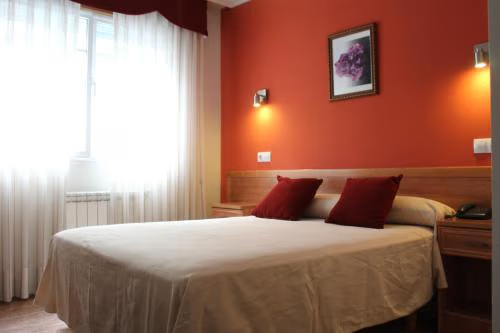
Isla Nova Hotel
 OpenReservations accepted
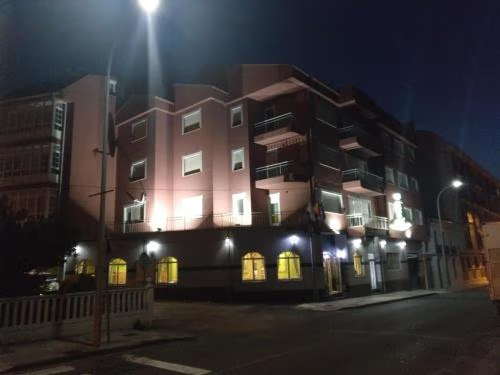
Hotel Rego Foz
Town 5 of 17