

Town on the Camino
Castelo Novo
Castelo Branco, Portugal
- places to stay
- 7
- Camino
- 1
- Elevation
- 616 m
Castelo Novo is the first of the Aldeias Históricas on the Via Nascente: a granite village of the Templars on the slope of the Serra da Gardunha, which you get to know through its fountains. After 34.1 kilometres from Castelo Branco, an evening is enough for fountains, castle and the wine press in the rock. Tomorrow you cross the mountain, 12.6 kilometres to Fundão.
How long to stay?
An afternoon is enough, and after this stage there is not much more than an evening left anyway. You arrive after 34.1 kilometres from Castelo Branco. According to one pilgrim guide you will have seen the village itself in half an hour; with the castle, the fountains and the Lagariça it becomes a good hour. Plan dinner early, because outside the summer the only restaurant is open in the evening by request only.
Castelo Novo in Ninja numbers
- 34.1 kilometres is the distance from Castelo Branco to here according to Camino Ninja. The last supplies on the way were at Soalheira, 7.5 kilometres before the village.
- 12.6 kilometres remain to Fundão, over the Serra da Gardunha.
- 132.2 kilometres from here to Trancoso, the end of the Via Nascente.
- Three spouts has the fountain at the old town hall, from the time of King Manuel I. A second bears the coat of arms of Dom João V. Here the water is the monument.
Arriving: granite on the mountain
Castelo Novo lies on a slope of the Serra da Gardunha, built like an amphitheatre. The houses are of granite, many with wooden balconies, the lanes narrow, often with steps. At the very top, at around 650 metres, stands the castle. The village is one of the twelve Aldeias Históricas de Portugal, the historic villages of the Centro region, and the first through which the Via Nascente leads. Belmonte and Trancoso follow later. In 2022 the World Tourism Organization of the United Nations included Castelo Novo in its list of the best tourism villages. José Saramago is said to have called the village one of the most moving memories of a traveller.
In brief: from the Templars to healing water
At the beginning of the 13th century, under King Sancho I, the place was still called Alpreada. It passed to the Templars, later to the Order of Christ, who were to resettle and secure the land. According to Turismo Centro, Pedro Guterres bequeathed the land to the knights in his will in 1208. In 1290 King Dinis had the castle rebuilt. In 1510, under Manuel I, the town hall with prison and the pillory were built. In the 18th century, with money from Brazilian gold, came the main church of 1732 and the Chafariz da Bica. In 1835 Castelo Novo lost its status as a municipality of its own, and today it belongs to Fundão.
In the 20th century the water rose to fame: in 1916 the chemist Charles Lepierre analysed the spring of the Alardo, in 1921 the railway entrepreneur Gama Lobo built a hotel after his daughter had got better in Castelo Novo. In 1922 the spring received the licence to sell its water.
Water in the granite: what to see
Everything lies close together, from bottom to top. We did not find opening times for any church.
- Largo do Pelourinho: The square is the heart of the village: the old town hall with prison, the Manueline pillory and the Baroque fountain of Dom João V. The town hall dates in its present form from 1510, and perhaps there was an earlier building under King Dinis. In its façade sits the fountain with three spouts in the Manueline style. For you the square is the natural place to arrive and shake off the stage. Whether the water of the fountains is drinkable, we did not find out.
- Chafariz da Bica: The fountain was built in the first half of the 18th century and bears the coat of arms of King João V, paid for in the time when the gold from Brazil flowed.
- Lagariça: A wine press hewn directly into the rock, with two basins: in the large one the grapes were trodden, in the small one the must collected. The Aldeias Históricas date it to the 7th to 8th century and see in it a legacy of Roman winegrowing. A piece of farming older than the castle.
- Castle: Of the Templar castle at around 650 metres, remains are left. The view over the village and the country you have come through is worth the short climb. In some of the stones there are said to have been holes for a gallows.
- Igreja Matriz de Nossa Senhora da Graça: The main church of 1732 stands on the remains of an older building, with white walls, Baroque windows and granite portals. The village also has a Misericórdia from the 17th century and the Capela de Santo António from the 16th century.
- Cabeço da Forca: At the edge of the village lie two granite blocks into which skulls and bones are carved. A rectangular hole perhaps held a gallows. A quiet, slightly eerie place.
Honestly
- The stage here is long. 34.1 kilometres from Castelo Branco, and the last supplies are in Soalheira, 7.5 kilometres before the end. Buy there what you need for the evening.
- There is no pilgrim hostel. You sleep in private houses. Book ahead.
- Dinner is not a given. The only restaurant in the village, O Lagarto, according to one pilgrim guide opens outside July to September only at lunchtime. For pilgrims it cooks in the evening if you phone beforehand: +351 275 567 406.
- Tomorrow you head into the mountain. According to pilgrim guides, the stage to Alcongosta is a proper mountain stage. It is short, but do not start tired from today.
Where pilgrims sleep
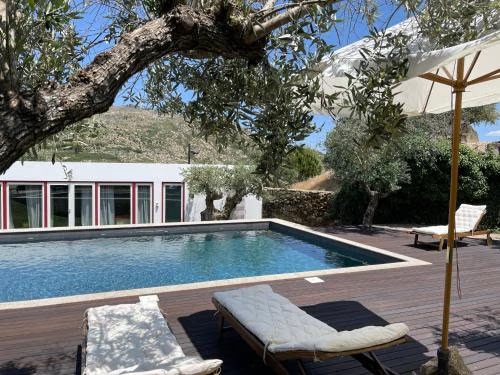
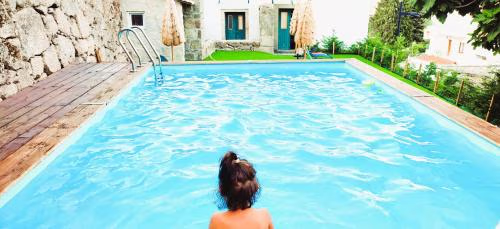
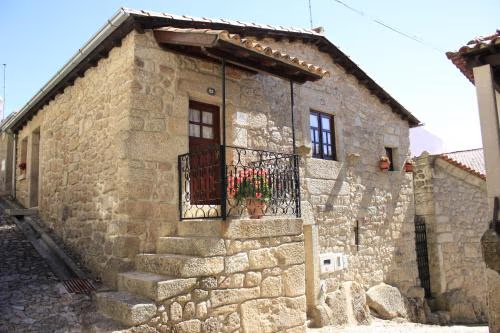
There is no pilgrim, parish or municipal hostel in Castelo Novo. You sleep in private guesthouses and holiday homes in the village, and in the Serra da Gardunha there is also a glamping site. Book ahead, because the village is small.
Ninja tips
- Phone about dinner before you set off from Castelo Branco. Outside the summer this is the only chance of a hot meal in the village.
- Shop in Soalheira. There are shops, a restaurant and a cash machine, and it is the last supply point before Castelo Novo.
- Walk up to the castle in the evening. From the top you look over the village, which runs down the slope like an amphitheatre.
- On the first Sunday in September there is a procession. Then the village walks to the Senhor da Misericórdia, in memory of the legend of Belisandra (see below).
Onward: over the Gardunha to Fundão
On the Via Nascente you go north over the flank of the Serra da Gardunha. After 8.8 kilometres you reach Alcongosta, a village with a café, where cherries are set into the paving: the area is known for its cherries, ripe at the end of May. After 12.6 kilometres you are in Fundão. After that it gets long again: from Fundão it is still 41.1 kilometres to Belmonte.
What awaits you tomorrow
Tomorrow is a short day with some climbing: 12.6 kilometres over the mountain to Fundão, a town that according to one pilgrim guide has all services. On the way lies Alcongosta, where the cherries are set into the paving. And just beyond Fundão, at the station, according to the pilgrim guide of the Centro region, there is an installation by the artist Bordalo II.
Deep dive: The witch who saved the village
A short read, in case you want to learn more about Castelo Novo. About two minutes' reading.
Where you stand
When you stand on the square with the pillory, you hear water. From the wall of the old town hall it flows from three spouts that have sat there since the time of King Manuel. A little further on stands the fountain with the coat of arms of Dom João the Fifth. Castelo Novo is a village of granite, but you understand it through its water.
Knights and kings
In the beginning the place was called Alpreada, and it was almost abandoned. The kings gave it to the Knights Templar so that they would resettle the land. King Dinis had the castle rebuilt in 1290, King Manuel the First the town hall and the pillory in 1510. And when in the eighteenth century the gold of Brazil came to Portugal, a little of it came as far as here, into a new church and a new fountain.
The water of the Alardo
In the twentieth century the water itself became a reason to come to Castelo Novo. In 1916 the chemist Charles Lepierre examined the spring of the Alardo. A railway entrepreneur named Gama Lobo brought his sick daughter here, and when she got better, he built a hotel in 1921. A year later the water was allowed to be sold. The hotel is now an old building among the sights of the village.
Belisandra
The village tells a legend. Once the locusts came over the fields, and nobody knew what to do. Then a young woman named Belisandra spoke up, whom the village took for a witch. She advised a procession to the Senhor da Misericórdia. The people went, and as they walked, the insects died. So at least it is told. Since then Castelo Novo has walked this path every year on the first Sunday in September.
What Castelo Novo gives you to take along
The woman who was suspected saved the village with a piece of advice: walk together. You know this. For days you have done nothing else. Tomorrow you cross the mountain, and down on the square the water keeps flowing from three spouts, as it has for five hundred years.
Where to stay in Castelo Novo
Places to stay in Castelo Novo.
 OpenReservations accepted
Pedra Nova
 OpenReservations accepted
Lagarto Pintado Casa n'Aldeia
 OpenReservations accepted
Casa do Balcao
KitchenCooktopsMicrowaveAnd more


Town 20 of 25