

Town on the Camino
Hospital de Órbigo
León, Castilla y León, Spain
- places to stay
- 10
- Camino
- 1
- Elevation
- 820 m
You enter Hospital de Órbigo over one of the longest bridges on the Camino Francés. On it, the knight Suero de Quiñones held the crossing for thirty days in 1434, out of love and with an iron ring around his neck. Today a parish albergue with a flower courtyard welcomes you, and in the evening there is trout from the river. An afternoon is enough.
How long to stay?
An afternoon is enough. The town lives off its bridge, and you walk it anyway. After that there is time for the river, a meal and a quiet evening in the courtyard. Staying longer only pays off on the first weekend of June, when the tournament is re-enacted.
Hospital de Órbigo in Ninja numbers
- 166 lances is what Suero de Quiñones broke on this bridge in the summer of 1434. He had set out to break 300; the judges released him anyway.
- 30 days he held the crossing with nine companions, from July 10 to August 9, 1434.
- 17.5 kilometers is the stretch to Astorga tomorrow, with 249 meters of climbing.
- 282.2 kilometers still separate you from Santiago on the Camino Francés.
- 1998 is the year the Justas, the re-enacted tournament, were recognized as a festival of regional tourist interest.
Arriving: across the bridge of honor
From León you come across the Páramo plateau after 32 kilometers, on the Camino Ninja map's route via Villadangos mostly close to the road. Only in the district of Puente de Órbigo does it change: ahead of you lies the long, flat stone bridge over the Órbigo, with around twenty arches. On the other side Hospital begins. If you can, go out once more in the late afternoon, when the stone glows.
In brief: a town named for its task
The Romans probably crossed the Órbigo here too, on a bridge of their road from Astorga to Tarragona. The present bridge dates from the 13th century and was rebuilt several times. In the 12th century the Knights Hospitaller founded a hospital for pilgrims by the river, and the town still carries its task in its name: Hospital, hospitality for those who walk to Santiago.
The honorable passage
In 1434 Suero de Quiñones, a knight from León, was unhappily in love with Leonor de Tovar. For her sake he wore an iron ring around his neck every Thursday and fasted. To free himself from this vow, he asked King Juan II for permission to hold the bridge of Órbigo: every knight who wanted to cross had to fight him or one of his nine companions. He meant to break 300 lances. After 30 days it was 166, and the judges declared him free. A year later he married Leonor. The tournament went down in history as the "Passo Honroso", the honorable passage.
Every year on the first weekend of June the town returns to 1434, with knights, ladies, a market and a tournament next to the bridge; in 2026 thousands came on June 7. For you the passage is easier today. Nobody challenges you. But you walk over the same stones, and if you like, you may think this evening about what you actually want to be released from on this path.
The Passage: what to see
Everything important lies on the way.
- Puente del Paso Honroso: The medieval bridge with its around twenty arches is one of the longest on the whole Camino. It was built on the site of a probably Roman bridge and renewed several times, which is why the arches differ. For you it is the reason to sleep here: in the evening, without a backpack, you walk it more slowly than in the afternoon.
- The riverbank: North of the bridge you can walk down to the Órbigo, a quiet place to sit. Pilgrims reported in 2026 that they swam in the river in summer.
- Iglesia de San Juan Bautista: With its patron saint the church recalls the Knights Hospitaller, who ran the pilgrim hospital here. We found no opening hours.
Food and drink
The dish of the town is trout from the Órbigo. The typical dish is trout soup, sopas de trucha, in several restaurants in town; with it comes cecina, the region's air-dried beef ham. If you start early: at the bridge you can get breakfast from 7:30.
Honestly
- The way here is the weakest day out of León. From León the route on our map runs for a long time beside the road across the flat plateau.
- The parish albergue closes in winter. It is open only from mid-March to the end of October; after that you are left with private albergues.
- On tournament weekend the town is full. If you come on the first weekend of June, book ahead or sleep further ahead or further back.
- Not a place for a rest day. After the bridge and dinner you have seen Hospital.
Where pilgrims sleep
The Albergue parroquial Karl Leisner belongs to the parish and is run by volunteer hospitaleros. It is in a traditional stone house right on the path, with a courtyard full of flowers, a footbath and a small fish pond. A place costs €12 with a disposable sheet (as of September 2026), there are no reservations, admission from 12:00, only with a credencial. It is open from March 15 to October 31. Every day the albergue invites you to a shared prayer. It is named after the German priest Karl Leisner, who was secretly ordained in Dachau concentration camp in 1944 and beatified in 1996; the connection arose around the year 2000, when the house was restored with a youth organization from Freiburg.
Besides it there are several private albergues for €15 to €20 (as of October 2026), most of them bookable through booking portals and open until November, some right on the path, one with a large garden and vegetarian dinner a good 400 meters off the route. One of them is open all year except Christmas and January.
Ninja tips
- Walk the bridge twice. Once with your backpack on arrival, once in the late afternoon without it, when the light falls flat on the stone.
- Order the trout soup. It is the dish of this river, and you will not get it everywhere on the Camino.
- Take the signposted route via Villares de Órbigo tomorrow. The shorter variant along the road has no path of its own for about three kilometers. The arrows lead through the villages by now anyway.
- Join the prayer. If you sleep in the parish albergue, you are invited to the daily shared prayer; ask at check-in for the time.
Practical tips for pilgrims
- Credencial and stamp: in the parish albergue and the other albergues.
- Parish albergue: no reservations, admission from 12:00, closes at 22:00.
- Justas: first weekend of June, tournament and medieval market at the bridge.
Onward: through the villages to Astorga
The path leaves Hospital to the west via Villares de Órbigo (km 496.5) and Santibáñez de Valdeiglesias (km 499.2). Between Santibáñez and San Justo de la Vega you reach the highest point of the day at 921 meters, before it goes down to San Justo (km 507.2) and across to Astorga. In all it is 17.5 kilometers with 249 meters of ascent and 197 meters of descent, a quiet stage through fields and hills.
What awaits you tomorrow
Astorga, the episcopal city of the Maragatería, with a cathedral and a bishop's palace by Antoni Gaudí. Here the Vía de la Plata joins the Camino Francés, and from here the path climbs into the mountains of León.
Deep dive: A knight, a bridge and a priest from the Lower Rhine
A short read, in case you want to learn more about Hospital de Órbigo. About three minutes' reading.
A place on a river
Anyone going from León to Astorga had to cross the Órbigo. Probably the piers of a bridge already stood here in Roman times, on the road that joined Astorga with Tarragona on the Mediterranean. The bridge you walk over is medieval, built in the thirteenth century and repaired again and again since. In the twelfth century the Knights Hospitaller, a knightly order that cared for the sick and for travelers, founded a hospital for pilgrims on the other side of the river. From it grew a town that still carries the name of this task.
The summer of 1434
Suero de Quiñones was a knight from León. He loved Leonor de Tovar, and because she did not return his love, he laid a penance on himself: every Thursday he wore an iron ring around his neck and fasted. To be freed from it, he asked King Juan the Second for permission to hold the bridge of Órbigo. From the tenth of July to the ninth of August 1434, every knight who wanted to cross had to fight him or one of his nine companions. Suero meant to break three hundred lances. It came to one hundred and sixty-six, and the judges declared the vow fulfilled. A year later he married Leonor. Twenty-four years after that, a knight he had defeated on this bridge killed him. The story has been called the Passo Honroso ever since, the honorable passage, and since 1998 the festival with which the town re-enacts it every June has been recognized as a regional festival.
A name from Germany
In the parish albergue, where many pilgrims sleep, you meet a German name. Karl Leisner, born in 1915 in Rees on the Lower Rhine, was arrested by the Gestapo in 1939 and sent to Dachau concentration camp. There, on the seventeenth of December 1944, he was secretly ordained a priest, by a French bishop who was a prisoner as well. Shortly after the liberation he died of tuberculosis in August 1945. In 1996 Pope John Paul the Second beatified him. Around the year 2000 the albergue was restored with the help of a youth organization from Freiburg, and from the circle that keeps Leisner's memory alive came the idea of connecting it with his name.
What Hospital de Órbigo gives you
On this bridge a man fought for a month to free himself from a vow. In the albergue next to it, a name recalls a man who made his vow under the hardest circumstances. You stand somewhere in between, with your own reason for being here. When this text was written, in the autumn of 2026, the passage was free. Nobody demands a lance from you. Only that you cross over.
Where to stay in Hospital de Órbigo
The places pilgrims rate highest in Hospital de Órbigo come first.
- Top #1
 OpenReservations accepted
Albergue Verde
- Top #2
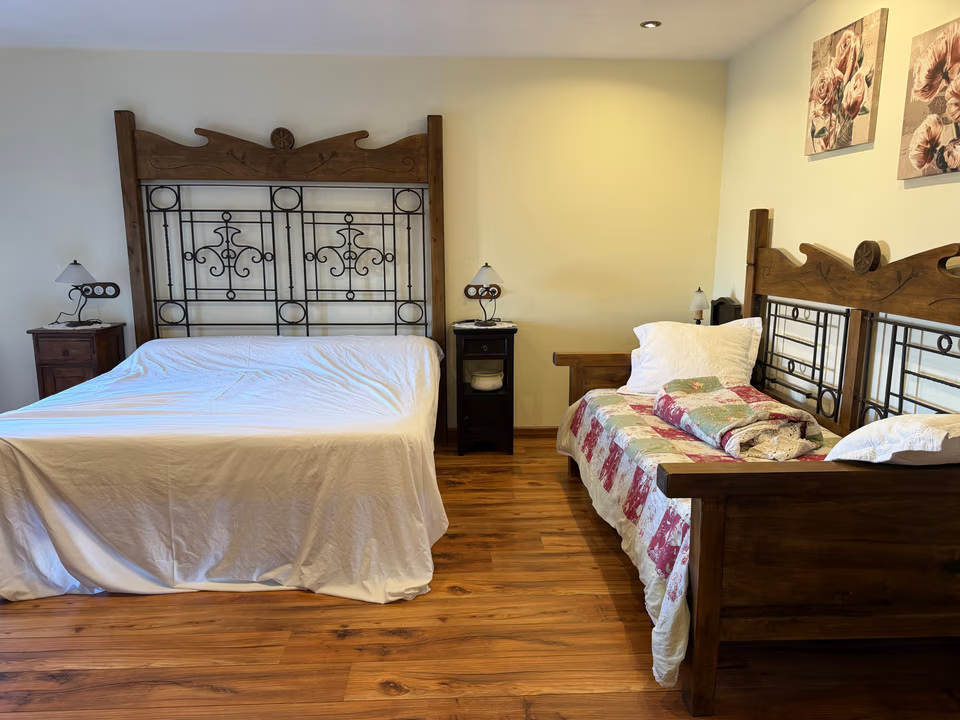 OpenReservations accepted
B&B El Caminero
- Top #3
 OpenReservations accepted
DORMERO Albergue San Miguel


Services in Hospital de Órbigo
What you can find in town before the next stage.
- ATM
- Café
- Shop
- Tobacco
- Medical clinic
- Pharmacy
- Fountain
- Post office
- Train station
- Restaurant
Source: © OpenStreetMap contributors · updated November 2025
Town 29 of 49