

Stage town on the Camino
Lisboa
Distrito de Lisboa, Região de Lisboa, Portugal
- places to stay
- 32
- Caminos
- 2
- Elevation
- 27 m
Lisbon is the long run-up: from the cathedral, built after 1147 over Roman and Moorish layers, it is 618.9 kilometres to Santiago, about a month on foot. You get your credencial and first stamp in the Sé, and the first yellow arrow is right beside its door. Give the city a day before you set off along the Tagus.
How long to stay?
Worth a rest day, ideally before you set off. Most people arrive by plane or train and want to start straight away. Give yourself a day anyway: you need your credencial, and the pilgrim office only opens in the afternoon. The Alfama around the cathedral is steep and narrow, and it is far easier to explore without a backpack. And the first walking day is long enough that you should start it rested.
Lisbon in Ninja numbers
- 618.9 kilometres separate the Sé from Santiago on the Camino Portugués Central. To Porto alone it is already 375.0.
- 1147 is when work on the cathedral began, the same year Christian forces took the city. It is considered Lisbon's oldest church.
- 2,474 pilgrims started in Lisbon in 2017; in 2007 there were just 219. Eleven times as many in ten years, and Lisbon's pilgrim office reports more requests every year.
- 1,800 people from 61 countries had been advised by the pilgrim office by July 2026, in its first three years.
- 22.0 kilometres take you to Alpriate, home of the first pilgrim hostel. On the whole way there you climb just 91 metres.
Arriving: up to the Sé
Whether you arrive at the airport or one of the big stations, the first thing to find is the Sé, the cathedral on the southern slope of the castle hill. It is kilometre zero. From the Baixa, the lower town by the river, narrow lanes lead uphill, a real test with a backpack. What stands before you then is more fortress than church: two towers, a rose window between them, thick Romanesque walls. To the right of the door you will find the first yellow arrow of your journey.
In brief: a city rebuilt three times
In 1147 Afonso Henriques, Portugal's first king, took Lisbon from the Moors. Right afterwards he had a cathedral built on the slope below the castle, begun in Romanesque style and finished in Gothic. Around 1160 a church for Santiago, the Apostle James, went up a few lanes further uphill. In 1255 Lisbon became the capital. Earthquakes struck the Sé in 1321, 1531 and above all 1755, when large parts of the city collapsed; each time it was rebuilt. Since 1990 archaeologists have found layers from the Iron Age, from Roman and from Muslim times beneath its cloister. So you begin your journey on many cities stacked on top of each other.
The long run-up
If you start in Lisbon, you have a month ahead of you. Most pilgrims on the Portuguese Way only begin in Porto, many even later in Tui. Here, by contrast, you often walk the first days alone, through the flat valley of the Tagus, then via Santarém and Tomar inland. Only from Porto does it get busier. That is the appeal and the burden of this starting point: the infrastructure is thinner, the company smaller, and you have plenty of time to find your rhythm before the others arrive.
On the castle hill: what to see
Everything that matters for pilgrims lies within a few hundred metres of the Sé.
- Sé de Lisboa: The cathedral is your starting point. This is where you get your credencial and first stamp, and to the right of the door you see the first yellow arrow. It is open from 9:00 to 19:00 (as of October 2026). The cloister from the late 13th or early 14th century is worth it: beneath a new terrace lies a crypt with the excavations, Iron Age, Roman, Muslim and medieval. Cloister visits begin at 10:00.
- Igreja de Santiago: About five minutes uphill, following the tram tracks, stands the church of Saint James. A church has been dedicated to James on this spot since the 12th century; the present building was rebuilt after the earthquake of 1755. It is considered the old starting point of the Portuguese Way. It is usually closed and opens mainly for Mass, on Wednesdays at 17:30 and Sundays at 9:00, not in August (as of October 2026). Inside: a gilded Rosary altarpiece from before the earthquake and azulejos from the 19th century.
- Miradouro de Santa Luzia: Just around the corner from the Santiago church is the viewpoint with its tiled terrace above the roofs of the Alfama and the Tagus. From here you see the river you will walk along tomorrow.
- Igreja da Conceição Velha: About 200 metres from the Sé, in the lower town, with a Manueline portal. In the small room at the back of the church you will find the pilgrim office (see practical tips).
- The Tagus at Parque das Nações: Not a detour but part of your first day. After a good eight kilometres you reach the modern waterfront with the Ponte Vasco da Gama in the background, one of the longest bridges in Europe.
Food and drink
Lisbon is a city of bacalhau and pastéis de nata, the sweet custard tarts that come from Belém. In the Alfama you will find traditional restaurants and fado. For your first walking day: eat well in the morning and take something with you, because the route runs a long way through suburbs and industrial areas.
Honestly
- No pilgrim hostel in the city. In Lisbon you sleep in hostels for tourists, at tourist prices. The first hostel just for pilgrims is in Alpriate, 22 kilometres on.
- The first day is city outskirts. Almost the whole stage runs on asphalt, via Santa Apolónia and past the industrial estate of Sacavém. Only shortly before Alpriate does the route turn into a dirt track.
- The waymarking in the city had gaps. In 2018 pilgrims and the pilgrim association complained that arrows were missing between the Sé and the edge of the city. We have found no evidence on whether that has been fixed. Get the map at the pilgrim office.
- The Alfama is steep. Cobblestones, steps, narrow lanes: with a full backpack, even the walk to the Sé is a test. The first walking day after it is flat by comparison.
Where pilgrims sleep
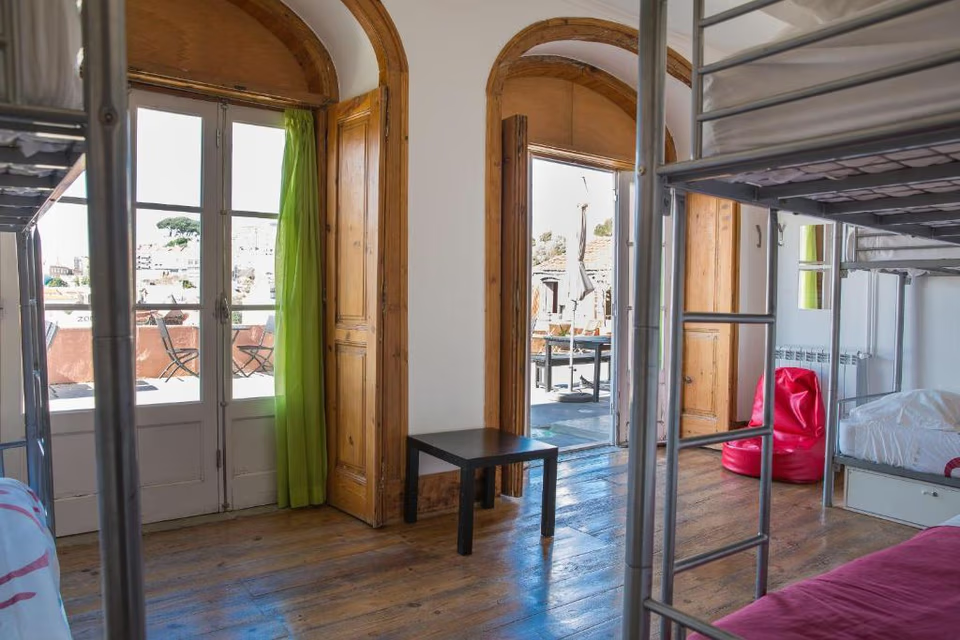
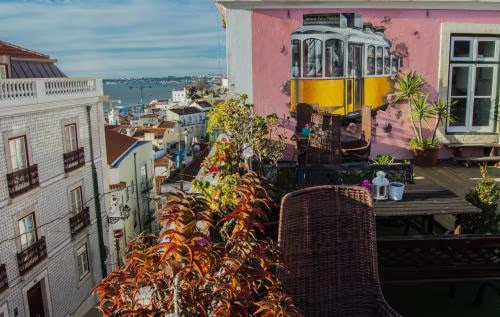
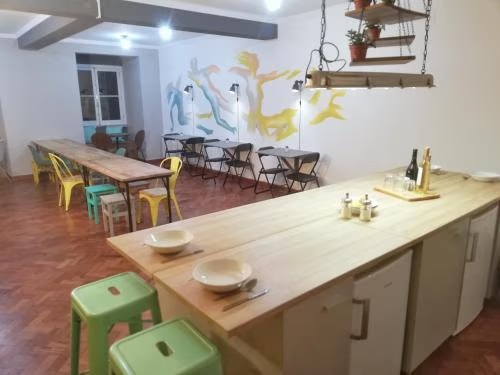
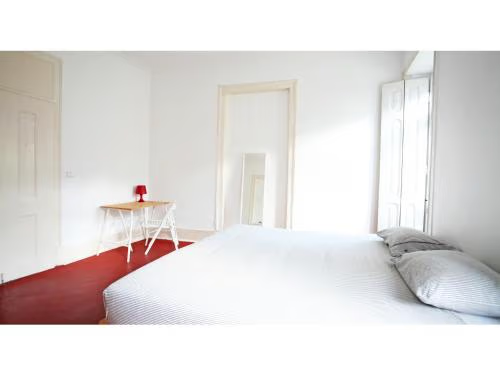
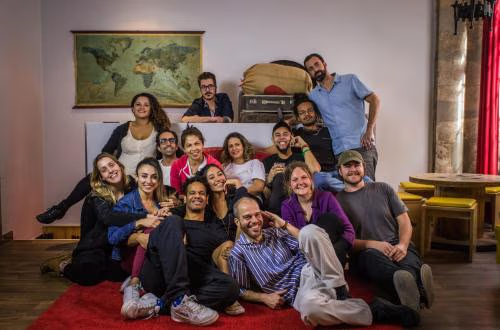
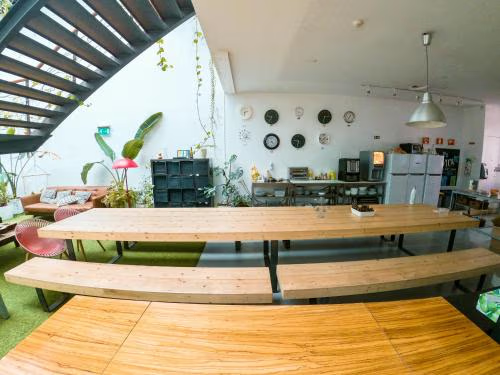
There is no pilgrim hostel in Lisbon. Well placed for the start are the hostels around the Alfama and the Rossio. This is Lisbon Hostel lies below the castle, not far from the Sé, is open all year and has dormitory beds from €14 (as of October 2026). Alfama Patio Hostel is right in the Alfama. In general you pay between roughly €10 and €30 for a dorm bed depending on the season (as of October 2026), often much more than in the hostels further north. Booking ahead is almost always necessary in Lisbon.
Ninja tips
- Get your credencial at the Sé, your advice at the pilgrim office. The cathedral is open in the morning, the pilgrim office only from 14:30. If you want to start in the morning, go the day before.
- Ask the pilgrim office about wildfires and storms. The volunteers keep track of which accommodation between Lisbon and Porto is currently affected.
- Set off early. A Belgian pilgrim called leaving the Alfama at sunrise one of the finest moments of his entire journey.
- Choose your first day deliberately. It is 22.0 kilometres to Alpriate and 40.9 to Vila Franca de Xira. For getting started, Alpriate is the sensible choice.
- Call Alpriate ahead. The hostel is small and was last open only in season. The number is below.
- Go to Mass at the Santiago church if you are in the city on a Wednesday evening or Sunday morning. It is the most fitting farewell.
Practical tips for pilgrims
- Credencial and first stamp: At the Sé, open from 9:00 to 19:00 (as of October 2026).
- Pilgrim office: The Associação de Peregrinos Via Lusitana has run it since 2024 in the Igreja da Conceição Velha, about 200 metres from the Sé. According to a report from July 2026 it is open daily from 14:30 to 18:00; older information gives only the season from March or April to October. You get a map and a list of places to sleep and eat, in Portuguese, English, Spanish, French and Italian. They also help by phone while you are on the way.
- Alpriate hostel: Largo de Alpriate 13, phone +351 915 595 213, run by Via Lusitana. In 2018 it had 12 beds and was open from March to October to pilgrims with a credencial only.
- Two routes from here: Besides the Camino Portugués Central, the Caminho do Tejo to Fátima also begins in Lisbon. Alpriate, the first hostel, lies on both routes too.
Onward: out along the Tagus
From the Sé you head down to Santa Apolónia and then along the Tagus to the northeast. After 8.1 kilometres you reach Parque das Nações, then the riverside path with the Ponte Vasco da Gama behind you. At Sacavém (km 13.3) you cross the Trancão and walk between olive and almond trees along the river to Alpriate (km 22.4). The whole stage is flat: 91 metres up, 85 down. If you want to go further, you continue via Póvoa de Santa Iria and Alverca do Ribatejo to Vila Franca de Xira (km 41.3).
Deep dive: A beginning on many cities
A short read, in case you want to learn more about Lisbon. About four minutes' reading.
Beneath the cloister
When you collect your first stamp in Lisbon's cathedral, you are standing on a stack of cities. When the ground in the cloister garden gave way in 1990, archaeologists began to dig. They found traces from the Iron Age, from Roman times, layers from the Muslim era and, above them, the medieval city. Today a terrace at the level of the old garden covers the ruins, and below it, in a crypt, you can go down. Hardly any pilgrim route begins at a place that shows so openly how many beginnings it has already had.
The conqueror's cathedral
The cathedral itself is a child of the year 1147. That year Afonso Henriques, Portugal's first king, took the city from the Moors, and straight afterwards he had a bishop's church built on the southern slope of the castle hill. To this day it looks like a castle, with two massive towers and little decoration. It was begun in Romanesque style and finished in Gothic, and the earthquakes of 1321, 1531 and 1755 damaged it again and again. Each time, people kept on building.
A church for James
Only a few years after the conquest, around 1160, a church for Santiago, the Apostle James, went up a few lanes further uphill. The parish is recorded in the sources from 1299. The great earthquake of 1755 brought this church down too, and it was rebuilt. What remained is the name and the claim: here, they say in Lisbon, the Portuguese Way to Santiago began. When you set off today, you walk past it, down the castle hill and to the river.
The return of the pilgrims
For a long time hardly any pilgrims set out from Lisbon. In 2007 the pilgrim office in Santiago counted just 219 people who had started here. Ten years later there were 2,474. For a long time there was not a single place between the city and Alverca where only pilgrims could sleep. Around 2015 the pilgrim association Via Lusitana opened a small hostel with twelve beds in Alpriate, and of the first thousand guests only eight were Portuguese. Since 2024 Lisbon has also had its own pilgrim office, in a back room of the Igreja da Conceição Velha. In its first three years about 1,800 people from 61 countries came by.
What Lisbon gives you
Lisbon does not send you off like Porto, into the middle of a stream of pilgrims. It sends you to a river, onto a flat, long first day, often alone. More than six hundred kilometres lie ahead of you. That sounds like a burden and is in fact a gift: you have time. When this text was written, in autumn 2026, people from all over the world set off here, with a stamp from a church that has begun anew many times. Perhaps that makes it the best place to begin yourself.
Where to stay in Lisboa
Places to stay in Lisboa.
 OpenReservations accepted
This is Lisbon Hostel
 OpenReservations accepted
Alfama Patio Hostel
 OpenReservations accepted
Urban Garden Hostel


Services in Lisboa
What you can find in town before the next stage.
- ATM
- Café
- Shop
- Tobacco
- Medical clinic
- Pharmacy
- Fountain
- Post office
- Train station
- Bus station
- Airport
- Restaurant
Source: © OpenStreetMap contributors · updated January 2026
Town 1 of 43