

Town on the Camino
Gernika
Bizkaia, Euskadi, Spain
- places to stay
- 4
- Caminos
- 2
- Elevation
- 22 m
Gernika is the town under the tree: for centuries the assemblies of Bizkaia met beneath an oak, and on 26 April 1937, a market day, German and Italian aircraft destroyed around three quarters of its buildings. The tree and the assembly house were left standing. An afternoon is enough, but take it.
Right now in Gernika (as of October 2026)
- Hardly any pilgrim beds: The Gernika Lumo Aterpetxea youth hostel is temporarily closed. The municipal pilgrim hostel only opens in August, and one source now lists it as permanently closed. Plan on a guesthouse or a hotel.
- It stays tight beyond: The hostels in Gerekiz (until 15 October), Larrabetzu (until 14 October) and Lezama (until 30 September) are closed for the season. Between autumn and spring we found no open pilgrim hostel all the way to Bilbao.
How long to stay?
An afternoon is enough, but take it. After 25.1 kilometres from Markina you arrive early enough to see the Peace Museum, the assembly house with the tree and the park behind it. Everything is close together. You don't need more time, unless you want to see the Monday market.
Gernika in Ninja numbers
- 732.1 kilometres are still left from here to Santiago de Compostela. On the Camino del Norte you haven't even done a fifth yet.
- 907 metres of climbing on the stage from Markina-Xemein, and almost as much back down. You end up at 23 metres.
- 26 April 1937, a Monday: market day, when the bombs fell. Monday is still market day here.
- 1,654 or 153: that is how far apart the death tolls are. The first was given by the Basque government at the time; the second is a historians' group's provisional list of documented names.
- 2015 is when the young oak was planted, under which the Basque head of government now takes the oath of office.
Arriving: down to Urdaibai
The stage from Markina-Xemein is hilly. After Bolibar and the Ziortza monastery you reach the day's highest point, 367 metres at kilometre 147.6, then it's a long way down. Gernika lies on the edge of the Urdaibai biosphere reserve, almost at sea level. At the entrance to town stands the Gothic church of Santa María; from there it's a few steps to the centre.
In brief: the tree and the Monday
For centuries Gernika was where the assemblies of Bizkaia gathered under an oak. Here, in the 14th century, the special rights were confirmed, the fueros, which the Basques still invoke today. In 1826 a neoclassical assembly house was built next to the tree, the Casa de Juntas.
On Monday, 26 April 1937, in the middle of the Spanish Civil War, aircraft of the German Condor Legion and the Italian air force bombed the town for several hours. It was market day. Around three quarters of the buildings were destroyed. The assembly house and the tree were unharmed, as were the bridge and the arms factory. Picasso turned the attack into his famous painting that same year.
A town that remembers: what to see
Everything is a few minutes' walk from the Plaza de los Fueros and the Casa de Juntas.
- Museo de la Paz: The Peace Museum on the Plaza de los Fueros tells the story of the attack through witness accounts and images and asks what peace means today. There is even a flat furnished as it was on the day of the attack. For a pilgrim who has just come through peaceful hills, this is the most important visit in Gernika. Admission €6, reduced €4, free on Sundays and on 26 April. We could not reliably find the opening hours.
- Casa de Juntas and the tree: The assembly house of 1826 is still the seat of the Juntas Generales of Bizkaia. In the hall with the great stained-glass ceiling you see scenes from Basque history. In the garden stands the young oak of 2015, and next to it, under a round colonnade, the trunk of an old 18th-century tree that survived the attack. We could not reliably find opening hours or admission.
- Parque de los Pueblos de Europa: Behind the assembly house is a park with a pond and trees. It holds a sculpture by Henry Moore and Eduardo Chillida's "Gure Aitaren Etxea", the House of Our Father, made for the 50th anniversary of the attack. Through its large opening you look at the oak.
- Guernica in ceramic: The original hangs in Madrid. In Gernika a full-size ceramic copy on a house wall shows how big the painting is.
- Museo de Euskal Herria: The museum of Basque culture has been housed since 1991 in the Baroque Palacio Alegría, which also survived the attack. The upper floors cover sport, music, dance and mythology.
Honestly
- Gernika has become difficult for pilgrims. We found no year-round pilgrim hostel. If you stay here, you sleep in a guesthouse or a hotel.
- The town is new. Most of it was rebuilt after 1937. Don't expect a medieval townscape.
- After this, there's little for a long time. Until Larrabetzu, a good 16 kilometres on, you'll find hardly any shops or bars, and the stage is steep.
Where pilgrims sleep
The municipal pilgrim hostel is in a school on Calle Zeharreta. Volunteer hospitaleros run it, with 35 places on a donation basis, but only from 1 to 31 August, and whether it opens at all in 2026 is unclear. The large Gernika Lumo Aterpetxea youth hostel is temporarily closed. What remains are guesthouses and small hotels in the centre, with rooms from around €50 to €60.
The next hostel on the way is the Albergue Gerekiz in Morga, 6.9 kilometres on: private, 30 beds, €20 to €22 with breakfast, from 11 April to 15 October, booking recommended. At kilometre 180.3 comes the donation-based pilgrim hostel of Larrabetzu, open from 24 March to 14 October (as of October 2026).
Ninja tips
- Shop the evening before. Beyond Gernika there's hardly anything until Larrabetzu. Water and food belong in your pack before you set off.
- Visit the Peace Museum on a Sunday. Admission is free then.
- Come on a Monday. The market is still held on Mondays, as it was on that day in 1937.
- Look at the old trunk, not just the young tree. It stands right next to it under a colonnade and survived the attack.
Practical tips for pilgrims
- Money and shopping: There are cash machines, a pharmacy, bakeries and shops in town.
- A shorter stage is possible: If you don't want to walk the 32.4 kilometres to Bilbao with over 1,000 metres of climbing in one day, split it at Lezama.
Onward: over the hills to Lezama
You leave Gernika at the 16th-century Ermita de Santa Lucía and climb to the Alto de Morga. At Gerekiz (km 171.0) stands the Ermita de San Esteban, then it's a steep climb to the day's highest point, 362 metres at kilometre 175.1. Via Larrabetzu you reach Lezama: 19.7 kilometres with 638 metres up and 601 metres down. Bilbao is 32.4 kilometres away.
What awaits you tomorrow
Lezama, a village at the gates of Bilbao, with a medieval tower house and a pilgrim hostel in the community centre. From there it's only 12.7 kilometres the next morning into the city.
Deep dive: The tree that stayed standing
A short read, in case you want to learn more about Gernika. About three minutes' reading.
An oak as a parliament
Long before there was an assembly house here, there was a tree. Under an oak the representatives of Bizkaia met, deliberated and swore by their rights. In the fourteenth century the fueros were confirmed here, the old special rights that gave the Basques an order of their own for centuries. When the tree died, it was replaced, always by a descendant. In 1826 a stone house was built beside it, the Casa de Juntas. The Juntas Generales of Bizkaia still meet there today, and the Basque head of government still takes the oath of office under the oak.
A Monday in April
The twenty-sixth of April 1937 was a Monday, and Monday was market day. Spain was in the middle of the Civil War, and the front was moving closer. In the afternoon came aircraft of the German Condor Legion and the Italian air force. They dropped explosive and incendiary bombs, for several hours. There was no air defence. Around three quarters of the buildings were destroyed. How many people died is still disputed. The Basque government spoke of 1,654 dead at the time. A group of historians has so far documented 153 dead by name, and their list is not finished. Both numbers say something: the first about the horror, the second about the effort to find every single person.
What was left standing
The bridge was left standing, and the arms factory. And so were the assembly house and the tree. Whether that was chance is still argued over. That same year Picasso painted his great picture, which carried the town's name around the world. The original hangs in Madrid. In Gernika itself a museum was created that does not only look back. It asks what peace is and what it costs.
What Gernika gives you
You arrive as a pilgrim in a town that was almost wiped off the map, and in the garden of the assembly house you find a young tree beside an old trunk. When this text was written, in autumn 2026, the oak of 2015 stood where an oak has stood for centuries. Tomorrow the way takes you on over the hills. Perhaps you take something from here that weighs nothing: that some things stay standing.
Where to stay in Gernika
Places to stay in Gernika.
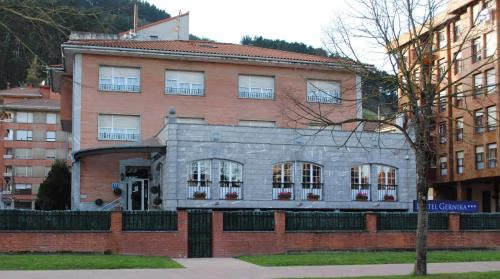 OpenReservations accepted
Hotel Gernika - Adults Only
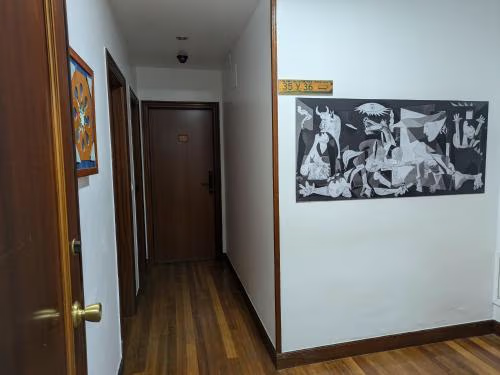 OpenReservations accepted
Akelarre Ostatua
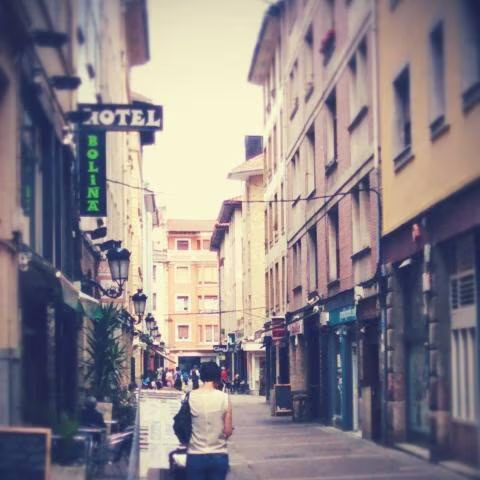 OpenReservations accepted
Hotel Boliña
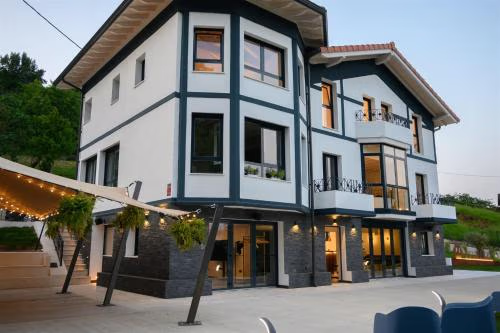
Services in Gernika
What you can find in town before the next stage.
- Café
- Shop
- Medical clinic
- Pharmacy
- Fountain
- Post office
- Train station
- Bus station
- Restaurant
Source: © OpenStreetMap contributors · updated February 2026
Town 11 of 49