

Town on the Camino
Molinaseca
León, Castilla y León, Spain
- places to stay
- 14
- Camino
- 1
- Elevation
- 586 m
Molinaseca is the village by the river after the long descent from the Monte Irago: over 1,000 metres of elevation down, then across the pilgrim bridge over the Meruelo into the Calle Real. In summer the river is an open-air pool, and the door of the sanctuary is clad in iron because pilgrims cut out splinters. An afternoon is enough.
Right now in Molinaseca (as of October 2026)
- San Roque albergue: The albergue in the old chapel of San Roque, a good kilometre beyond the village, is listed as temporarily closed in an albergue overview from September 2026, and at the same time as open all year. Don't plan on it firmly.
- End of season: The albergues Santa Marina and Compostela close at the end of October and only reopen in March.
How long to stay?
An afternoon is enough. Bridge, sanctuary, Calle Real and church lie within a few hundred metres, and you spend the rest of the day at the river. Many stay overnight anyway, because the knees have had enough after the descent, and that is a good reason. A rest day is better spent in Ponferrada, 7.6 kilometres away.
Molinaseca in Ninja numbers
- 1,061 metres of elevation you have descended since Foncebadón, over 19.0 kilometres, 584 of them on the last 7.8 kilometres from El Acebo alone.
- 586 metres is the altitude of Molinaseca, almost 900 metres lower than the highest point of the Camino Francés, which you crossed this morning.
- 1637 is the year King Philip IV allowed the village to collect a toll on the pilgrim bridge for livestock and goods. Pilgrims pay nothing today.
- Under 50 centimetres narrow are some of the alleys between the houses of the Calle Real.
- 220.3 kilometres remain from here to Santiago.
Arriving: over the river into the town
The descent from El Acebo ends at the road, and the first thing you see of Molinaseca is the Santuario de las Angustias, which stands right on your path. A few metres further on you cross the Meruelo on the Puente de los Peregrinos. Below you in summer lies the dammed river pool, ahead of you the Calle Real, the old pilgrim street with stone façades, wooden balconies and slate roofs. If you come from the mountains, you notice at once: here the Bierzo begins.
In brief: Settemolini
Molinaseca appears in the Codex Calixtinus, the pilgrim book of the 12th century. In the 11th century the first hermitages and pilgrim hospitals were here, in 1180 the municipal council is first mentioned, at the end of the 12th century the village received town rights, and in the 13th century Franks, that is, newcomers from beyond the Pyrenees, lived in a quarter of their own. In 1673 the Italian pilgrim Domenico Laffi came through and called the village "Settemolini". Today just under 800 people live in Molinaseca, which counts among the "most beautiful villages of Spain".
A village on the water: what to see
Everything lies on your path or 150 metres from it.
- Santuario de Nuestra Señora de las Angustias: The sanctuary from the late 17th century stands right on the path at the entrance to the village. Pilgrims and harvest workers sought shelter under its side porches. Take a look at the doors: pilgrims used to cut out splinters as relics, which is why the wood was covered with sheet iron. Inside, a high altar from 1715 and the figure of the Virgen de las Angustias from the 17th century, the patron saint of the village. We did not find opening hours.
- Puente de los Peregrinos: Seven arches over the Meruelo. Whether its core is Roman is disputed; documents attest it since the 12th century, in the 18th century it was widened, and it was last reworked in 1980.
- Calle Real: The main street is the street of the pilgrims, with the manor houses of the Cangas and Pambley families from the 17th and 18th centuries. Look out for the gaps between the houses, some narrower than a backpack.
- Iglesia de San Nicolás de Bari: The parish church on the hill above the village, 150 metres from the path, is in its present building neoclassical from the 17th century, with a high altar from 1672 to 1674. Its most important piece is a Gothic Christ from the 14th century, for some the most important in the Bierzo. We did not find opening hours.
- River pool on the Meruelo: In summer the river at the entrance to the village is dammed into a pool. After the descent, cold feet in the river are the best medicine.
- The Buddha of San Roque: By the old chapel of San Roque at the far end of the village, the Japanese artist Fumiaki Ogita carved a Kannon figure into a living walnut tree in 2014. Since 2009 Molinaseca has been twinned with two villages on the pilgrimage of the 88 temples on Shikoku.
Food and drink
On the Calle Real and on the main street there are several bars and restaurants, a bakery and a few small shops. Pilgrims report that the village wakes up late in the morning; on the main street you can still get coffee and toast early at a churrería.
Honestly
- No municipal or church albergue in the village. The parish albergue San Roque lies outside and is uncertain in autumn 2026, the other albergues are private.
- In winter it gets tight. Santa Marina and Compostela are only open from March to the end of October.
- The descent here is hard. Slate and scree, steep and slippery when wet; pilgrims report knee and ankle problems and take a rest day here.
- Churches often closed. For the sanctuary and the parish church we found no reliable opening hours.
Where pilgrims sleep
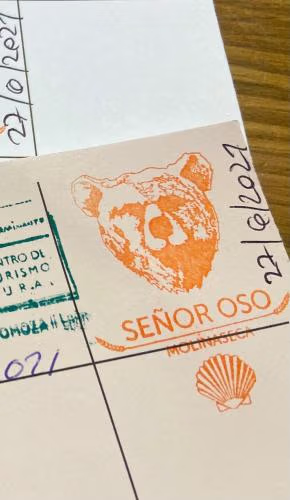
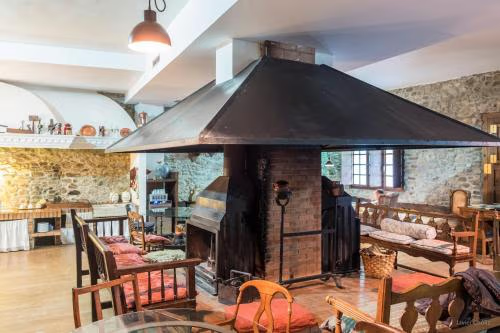
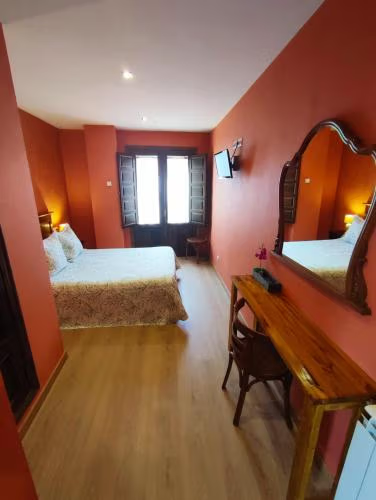
There is no municipal or parish albergue in the middle of the village. The parish albergue San Roque, a good kilometre beyond the village, in the former chapel, belongs to the Basilica La Encina in Ponferrada; its status is unclear in autumn 2026. Private albergues cost about €12 to €18 in a dorm (as of October 2026): Santa Marina at the far end of the village with garden and terrace, Compostela and Señor Oso on the Calle Real. There are also pensions and country houses; the cheap dorms can be full, so book ahead in season.
Ninja tips
- Cool your legs in the river. After 1,061 metres of descent, the river pool at the entrance to the village is the best thing you can do for your knees, in summer even for swimming.
- Look closely at the iron doors. At the Santuario you see how far pilgrims used to go for a relic.
- Get cash. Molinaseca has a cash machine and a pharmacy; in Foncebadón there was neither.
- Short stage tomorrow? If you sleep here, Ponferrada is only 7.6 kilometres away; many walk on to Cacabelos (22.8 kilometres) or Villafranca del Bierzo (31.1 kilometres).
- Mid-August is festival time. On 15 and 16 August the village celebrates its patroness and San Roque, on 17 August it is the Fiesta del Agua, when people splash each other with buckets.
Practical tips for pilgrims
- Stamp: in the albergues.
- Money and pharmacy: cash machine and pharmacy in the village, plus a health centre (987 410 250).
- Tourist information: in season only.
- Bus: From Ponferrada a bus runs only on Wednesdays and Sundays; the nearest railway station is Ponferrada.
Onward: through the Bierzo to Ponferrada
The path leaves Molinaseca past the old chapel of San Roque and leads via Campo (km 560.0) to Ponferrada (km 563.4). It is 7.6 kilometres with 98 metres of ascent and 149 metres of descent, flat compared with yesterday. Beyond Ponferrada the way continues through the Bierzo to Cacabelos (km 578.6) and Villafranca del Bierzo (km 586.9).
What awaits you tomorrow
Ponferrada, the capital of the Bierzo, only 7.6 kilometres away. The path leads you straight into the old town with the Templar castle above the river Sil.
Deep dive: Splinters, tolls and a Buddha
A short read, in case you want to learn more about Molinaseca. About three minutes' reading.
At the foot of the mountain
Molinaseca lies where the path from the Monte Irago reaches the valley. Since the eleventh century there were hermitages and hospitals here for pilgrims who needed rest after the pass. In the Codex Calixtinus, the great pilgrim book of the twelfth century, the village appears on the list of stations. In the thirteenth century Franks lived in a quarter of their own, people from beyond the Pyrenees who had stayed on along the way.
A bridge that brought money
The bridge over the Meruelo is attested since the twelfth century. Whether its oldest arches are Roman is disputed. What is certain is that it brought the village money: in 1637 King Philip the Fourth allowed the council to demand a toll for livestock and goods that came over the bridge. In the eighteenth century it was widened, and in 1980 it was last renewed. In 1673 the Italian priest and pilgrim Domenico Laffi came through here and wrote the name down as Settemolini.
The doors of the Angustias
At the entrance to the village, since the late seventeenth century, stands the sanctuary of the Virgen de las Angustias. Pilgrims cut splinters from the wood of its doors and took them along as relics. At some point the doors were covered with sheet iron so that something of them would remain. Under the porches, pilgrims and harvest workers sought shelter.
A way that joins another
Since 2009 Molinaseca has been twinned with two villages on the Japanese island of Shikoku, on a pilgrimage to eighty-eight temples. In 2014 the Japanese artist Fumiaki Ogita carved a figure of Kannon, the embodiment of compassion, into a living walnut tree by the old chapel of San Roque. When this text was written, in autumn 2026, it still stood there on the way to Ponferrada.
What Molinaseca gives you
Today you have walked down over a thousand metres and arrived at the water. Earlier pilgrims took a piece of wood from here as protection. You can take something simpler: an afternoon with your feet in the river.
Where to stay in Molinaseca
The places pilgrims rate highest in Molinaseca come first.
- Top #1
 ClosedReservations accepted
Albergue Santa Marina
- Top #2
 OpenReservations accepted
Hostal Casa San Nicolás
- Top #3
 OpenReservations accepted
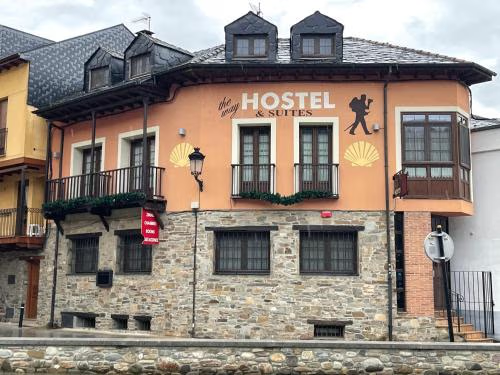
B&B The Way Hostel Molinaseca



Services in Molinaseca
What you can find in town before the next stage.
- Café
- Shop
- Medical clinic
- Pharmacy
- Fountain
- Restaurant
Source: © OpenStreetMap contributors · updated January 2025
Town 34 of 49