

Town on the Camino
O Vicedo
Spain
- places to stay
- 3
- Camino
- 1
- Elevation
- 13 m
O Vicedo is the last stop in the province of Lugo: a small harbour, a monument to the fishermen and a long beach as far as the Río Sor. Behind you lie the cliffs of the Punta Fuciño do Porco, ahead of you the iron bridge of 1901 across to O Barqueiro.
How long to stay?
An afternoon is enough. From Viveiro it is 21.1 kilometres according to Camino Ninja, and if you made the detour to the Punta Fuciño do Porco, you are tired enough by evening. O Vicedo itself is small: a harbour, a few streets, the beach of Arealonga. There is no pilgrim albergue, but there are pensions. If you still have energy, walk on the 4.1 kilometres to O Porto do Barqueiro on the other side of the ría.
O Vicedo in Ninja numbers
- 120.4 kilometres lie between Ribadeo and O Vicedo according to Camino Ninja, and there are still 151.6 to Ferrol.
- 1,723 people lived in the whole municipality in 2018, spread over seven parishes.
- Since 1952 the village of O Vicedo has been the seat of the municipality. Before that the administration was elsewhere.
- 1901 is when the iron bridge over the Sor was opened, which you cross tomorrow morning.
Arriving: over the cliffs to the ría
From Viveiro you leave the town over the old bridge and after 2.2 kilometres reach the beach of Covas. Then, according to Camino Ninja, it goes via the villages west of the ría, past Xilloi with its beach almost a kilometre long, through O Vicedo Vello and down to the harbour. The highlight of the day, though, lies off the route: the Punta Fuciño do Porco at kilometre 108.3, a good kilometre from the path.
In brief: a municipal seat for administrative reasons
The municipality of O Vicedo is young. In the Middle Ages its parishes belonged to different lords, after 1812 they were spread over three municipalities, in 1835 over Galdo and Viveiro. In 1840 the municipality of Riobarba arose with today's parishes. Only in 1952 did the civil governor of Lugo move the seat to the village of O Vicedo, and since then the municipality has borne its name.
Between cliff and river: what to see
The most beautiful spots of the municipality lie on the way there and at the edge of the village.
- Punta Fuciño do Porco: The name means "pig's snout" and alludes to the shape of the headland. A zigzag wooden walkway with a railing leads over a steep ridge out onto the Punta Socastro, almost directly above the sea. From the platform at the end you see the Ría de Viveiro, the beach of Area and the island of Coelleira. There and back it is about 3.7 kilometres from the small car park. After a viral photo in 2017 visitors came in crowds; in July and August you recently needed a reservation. One woman pilgrim explicitly recommended the detour in September 2026.
- Isla Coelleira: The island you see from Fuciño do Porco is about 26 hectares in size and 82 metres high. You may not set foot on it; a navy lighthouse stands on it. A monastery of Saint Michael is said to have stood here once, but no visible remains exist. Picture it as you look across: a monastery at the outermost edge, reachable only over water.
- Praia de Xilloi: Shortly before the goal you pass this sheltered beach almost a kilometre long. It often has the Blue Flag, and in summer there are lifeguards and showers. If the weather plays along, this is your swimming spot of the day.
- The harbour and O Mariñeiro: In the small harbour lie fishing and leisure boats. Since May 1999 a statue of a seaman has stood here, with which the village honours its fishermen. A good place to take off your shoes after the stage.
- Praia de Arealonga: About 1,300 metres of light sand with calm water. The beach lies on the border between the provinces of Lugo and A Coruña; from here you see the bridge coming across from the Coruña side.
- The iron bridge over the Sor: Three identical spans of wrought iron on piers of concrete and ashlar. It was built from 1895 by the Catalan firm La Maquinista Terrestre y Marítima and opened in 1901. It replaced the ferry across the ría, and today only pedestrians may cross. In the summer of 1936 people were shot on the bridge, and a commemoration remembers them every year.
Honestly
- No pilgrim bed. The next pilgrim albergue lies 21.1 kilometres back in Viveiro, according to Camino Ninja. Here you sleep in a pension.
- The village is quickly seen. What makes the municipality famous lies kilometres before the village on the cliffs. Plan your day around that.
- Fuciño do Porco is no secret tip. In summer thousands come, and the car park is small. Early in the day you are more likely to have the walkway to yourself.
- The tourist info only opens in July and August. It is in the Casa do Concello. The rest of the year, ask at your accommodation.
Ninja tips
- Make the detour in the morning. Then there is enough time for the rest of the stage, and you are there before the day-trippers.
- Watch your footing on the walkway. In wind and wet the wooden planks are slippery, and the cliffs drop steeply.
- Go over the bridge as well. If you arrive here early, it is only 4.1 kilometres to O Porto do Barqueiro. The way over the old iron bridge is the most beautiful end to the day.
- Celebrate with the Vikings. At the end of July, on the beach of Area Grande in San Román, Vikings and Christians re-enact their battles, with a dragon boat and torches. In 2025 that was on 26 and 27 July.
Practical tips for pilgrims
- A pilgrim bought his provisions in September 2026 at the supermarket in O Porto do Barqueiro on the other side of the bridge. If you find nothing here in the evening, that is your address for the next morning.
- Take water with you for the detour to Fuciño do Porco. Supplies at the walkway are not mentioned in our sources, and the car park is small.
Onward: over the Sor to A Coruña
The next stop, O Porto do Barqueiro, lies only 4.1 kilometres away according to Camino Ninja. At the end of the ría you cross the Sor on the iron bridge and change into the province of A Coruña. It is 24.8 kilometres from here to Ortigueira. The Camino del Mar then leads you into the landscape of the capes between Estaca de Bares and Cabo Ortegal.
What awaits you tomorrow
O Porto do Barqueiro, a fishing village with colourful houses above the harbour, right behind the iron bridge. Beyond it begins the peninsula of Bares with the northernmost point of the Iberian Peninsula, and then the cliffs of Loiba with the most famous bench in Galicia.
Where to stay in O Vicedo
Places to stay in O Vicedo.
 OpenReservations accepted
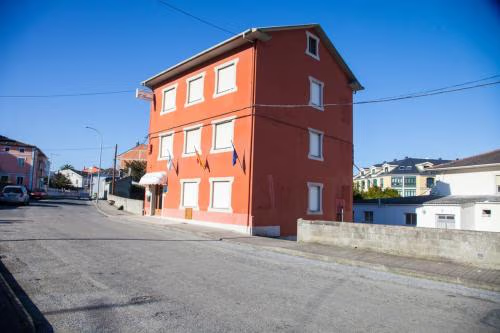
Pension O Remo
 OpenReservations accepted
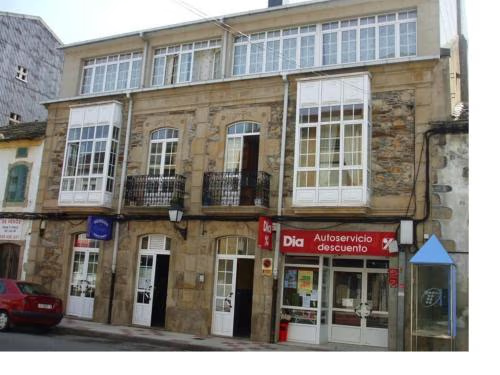
Pensión Galatea
 OpenReservations accepted
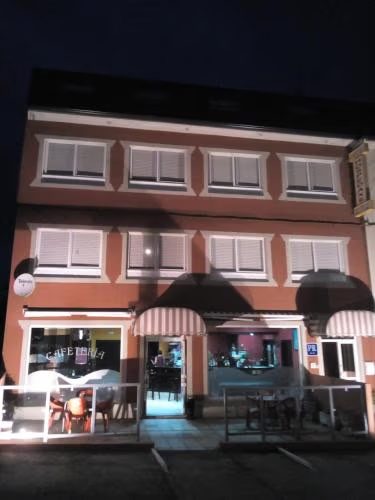
Hospedaxe Don Manuel
Town 9 of 17