

Town on the Camino
Oelsnitz/Erzgebirge
Erzgebirgskreis, Saxony, Germany
- places to stay
- 5
- Camino
- 1
- Elevation
- 372 m
Oelsnitz/Erzgebirge is a town built on coal and therefore sunk a little into the ground: from 1844 to 1971 miners brought hard coal up from the depths here. The KohleWelt in the old shaft tells the story. For pilgrims Oelsnitz is a short stop, 8.2 km after Stollberg, with 21 km to go to Zwickau.
How long to stay?
An afternoon is enough, and even that only if you want to go underground. According to Camino Ninja, Oelsnitz is only 8.2 km beyond Stollberg; if you start there, you're here by the morning and still have 21 km to Zwickau ahead of you. It's worth staying for the KohleWelt, the renovated mining museum in the old Kaiserin-Augusta-Schacht: you need to allow an hour and a half for the exhibition, and the guided tour of the show mine comes on top. On Mondays the museum is closed, and then there's no reason to end your stage here.
Oelsnitz/Erzgebirge in Ninja numbers
- 193.1 km is what you have behind you since Bautzen, according to Camino Ninja, and 114.9 km remain to Hof. More than half is done.
- 127 years, from 1844 to 1971, is how long hard coal was mined in the Lugau-Oelsnitz coalfield. After that it was "Schicht im Schacht" (the shift is over), quite literally.
- Up to 1,200 metres deep is how far the pits reached in the end. The first coal seams, by contrast, lay only about 9 metres below the surface.
- 50 metres is the height of the KohleWelt's winding tower, where the tour begins.
- Around 1.4 km as the crow flies is the distance of the KohleWelt from the way, according to the Camino Ninja track. A detour, but a short one.
Arriving: on sunken ground
From Stollberg you come to Oelsnitz via Oberwürschnitz. What you don't see still shapes the town today: beneath it the ground is hollow. Mining made the land subside, and at the end of the 19th century the town centre had to be rearranged as a result. So Oelsnitz is not a grown old town with half-timbered lanes but a mining town that had to adapt to the coal.
Oelsnitz only received town rights in 1924, when coal had long since made the place big. Today almost 11,000 people live here.
In brief: black diamonds
The village was probably founded at the end of the 12th century by a family of knights who gave it its name. For centuries it was a farming village. That changed when the Zwickau mining official Karl Gottlob Wolf found hard coal in the Lugau-Oelsnitz area. Mining began in 1844, the railway arrived in 1858, and within a century the population grew about fivefold.
The heart of the coalfield was the Kaiserin-Augusta-Schacht, which in the 1920s was considered the most modern hard-coal mining facility in Germany. In 1946 it was renamed Karl-Liebknecht-Schacht. Here the miner Adolf Hennecke worked his special shift in 1948, which took on great political significance in the history of the GDR. In 1971 coal mining came to an end. In 1986, on Miners' Day, the mining museum opened in the old shaft.
Underground and up above: what to see
Oelsnitz has two highlights, and they point in opposite directions: one leads down, one leads up.
- KohleWelt – Museum Steinkohlenbergbau Sachsen: The former mining museum was closed from 2019 for renovation and reopened on 18 and 19 January 2025 as the KohleWelt, with a newly designed permanent exhibition. In 2025 it won the Sächsischer Museumspreis. You see the history of Saxon hard coal, the work and the dangers underground, a show mine with about 400 metres of galleries, a reconstructed coal-age forest and the largest still-working steam engine in Saxony, which runs at the end of the tours. For pilgrims it's the key to everything you see on this section of the way: spoil heaps, settlements, pit names. Address Pflockenstraße 28, open Tuesday to Sunday 10 to 5, closed Mondays (as of November 2026). Our sources give conflicting admission prices, so check on the spot or at kohlewelt.de.
- Glückaufturm and Wunderhorn: The viewing tower was built in 2000 in the shape of a winding frame. A short, steep climb leads up, and at the top on good days the view reaches as far as the Leipzig lowlands. Right next to it stands the Wunderhorn, an artwork with a seat, heated all year round with warmth from the spoil heap. A place where mining quite literally warms your back.
- Bürger- und Familienpark: Laid out for the 2015 Landesgartenschau (state garden show) on the former goods station, which lost its purpose when mining ended in 1971. The park includes a graduation house (Gradierwerk). Good for a rest on a bench if you don't want to go into the museum.
Honestly
- Oelsnitz isn't a stage end for everyone. 8.2 km after Stollberg is too early to call it a day, and without a museum visit there's no reason to stay.
- The KohleWelt is off to one side. Around 1.4 km as the crow flies from the way, so there and back it's a real detour. Plan it in rather than trying it on the side.
- Closed on Mondays. If you come on a Monday, you only see the winding frame from outside.
- Risk of confusion. On the Saxon Way of St James there are two Oelsnitz: this one in the Erzgebirge and Oelsnitz im Vogtland, 79.2 km further on according to Camino Ninja. For train tickets, bookings and meet-ups, always say "Erzgebirge".
Where pilgrims sleep
We found no pilgrim hostel, parish hostel or church-community accommodation in Oelsnitz/Erzgebirge. The Camino Ninja database lists holiday flats and apartments spread across the town. If you're not staying for the KohleWelt, Zwickau, 21 km further on, is the obvious stage end.
Ninja tips
- The Stollberg–Zwickau stage splits well at Oelsnitz: in the morning the 8.2 km to here, museum, then another 21 km to Zwickau, which makes it long. If you want to see the KohleWelt in peace, sleep here.
- Tours into the show mine start at fixed times. Find out beforehand so you don't wait an hour in front of the winding tower.
- Sit down at the Wunderhorn. A warm seat on a coal heap is worth more on a cool day than any bench in the park.
- Look back beyond Oelsnitz: near Härtensdorf the view opens back onto the Erzgebirge with Fichtelberg and Auersberg.
Onward: 21 kilometres to Zwickau
According to Camino Ninja it's 21.0 km from Oelsnitz to Zwickau. After 15.3 km you come through Reinsdorf, where the way passes the St.-Jakobus-Kirche, with a flight of steps up. Then it continues along the Dorfbach until the first houses of Zwickau begin.
If you want to get your bearings on the Saxon Way of St James: Zwickau is the next big place, and the Via Imperii crosses there.
What awaits you tomorrow
Zwickau. And with Zwickau a circle closes that you opened here in Oelsnitz: the man who found the coal of Oelsnitz was a Zwickau mining official. Shortly before the old town you cross the Röhrensteg, a covered wooden bridge carrying a water pipe from 1535 that brings drinking water from Reinsdorf and Pöhlau into the town. So tomorrow you follow the water into town.
Deep dive: A town above a void
A short read, in case you want to learn more about Oelsnitz/Erzgebirge. About 3 minutes' reading.
A village above a treasure
Oelsnitz was probably founded at the end of the twelfth century by a family of knights who gave it its name. It only became known centuries later, for what lay beneath it: hard coal. It was found by a man from Zwickau, the mining official Karl Gottlob Wolf. In 1844 mining began, and from then on everything revolved around coal. People called it the black diamonds of Saxony.
The shaft and the depth
The centre of the coalfield became the Kaiserin-Augusta-Schacht with its widely visible winding frame. In the 1920s it was regarded as the most modern hard-coal mining facility in Germany. The first seams had been found a few metres down, and in the end the mines dug as deep as twelve hundred metres. The work was hard and dangerous, and the museum doesn't hide that. After the war the shaft got a new name, Karl Liebknecht. Here the miner Adolf Hennecke worked a special shift in 1948 that took on great political significance in the history of the young GDR. Whether that was an honour or an appropriation is something you can think about for a long time in the museum.
The ground gives way
Whoever takes so much out of the earth also changes what stands above. In Oelsnitz the ground sank, and at the end of the nineteenth century the town centre had to be rearranged. Oelsnitz became a town only in 1924, when through coal it had long since grown many times over. In 1971 mining ended. What remained were the spoil heaps, a goods station without goods and a shaft without coal.
What remains
In 1986 the shaft became a museum, opened on Miners' Day. After years of renovation it reopened in January 2025 as the KohleWelt. The goods station became a park for the 2015 Landesgartenschau. And in 2000 a viewing tower in the shape of a winding frame was built, with a seat beside it heated by the warmth of the spoil heap. Perhaps that is this town's message for someone travelling on foot: what lies deep beneath you keeps working long after nobody is working there any more. And sometimes it warms you, if you just sit down.
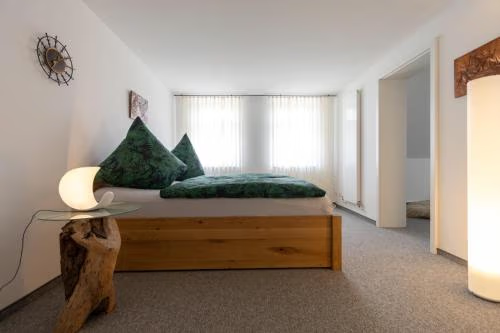
Where to stay in Oelsnitz/Erzgebirge
Places to stay in Oelsnitz/Erzgebirge.
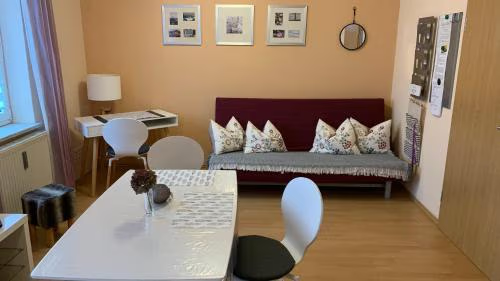 OpenReservations accepted
Kathrin`s Appartment
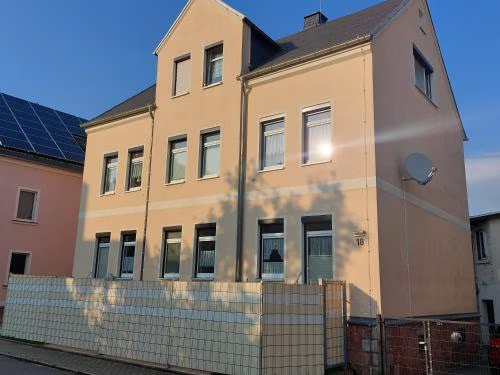 OpenReservations accepted
Sweet Home - Sweet Dreams
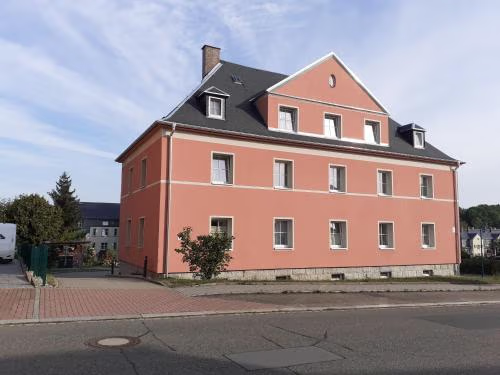 OpenReservations accepted
Ferienwohnung - August-Bebel-Str. 19
Town 11 of 15