

Town on the Camino
Panxón
Pontevedra, Galicia, Spain
- places to stay
- 2
- Camino
- 1
- Elevation
- 5 m
Panxón is a fishing village at the end of a bay, and it has two arches that belong together: a Visigothic horseshoe arch from the 6th or 7th century and a church that Antonio Palacios built after its model from 1932 to 1937. For pilgrims it is a break on the beach, 17.7 kilometres before Vigo.
How long to stay?
A break is enough. Panxón lies only 4.3 kilometres beyond A Ramallosa and 8.4 beyond Baiona; few people sleep here. Take half an hour for the arch and the Templo Votivo do Mar and perhaps a coffee on the beach. Then on towards Vigo.
Panxón in Ninja numbers
- 121.0 kilometres are still left from here to Santiago on the Senda Litoral.
- 17.7 kilometres separate you from Vigo, with 148 metres of ascent.
- Around 1,300 years lie between the two arches of Panxón: the Visigothic one from the 6th or 7th century and the Templo Votivo do Mar from 1937.
- 1926 was the year the old arch was rediscovered, after nobody had noticed it for decades.
Arriving: around the bay
From A Ramallosa the Camino Ninja map leads to the Río Miñor and around the Monte Lourido peninsula to Playa América, then along the stream to the beach of Panxón. The stretch is flat and runs almost entirely by the water. This is the coastal variant with green arrows; the official route with yellow arrows stays inland and does not pass through Panxón.
In brief: an arch and its copy
In the village centre stands a horseshoe arch from the 6th or 7th century, the remains of an early place of worship. Later the old parish church of San Xoán was built on the same spot, and the arch was set in as the entrance to the chancel. Then it was forgotten, until it was rediscovered in 1926. In 1932 the parish moved to a new church higher up, and the arch stayed where it was. The new church was designed by Antonio Palacios from O Porriño, who also built in Madrid, and he was inspired by exactly this arch. In 1964 the arch was placed under heritage protection.
Two arches: what to see
- Arco visigótico: The Visigothic horseshoe arch is one of the oldest structures along your whole route and is protected today as a cultural asset. Next to it lies a fragment of a sarcophagus lid from the same period. It is worth it for a pilgrim because it shows how old Christianity is on this coast, long before anyone walked to Santiago.
- Templo Votivo do Mar: Palacios built the church from 1932 to 1937; it opened on 16 October 1937. It is dedicated to the Virgen del Carmen, patron saint of seafarers, and looks like a castle: pointed-arch portal, battlements, buttresses, an octagonal tower over the crossing. Inside, the dome and vaults are painted, and mosaics show the Annunciation, the Coronation of Mary and the Virgen del Carmen. In 2024 the Xunta put a restoration out to tender; whether it is finished we have not found, nor any opening or mass times.
Food and drink
Panxón is a beach resort with bars and restaurants on the waterfront road. We have not found specific recommendations or opening times documented. The next confirmed supplies with a shop and pharmacy are in Saiáns, 3.9 kilometres further on.
Honestly
- No pilgrim hostel. If you sleep here, you sleep in a guesthouse or a private house.
- The church is often closed. We have not found opening times; plan on seeing it only from outside.
- Off the official route. Panxón lies on the coastal variant. If you follow the yellow arrows, you will not pass by.
Where pilgrims sleep
There is no pilgrim hostel in Panxón. The Camino Ninja database lists two private places on Rúa Tomás Mirambell, the Pensión Residencia La Chica and the Patos Beach House, with beds in shared rooms from about €18 to €22 (as of October 2026). The nearest hostels are the one in the Pazo de Pías in A Ramallosa, 4.3 kilometres back, and a small hostel in Saiáns that opens from March to October.
Ninja tips
- Take the detour from the yellow route. If you are on the official variant, you will miss Panxón. The coast is flatter and more beautiful.
- Look at the old arch first, then the church. In this order you see what Palacios saw.
- Stock up in Saiáns. There is a shop and a pharmacy there; after that the route follows the beaches to Vigo.
- From Samil, use the map. The green arrows of the coastal variant stop there.
Practical tips for pilgrims
- Stamp: We have not found a fixed stamping point; ask in bars or at the guesthouse.
- Route: coastal variant with green arrows, official route with yellow arrows inland.
Onward: via Saiáns to Vigo
From Panxón the Camino Ninja map leads along the coast via Patos beach to Saiáns (km 166.3) and on along the beaches of Canido and Samil to Vigo (km 180.1). That is 17.7 kilometres with 148 metres of ascent and 123 metres of descent; the highest point, at 54 metres, is near Saiáns.
Deep dive: What Palacios saw on the beach
A short read, in case you want to learn more about Panxón. About two minutes' reading.
A forgotten arch
In Panxón stands an arch older than almost anything you have seen on the way from Porto to here. It has the shape of a horseshoe, and it dates from the sixth or seventh century, from the time of the Visigoths. It belonged to an early place of worship. Later a parish church was built on the same spot, and the old arch was reused as a passage to the chancel. And then it was forgotten. Only in 1926 did someone recognise again what was standing there.
An architect from O Porriño
Antonio Palacios came from O Porriño, a town you pass through on the Camino Portugués Central when you walk north from Tui. He became famous in Madrid, with large buildings for the capital. In the early 1930s he built a new church for the parish in Panxón, dedicated to the Virgen del Carmen, the saint of fishermen and seafarers. He gave it a pointed-arch portal, battlements and an octagonal tower, and he took the old Visigothic arch as his model. On 16 October 1937 the church opened. The old arch stayed down below, where it had always stood.
What Panxón gives you
When this text was written, in the autumn of 2026, most pilgrims on the coastal variant walked through Panxón in an hour. In that hour you can pass through an arch twice: once through the one someone built thirteen hundred years ago, and once through the one a twentieth-century architect modelled on it. In between lies the whole history of this coast.
Where to stay in Panxón
Places to stay in Panxón.
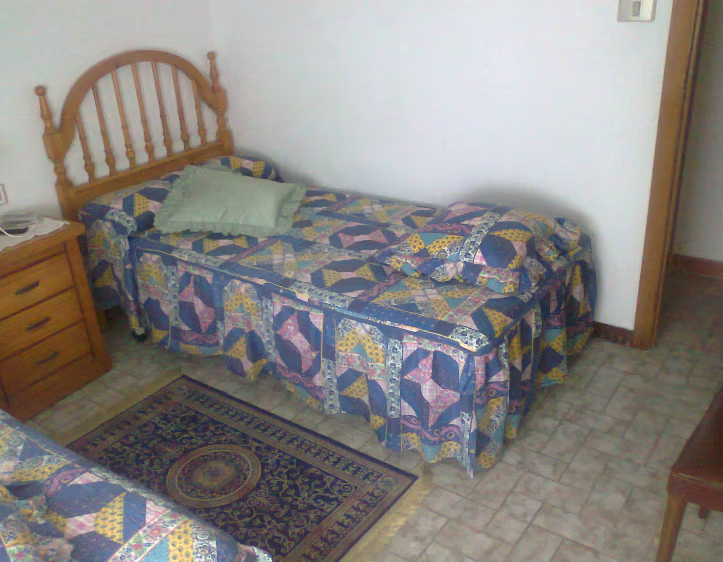 Open
Pensión Residencia La Chica
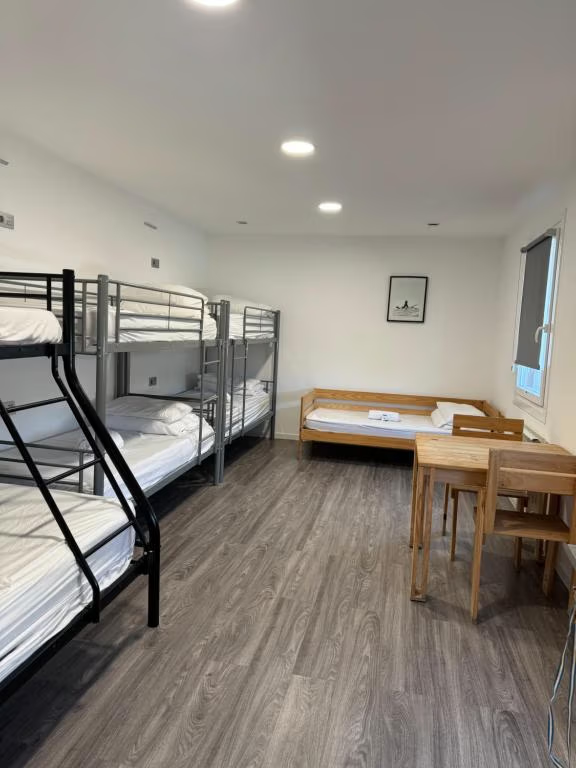 OpenReservations accepted
Patos Beach House
Services in Panxón
What you can find in town before the next stage.
- ATM
- Café
- Shop
- Tobacco
- Pharmacy
- Fountain
- Post office
- Restaurant
Source: © OpenStreetMap contributors · updated April 2026
Town 22 of 33