


Vigo is Galicia's largest city and lives off the sea: a busy port, oysters from the ría and a treasure that is said to have lain under the water since 1702. According to Camino Ninja it is 103 kilometres from here to Santiago, enough for the Compostela. The city has no yellow arrows, though, so you will need a map.
Right now in Vigo (as of October 2026)
- No official waymarking: The city still refuses official Camino markers and arrows, last confirmed in July 2026. In June 2026 the regional government walked from Vigo to Redondela in protest. Until something changes, the map in the app is your only reliable guide.
- Public albergue: It is open all year round. In July 2026 it welcomed its 50,000th guest since opening in 2021.
How long to stay?
An afternoon is enough, unless you want to visit the islands. The old town by the harbour, oyster street and the view from Monte do Castro fit nicely into an afternoon after you arrive. For a rainy day there are two museums with free entry plus the Xunta's maritime museum. A full rest day is mainly worth it for a boat trip to the Illas Cíes at the mouth of the ría. The boats only run in season, though, and you need a permit from the Xunta. In autumn and winter you are better off moving on the next morning.
Vigo in Ninja numbers
- 103 kilometres separate Vigo from Santiago, according to Camino Ninja. If you start here, you are just over the 100 kilometres you need for the Compostela.
- More than 57,700 pilgrims walked through Vigo between January and the end of July 2026 and then collected their Compostela in Santiago. That was 22 per cent more than the previous year. Eight in ten came from abroad.
- 50,000 guests had stayed at the public albergue by July 2026, since it opened in July 2021.
- Zero official waymarkers: The mayor has refused them for the city since 2018.
Arriving: a big city without yellow arrows
From Baiona it is a good 26 kilometres to Vigo according to Camino Ninja, on the Senda Litoral, the coastal variant of the Portuguese Coastal Way. At A Ramallosa the route splits. The official route with yellow arrows heads inland, mostly on asphalt and pavements. It follows the Río Lagares and crosses the Parque de Castrelos, then climbs through the San Roque district to Rúa Urzáiz and ends at the Igrexa dos Picos. The coastal variant with green arrows runs via Panxón, Canido and the city beach of Samil. Pilgrims on the forum find it prettier, and it is more direct if you are sleeping in the old town. After Samil, however, the green arrows stop.
Whichever you choose, the walk into the city is long and urban, and according to the Xunta, Vigo is the only city on a Camino in Europe without an officially waymarked route. Instead of markers, bars and shops display stickers with a shell or an arrow in their windows. That often isn't enough, and every day pilgrims wander lost through the streets. The public albergue is down by the harbour, in the old fishing quarter of Ribeira do Berbés. Set it as your destination on the map before you reach the city.
In brief: from village to Galicia's largest city
On Monte do Castro, above today's centre, there was a settlement more than 2,000 years ago. The name Vigo probably comes from the Latin "vicus", village. And a village it remained for a long time. In the twelfth century Santiago de Vigo was the main parish. In 1589 Francis Drake sacked the town, and in 1656 it got walls and a fortress.
Vigo only grew big with its port. From 1855 ships sailed regularly to the Americas, the walls were torn down, the railway arrived, and canneries sprang up everywhere. For many emigrants, Vigo was their last sight of Galicia. In 1900 the town had just over 23,000 inhabitants; today it has almost 294,000. That makes Vigo the largest municipality in Galicia, without being a provincial capital.
The treasure in the ría
On 23 October 1702 a Spanish silver fleet from the Americas lay in the Ría de Vigo, loaded with gold, silver and jewels. During the War of the Spanish Succession an Anglo-Dutch fleet attacked it in the strait of Rande, just off Redondela, and sank it. Whether the treasure was still on board or had already been brought ashore is disputed to this day. Hundreds of expeditions have searched the ría, and in 2011 six more wrecks from the battle were identified.
Jules Verne turned it into literature. In "Twenty Thousand Leagues Under the Seas", Captain Nemo sails the Nautilus into the Bay of Vigo and recovers the gold of Rande from the seabed. Verne himself came to Vigo on his yacht on 1 June 1878, fleeing a storm, and again six years later. A statue of him has stood at the harbour since 2005. For you this means: tomorrow you walk to Redondela with a view over this ría, to the inner end of the bay.
By the harbour and up on the Castro: what to see
The old town, the Casco Vello, climbs the slope from the harbour. From the albergue you can walk to oyster street and the Concatedral. Monte do Castro means going uphill, but the path is not steep.
- Rúa da Pescadería, "oyster street": In Vigo everyone simply calls it Calle de las Ostras. Here the ostreiras sell fresh oysters every day. They come from Arcade, where oysters have been farmed since Roman times, and are brought in every morning. For you it is a greeting from the trail: you will pass through Arcade tomorrow or the day after.
- Concatedral de Santa María: Locals call it "A Colegiata". The present church was built between 1816 and 1836 on a site where a church already stood in the Middle Ages. It is home to the venerated Cristo da Vitoria. We could not find opening or Mass times.
- Monte do Castro: The hill above the city is a park with the best view over the ría. Here are the remains of the hillfort settlement from which Vigo grew, and the walls of the seventeenth-century fortress. The Monument to the Rande Galleons displays three large anchors from the strait and five cannons from the sunken ships. You can visit the hillfort excavation for free on a guided tour, though only on a few days a week in the winter half of the year.
- Igrexa de Santiago de Vigo: The city's church of Saint James stands on Rúa García Barbón. It was built to an 1896 design in neo-Gothic style, and because the money ran out, its two towers ended up lower than planned. It carries the name of the old main parish from the twelfth century.
- Pazo Quiñones de León in Parque de Castrelos: If you take the official route, you walk straight through the park. Since 1937 the manor house has been the city museum, with European paintings and finds from Monte do Castro. Entry is free; it is closed on Mondays. The French-style garden is worth a break before you head into the city.
- Verne statue: At the Muelle del Comercio, near the marina, Jules Verne sits in bronze. The Vigo sculptor José Molares created it in 2005, a hundred years after Verne's death.
Food and drink
Eat oysters on Rúa da Pescadería; it is the experience Vigo is known for. In Galicia that goes with pulpo and a glass of Albariño. In the evening people sit on the terraces under the arcades of the Praza da Constitución in the old town. Out in the ría you can see the mussel rafts, the bateas.
Honestly
- You will get lost. Without official arrows, the way into Vigo and out again is hard to find. Use the map in the app and follow it rather than hunting for stickers.
- The approach drags on. Whether via Castrelos or via Samil, the last kilometres are city. From Baiona it is a good 26 kilometres according to Camino Ninja, and the end is asphalt. Pace yourself.
- The albergue is good, but the kitchen is empty. Several Camino Ninja pilgrims report that the kitchen has only a microwave: no crockery, no cutlery, no kettle. If you were planning to cook, you will be eating out.
- The Cíes are not a spontaneous trip. Without a permit and outside the season, you won't get onto the islands.
Where pilgrims sleep
- Albergue de peregrinos Juan Manuel López-Chaves: the Xunta's public albergue, open since July 2021 in restored houses on the Ribeira do Berbés, by the harbour and at the edge of the old town. It has 93 places, costs €10 a night including disposable bedding and does not take reservations (as of August 2026). Check-in is from 13:30 to 22:00, after which the door stays shut, and in the morning you must leave before 08:00. It is open all year. Pilgrims in the app praise the laundry room with several washing machines and dryers.
There are also a few private hostels with dorms in Vigo that you can book. They cost more than the public albergue.
Ninja tips
- Destination in the map, not in your head: Before you reach the city, set the albergue on the Ribeira do Berbés as your destination. You cannot rely on arrows in Vigo.
- The coast is prettier: From A Ramallosa the variant with green arrows follows the water via Panxón, Canido and Samil. Whenever you can turn left towards the beach, do it. From Samil onwards you will need the map.
- Bring something for the microwave: The albergue kitchen has only a microwave, no crockery and no kettle. Pilgrims in the app advise bringing food you can heat up in it.
- Out of the city via Rúa Urzáiz: Follow Rúa Urzáiz uphill and, after the Mercado do Calvario market, take the fourth street on the left. From Rúa de Toledo the yellow arrows reappear.
- Oysters as a farewell: The oysters on the Pescadería come from Arcade. When you walk through Arcade tomorrow, you will know where they come from.
When it rains
And it does in Vigo, plenty: at the airport above the city around 1,700 millimetres of rain fall a year on about 130 days, a little less down in the city.
- MARCO, museum of contemporary art: in the pedestrian zone on Rúa Príncipe, free entry, Tuesday to Saturday 11:00–14:30 and 17:00–21:00, Sunday mornings, closed Mondays.
- Museo do Mar de Galicia: The Xunta's maritime museum in Alcabre stands on the site of an old cannery and has a small aquarium showing the underwater world between the harbour and the Cíes. In the winter half of the year it is open Tuesday to Friday 10:00–14:00 and 16:00–19:00, with separate weekend hours, closed Mondays (as of the 2025/26 season). We could not find the admission price.
- Museo Quiñones de León: in Parque de Castrelos, free entry, closed Mondays. Check the opening hours beforehand; we only found older information.
Practical tips for pilgrims
- Starting in Vigo: At 103 kilometres from Santiago, Vigo works as a starting point for the Compostela. From here you need two stamps a day.
- Albergue hours: Check-in from 13:30; the door is locked at 22:00. Plan your evening in the old town accordingly.
- Illas Cíes: For the boat trip to the islands you need a permit from the Xunta and a ticket. Boats only run in season, roughly from spring to October.
Onward: above the ría to Redondela
You leave Vigo up the steep Rúa Urzáiz, past the Igrexa dos Picos and along Rúa Cantabria. Then comes the Camiño da Traída das Augas, the path of the old water supply, alternating between dirt and asphalt. It is considered one of the finest viewpoints over the Ría de Vigo, and you pass a small waterfall. After Cedeira there is a steep descent on the Camiño das Cardosas, then a stretch on the hard shoulder of the N-550 before you reach Redondela. According to Camino Ninja it is 16 kilometres. If you want to go further, you can make it to Arcade, a good 25 kilometres.
What awaits you tomorrow
In Redondela your coastal route merges into the Central Portuguese Way. From there you walk not only with the pilgrims from the coast but also with everyone who came via Tui. The town is called "Vila dos Viadutos" because two nineteenth-century railway viaducts cross it. Off the town lies the small island of San Simón where, according to legend, the dragon lived that Redondela defeats every year at Corpus Christi.
Deep dive: A city that lives from the sea
A long read, in case you want to learn more about Vigo. About twenty-five minutes' reading.
By the harbour, where the fishermen lived
If you sleep in the pilgrim albergue, you sleep in the Berbés. That is the name of the old fishing quarter down by the harbour, the Ribeira do Berbés. For centuries the boats landed here, one of the seven gates of the old town wall stood here, and from this quarter came an old sailor everyone simply called Carolo. One of the stories that Vigo still re-enacts in the streets every year begins with him. You will meet him again in this text.
Vigo is not a city you expect on a Camino. For days you have been walking along the coast, through fishing villages, past beaches, over rocks. Then come houses, streets, the port and the traffic. Almost 294,000 people live here, more than in any other municipality in Galicia. And yet this big city is made of the same stuff as the villages you came through: salt, fish and sea. Almost everything that has happened in Vigo came across the water. Roman traders and raiders from the north, Francis Drake and a silver fleet from the Americas, a writer fleeing a storm, steamers full of emigrants, fishermen with freezer ships. And for a few years now, people like you, on a route that follows the coast north.
This text tells their stories. It begins on a hill above the city and ends tomorrow morning, when you leave Vigo again.
A village on the hill
Above today's centre rises Monte do Castro. On its western slope lay the largest of twenty-six Iron Age settlements that archaeologists have found within the municipality of Vigo. In Galicia such settlements are called castros: round stone houses behind ramparts, built close against the slope. The castro of Vigo was inhabited from the second century before Christ to the third century after Christ. Then people left it, apparently peacefully, and moved down to the area by the shore that is called Areal today, closer to the water. Three houses have been rebuilt on the hill: a round dwelling with a porch, a storehouse and a square house from the time after the Roman conquest. That square house shows you how far the new rule reached, right into the way people laid their walls.
The Romans valued the bay. After Lugo, Vigo has the most Roman finds in Galicia: works where fish were salted, a burial ground, country houses at Alcabre and Toralla. The city's name, too, comes from Latin according to the most common explanation, from vicus, village or hamlet. Others take Vigo to be the Roman port town of Burbida, and still others derive the name from a Norse word for bay. Historians do not agree. But the village has survived, in the name of Galicia's largest city.
The islands out beyond the ría appear in antiquity too. Several authors, among them the geographer Strabo and the astronomer Ptolemy, speak of the Insulae Deorum, the islands of the gods, and this is usually taken to mean the Cíes. The historian Cassius Dio tells how Julius Caesar pursued Lusitanians there who had fled to the islands, and besieged them until they surrendered on the beach of Rodas. According to tradition, that was in the year 60 before Christ.
Waves that hear a question
Little is known about Vigo in the early Middle Ages. Germanic incursions and raiders from the north apparently drove people back up onto the castro. Only from the year 1024 are Romanesque churches recorded in today's city area. Three of them still stand, and one bears the name of the apostle you are walking towards: Santiago de Bembrive. In the twelfth century the place grew again, and the most important parish was Santiago de Vigo, alongside the quarter around Santa María. Even so, Vigo did not become big. The Crown gave the right to trade by sea to its neighbour Baiona, and the land around came under the influence of the Cistercian monastery of Melón in the hinterland.
From this quiet time comes the most beautiful testimony Vigo has. Probably around the middle of the thirteenth century, a minstrel named Martín Codax lived here. Nothing has come down to us about his life, not even for certain that he came from Vigo. Seven songs survive, cantigas de amigo, songs of a lover. In them speaks a young woman waiting for her beloved, and the sea where she waits is the sea of Vigo. The most famous song opens with a question to the waves: „Ondas do mar de Vigo, se vistes meu amigo?“ Waves of the sea of Vigo, have you seen my love? In another song she asks her sister to go with her to the church of Vigo and look at the waves. Which church that was, we do not know.
That we know these songs together with their melodies is down to chance. In the years before the First World War, the Madrid antiquarian bookseller Pedro Vindel found an old parchment that someone had used as the binding for a copy of Cicero's book on duties. On it were the seven songs of Martín Codax, and for six of them the musical notation as well. No other song of this kind has survived with its music. The sheet now lies in the Morgan Library in New York. In the winter of 2017 to 2018 it came back for a few months and lay in Vigo's sea museum, a few steps from the coast it sings about.
Santa María, the church on the slope
In the middle of the old town, on Praza da Igrexa, stands the church that everyone in Vigo calls A Colegiata, the collegiate church. Officially it is a co-cathedral: the diocese that Vigo belongs to has its bishop's seat in two churches, here and in the cathedral of Tui, which pilgrims on the Camino Portugués Central know. Since 2020 Santa María has also held the title of basilica, granted by the Vatican.
A church of the Virgin is recorded on this spot as early as the twelfth century, in a document of 1156 dividing up the parishes of the diocese of Tui. At the end of the fourteenth century it was replaced by a Gothic church, finished in 1403, which kept parts of the earlier building. On 11 June 1497 it was raised to a collegiate church, with a prior named Jaime González de Pedroso at its head. That is where the name comes from, and it has stuck to this day.
We still know which side chapels this Gothic church had. One was dedicated to Saint Anne, one to the Rosary, one to Saint Martin, one to the Guardian Angel, and one to three apostles at once: Bartholomew, John and James. That is the only link to Saint James in this church's history that we have found documented. For today's church we found no image of Saint James and no pilgrim tradition. The apostle has his own parish in Vigo, the church of Santiago de Vigo, which stands today as a neo-Gothic building on Rúa García Barbón.
The Gothic church did not have a quiet life. It was plundered during the raids of the Englishman Francis Drake. It took its heaviest blow in 1809, in the war against Napoleon: up in the fortress on the castro a powder magazine blew up, and the church was so badly damaged that a new one had to be built.
A church that could also be a fortress
The design came from Melchor de Prado y Mariño, a member of the Royal Academy of Fine Arts of San Fernando in Madrid. He presented his plans in 1811, in the middle of the war. Work could only begin in 1816, and in the 1830s the church was finished with its tabernacle and side altars. The exact dates vary from source to source. An unusual idea played a part in the building: after the experience of the war, it was to be so solid that in an emergency it could serve as a fortress.
You can see that. The church is neoclassical, plain, almost severe, and is considered one of the best examples of the style in Galicia. The façade is symmetrical, with a single wide portal under a triangular pediment. Only the two towers break ranks. They are baroque and stand in deliberate contrast to the sobriety of the rest of the building. On the right of the façade there is a sundial designed by Juan Agustín Domínguez in 1837. It has a peculiarity that connoisseurs notice: it does not face south.
Inside, twelve plain columns carry the barrel vaults of three naves. A single arch separates the sanctuary from the nave. Behind the high altar rises a lavish altarpiece in the Churrigueresque style, a particularly ornate form of Spanish baroque. Around the sanctuary run large mosaics by the artist Santiago Padrós. They show angels with the tablets of the Law and the Gospels, together with views of Istanbul and Rome, with the Colosseum and the Pyramid of Cestius. Outside, Vigo is loud and fast. In here you stand in a space that wanted to be built for eternity, and for a siege if need be.
The Christ from the salt
The most important image in the church is older than the building. It is a crucified Christ that people in Vigo call the Cristo da Vitoria, the Christ of Victory. It was carved in the seventeenth century, and experts attribute it to the sculptor Sebastián Ucete from Toro, who lived from 1568 to 1621. The first known mention dates from 1740. The city of Vigo names as its donor Marcó del Pont, a Catalan businessman who lived in Vigo in the second half of the eighteenth century. How that fits with the early mention, we have not been able to establish.
A legend surrounds the figure, and it exists in several versions. The Christ is said to have ended up in the sea, through a storm or because people wanted to hide it from English pirates. A merchant ship carrying a cargo of salt fished it out of the water near the Cíes. That is why it was long called the Cristo da Sal, the Christ of the salt.
It got its present name in 1809. When the people of Vigo had driven out the French occupiers, they credited this Christ with the victory. Since then it has been the Christ of Victory. On the first Sunday in August it leaves the church and is carried in procession, the largest religious event in the city. On the day before, the figure is taken down from the cross in a ritual of its own, the Descendimiento. A brotherhood looks after both, and it also keeps small stories. The three original nails of the figure were at some point replaced by more practical ones and given to three deserving members of the brotherhood. One of them now belongs to someone in Vigo who inherited it from their father and keeps it as a lucky charm.
Pirates at the door
In the sixteenth century, a town on the open Atlantic was a town in danger. In 1585 Francis Drake, the English seafarer whom Spain called a pirate, tried to take Vigo. The inhabitants fought him off. Four years later he came back, this time successfully, and large parts of the town went up in flames. He used the Cíes as a base to repair his ships and take on supplies. In 1617 Turkish pirates attempted a raid, and once again the inhabitants held out.
After that Vigo got what it had long lacked. In 1656 work began on a town wall and the fortress of San Sebastián, which worked together with a second castle up on the castro. The wall had seven gates, and their names still echo through the old town: A Laxe, Berbés, Gamboa, Falperra, Mar, Placer and Sol. The Porta do Sol is today a square where the figure of the Sireno stands. And through the Gamboa gate, someone with an axe will still come in this text.
A chain across the strait
In the autumn of 1702 the War of the Spanish Succession was raging in Europe. Spain had a new king from the House of Bourbon, Philip the Fifth, a grandson of the French king, and England and the Netherlands were at war with him. Into the middle of this war sailed the Spanish silver fleet from the Americas. It consisted of three war galleons, fourteen merchant galleons and some smaller ships, escorted by fifteen French ships of the line under the Count of Châteaurenault. The Spanish commander was Manuel de Velasco. The fleet should really have gone to Seville, because Seville held the monopoly on trade with the Americas. But the way there was too dangerous. On 22 September 1702 it sailed into the Ría de Vigo.
The ships withdrew deep into the bay, into the Ensenada de San Simón off Redondela. In front of it, at the strait of Rande, the defenders stretched a barrier of timber and chains from shore to shore. At the southern end stood the fort of Rande, a stone tower with a battery, and at the northern end a second battery. Guns for it were taken from the ships. The Prince of Barbançon, governor of Galicia, raised militias.
In October the Anglo-Dutch fleet under Admiral George Rooke appeared, with more than twice as many men and guns as the defenders. On 23 October it attacked. The Duke of Ormonde landed about 2,000 men near Teis and marched on the fort of Rande. Grenadiers stormed the outer wall, around 300 defenders held out in the tower for a while, then it fell too. On the water, Vice-Admiral Thomas Hopsonn led the attack in his ship, the Torbay. She broke through the barrier and drifted on. Then the wind dropped, and the others could not follow. The French sent a fireship alongside, and the Torbay caught fire. What happened next sounds invented and yet is in the reports: the fireship was loaded with snuff. When it exploded, a cloud of tobacco dust settled over the Torbay and helped the crew smother the flames. Even so, according to Rooke's journal, 53 men drowned.
When the barrier was broken and the forts had fallen, the defenders gave up. A Spanish account by Chacón records that the French count gave orders to burn all the ships so that they would not fall into enemy hands. The crews set fire to their own ships and fled ashore. After about ten hours it was all over. Not a single one of the fifteen French ships of the line escaped. Six were captured, the others burned or sunk. Of the Spanish ships, the victors took some with them, and the rest sank or burned out. The defenders' losses were far higher than the attackers'. Afterwards the victors plundered Redondela and the island of San Simón. On 30 October Rooke sailed away with his spoils. On the way back, it is said, one of the captured galleons sank near the Cíes.
In London, Vigo Street still recalls this victory. When this text was written, in October 2026, the battle was exactly 324 years ago to the day.
Where is the silver?
Since that day Vigo has asked itself one question: is the treasure still in the ría? The fleet had carried gold, silver and jewels from the Americas, according to the city the greatest treasure ever to cross the Atlantic. If the ships sank, so the simple reckoning goes, it must be lying down there in the mud.
Historians tell a different story. Between the fleet's arrival in September and the attack in October lay a whole month. According to one version, unloading began as early as 27 September, on the orders of the Council of the Indies. The silver had priority. It went inland to Lugo and later to the castle of Segovia. The Galician historian Xosé Ramón Barreiro describes a train of around 1,000 ox carts that set off for Madrid under the Prince of Barbançon, and mentions that the cathedral chapter of Lugo provided money to house the carts. His dry conclusion: „Seguramente, la plata viajaría en los bueyes.“ The silver probably travelled by ox.
The victors, too, found less than they had hoped. Isaac Newton, then head of the Royal Mint in London, reported in June 1703 that he had received a little over 2,000 kilograms of silver and around three and a half kilograms of gold from the spoils, worth about 14,000 pounds. Coins were struck from it bearing the word VIGO beneath the portrait of Queen Anne. Today they are rare and sought after. But the real winner was, of all people, the king whose fleet had been destroyed. In February 1703 Philip the Fifth confiscated around four million pesos belonging to English and Dutch merchants, and borrowed a further two million from Spanish traders. In the end he kept almost seven million pesos, more than half the fleet's silver. The big losers were private merchants, whose pepper, cochineal, cocoa, snuff, indigo and hides burned with the ships.
Still, the ría is not quite empty. Wrecks lie on its bed, and generations of treasure hunters have tried their luck with them. In 1728 the Frenchman Alexandre Goubert hauled a ship almost entirely ashore, only to find that it was a French warship with no treasure. In 1825 the Englishman William Evans dived with a diving bell and for a year brought up a little silver, cannonballs and other things. An American company tore a ship apart in a failed salvage attempt. In 1990 an underwater robot found the wreck of the Santo Cristo de Maracaibo at a depth of 79 metres off the Cíes. In 2007 a company called San Simon offered the Galician government 310 million euros for the right to explore the wrecks and to lend three galleons to museums in Moscow, Berlin and Rostock. A government inspection found no trace of coins on the wrecks. In 2011 six more wrecks from the battle were identified. The biggest obstacle to this day is the mud that covers every wreck metres deep.
So who is right? Honestly, the sources suggest that most of the silver never lay on the seabed. Whether something did remain down there, no one can rule out. Barreiro summed up the dispute in one sentence: „El mito sobre el tesoro es precioso.“ The myth of the treasure is beautiful. And no one did more for this myth than a Frenchman who never dived in the ría.
Captain Nemo in the bay
Jules Verne worked on his novel „Twenty Thousand Leagues Under the Seas“ in the years between 1866 and 1870. Vigo was in the newspapers at the time, because there was a financial scandal over the salvage rights to the treasure of Rande, and all over Europe investors were buying shares in salvage companies. According to the journalist and Verne expert Eduardo Rolland, Verne took two inventions for his novel from the reports on the salvage campaign of one Hipólito Magen: an electric lamp and a breathing apparatus for divers.
In the novel it is 18 February 1868. The narrator, Professor Aronnax, plans to escape from the Nautilus that night with the harpooner Ned Land. But Captain Nemo asks him into the saloon, opens the windows, and outside, in the glare of the lights, lie the wrecks of the galleons. Divers from the Nautilus gather ingots, coins and jewels from rotted barrels and chests. Nemo explains where they are: in the Bay of Vigo. Then he says a sentence that explains the whole character: all he has to do is pick up what other men have lost. In Verne's version the treasure was never unloaded. The king, he writes, under pressure from the merchants of Cádiz, ordered the fleet held in Vigo without unloading, and so everything sank with the ships. With this gold Nemo finances his submarine.
At that time Verne knew Vigo only from books and newspapers. On 1 June 1878 he came himself, in his yacht Saint Michel III, fleeing a storm. In 1884 he came again, this time because the yacht needed a repair, which a workshop at the harbour called La Industriosa carried out. On this visit he wanted to see the Ensenada de San Simón, the bay of the battle he had described years before. Since 2005, a hundred years after his death, he has sat in bronze at the Muelle del Comercio, made by the Vigo sculptor José Molares.
There is something lovely about the fact that it was a novel, of all things, that put the treasure where historians no longer find it. Captain Nemo is the only treasure hunter in Vigo who really struck gold.
An axe at the Porta da Gamboa
In January 1809 Vigo fell to Napoleon. The British army under John Moore had withdrawn from Galicia to England, and the French took one city after another: A Coruña, Santiago, Pontevedra, Ferrol, finally Vigo. Colonel Antoine Chalot became military governor. According to the researcher Ricardo Troncoso, he had served at the storming of the Bastille, fought at Austerlitz and Jena and gone with Napoleon to Egypt. Not a man to give up easily.
But resistance formed around Vigo, and very different people came together. One of them was Bernardo González del Valle, a captain from Pereiro de Aguiar near Ourense, whom everyone called Cachamuíña after his home parish. A Portuguese officer, Juan Bautista Almeida de Sousa, came over the border with a small troop. A Catalan friar, Andrés Villageliú, took up arms at the monastery of San Francisco. Out in the ría lay two British frigates, the Lively and the Venus, blockading the port. A Russian frigate, the Spitzbergen, which had become separated from its squadron, had also been anchored in the bay for months. As the siege tightened, Chalot asked the Russians for food.
On 27 March 1809 there was a scene that shows how much war is also a matter of form. Chalot would only surrender to a commander with the rank of colonel. So the besiegers promptly proclaimed one of their own, the 34-year-old Pablo Morillo, a colonel. That night they stormed the walls. At the Gamboa gate an old sailor from the Berbés went at the wood with an axe: Carolo. The French fired from the wall, and Carolo fell. Morillo later wrote in his report: „Se admiró la valerosa serenidad de un anciano que murió de un balazo haciéndola astillas.“ The brave composure of an old man was admired, who died from a bullet while smashing the gate to splinters. Who Carolo really was, no one knows. He does not appear in the parish death registers. Cachamuíña, too, was hit by several bullets at the gate.
Around ten in the evening the French drums beat the signal for talks. At eight on the morning of 28 March the French handed over the city and its castles. Chalot signed the capitulation aboard a British ship, with the two captains as guarantors. With him, 45 officers and more than 1,200 soldiers went into captivity, and Morillo took the French treasury, around 150,000 gold francs. How many attackers died is unclear to this day. Morillo gives seven dead at the Gamboa gate alone, another chronicler, Pardo de Andrade, twelve along all the walls. It must be added that Morillo also wrote his report to highlight his own bravery.
In Vigo people like to say the city was the first in Europe to drive out the French by its own strength. King Ferdinand the Seventh granted it the title „fiel, leal y valerosa“ in 1810, faithful, loyal and valiant. Two streets have since been called Victoria and Reconquista. And every year on the first weekend after 28 March the old town re-enacts the uprising, with costumes, music and market stalls. The parade starts at the square in the Berbés, in the quarter Carolo came from and where you are sleeping tonight.
Sardines, steam and tinplate
Vigo did not grow big through battles but through trade. In 1778 King Charles the Third abolished the monopoly on trade with the Americas, and suddenly ports like Vigo could trade directly with the colonies. In the second half of the eighteenth century Catalan merchants arrived, led by Buenaventura Marcó del Pont, and with them factories for soap, salted fish, leather and linen.
From 1855, scheduled ships sailed regularly from Vigo to Buenos Aires, Havana and Puerto Rico. The Banco de España opened a branch, a new stone quay was built, and the city council had the walls torn down so that the city could grow. About a decade later work began on the railway, and parts of the ría were filled in to make room for the port. In 1881 the first train ran to Ourense.
In the Areal district, where the people from the castro had once settled, Antonio Alonso Santodomingo built a simple factory around 1860 with a boiler, a steam engine and an oven for roasting sardines. It grew into one of the great canneries of Galicia. In the 1920s, together with Massó, Albo and Curbera, it was among the four largest in Spain. The industry depended on tinplate for the cans. When it ran short in 1890, the factories stood still, and in April people took to the streets. The Xunta's sea museum in Alcabre stands today on the site of one such nineteenth-century cannery.
In 1898 the wounded from the war in Cuba arrived in the port of Vigo, and the city cared for them. Since then its motto has also carried the title „Siempre Benéfica“, always charitable. The population doubled in about a decade, and by 1910 more than 30,000 people lived here. In 1914 the first tram ran, and in 1947 the free trade zone was founded. The twentieth century also had dark chapters. In July 1936, after the military coup, there were ten days of fighting for the city, then came the repression, and among the victims was the mayor, Emilio Martínez Garrido.
After the war Vigo became an industrial city. Shipyards such as Barreras and Vulcano grew, and in the 1950s Citroën arrived. On 23 June 1960 José Fernández López and his brothers founded the company Pescanova. Its first ship, the Lemos, built in 1961 at the ASCON shipyard in Moaña on the other side of the ría, could deep-freeze 250 tonnes of fish on board and brought its first catch to Vigo. In Vigo you often hear that the Lemos was the world's first freezer ship. That is not quite true: eight years earlier the Fairtry had been launched in Aberdeen in Scotland. But for Vigo it was the beginning of a new kind of fishing on distant seas. Today more than 660 fishing vessels are registered in the port, around 800,000 tonnes of fresh fish pass through it every year, and more than 20,000 people work directly in fishing. Vigo is one of the most important markets for fresh fish in the world.
The last look at Galicia
For tens of thousands of Galicians, Vigo was not the start of a pilgrimage but the end of their old life. From the nineteenth century well into the twentieth, they left their homeland through the ports of A Coruña and Vigo to find work in the Americas: in Argentina, Uruguay, Cuba, Brazil, Venezuela. In these countries every Spaniard soon came to be called a Gallego.
How many left through Vigo alone can be read precisely for individual years. The historian Hilario Rodríguez Ferreiro analysed the passenger lists for the years 1900 to 1904. He estimates that in those five years more than 32,000 people set off from Vigo for the Americas, around 6,500 a year, and almost 30,000 came back. Where the destination was known, almost two thirds went to the Río de la Plata, the rest to Brazil and Cuba. About a third were women. Most came from the provinces of Pontevedra and Ourense. Departures were mainly in autumn and winter, and those returning came in summer. The ships belonged to English, German, French and Spanish shipping lines.
Behind these numbers stand families. On 14 February 1925 the family of Cándido Moure and Elena Rodríguez boarded the steamer Groix in Vigo with several children. They came from A Touza, a village near Chantada in the province of Lugo. The eldest son, Manuel, had gone ahead in 1920. On 15 March 1925 they reached Buenos Aires. A grandson wrote the story down a hundred years later. He tells how letters home were often lost or arrived too late, and how his father looked out at the horizon, hoping for a ship that would take him back to the village.
On Praza de América there is a monument to these people, the Porta do Atlántico, the gateway to the Atlantic, designed by the sculptor Silverio Rivas in 1990. It is 14 metres high, weighs 427 tonnes, and its granite comes from a quarry in Porriño. The gate has two doors, one for America and one for Europe. You are walking in the opposite direction to the emigrants, from the port inland, and you know you are going back.
The islands of the gods
Out beyond the ría lie the Cíes, three islands: the northern island of Monteagudo, the middle island of do Faro and the southern island of San Martín. The two northern ones are joined by a sandbar, the Praia de Rodas, a good kilometre long. In February 2007 the British newspaper The Guardian chose it as the most beautiful beach in the world.
The islands belong to the municipality of Vigo, and they have a long, rough history. From the ninth to the eleventh century monks lived there, with monasteries dedicated to Saint Stephen and Saint Martin. Chronicles report raids by Normans and Arabs. In the sixteenth century Drake anchored here. In 1840 two factories for salting fish, a tavern and a lighthouse were built. After that the population kept shrinking, until tourism arrived around the middle of the twentieth century.
The islands have suffered too. In 1970 the tanker Polycommander ran aground off Monteagudo and lost around 15,000 tonnes of crude oil. On 13 November 2002 the tanker Prestige sank off the Galician coast, and around 30 per cent of the Cíes coastline was polluted. In the same year the islands became part of the new national park of the Atlantic Islands of Galicia. Today almost 3,000 visitors a day come in high season. Without a permit from the Xunta and a boat ticket you cannot get there, and the boats only run in season.
For pilgrims the Cíes have another meaning too. It was near them that the salt ship is said to have pulled the Christ of Victory out of the sea. And off the islands, at a depth of 79 metres, lies the Santo Cristo de Maracaibo, one of the galleons of Rande.
Pilgrims on a coast without arrows
And the pilgrims? Honestly: we have found hardly anything reliable about pilgrims in medieval Vigo. Most pilgrims from Portugal crossed the Miño at Tui, where for a long time there was the only bridge. The most famous of them, Queen Isabel of Portugal, made the pilgrimage to Santiago in 1325 and 1335 and laid her crown at the apostle's tomb, but by today's reckoning on the inland route. Further south on the coast, tradition has it that Thomas Becket, Archbishop of Canterbury, stayed at the monastery of Oia. That is not documented either.
Vigo does have a legend of its own, though, and it is about the sign you carry on your backpack. It is told in several versions. In the version told in Vigo, a nobleman on the shore of Bouzas, today a district of Vigo, was struck by a lance and sank into the sea. As the boat carrying the apostle's body passed by, he came back to life and rose out of the water on his horse, covered all over in scallop shells. Since 2010, a small fleet of boats has sailed every year on the Ruta Marítima from Bouzas to Santiago, named after him: O Cabaleiro das Cunchas, the knight of the shells.
The route you came on is young. In 1984 an association, the Amigos dos Pazos, with Grato Amor and Carlos del Río Bouzas, began to research the way along the coast, marked the first sections and organised a first pilgrimage. In A Guarda local people painted the first arrows. Whether this route is historical was long disputed. For official recognition, one advocate argued, you need a pilgrim hospital, devotion to the apostle and an old road, and in the end recognition is a political decision. In May 2016 it came: since then the Portuguese Coastal Way has been an official Camino. In 2025 it grew more strongly than any other route to Santiago. More than 350,000 people had walked it by the summer of 2026, and from January to the end of July 2026 alone, more than 57,700 pilgrims passed through Vigo and then collected their Compostela.
In July 2021 the Xunta opened the old town's first public pilgrim albergue in the Berbés, made from restored houses, for 1.8 million euros. In July 2026 it welcomed its 50,000th guest, a man from Viana do Castelo who had set out from Porto.
And yet to this day Vigo has no official waymarkers. The mayor has refused them since 2018, and the regional government, with which he is at political loggerheads, accuses him of leaving pilgrims in the lurch. Almost 300 bars and shops have instead put stickers with a shell or an arrow in their windows. In June 2026 representatives of the Xunta walked from Vigo to Redondela in protest. You do not have to decide who is right. For you it is above all a reason to keep the map in your hand, and perhaps one to have a coffee in the bar with the shell in the window.
What Vigo gives you
Tomorrow morning you leave the city up the steep Rúa Urzáiz. After a few kilometres you pass through Teis, where in October 1702 the Duke of Ormonde put his soldiers ashore. Then you walk along the path of the old water channel high above the ría, with a view out over it, and descend to Redondela, at the inner end of the bay. Beyond Redondela lies Arcade, where the oysters sold on Rúa da Pescadería come from.
Vigo does not dress up for pilgrims. The city works. But once you know its stories, you see that it has always looked out to sea: at ships that came with silver, at emigrants who left, at fishermen who returned, at a girl asking the waves about her love. Perhaps what you take from here above all is this: that Vigo's greatest treasure probably never lay on the seabed, and that the city has been telling of it for more than 300 years anyway. Some things are precious because we search for them, not because we find them. You are not walking the rest of the way just to arrive either. Or not only.
Where to stay in Vigo
The places pilgrims rate highest in Vigo come first.
- Top #1

- Top #2
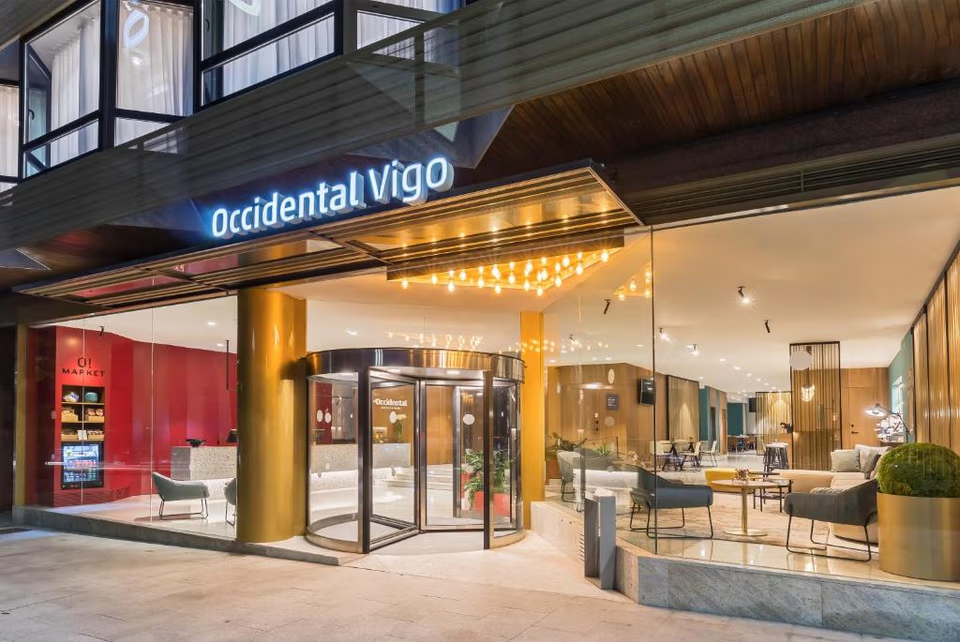 OpenReservations acceptedHotel Occidental VigoVigo
5.03 reviews
85€BreakfastWi-FiCotton Sheets & Pillowcases - Top #3
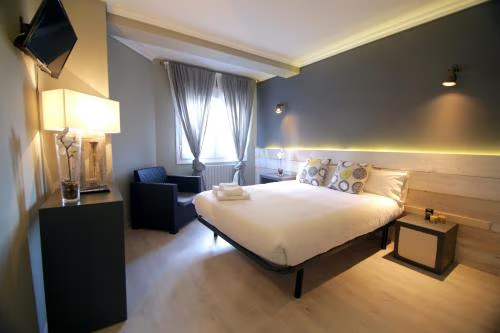 OpenReservations acceptedHotel Alda Estación VigoVigo33€Wi-FiTVCotton Sheets & Pillowcases
- Top #4

- Top #5
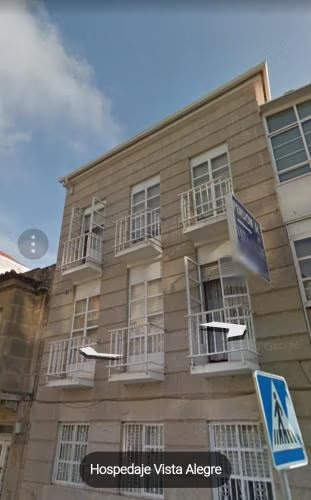 OpenReservations acceptedPension Vista AlegreVigo40€Wi-FiTVIndividual Power PlugsAnd more
Services in Vigo
What you can find in town before the next stage.
- ATM
- Café
- Shop
- Tobacco
- Medical clinic
- Pharmacy
- Fountain
- Post office
- Train station
- Bus station
- Airport
- Restaurant
Source: © OpenStreetMap contributors · updated April 2026
Caminos through Vigo
Open a Camino to follow it on the map from Vigo.