

Stage town on the Camino
Salas
Asturias, Spain
- places to stay
- 9
- Camino
- 1
- Elevation
- 246 m
Salas is the stage town before the first big climb of the Camino Primitivo, 48.4 kilometres from Oviedo: a small town of tower, palace and collegiate church, where the founder of the University of Oviedo lies in an alabaster tomb. Tomorrow you climb 539 metres to La Espina. An afternoon is enough.
Right now in Salas (as of October 2026)
- Hostels in winter: La Campa and Valle del Nonaya close on 30 October, Cielito Lindo on 31 October. After that, the municipal hostel stays open until 30 November and Casa Sueño until 21 December (information as of August 2026).
How long to stay?
An afternoon is enough. The historic core of Salas is small: a medieval tower, the palace of the Valdés-Salas and the collegiate church stand close together, the tower and palace joined by a bridge. In a few hours you have seen it all, including the small museum in the tower. If you have time, walk another kilometre up to the church of San Martín. Rest, because the next morning starts with a long climb.
Salas in Ninja numbers
- 48.4 kilometres you have walked on the Camino Primitivo since Oviedo, the last 22.0 of them from Grado.
- 260.3 kilometres remain from here to Santiago.
- 539 metres is what you climb tomorrow over the first 8.2 kilometres to La Espina. Salas lies at 246 metres.
- 1576 to 1582 the sculptor Pompeo Leoni worked on the alabaster tomb in the collegiate church.
- 1024 a king's daughter founded the monastery in Cornellana that you passed today.
Arriving: through the Nonaya valley
From Grado the way first climbs to 364 metres, then drops into the Narcea valley to Cornellana. There stands the monastery of San Salvador, founded in 1024 by the Infanta Cristina, a daughter of King Bermudo II, and given by a great-grandson to the Abbey of Cluny in 1120. It is part of the World Heritage of the Routes of Santiago. Then the way climbs up the valley via Casazorrina to Salas.
In brief: a family and its town
Salas is inseparable from the Valdés-Salas family. Their tower goes back to the 14th century, their palace to the 16th. The family's most famous son was Fernando de Valdés-Salas: Archbishop of Seville, Inquisitor General and President of the Council of Castile. He founded the University of Oviedo and in 1549 had the collegiate church of Santa María la Mayor built in his home town, where he is buried. Tower, palace and church still form an ensemble today, joined by a bridge bearing coats of arms.
Tower, palace, church: what to see
The essentials are within a few hundred metres.
- Colegiata de Santa María la Mayor: The collegiate church of 1549, a national monument, with baroque altarpieces from the 17th century. Its centrepiece is the alabaster tomb of its founder Fernando de Valdés-Salas, made from 1576 to 1582 by the Italian sculptor Pompeo Leoni. For a pilgrim it is a rare moment to meet a work of art of this rank on a mountain route. We have not found opening hours.
- Torre de la Villa and Museo Prerrománico: The tower dates back to the 14th century; it got its present form in a reconstruction in the mid-20th century. Inside, a small museum shows the original stones of the pre-Romanesque church of San Martín, with pieces from the 10th century. Guided visits are free, Tuesday to Saturday, according to 2026 information from 10:30 to 14:30 and from 16:00 to 19:00; check beforehand.
- Palacio de Valdés-Salas: The 16th-century palace is now a hotel. From outside you see the bridge that joins it to the tower.
- San Martín de Salas: About a kilometre out of town on a hill stands the church whose origins lie in the 10th century. The pre-Romanesque stones inside are replicas; the originals are in the tower museum. An old yew stands at the entrance. A detour for the evening, if your legs are still willing.
Food and drink
Salas has bars, restaurants and shops. The local speciality is the Carajitos del Profesor, a pastry you should try here. Trout and fabada are also typical of the area.
Honestly
- The hostels close early. Most shut at the end of October. In November the municipal hostel with its 16 beds is almost on its own.
- The morning is hard. Right behind Salas begins the longest climb of the route so far, 539 metres of ascent in just over eight kilometres.
- The church is not always open. For the tomb especially, it is worth asking at the hostel or the museum first.
- The accommodation information is contradictory. Prices and bed numbers differ between sources. Call if in doubt.
Where pilgrims sleep
The Albergue de peregrinos de Salas belongs to the municipality: 16 beds in two rooms, around €8 to €9, check-in from 12:00 to 20:00, no reservations, credencial required. Open from 1 April to 30 November. Coffee, lemonade and pastries are free (as of August 2026).
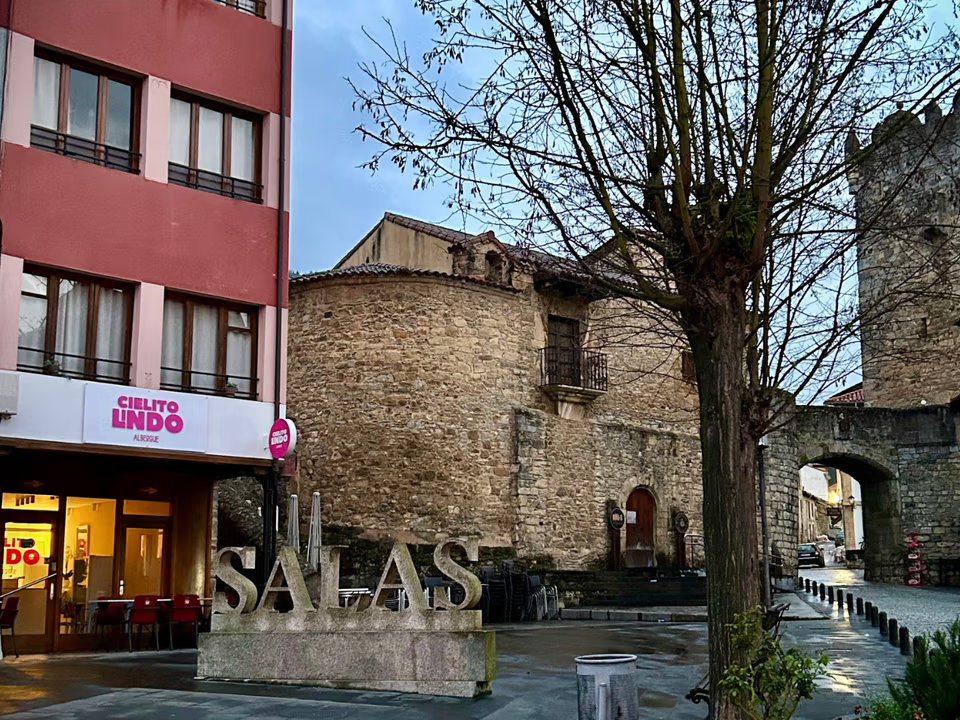
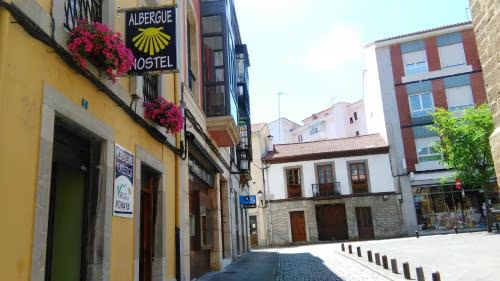
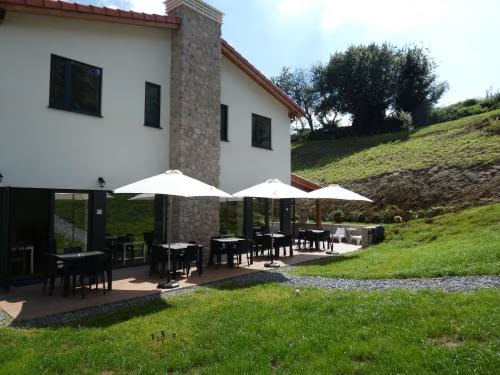
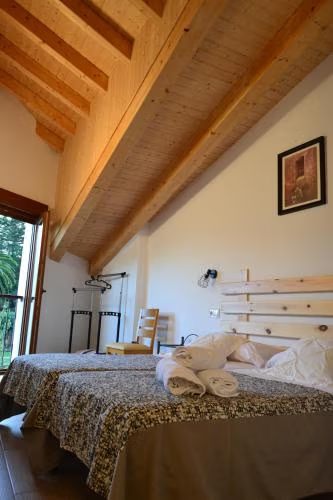
There is also the Albergue La Campa; sources give either a donation or a fixed price, so it is best to ask directly. Private hostels are Cielito Lindo, Valle del Nonaya and Casa Sueño, with beds between about €15 and €21 (as of 2026). Casa Sueño is open for the longest part of the year.
If you find nothing in Salas or would rather stop earlier: in Cornellana, 11 kilometres before, the municipal hostel in the monastery of San Salvador is open all year, with around 30 beds at €8.
Ninja tips
- Visit the tower museum. The tour is free and explains what you see in the collegiate church.
- Buy supplies for the climb. Between Salas and La Espina it is all uphill; if you leave early, have your food in your pack already.
- Sleep in Cornellana if Salas is full or the hostels are closed. The monastery hostel is open all year.
- Try the carajitos. The pastry belongs to Salas as much as the Valdés-Salas do.
Practical tips for pilgrims
- Supplies: ATM, pharmacy, medical care, groceries, bakery and butcher.
- Bus: ALSA runs daily to Oviedo.
- Festival: The Martes de feria is on the last Tuesday in April.
Onward: up to La Espina
Beyond Salas the way climbs via Porciles (km 54.1) and Bodenaya (km 55.3) to La Espina (km 56.6), 8.2 kilometres with 539 metres of ascent. Then it runs along the high ground via La Pereda and El Pedregal, reaches its highest point at kilometre 62.3 at 787 metres, and descends to Tineo (km 68.1). The whole stage is 19.7 kilometres with 904 metres of ascent and 482 metres of descent.
What awaits you tomorrow
Tineo, a town on a hillside that was already a compulsory stop for pilgrims in 1222, by order of a king. Its pilgrim hospital was called Mater Christi, and that is the name of the hostel today.
Deep dive: The Inquisitor from Salas
A short read, in case you want to learn more about Salas. About three minutes' reading.
A tower in the valley
Salas lies in the Nonaya valley, where the Camino Primitivo gets serious for the first time. A tower stands in the town. Its origins go back to the fourteenth century, and for a long time it was the sign of a family that shaped this place, the Valdés-Salas. Next to the tower they built a palace in the sixteenth century and joined the two with a bridge. Tower, palace and the later collegiate church are still the heart of old Salas today.
A man of power
The best-known son of this family was Fernando de Valdés-Salas. He rose to become one of the most powerful men in Spain. He became Archbishop of Seville, President of the Council of Castile and Inquisitor General. As Inquisitor General he stood at the head of the Inquisition, an institution whose history still weighs heavily today. At the same time he founded the University of Oviedo, an institution of learning that still exists. Both belong to him, and both have to be seen together.
A tomb of alabaster
In his home town he had a collegiate church built in 1549, Santa María la Mayor. He wanted to be buried there. After his death, the Italian sculptor Pompeo Leoni created an alabaster tomb between 1576 and 1582. It is the church's main work. That such a work of art stands in a small town on the edge of the mountains says a lot about this man's power and about how strongly he felt tied to the place he came from.
Older than the family
Yet Salas is older than the Valdés-Salas. A kilometre out of town, on a hill, stands the church of San Martín, whose origins lie in the tenth century. Its oldest, pre-Romanesque stones are now shown in the tower. They come from a time when the road you are walking was still young.
What Salas gives you
In Salas, power and devotion, learning and the Inquisition stand close together. Tomorrow morning you climb out of this valley, more than five hundred metres up to the high ground. Perhaps that is the right moment to think about what remains of a person, and what you yourself want to leave behind.
Where to stay in Salas
The places pilgrims rate highest in Salas come first.
- Top #1
 ClosedReservations accepted
Albergue Casa Sueño
- Top #2
 ClosedReservations accepted
Albergue La Campa
- Top #3
 ClosedReservations accepted
Cielito Lindo Albergue

Services in Salas
What you can find in town before the next stage.
- ATM
- Café
- Shop
- Medical clinic
- Pharmacy
- Fountain
- Post office
- Restaurant
Source: © OpenStreetMap contributors · updated November 2025
Town 3 of 17