

Stage town on the Camino
Triacastela
Lugo, Galicia, Spain
- places to stay
- 14
- Camino
- 1
- Elevation
- 663 m
Triacastela is where you arrive after the long descent from Alto do Poio and have to decide: tomorrow you either take the short way via San Xil or the route seven kilometers longer via Samos Monastery to Sarria. A stage already ended here in the 12th century, and pilgrims carried a stone from here for the cathedral. One evening is enough.
How long to stay?
One evening is enough. Triacastela is a stage village along a road, with a church, a pilgrim monument and plenty of albergues. You arrive after 21 kilometers and more than a thousand meters of descent with tired knees, eat, sleep and, in the evening, make the most important decision of the next day: San Xil or Samos.
Triacastela in Ninja numbers
- 1,018 meters of descent are in your legs today since O Cebreiro, with only 396 meters of ascent, and the highest point was Alto do Poio at 1,337 meters.
- 139.9 kilometers remain from here to Santiago de Compostela.
- 95.4 kilometers is how far pilgrims of the 12th century carried a limestone from here to Castañeda beyond Melide, so that lime for the cathedral could be burned there.
- Around 7 kilometers longer is the way to Sarria via Samos than via San Xil: 25.4 instead of about 18 kilometers.
- 1790 is when the Church of Santiago got its tower with the coat of arms of the three castles.
Arriving: down in the valley
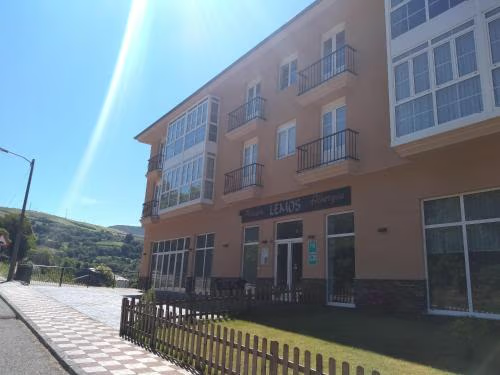
Beyond Alto do Poio you head downhill via Fonfría and Biduedo, through Fillobal and Pasantes, until you stand in the valley at 663 meters. The path takes you right past the Iglesia de Santiago into the village, which essentially consists of one main street with albergues, bars and shops. At the end of this street the Camino splits: left toward Samos, right toward San Xil. Have a look at the spot this evening.
In brief: a stage from the Codex
Triacastela is mentioned in 969 and 1149; presumably the name first referred to a whole region and not just the village. King Alfonso IX is considered its refounder, and its heyday fell in the decades around 1200, when the stream of pilgrims was at its strongest. In 1248 King Fernando III summoned the communities of Galicia here. The Codex Calixtinus, the 12th-century pilgrim guide, has its eleventh stage end in Triacastela, "pasado el puerto del monte Cebrero", and the twelfth run from here to Palas de Rei.
A stone for the cathedral
The same Codex tells what made Triacastela special for the pilgrims of that time: it was the "lugar donde los peregrinos cogen una piedra y la llevan hasta Castañeda, para obtener cal destinada a las obras de la basílica del Apóstol". Whoever passed through here picked up a limestone and carried it about 95 kilometers to Castañeda, so that the cathedral in Santiago could keep being built. Today the monument next to the public albergue, a small figure on a pile of stones, remembers these pilgrims. You don't have to take a stone. But if you sleep here, you are part of a line that began almost nine hundred years ago with luggage heavier than yours.
A stone for the cathedral: what to see
Everything is on the main street or a few steps from it.
- Iglesia de Santiago: The Church of Santiago is Romanesque and was restored in the 18th century; it has kept its floor plan almost unchanged. Its four-story tower dates from 1790, and on the second level you can see the coat of arms of the village with the three castles. Inside, Santiago on horseback stands above the main altar. We did not find opening or Mass times.
- Monumento al peregrino: The monument next to the public albergue remembers the pilgrims who carried the limestone. A good place to stop for a moment after the descent.
- Cárcel de peregrinos: The village once had a prison for false pilgrims, for people who passed themselves off as pilgrims, at a time when pilgrimage and begging lay close together. Not much of it is left to see today.
Food and drink
Triacastela lives from its pilgrims: bars and restaurants with a pilgrim menu on the main street, plus a grocery store, a butcher and a bakery. Stock up here for tomorrow, because on both routes to Sarria there is hardly any supply in the many small hamlets.
Honestly
- A place you pass through. Triacastela is practical, not spectacular. If you expect more here than a church and a monument, you will be disappointed.
- Your knees suffer. Over a thousand meters of descent in one day are rare on the whole Camino Francés. Plan a calm evening.
- The Samos variant runs partly along the road. On the first kilometers beyond Triacastela it follows the LU-633. If you choose San Xil, you get more climbing but less traffic.
Where pilgrims sleep
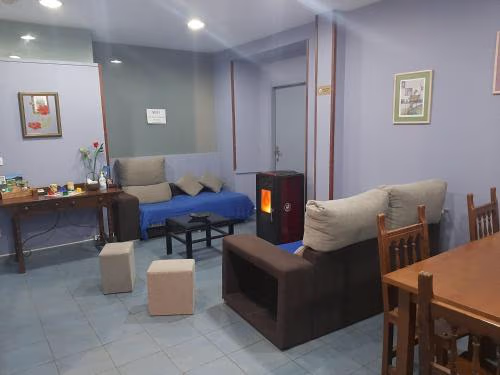
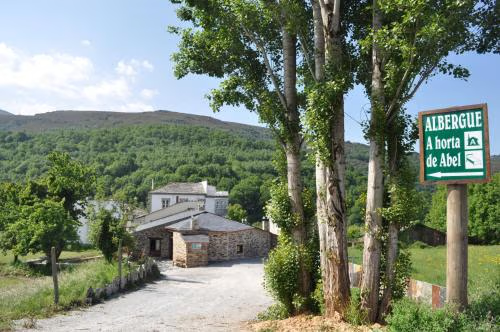
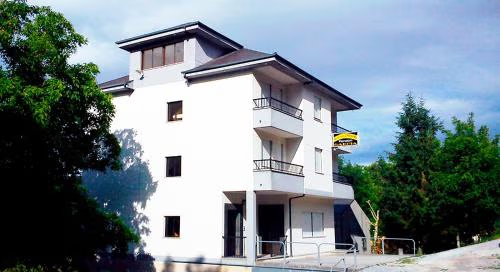
The public Albergue de peregrinos de Triacastela costs €10 (as of October 2026), is open all year and is located next to the pilgrim monument. In addition there are many private albergues with dormitories for roughly €10 to 15, such as Berce do Camiño, Refugio del Oribio, A Horta de Abel and Aitzenea, which only opens from mid-April to mid-October. There is no parish or donativo albergue in Triacastela.
Ninja tips
- Decide this evening, not tomorrow morning. The way splits at the end of the main street. To the left via Samos it is 25.4 kilometers to Sarria, to the right via San Xil about 18. Both meet again in Aguiada.
- Choose Samos for the monastery, San Xil for the quiet. Via Samos you walk through a river valley with chestnuts and oaks and see one of the oldest monasteries in Spain; via San Xil you climb up to Alto de Riocabo and walk quiet paths between stone walls.
- Check the albergue in the monastery before taking the Samos variant. It is currently closed because of construction work (as of October 2026); if you want to sleep in Samos, you need a private albergue.
- Stock up. On both variants there are many hamlets without a shop.
Practical tips for pilgrims
- Money and health: An ATM, a pharmacy and medical care are in the village.
- Stamp: at the albergue.
- Festivals: Virgen del Carmen on 16 July, San Mamede on 17 August with a pilgrimage to the chapel.
Onward: Samos or San Xil
The Camino Ninja map leads via Samos: 10.0 kilometers along the Río Oribio through San Cristovo do Real, Lusío and Renche to the monastery, then another 15.4 kilometers via Pascais, Gorolfe and Sivil to Aguiada and Sarria, 25.4 kilometers in total with 697 meters of ascent and 900 meters of descent. The shorter variant via San Xil climbs beyond A Balsa to Alto de Riocabo and goes via Montán, Furela, Pintín and Calvor to Aguiada, about 18 kilometers. From Aguiada both ways are one again.
What awaits you tomorrow
If you turn left: Samos, a Benedictine monastery from the 6th century with one of the largest cloisters in Spain and a small Mozarabic chapel under a tall cypress. If you turn right: a quiet day between stone walls and chestnuts to Sarria, where the way gets crowded.
Deep dive: The limestone carriers
A short read, in case you want to learn more about Triacastela. About three minutes' reading.
A stage from the twelfth century
Around 1140 someone in France wrote a guide for pilgrims to Santiago. It has come down to us in the fifth book of the Codex Calixtinus, and it divides the way into stages. The eleventh ends here: from Villafranca to Triacastela, over the pass at Cebreiro. The twelfth leads on to Palas de Rei. That is a day's work one marvels at today, but it shows how early Triacastela was seen as a place to arrive.
The stone
The same guide reports a custom. In Triacastela the pilgrims picked up a stone and carried it to Castañeda, a village near Arzúa. There lime was made from the stone, and the lime was needed for building the basilica of the Apostle. The cathedral of Santiago was growing at that time, and the pilgrims helped build it by carrying. Following today's way, it is a good ninety-five kilometers from Triacastela to Castañeda, four or five days with a stone in your luggage.
A place of kings
Triacastela was not just a resting place. King Alfonso the Ninth of León rebuilt the village and held it to be important, and in 1248 Fernando the Third summoned the communities of Galicia here. The decades around 1200 were the great time of the village, when the streams of pilgrims were at their strongest. Later fewer pilgrims came, and more people who only passed themselves off as pilgrims in order to get alms. For them there was a prison of their own in the village.
What Triacastela gives you
When this text was written, in the autumn of 2026, Triacastela was a village full of albergues, taking in pilgrims from all over the world every evening and sending them on in two directions every morning. The limestone carriers are long gone. What remains is the question they did not have to ask themselves: which way will you take tomorrow? Both lead to Santiago.
Where to stay in Triacastela
The places pilgrims rate highest in Triacastela come first.
- Top #1
 OpenReservations accepted
Albergue Atrio
- Top #2
 ClosedReservations accepted
Albergue Aitzenea
- Top #3
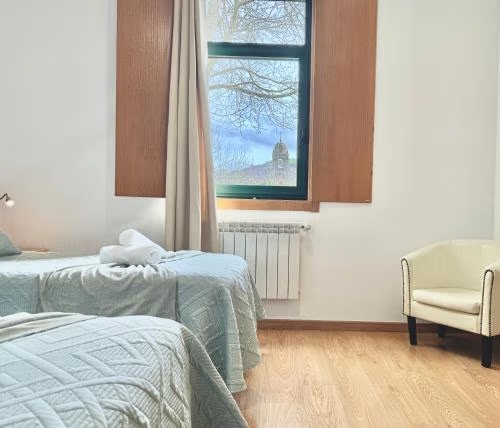 OpenReservations accepted
Albergue-Pensión Complexo Xacobeo


Services in Triacastela
What you can find in town before the next stage.
- ATM
- Café
- Shop
- Tobacco
- Medical clinic
- Pharmacy
- Fountain
- Post office
- Restaurant
Source: © OpenStreetMap contributors · updated November 2025
Town 39 of 49