

Town on the Camino
Vila Nova de Gaia
Distrito do Porto, Região do Norte, Portugal
- places to stay
- 22
- Caminos
- 2
- Elevation
- 116 m
Vila Nova de Gaia is the other bank: the town opposite Porto was founded to take trade away from the bishop over there, and it still stores the port wine today. From here Wellington crossed the Douro in 1809, from here you walk over the Luís I bridge. It is still 2.4 kilometres to Porto.
How long to stay?
An afternoon is enough, and you spend it best from Porto. Gaia is a big city, but for pilgrims it is above all the last hour before Porto: 12.9 kilometres from Grijó, then down the Avenida da República to the Douro, and 2.4 kilometres further on you are standing at the cathedral. What makes Gaia are the waterside and the hill: the port wine cellars on the bank, the round monastery of the Serra do Pilar and the view of Porto. You can reach all of that from Porto across the bridge in a few minutes. Anyone who sleeps in Gaia has the finest view of Porto, just from the outside.
Vila Nova de Gaia in Ninja numbers
- 2.4 kilometres is the distance from Gaia to Porto according to Camino Ninja. In between lie a river and a bridge that is part of a World Heritage Site.
- 246.3 kilometres still lie ahead of you to Santiago according to Camino Ninja. You have 373 behind you since Lisbon.
- 303,824 inhabitants lived in the municipality of Vila Nova de Gaia in 2021. It is the third largest in Portugal and has more inhabitants than Porto.
- 5 réis was what pedestrians paid in 1886 to cross the new bridge. The toll was only abolished on 1 January 1944.
- 1255 is when King Afonso III gave the place its first town charter, so that the Bishop of Porto was no longer the only one earning from trade on the river.
Arriving: down the avenue to the river
The stage from Grijó is short, and it has two faces. Beyond Perosinho you walk on an old Roman road between stone walls and ferns through the forest and see the coast of Gaia and the Atlantic from above. Then it turns urban: Rechousa, the old national road EN-1, a steep climb through Laborim, then the roundabout at the Santo Ovídio metro station. From here the path follows the Avenida da República, beneath which metro line D runs, a good two and a half kilometres straight ahead to the north. At the end the view opens up: Jardim do Morro, the monastery of the Serra do Pilar and below you the Douro with Porto opposite.
In brief: the town founded against Porto
The Romans already knew the place as Cale. On the north bank lay the harbour, Portus Cale, and that name later became Portugal. In the Middle Ages Porto belonged to the bishop, who charged duties on goods bought or sold in the city, around one per cent each time. In 1255 King Afonso III gave the settlement at the castle of Gaia a town charter, in order to bring trade to the south bank. In 1288 King Dinis and Queen Isabel founded another settlement on the bank next to it, Vila Nova de Rei, which was meant to concentrate the wine trade. That is the same Isabel who went to Santiago as a pilgrim in 1325.
The wine merchants built their cellars on the south bank, and that also had to do with nature: the ground is rich in water, the bank faces north, sheltered from the wind off the river mouth, so it is cool and even, good for wine that is meant to mature for years. From 1777 Gaia was the official storage place for everyone who exported port wine. In 1984 Gaia was raised to the status of city.
The monastery opposite
Above the bridge, on the hill, stands the monastery of the Serra do Pilar, and for pilgrims on this way it is a special place. In 1527 King João III ordered a larger monastery to be built for the Augustinians from Grijó, where you may have slept last night. In 1537 the monks moved here. The church, built from 1597 and consecrated in 1672, is round, and so is the cloister beside it, with the same diameter.
Its position made the monastery a fortress. In 1809 Wellington's troops occupied the hill and crossed the Douro from here to retake Porto from the French. In the civil war it became a makeshift fortress in 1832, the only one of the Liberals on the south bank, while Porto was under siege. Since 1947 part of the grounds has been a barracks; today an artillery regiment is based here. Since 1910 the monastery has been a national monument, and since 1996 it has belonged, together with the old town of Porto and the Luís I bridge, to the UNESCO World Heritage. From its terrace you see exactly what the name of this page promises: Porto, opposite.
From hill to riverbank: what to see
The sights lie close to the river: up above the hill with monastery and garden, down below the bank with the cellars. In between runs a cable car, the Teleférico de Gaia, from the bank up to the upper deck of the bridge. We have not found opening hours and prices for any of these places reliably.
- Ponte Luís I: The bridge is your way to Porto. Building began in 1881 to the plans of Théophile Seyrig, who had previously worked with Gustave Eiffel and designed the Maria Pia railway bridge. The upper deck was opened on 31 October 1886 and is around 395 metres long. Beneath it lies a second, shorter deck close to the water. Since 2005 the metro runs on top, along with pedestrians; cars have been banned since 2003. The bridge replaced a suspension bridge of 1843, of which two pillars have remained standing. For you it is the moment the last few days have been leading up to: high above the Douro, beneath you the boats and the cellars, ahead of you Porto.
- Mosteiro da Serra do Pilar: The round church and the round cloister are what make this monastery unique. The monks from Grijó lived here, and Wellington gathered his troops here in 1809. The church still serves for Mass on Sundays; we have not found the time. The monastery itself is closed in November 2026 because of building work, see "Honestly".
- Jardim do Morro: The garden at the upper end of the bridge was laid out in 1927, with a small lake and lime trees. The metro stops here, the cable car arrives here, and here you stand on your last metres before the bridge. If you are not staying the night in Gaia, this is your place for a break with a view.
- Port wine cellars at the Cais de Gaia: On the bank the port houses store their wine and let it mature there. The cellars are one of the town's great attractions, and many can be visited. For pilgrims this is the place where you understand why this town exists: without the wine and the bishop's duties across the water, Gaia would not exist in this form. Prices and times differ from house to house.
Honestly
- The Avenida da República is long. After the forest beyond Perosinho comes city traffic, and for the last two and a half kilometres you walk straight ahead on a big road beside the metro. It only becomes beautiful at the Jardim do Morro.
- The monastery is closed at the moment. The state heritage authority reports the Serra do Pilar as temporarily closed because of building work, with no date for reopening (as of November 2026). You still have the view from outside.
- No pilgrim hostel. There is no pilgrim hostel in Gaia, only hostels and rooms. The pilgrim hostel of Porto is on the other side of the river.
- Down on the bank it is tourist land. The cellars at the Cais de Gaia are among the great attractions of the area, and it is busy there accordingly. For a quiet moment the Jardim do Morro up above is the better choice.
Where pilgrims sleep
There is no pilgrim hostel in Vila Nova de Gaia. Near the bank, between the Avenida da República and the Cais, there are several private hostels with dormitories; a bed there usually costs around €20 (as of November 2026). If you would rather sleep among pilgrims, walk the 2.4 kilometres on to Porto. There you will find the Albergue de Peregrinos do Porto with 26 places, from €20 according to Camino Ninja (as of November 2026), at the start of the stage out of Porto.
Ninja tips
- Don't ride all the way to the bridge. From Santo Ovídio the metro follows the path for about two and a half kilometres. If you want to save yourself the Avenida, get off at the Jardim do Morro station, that is before the bridge, and walk over the bridge on foot. The step across the Douro is yours.
- Take the upper deck. The path leads over the upper deck, where there is an area for pedestrians only. After about 100 metres on the Porto side you turn left, past a medieval wall and the equestrian statue of Vímara Peres, and climb up to the square in front of the cathedral.
- Look around at the Jardim do Morro. Before you cross the bridge, turn around once: behind you lies the town you have just crossed, ahead of you the one you have been walking towards for days.
- By cable car to the cellars. If you are staying in Porto and want to visit the cellars in the afternoon, walk back over the upper deck to the Jardim do Morro and take the cable car down to the bank. Back to Porto you then go over the lower deck.
- Cathedral before closing time. According to a stage portal the cathedral of Porto closes at 6 pm from November to March and has a lunch break from 12:30 to 2:30 pm. If you want to see it on your day of arrival, don't dawdle in Gaia.
Onward: over the Douro to Porto
From Gaia it is still 2.4 kilometres to Porto according to Camino Ninja. Beyond the bridge lies the cathedral, the starting point for many who only begin here on the Camino Portugués Central. In Porto the Portuguese Coastal Way also begins, leading north along the sea. Pilgrims on the Fátima: Caminho do Norte walk the same stretch in the opposite direction, from Porto southwards.
What awaits you tomorrow
Porto, and after only half an hour. If you stay the night in Gaia, your morning begins with one of the great moments of this way: over the bridge, high above the river, towards the cathedral. After that you have to decide whether to go to Santiago inland or along the coast.
Deep dive: The other bank
A short read, in case you want to learn more about Vila Nova de Gaia. About five minutes' reading.
On the edge of the hill
When you stand at the Jardim do Morro, above the bridge, looking across at Porto, you stand at a spot where two banks have always looked at each other. Two cities, one river, and both have good reasons to consider themselves the real beginning. Vila Nova de Gaia is a big city, with more inhabitants than Porto. And yet the world knows it mainly as what lies opposite Porto.
Cale and the harbour
The Romans called the place on the Douro Cale. The name is probably older than they are and goes back to a Celtic settlement. On the north bank lay the harbour, Portus Cale, the harbour of Cale. Portus Cale became Portucale, and even the Suebi and Visigoths used the name in the fifth century for the whole region. Portucale later became Portugal. A country thus has its name from this river crossing.
Who invented the name?
Here the dispute begins, and honestly it cannot be fully settled. Did Cale lie on the south side, where Gaia is today, and the harbour on the north side, where Porto is today? Or were both banks parts of the same settlement, as some descriptions say? You can tell the story from both sides. From Gaia it goes: the name belongs to the place after which the harbour was named. From Porto it goes: without the harbour nobody would have known the name. Probably both are true. A harbour needs a bank to lie on, and a place needs a harbour so that people know it.
A town against the bishop
In the Middle Ages Porto belonged to the bishop. Anyone who bought something in the city or brought something in to sell paid him a duty, roughly one per cent of the value. For the king that was annoying, because the money flowed to the Church and not to the Crown. In 1255 King Afonso the Third therefore gave the place at the castle of Gaia a town charter. Ships were to land on the south bank, merchants to trade on the south bank. In 1288 King Dinis and Queen Isabel went a step further and founded a new settlement on the bank, the Vila Nova de Rei, the king's new town. From it Vila Nova de Gaia has the first half of its name.
This Queen Isabel is no stranger to pilgrims. Thirty-seven years later, in 1325, she went to Santiago as a widow and received the staff of a pilgrim of St James there. The woman who founded, with her husband, the town opposite Porto has thus walked the same way you are on now.
Wine that sleeps on the bank
What the founders wanted happened, only more slowly than expected. The wine merchants built their stores on the south bank to avoid the bishop's duties. And they noticed that nature was on their side. The ground in Gaia is rich in water, and every cellar had its own spring. The bank faces north and lies sheltered from the wind that comes up from the river mouth. It is cool and even there, exactly right for a wine that is to mature in barrels for years. In 1777 Gaia became the official storage place for everyone who sold port wine abroad. The wine grows upriver in the Douro valley, but it grows up here.
Monks on the hill
In the sixteenth century a second reason came along to look at this hill. King João the Third had a new house built on the hill above the river for the Augustinians from Grijó, the monastery twelve kilometres further south on the way. In 1537 they moved in. Their church, which was only consecrated in 1672, is perfectly round, and so is the cloister beside it, with exactly the same diameter. Anyone looking across from Porto sees the dome above the river.
War across the Douro
A hill that lies over a city like this attracts soldiers. In May 1809 French troops held Porto occupied. They had destroyed the bridge over the river. Arthur Wellesley, later Duke of Wellington, used the monastery on the hill to gather his troops and had them cross the Douro by surprise. Porto was retaken. Twenty-three years later, in the civil war between Liberals and Absolutists, the monastery was the only fortress of the Liberals on the south bank while Porto was under siege. Since the twentieth century part of the grounds has been a barracks, and an artillery regiment is based there to this day.
Bridges
For a long time the river was what separated the two cities. In 1843 a suspension bridge was opened, of which two pillars still stand today. In 1886 followed the Luís the First bridge, an iron arch to the plans of Théophile Seyrig, who had previously worked with Gustave Eiffel. Anyone who wanted to cross paid a toll, even on foot, until the first of January 1944. Today the metro runs on top, and beside it walk pedestrians, tourists, commuters and pilgrims with rucksacks. Since 1996 the bridge, the monastery on the hill and the old town of Porto have together been a World Heritage Site. UNESCO has thus honoured the two banks together, as if it wanted to end the old dispute.
What Gaia gives you
When this text was written, in autumn 2026, the monastery on the hill was closed because of building work. But the view from its terrace was free. And perhaps that is the real gift of this town to pilgrims: it shows you your destination before you enter it. Since Lisbon you have seen many cities from the inside. Porto you see first from the outside, as a whole, with cathedral, roofs and river. Then you walk over the bridge, and the opposite becomes the here.
Where to stay in Vila Nova de Gaia
Places to stay in Vila Nova de Gaia.
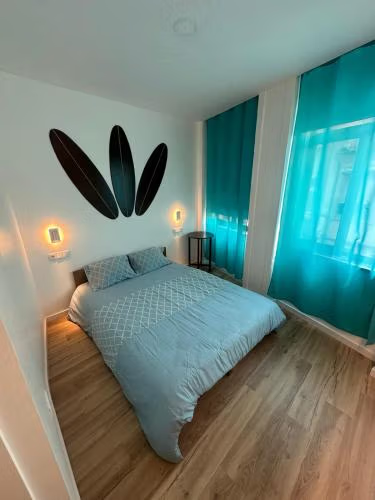 OpenReservations accepted
Douro Surf Hostel
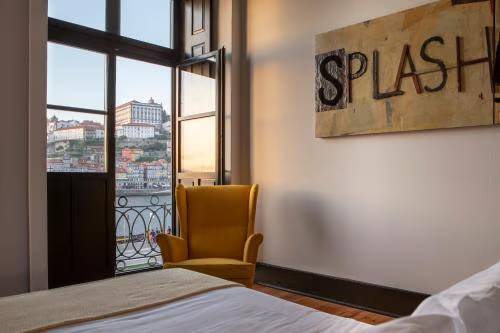 OpenReservations accepted
The House of Sandeman Hostel & Suites
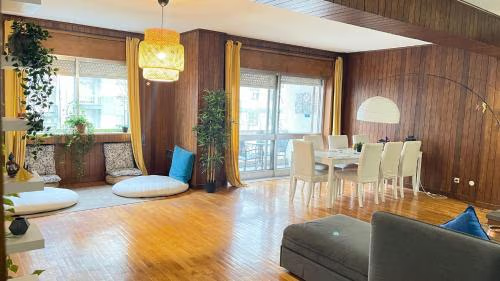
 Open
Hostel Cruz Vermelha
22€



Things to do in Vila Nova de Gaia
Tours, tickets and day trips you can book on Booking.com. Prices were checked on November 9, 2026 and may have changed.

Poças Guided Visit and Wine Tasting of 3 Port Wines
With more than 100 years of existence, Poças lies in the hands of the 4th generation, being one of the very few Port Wine company that was…
Rated 4.8 out of 5 from 203 reviews1 h 30 min
Free cancellation
from €23
opens Booking.com in a new tab
Poças Guided Visit and Wine Tasting of 2 DOC Douro & 1 Port Wine
Com mais de 100 anos de vida, a Poças está atualmente nas mãos da 4ª geração, sendo uma das raras empresas de Vinho do Porto que nasceu…
Rated 4.7 out of 5 from 28 reviews1 h 30 min
Free cancellation
from €23
opens Booking.com in a new tab
Porto: Fonseca Wine Cellars & WOW Day Pass
Step into WOW, a vibrant cultural quarter where museums become interactive tasting experiences. With one ticket, enjoy 48-hour access to…
Rated 4.6 out of 5 from 12 reviews2 days
Free cancellation
from €43
opens Booking.com in a new tab
Private Douro River Sailing Cruise (Sunset Available)
Private tours are available at various times: 1) Day times (morning & afternoon tours) 2) A golden hour tour (next-to-last departure time…
Rated 5.0 out of 5 from 10 reviews2 h
Free cancellation
from €175
opens Booking.com in a new tab
Services in Vila Nova de Gaia
What you can find in town before the next stage.
- ATM
- Café
- Shop
- Tobacco
- Medical clinic
- Pharmacy
- Fountain
- Post office
- Train station
- Bus station
- Restaurant
Source: © OpenStreetMap contributors · updated January 2026
Town 21 of 43