

Stage town on the Camino
Villafranca del Bierzo
León, Castilla y León, Spain
- places to stay
- 22
- Camino
- 1
- Elevation
- 532 m
Villafranca del Bierzo is the last deep breath before the mountain: a town founded in 1070 by French monks for pilgrims, with a Romanesque church of Santiago whose Puerta del Perdón grants the sick the graces of Santiago. Tomorrow brings 28.3 kilometres and 1,117 metres of ascent to O Cebreiro. An afternoon is enough, and an early bed is worth it.
Right now in Villafranca del Bierzo (as of October 2026)
- Holy Year 2027: The Puerta del Perdón of the Iglesia de Santiago opens only in Holy Years, when 25 July falls on a Sunday. 2027 is such a year again.
How long to stay?
An afternoon is enough, but go to bed early. The Iglesia de Santiago stands right at the entrance to town, and the old town with Plaza Mayor, Colegiata and Calle del Agua can be walked in an hour. You don't need more time, unless you want to take a rest day before the queen stage. Villafranca is a good place for that: it has everything you need before the mountain, and the town is quiet.
Villafranca del Bierzo in Ninja numbers
- 586.9 kilometres lie behind you since Saint-Jean-Pied-de-Port, 189.2 still ahead.
- 1,117 metres of ascent await you tomorrow on the way to O Cebreiro, over 28.3 kilometres. It is the hardest climb since the Pyrenees.
- 1070 is when monks from Cluny came and built a monastery here for French pilgrims. The town's name comes from "villa francorum", the settlement of the Franks.
- 1965 is when the entire old town was placed under heritage protection.
Arriving: the door of grace first
From Ponferrada you arrive after 23.5 kilometres through vineyards and past Cacabelos. The path climbs briefly to 583 metres and then drops into the valley. The first thing you see of Villafranca is the Iglesia de Santiago with its Puerta del Perdón. Only after that do you go down into the town, past the castle of the marquises, to the Plaza Mayor.
In brief: the little town of the Franks
When King Alfonso VI expanded the pilgrim routes, Benedictines from Cluny settled here in 1070 to look after the French pilgrims. They brought winegrowing with them, and around their monastery a settlement of Franks grew. The Codex Calixtinus from the 12th century names Villafranca as a stage town between Rabanal and Triacastela. In 1192 the town received its first rights from King Alfonso IX, and in 1486 the Catholic Monarchs made it a marquisate. From 1822 to 1833 Villafranca was even the capital of a province of its own. It has survived the plague of 1589, the flood of 1715 and the Napoleonic wars.
The Door of Forgiveness
The Iglesia de Santiago is a Romanesque church from the end of the 12th century. Its north door is called the Puerta del Perdón, the Door of Forgiveness. Anyone who has made it this far on the Camino but cannot go on because of illness or an accident receives at this door, in Holy Years, the same jubilee graces as in Santiago, after confession, communion and prayer. Apart from the cathedral, no other door on the Way offers this. The sources differ on which pope granted the privilege. In the 19th and 20th centuries the door was walled up, and in 1948 the custom was taken up again.
The idea has its place right here. Ahead of you lies the climb into Galicia, for many the hardest stage of the whole Way. Villafranca is the place where the Way tells those who can go no further: you have arrived all the same.
Before the mountain: what to see
Everything lies on a short walk from the entrance to town to the bridge over the Burbia.
- Iglesia de Santiago: Romanesque, single-nave, with a semicircular apse; inside, a Byzantine-style crucifix from the 13th century and a figure of Santiago the pilgrim from the 19th century. The Puerta del Perdón on the north side has four archivolts on slender columns, and it is worth a look even when closed. A cultural heritage site since 1993, part of the World Heritage of the Camino Francés since 2015. We have not found opening hours.
- Castillo-Palacio de los Marqueses: The 16th-century castle with four round corner towers stands opposite the church of Santiago. It is inhabited and cannot be visited, but the sight of it accompanies you into town.
- Colegiata de Santa María: Stands where the Cluny monks' monastery was in 1070; built in the 16th and 17th centuries, late Gothic with Renaissance and Baroque, the west part left unfinished. The town began here.
- Convento de San Francisco: The Franciscan church above the Plaza Mayor has a Mudéjar wooden ceiling from the 15th century. Its founding is dated sometimes to 1213, sometimes to 1285.
- Calle del Agua: The most beautiful street in town, with coats of arms on Renaissance and Baroque houses, the Palacio de Torquemada and the palace of the marquises. You leave town through it tomorrow morning.
- San Nicolás El Real: The 17th-century Jesuit college guards the Cristo de la Esperanza, the town's patron. Today it is also a pilgrim hostel, and you can visit a natural history museum by arrangement with the tourist office.
- La Anunciada: The convent of 1606 stands on the ruins of the old pilgrim hospital of Santiago. In the garden grows a cypress more than 400 years old, protected as a natural monument of Spain.
Eating and drinking
The Bierzo is a fertile valley: Pimientos del Bierzo, peppers roasted over wood, chestnuts, cherries, Reineta apples and pears. The hearty dish of the region is Botillo, stuffed pork stomach with ribs, meat and spices, cooked with cabbage and potatoes. A wine from the D.O. Bierzo goes well with it, since the Cluny monks once began winegrowing here. For tomorrow: have an early breakfast, and along the way there are enough bars in the valley.
Honestly
- The castle stays closed. It is private property and inhabited.
- The churches are often closed. We found no reliable opening hours for either the Iglesia de Santiago or the Colegiata.
- Tomorrow gets loud if you walk in the valley. The main route to O Cebreiro runs for a long stretch beside the national road and the motorway, with dangerous crossings near Trabadelo and La Portela.
- The hostels close in winter. The municipal hostel is open only from March to mid-December.
Where pilgrims sleep
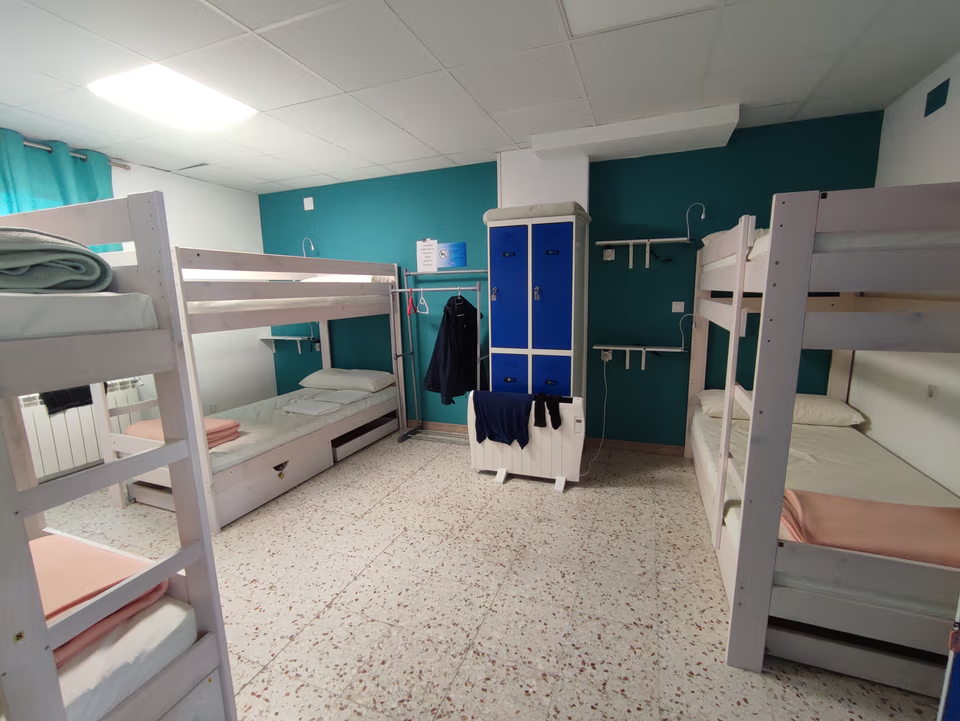
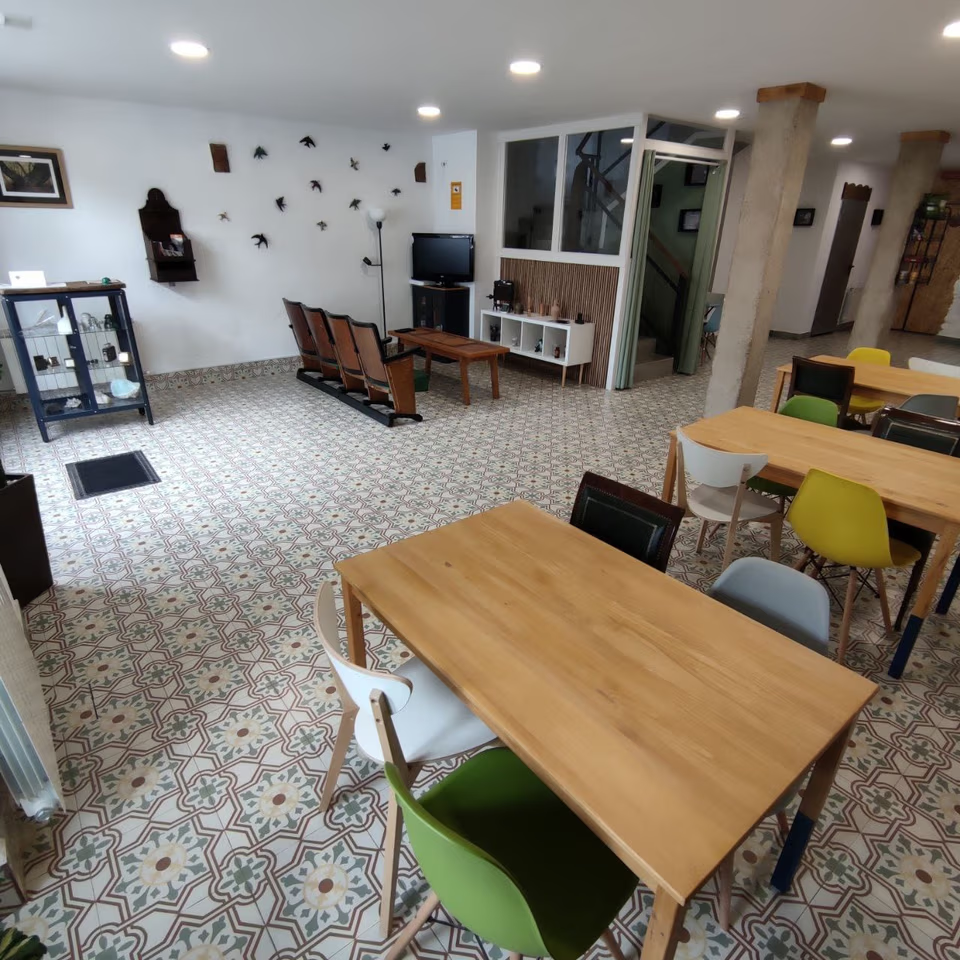
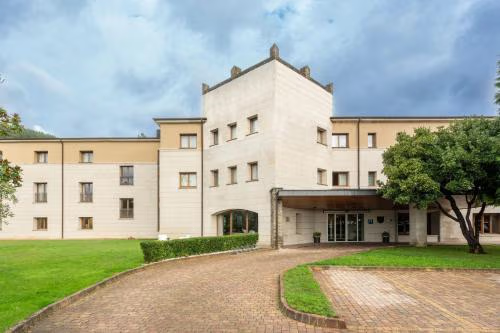
The municipal Albergue de peregrinos de Villafranca del Bierzo costs €10 and is open from 1 March to 15 December. Open all year and just as cheap is the Albergue Ave Fénix at €10, a pilgrim hostel with a long history. In the former Jesuit college you sleep in the Albergue-Hospedería San Nicolás El Real for €12, also all year. Then there are several private hostels such as Leo, De la Piedra and El Castillo for €14 to 25 (all prices as of August 2026), some only from March to November.
Ninja tips
- Decide before you set off. Beyond the Burbia bridge the Way splits: in the valley along the roads, or over the "Camino Duro" up to Pradela, with views and a steep climb. Both meet again in Trabadelo.
- Take a break in Vega de Valcarce. It is the best place for a longer rest before the real climb begins beyond Las Herrerías.
- Split the stage if you need to. Las Herrerías, La Faba and La Laguna have accommodation. Nobody has to walk the 28 kilometres with over 1,100 metres of ascent in one go.
- Watch the mountain weather. In O Cebreiro there can be fog, wind or snow when it is mild in Villafranca.
- Look at the Puerta del Perdón from the outside, even when it is closed. It lies right on the Way.
Practical tips for pilgrims
- Tourist office: Avenida Díaz Ovelar 10, tel. 987 540 028; Tuesday to Sunday 11:00–13:30 and 17:30–19:30, closed on Monday (undated information).
- Supplies: A cash machine, pharmacy, grocery shops, a bakery and a health centre (tel. 987 542 510) are in town. Buy water and provisions for tomorrow here.
- Getting there and away: Alsa buses stop in Villafranca; the nearest railway station is Ponferrada, 23.5 kilometres back along the Camino.
- Festivals: San Tirso on 28 January, the Festa do Maio on 1 May, the Cristo de la Esperanza on 14 September.
Onward: through the Valcarce Valley to O Cebreiro
The Way crosses the Burbia and follows the narrow Valcarce valley: Pereje (km 592.3), Trabadelo (km 596.8), where the Camino Duro rejoins, La Portela, Ambasmestas and Vega de Valcarce (km 603.8). Up to Las Herrerías (km 607.3) you climb slowly to 680 metres. Then it gets steep: a stretch of asphalt, then a stony path through chestnut and oak forest to La Faba (km 610.3), on across open country to La Laguna (km 612.9) and shortly after over the border into Galicia. After 28.3 kilometres, 1,117 metres of ascent and 370 metres of descent you reach O Cebreiro at 1,288 metres.
What awaits you tomorrow
O Cebreiro, the first village of Galicia, at almost 1,300 metres. This was the home of the priest who invented the yellow arrows, and in his pre-Romanesque church they tell of the miracle of the Grail. If there is no fog, you can see from above what you have achieved today.
Deep dive: The town that opens its door to the exhausted
A short read, in case you want to learn more about Villafranca del Bierzo. About two minutes' reading.
Monks from Burgundy
Villafranca begins with strangers. Around 1070 Benedictines from Cluny in Burgundy came to this valley, where the Burbia flows into the Valcarce. King Alfonso the Sixth had called them to secure and care for the pilgrim routes to Santiago. They founded a monastery for the many pilgrims from France, and around the monastery grew a settlement that was called the settlement of the Franks: villa francorum. The monks also brought winegrowing with them, and to this day wine grows in the Bierzo.
A stage town since the Middle Ages
In the twelfth century the Codex Calixtinus, the great pilgrim book of Santiago, names Villafranca as the end of a day's journey. At the end of that century the church of Saint James was built, the one you see today at the entrance to town. The kings of León liked to come here, Alfonso the Ninth alone nineteen times, and in 1192 he gave the town its first rights. Later the Osorio family bought the lordship, and in 1486 the Catholic Monarchs raised it to a marquisate. The castle with the four round towers and the palaces in the Calle del Agua date from this time.
The Door of Forgiveness
The north door of the church of Saint James has a special task. Anyone who had come this far on the way to Santiago and could not go on because of illness was not to go away empty-handed. At this door, so the tradition goes, he received the same graces as at the tomb of the apostle. Which pope granted this, the sources do not agree. It is certain that the door is opened in Holy Years and that for a long time it was walled up, for fear of plagues and thieves. In 1948 it was opened again. Today, so it is said, apart from the cathedral of Santiago there is no second door on the Way where one can receive the jubilee graces.
Plagues, floods and wars
The town did not always have it easy. In 1589 came the plague, in 1715 a flood that swamped the convent of the Anunciada and many houses. In the wars against Napoleon, Villafranca was in 1808 the headquarters of the Galician army, until in 1810 the French finally withdrew. From 1822 to 1833 the town was even the capital of a province of its own. In 1965 the whole old town was placed under protection.
What Villafranca gives you to take along
When this text was written, in autumn 2026, pilgrims went every morning through the Calle del Agua out into the valley, toward the mountain. Villafranca is the place where the Way once more draws breath. And it is the place that keeps a door open for those who can go no further. Whoever manages the climb tomorrow may think of this door. Whoever does not manage it may think of it too.
Where to stay in Villafranca del Bierzo
The places pilgrims rate highest in Villafranca del Bierzo come first.
- Top #1
 ClosedReservations accepted
Albergue Leo
- Top #2
 OpenReservations accepted
Viña femita
- Top #3
 OpenReservations accepted
Venecia B&B




Services in Villafranca del Bierzo
What you can find in town before the next stage.
- ATM
- Café
- Shop
- Tobacco
- Medical clinic
- Pharmacy
- Fountain
- Post office
- Train station
- Restaurant
Source: © OpenStreetMap contributors · updated November 2025
Town 37 of 49