

Town on the Camino
Bolibar
Biscay, Basque Country, Spain
- places to stay
- 3
- Caminos
- 2
- Elevation
- 176 m
Bolibar is the morning stop after Markina: a village of around 160 people, home of Simón Bolívar's ancestors, with a small museum about the liberator of South America. One kilometre uphill the monastery of Zenarruza awaits with its cloister, its Cistercians and their own beer. A break is enough, but take in both.
How long to stay?
A break is enough if you're coming from Markina. Bolibar lies 6 kilometres beyond Markina, you'll be here in the morning, and Gernika is still 19 kilometres away. Half an hour in the village and another up at the monastery of Zenarruza is time well spent. If you need a short day after the hard stage from Deba, you can also sleep here or at the monastery.
Bolibar in Ninja numbers
- 6 kilometres lie behind you since Markina-Xemein.
- 1.1 kilometres and 125 metres of ascent on the old paved road up to the monastery of Zenarruza.
- 751.2 kilometres still lie between here and Santiago.
- 1082 is the year an abbot of Zenarruza is first mentioned. Since 1988 monks have lived there again, Cistercians.
Arriving: a village with a big name
From Markina the Camino del Norte runs through the valley and gently up via Iruzubieta to Bolibar at 176 metres. Beside the way stand a bust and a monument to Simón Bolívar; the bust was a gift from the government of Venezuela. Bolibar belonged to Markina until 2005; today, together with Ziortza, it forms a small municipality of its own below Monte Oiz.
In brief: Bolívar, who was never here
Simón Bolívar was born in Caracas and in the 19th century freed large parts of South America from Spanish rule. His family, though, came from this village, once called La Puebla de Bolibar. The farmhouse Errementarikua, the ancestral home, is now a museum. The parish church of Santo Tomás on the square dates from the 17th and 18th centuries; its porch holds a chapel of the Virgen de Coromoto, the patron saint of Venezuela.
Between museum and monastery: what to see
- Museo Simón Bolívar: On the ground floor images of Bolívar, on the first floor life in medieval Bizkaia with mills, forges and charcoal burning, on the second floor Bolívar's life and the wars of independence. Open according to the provincial government Tuesday to Friday 10:00 to 13:00, weekends and holidays 12:00 to 14:00, in July and August also 17:00 to 19:00, closed on Mondays. Admission is free. If you pass in the late morning, your chances are good.
- Monastery and collegiate church of Zenarruza: A paved medieval road leads from the village up to the monastery, the only collegiate church in Bizkaia and a national monument of the Basque Country. The late Gothic church was built at the end of the 15th and the beginning of the 16th century, with star vaults, a Plateresque high altar from around 1530 to 1540 and an organ from the 17th century, the oldest in Bizkaia. The Renaissance cloister of 1560, with round arches and a balustrade, is the finest place for a break on this stage. The complex once included a hospital; pilgrims still find a hostel here today. We have not found opening hours for the church.
- The monastery shop: At the exit of the courtyard a small shop sells local products and the monks' beer, "Ziortza", in blonde, dark and toasted.
- Ermita de San Pedro in Arta: An 11th-century chapel with a window in the Mozarabic tradition. It lies in the Arta district off the way, only for the curious with time to spare.
Honestly
- No shop, no ATM. We have not found a documented shop, pharmacy or ATM in Bolibar or at the monastery; the hostel portal only mentions a bar-restaurant. Bring food for the day from Markina.
- The museum opens late. On weekdays not until 10:00, at weekends not until 12:00. Pass early and you'll find the door closed.
- The climb to the monastery is short but steep. 125 metres on just over a kilometre. It is the way, not a detour.
Where pilgrims sleep
Most walk on to Gernika. If you want to stay, you have two good options. In the village the private hostel Usandi is right on the way, with dormitory beds from 15 euros and rooms, open according to Gronze from 7 February to 31 October (as of October 2026). Up at the monastery the pilgrim hostel of the monastery of Zenarruza takes pilgrims with a credencial on a donation basis, according to the hostel portal all year round, without reservations, with a simple dinner and breakfast (as of August 2026). The figures for the number of beds vary widely, so we don't give one. There is no kitchen, but coffee and tea are available. The country house Montebaserria lies just over a kilometre off the way.
Ninja tips
- Take your break in the cloister of Zenarruza, not by the road. It is right on the way, and it won't get any quieter today.
- Short day after Deba? If you're tired after the Deba–Markina stage, you can walk only as far as the monastery the next day, just over 7 kilometres, and sleep there. Call ahead: +34 946 164 179.
- Coffee and tea are free at any time in the monastery hostel. If you sleep there, you don't need to worry about breakfast; it's part of the stay.
Onward: along the slopes of the Oiz to Gernika
Beyond the monastery the way climbs to 367 metres and then runs via Munitibar and Mendata to Gernika. From Bolibar it is 19.1 kilometres, with 698 metres up and 850 metres down according to our data.
Deep dive: The monastery above the village
A short read, in case you want to learn more about Bolibar. About two minutes' reading.
An abbot in 1082
Above Bolibar, on the northern slope of Monte Oiz, people were praying a thousand years ago. The oldest stones of Zenarruza date from the ninth or tenth century. In 1082 a charter names an abbot Blasco of Zenarruza. In the twelfth century a Romanesque church was built; in 1380 the bishop of Calahorra gave the canons a rule, and shortly afterwards the parish of Bolibar was placed under the collegiate church. In the sixteenth century they built on a grand scale: a new church, the cloister and a hospital.
Loss and return
In 1851 the collegiate chapter was dissolved and became a simple parish. In 1959 a fire destroyed large parts of the buildings, including the hospital. In 1988 Cistercian monks came from the monastery of La Oliva in Navarre and stayed. They have brought the place back to life. Where the hospital once stood there is now a guesthouse, and pilgrims find a hostel.
What Bolibar gives you
Down in the village they remember a man who never lived here and yet came from here. Up above live monks who came from elsewhere in order to stay. In Bolibar, origin and arrival lie just one kilometre apart. On the way to Santiago you are both right now: someone who comes from somewhere, and someone who has not yet arrived.
Where to stay in Bolibar
Places to stay in Bolibar.
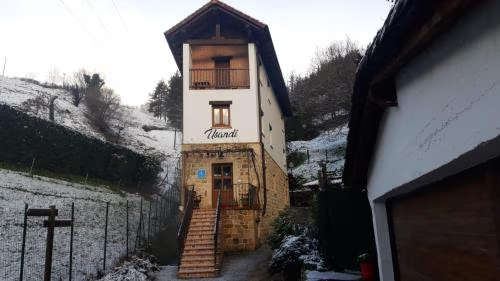 ClosedReservations accepted
Albergue Usandi Auto Check-in
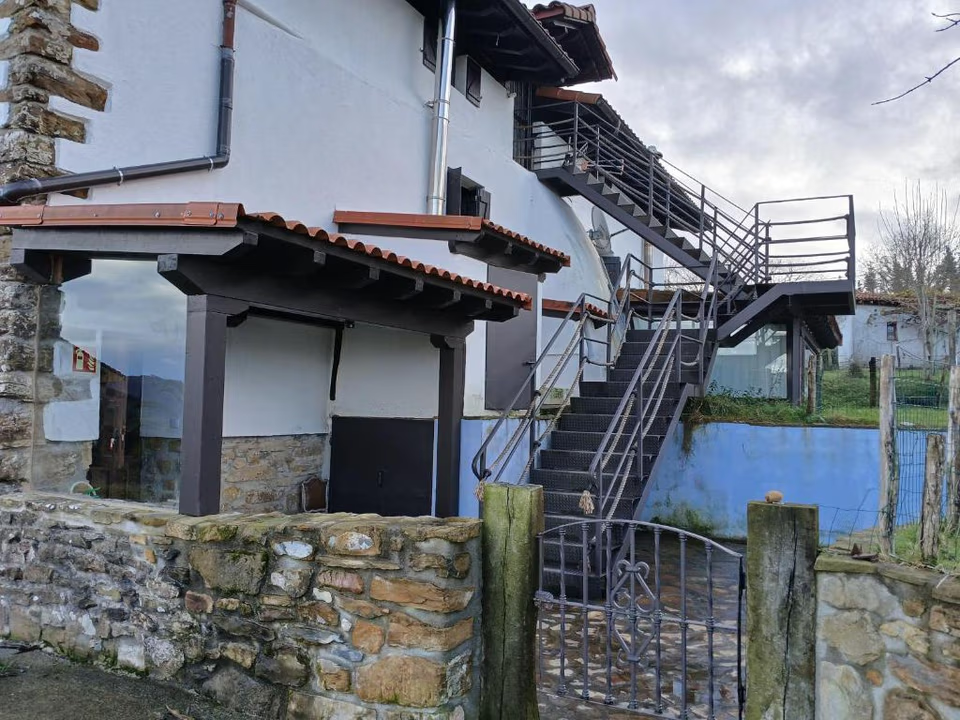 ClosedReservations accepted
Albergue Rural Montebaserria
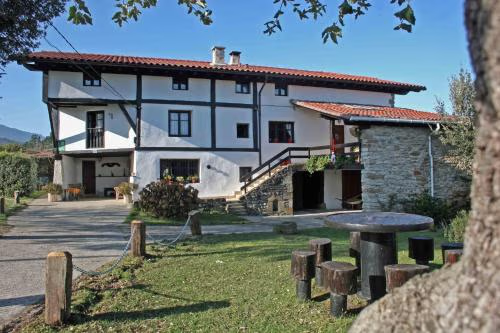 OpenReservations accepted
Monte Baserria
Services in Bolibar
What you can find in town before the next stage.
- Café
- Shop
- Fountain
- Restaurant
Source: © OpenStreetMap contributors · updated February 2026
Town 10 of 49