

Town on the Camino
Albergaria-a-Velha
Distrito de Aveiro, Região do Centro, Portugal
- places to stay
- 5
- Caminos
- 2
- Elevation
- 119 m
Albergaria-a-Velha carries a pilgrim hostel in its name: in 1117 Countess Teresa, mother of Portugal's first king, had a house for the poor and for pilgrims set up here. Today it is a small town after a short, pretty stage, with a good municipal hostel. Tomorrow will be long.
How long to stay?
An afternoon is enough. The stage from Águeda is short at 16.1 kilometres, so you arrive early. Use the afternoon to rest: tomorrow almost 30 kilometres lie ahead to São João da Madeira, with more climbing than on the two days before. The town has no great sights, but it has a story that suits you well.
Albergaria-a-Velha in Ninja numbers
- 311.4 kilometres lie behind you since Lisbon, and 307.9 remain to Santiago on the Camino Portugués Central. From here, the bigger part is done.
- 1117 was the year Countess Teresa obliged a nobleman to keep a hostel open here for the poor and for pilgrims. That is where the town gets its name.
- 110 metres higher than Águeda, you are now at 119 metres. The climb only comes after Lamas do Vouga.
- 7.4 kilometres further on lies Albergaria-a-Nova, the „new“ Albergaria. To tell them apart, this town is called „the old one“.
- More than 350 water mills are recorded in the municipality, more inventoried mills than anywhere else in Europe.
Arriving: out of the eucalyptus into town
The last kilometres from Águeda run through eucalyptus forest, and then you are at the edge of town. The hostel is right there, on the way, about 300 metres from the centre. The official route does not show the town's nicest streets; if you want to reach the centre, go straight on at the roundabout.
In brief: a town that grew out of a hostel
The road from Coimbra to Porto is old. It follows a Roman road and was later called the Estrada Mourisca, then the Estrada Real. In 1117 Countess Teresa, regent of the County of Portucale and mother of Afonso Henriques, gave the nobleman Gonçalo Eriz land on this road. The condition: he had to maintain an albergaria, a hostel for the poor and for travellers, including pilgrims to Santiago. The town grew around this house and took its name. The charter, the Carta do Couto de Osselôa, is regarded as one of the first documents in which Portugal is called a kingdom. In 1594 an Italian priest stayed here on his way to Santiago, in the retinue of a cardinal.
An old hostel: what to see
There is not much that is monumental. What counts is the history under your feet.
- The town itself: You walk along the road where, nine centuries ago, stood the hostel that gave the town its name. We could not document that anything of it survives. But the hostel where you sleep today bears the name of the woman who founded the first one.
- Rota dos Moinhos: The municipality has traces of more than 350 water mills, most of them from the 18th and 19th centuries, above all on the Rio Caima. A mill trail now links 14 of them. We have not found reliable information on how far it is from the hostel; without a car, it is hardly an afternoon outing.
Eating and drinking
The town has restaurants, shops and bakeries. If you want to cook for yourself, buy your food in the centre.
Honestly
- The town is unspectacular. Albergaria-a-Velha is an industrial town with metal and paper works that has seen better days. Its history is beautiful, its townscape less so.
- The hostel is seasonal. It is only open from March to November. In winter you are left with guesthouse and hotel.
- Tomorrow will be tough. The stage to São João da Madeira is 29.6 kilometres long, with stretches on the road. Save your strength today.
Where pilgrims sleep
The Albergue de Peregrinos Rainha D.ª Teresa belongs to the town. It lies at the entrance to town, right on the way, and is regarded as one of the best hostels on this route. A bed costs from €8 (as of October 2026). It opens at 14:00 and is open from March to November; if you arrive earlier, you may wait in the courtyard behind the house, at tables with a fountain. Phone: +351 234 529 754.
There is also the Pensão Parente in the centre, with dormitory beds from about €15, and the Estalagem dos Padres, which has a pilgrim rate. There is no parish or donativo hostel.
Ninja tips
- Feel free to arrive early. The hostel courtyard is open before 14:00, and you can rest there.
- Go straight on at the roundabout. The official waymarking bypasses the centre.
Practical tips for pilgrims
- Stamp: at the hostel.
- Winter: From December to February the municipal hostel is closed. Call ahead if you are walking at the edge of the season.
- Splitting the stage: If you don't want to walk the 29.6 kilometres to São João da Madeira in one go, you will find accommodation along the way in Albergaria-a-Nova, Branca, Pinheiro da Bemposta and Oliveira de Azeméis.
Onward: via Albergaria-a-Nova to São João da Madeira
Beyond the town the way enters the forest and soon follows the road for a while; the longest road section begins after the statue of Nossa Senhora do Socorro. At Albergaria-a-Nova (km 318.8) you cross the railway. Via Pinheiro da Bemposta (km 323.8) and Oliveira de Azeméis (km 331.8) you reach São João da Madeira after 29.6 kilometres. The day has 451 metres of ascent and 345 metres of descent; the lowest point is at km 329.5 at 99 metres, after which it is mostly uphill to the finish at 225 metres.
What awaits you tomorrow
São João da Madeira, the town of hats and shoes. In an old hat factory there is a museum like no other on the whole Iberian Peninsula.
Deep dive: A house for the poor and for pilgrims
A short read, in case you want to learn more about Albergaria-a-Velha. About three minutes' reading.
A countess and a promise
In 1117 Portugal was not yet a kingdom. It was a county, and it was ruled by a woman: Teresa, widow of Count Henry and mother of a boy who would later become the first king of Portugal as Afonso Henriques. That year she gave a nobleman called Gonçalo Eriz land on the road from Coimbra to Porto. It was not quite a gift. In return, Gonçalo Eriz had to maintain an albergaria, a house where the poor and travellers received shelter and food. Pilgrims to Santiago also travelled this road.
A town grows around a house
A town grew up around the hostel, and it took its name: Albergaria. A little further north lies a second town with the same name, Albergaria-a-Nova, the new one. To tell them apart, this one is called Albergaria-a-Velha, the old one. In 1258 a bishop of Coimbra had the charter of 1117 copied. It is regarded as one of the first documents in which Portugal appears as a kingdom.
A guest from Italy
In 1594 an Italian priest passed through the town, Gianbattista Confalonieri. He was accompanying a cardinal on the way to Santiago and spent the night here.
What Albergaria-a-Velha gives you
When this text was written, in autumn 2026, the town had a municipal hostel bearing the countess's name. Nine centuries after her promise, someone walking to Santiago still gets a bed here. You are not the first guest of this house. You are one in a very long line.
Where to stay in Albergaria-a-Velha
Places to stay in Albergaria-a-Velha.
 Open
Albergue de Peregrinos Rainha Dª Teresa
- OpenReservations accepted
Pensão Parente
15€ 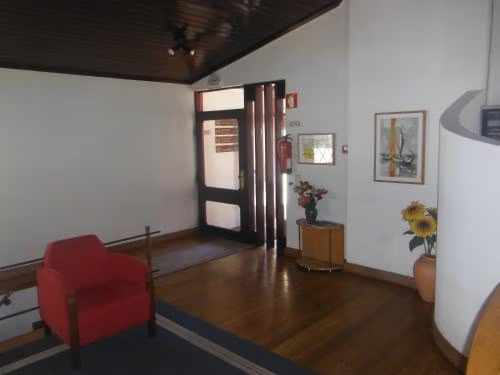 OpenReservations accepted
Hotel Alameda
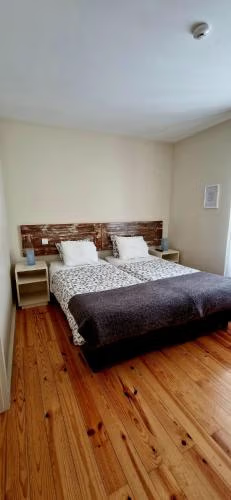
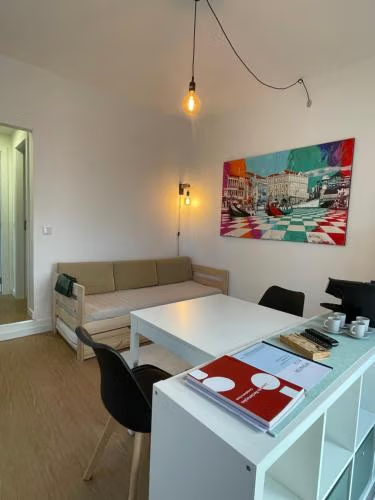
Services in Albergaria-a-Velha
What you can find in town before the next stage.
- ATM
- Café
- Shop
- Tobacco
- Medical clinic
- Pharmacy
- Fountain
- Post office
- Train station
- Restaurant
Source: © OpenStreetMap contributors · updated January 2026
Town 17 of 43