

Town on the Camino
Oliveira de Azeméis
Distrito de Aveiro, Região do Centro, Portugal
- places to stay
- 2
- Caminos
- 2
- Elevation
- 209 m
Oliveira de Azeméis is a milestone, literally: a Roman milestone stands on the main square, and it is still 43.6 km to Porto. Above the town lies the La Salette park with a chapel said to have sprung from a vow for rain. There is no pilgrim hostel.
How long to stay?
An afternoon is enough. After 20.4 km from Albergaria-a-Velha you arrive in an industrial town with a small centre: the main church, the milestone, a bank building by Álvaro Siza, and the climb into the La Salette park with its viewpoints. You can manage that in an afternoon. Since there is no pilgrim hostel, consider whether to walk another 9.2 km on to São João da Madeira.
Oliveira de Azeméis in Ninja numbers
- 43.6 km from here to Porto according to Camino Ninja. Two more days, and then you are standing above the Douro.
- 287.5 km still lie between you and Santiago according to Camino Ninja. 331.8 are behind you since Lisbon.
- 17 hectares is the size of the La Salette park above the town, with three viewpoints. From one of them you can see as far as the Ria de Aveiro and the coast near Ovar.
- 1719 is the year the main church was built, and its gilded high altar dates from 1731.
Arriving: through the forest into the factory town
The stage from Albergaria-a-Velha leads through eucalyptus and pine forest via Albergaria-a-Nova, Branca, Pinheiro da Bemposta and the old village centre of Bemposta. Then you come into a town that works. Oliveira de Azeméis is an industrial centre, where injection moulds, shoes, dairy products and car parts are made. Houses from the 19th and 20th centuries recall that many people emigrated from here to Brazil. The Way leads straight through the centre.
In brief: a town on the old road
On the main square stands a Roman milestone. It comes from the neighbouring village of Ul and is a reminder that the Romans already travelled north here. The municipality has about 68,000 inhabitants (as of 2011), the town itself about 20,000. Its most famous son is the writer Ferreira de Castro, born in 1898 in the district of Ossela. His novel "A Selva" tells of the rubber boom in the Amazon, and the town library bears his name.
A chapel for the rain
The landmark of Oliveira is the La Salette park on the hill above the town. According to tradition, its story begins with a drought. In the summer of 1870 the parish priest João José Correia made a vow and led a procession praying for rain to the then remote Monte dos Crastos. On the way home, so the story goes, the faithful were caught in a downpour. On 6 January 1871 construction began on a chapel for Nossa Senhora de La Salette, a Marian apparition from the French Alps, and it was consecrated on 19 September 1880. It is said to have been the first church in Portugal for this devotion. In 1923 it was replaced by the present church in neo-medieval style. The park was laid out from 1909 by Jerónimo Monteiro da Costa and his son José. For a pilgrim who has just walked through a hot day, this is a lovely punchline: here people prayed not for sun but for rain.
From milestone to viewpoint: what to see
The centre is compact, and La Salette lies on the hill above it. We did not find opening hours for the churches.
- Roman milestone: It stands on the central square and came here from the neighbouring village of Ul. For you it is a greeting from the first long-distance walkers on this route: Roman milestones counted the distances on the great roads, and today you count your own kilometres to Porto.
- Igreja Matriz: The main church, dedicated to the Archangel Michael, was built in 1719 and renovated in the middle of the 19th century. On the façade stands Michael vanquishing evil, two bell towers frame the portal, and a staircase with several landings leads up to it. Inside, gilded Baroque altars gleam, above all the high altar of 1731. According to a travel portal, the church can be visited without a guide.
- La Salette park and chapel: 17 hectares of woodland, romantic gardens, a lake, a music pavilion and a fountain, and at the top the church with sculptures by Henrique Moreira on the façade and stained glass by Ricardo Leone. From one of the three viewpoints you see the Ria de Aveiro and the coast near Ovar, the landscape you have walked through in recent days. In August the town's big festival takes place here.
- Bank by Álvaro Siza: In the centre, near the town hall, stands a bank building by the architect Álvaro Siza Vieira, born in 1933. Between church and milestone it is the modern counterpart: a house of money from the hand of one of Portugal's great builders.
Honestly
- No pilgrim hostel. Oliveira de Azeméis has no municipal hostel. If you want to sleep here, you need a room in a guesthouse or hotel and should book ahead.
- A working town, not a postcard. Industry shapes the edges, and anyone expecting an old town will find a small centre with a church and a square.
- La Salette costs a climb. The park lies on the hill above the town. After 20 km it is a detour that is worth it, but not one you do on the side.
Where pilgrims sleep
In Oliveira de Azeméis there is no pilgrim hostel, only hotels and private rooms. The nearest pilgrim hostel in the direction of walking is the Acolhida of the Santa Casa da Misericórdia in São João da Madeira, 9.2 km further on, with 8 places for €5 according to Camino Ninja (as of November 2026). If you plan shorter days, you will find private pilgrim accommodation before Oliveira in Albergaria-a-Nova and Pinheiro da Bemposta. The last public hostel before Oliveira is the Albergue de Peregrinos Rainha D. Teresa in Albergaria-a-Velha, 20.4 km back.
Ninja tips
- Decide early where you sleep. Without a hostel, Oliveira is either a booked room or a long break. If you go on to São João da Madeira, you have a day of almost 30 km.
- Go to La Salette in the evening. If you stay the night in Oliveira, the park is the best place for the evening: woods, water and the view back to the lagoon of Aveiro.
- Look for the milestone. It stands in the middle of the main square and is the oldest piece of Way you will see today.
- Watch for Santiago de Riba-Ul. In the parish, on the Way, lies a former river village on the Ul that carries the Apostle in its name.
Onward: to São João da Madeira and Grijó
Beyond Oliveira the Camino Portugués Central leads via Vila de Cucujães, 5 km further on, to São João da Madeira, 9.2 km according to Camino Ninja. On the same route you meet pilgrims of the Caminho do Norte to Fátima, which runs here in the opposite direction. To Grijó with its parish hostel it is 28.3 km from Oliveira, and to Porto 43.6.
What awaits you tomorrow
São João da Madeira is only 9.2 km away, a town that lived from hats and shoes and has one of the few hat museums in the world. If you go further, you reach Grijó with its monastery from the year 922, and from there it is only a short stage to Porto.
Deep dive: A vow on the hill
A short read, in case you want to learn more about Oliveira de Azeméis. About two and a half minutes' reading.
A summer without rain
When you climb up to the La Salette park in Oliveira de Azeméis, you are walking onto a hill that owes its meaning to a drought. In the summer of 1870 the rain failed to come in Portugal. The parish priest of Oliveira, João José Correia, made a vow and called for a procession praying for rain. The destination was a remote hill, the Monte dos Crastos.
The downpour
What happened next is told in Oliveira like this: on the way home from the procession the faithful were caught in heavy rain, and the drought was over. Whether it was exactly like that, nobody can check any more. What is certain is that the parish kept its promise. On 6 January 1871 construction of a chapel began, and on 19 September 1880 it was consecrated with great celebrations.
An apparition from the Alps
It was dedicated to Nossa Senhora de La Salette. The name comes from France, from a mountain village in the Alps, where two shepherd children claimed in 1846 to have seen a Marian apparition. That a parish in the north of Portugal built a chapel under this name only a few decades later shows how fast such stories travelled through Europe at the time. The chapel in Oliveira is considered the first in Portugal with this name. In 1923 it was replaced by the present church.
A park instead of a desert
In 1909 Jerónimo Monteiro da Costa and his son José, a landscape architect, laid out a park around the chapel. Today it covers 17 hectares, with woodland, gardens, a lake and viewpoints from which you can see as far as the lagoon of Aveiro. In August thousands come for the festival.
What Oliveira gives you
On the road you sometimes wish for only one thing: shade, a fountain, a cloud. On this hill a whole town once prayed for rain and, when it came, did not forget to say thank you. That is not a bad thought for the last two days to Porto.
Where to stay in Oliveira de Azeméis
Places to stay in Oliveira de Azeméis.
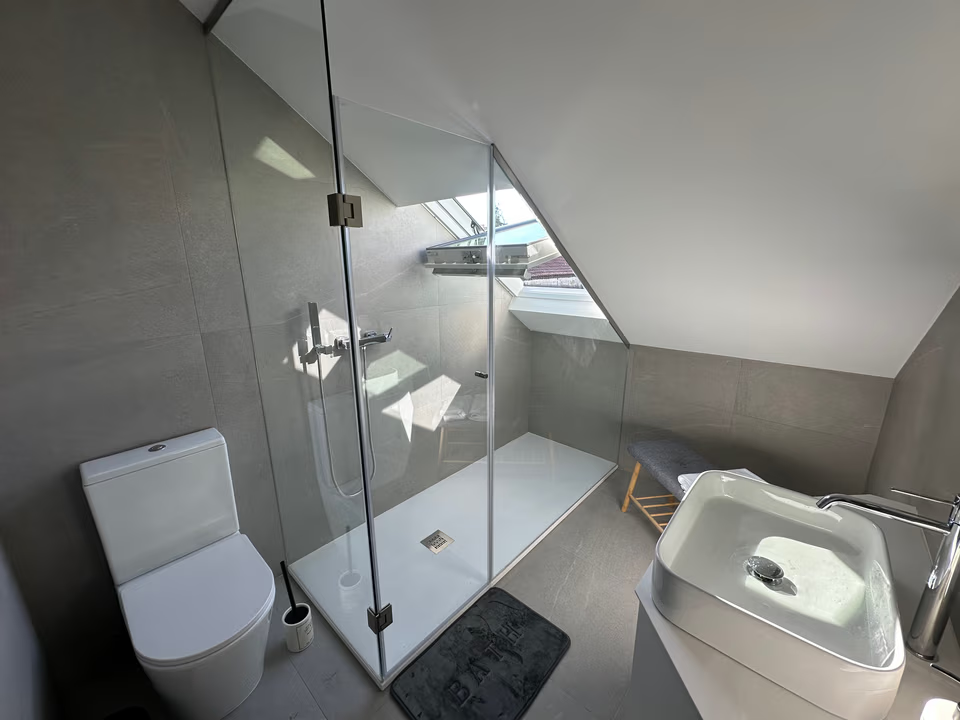 OpenReservations accepted
Loft Azeméis
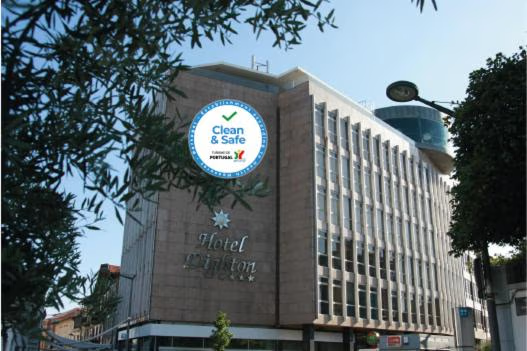 OpenReservations accepted
Hotel Dighton
Services in Oliveira de Azeméis
What you can find in town before the next stage.
- ATM
- Café
- Shop
- Medical clinic
- Pharmacy
- Fountain
- Post office
- Train station
- Restaurant
Source: © OpenStreetMap contributors · updated January 2026
Town 18 of 43