

Town on the Camino
Alvito
Portugal
- places to stay
- 4
- Camino
- 1
- Elevation
- 230 m
Alvito is the town of mornings: in 1979 Saramago found a Rua das Manhãs here, a street of all the mornings of the world. Above it stands the castle of Portugal's first baron, built from 1494 to 1504, and on the edge of town a chapel with old frescoes. An afternoon is enough, and then it is 13.3 kilometres to Viana do Alentejo.
How long to stay?
An afternoon is enough. You arrive from Cuba after 22.4 kilometres, and the Alentejo sun makes every kilometre longer. The official Alentejo stage does run straight from Cuba to Viana do Alentejo, but according to Camino Ninja that is 35.7 kilometres, and Alvito is the sensible place to split it. A few hours are enough for the castle from the outside, the parish church and the chapel of São Sebastião on the edge of town. Next morning you reach Viana after 13.3 kilometres, early enough for a quiet afternoon there.
Alvito in Ninja numbers
- 22.4 kilometres from Cuba to here, according to Camino Ninja. After 14.9 you pass Vila Ruiva, then another 7.5 to Alvito.
- 13.3 kilometres lie ahead of you to Viana do Alentejo, one of the shortest stages of the Via Nascente in this area. After 7.4 kilometres you walk through Águas de Peixe.
- 218.4 kilometres are behind you since Tavira. It is another 442.8 to Trancoso, according to Camino Ninja.
- 24 April 1475: On this day King Afonso V made João Fernandes da Silveira Baron of Alvito. It was the first barony in Portugal.
- Ten years the barons spent building their castle, from 1494 to 1504.
Arriving: in the country's first baronial seat
Alvito is small: the whole freguesia had around 2,500 inhabitants in 2011, and the town has a café and a few small shops. Your eye is drawn to the castle, a rectangular building with four round crenellated towers that looks less like a war machine than the home of a nobleman. That is exactly what it was. Since the Middle Ages Alvito was granted, given away and inherited, and in 1475 it became the first place in Portugal to have a baron.
In brief: given away, bequeathed, rewarded
The Portuguese conquered Alvito in 1234. King Afonso III gave the land to his chancellor Estêvão Anes, who died childless in 1279 and left it to the Trinitarian Order, the order devoted to ransoming prisoners. In 1296 the town was granted a fair. After the Battle of Aljubarrota in 1385, King João I gave Alvito to Diogo Lobo as a reward for his service there and in the conquest of Évora.
In 1475 João Fernandes da Silveira, husband of Maria de Sousa Lobo, became the first baron. His son Diogo Lopes da Silveira began the castle in 1494, and it was finished in 1504. After the earthquake of 1755 and the Liberal Wars of 1834 it was repaired, in 1887 its sale to the future King Carlos was agreed and in 1897 it was completed, and in 1910 it became a national monument. Since 1993 it has been a pousada. In the second half of the 20th century, above all in the 1960s and 1980s, Alvito lost many of its people.
Around the castle: what to see
Everything is close together. We found no opening times for any of these places.
- Castelo de Alvito: The castle combines fortress and palace. Horseshoe windows, twin windows and ogee arches show Gothic, Manueline and Islamic-influenced forms, and in the north-west stands the square keep with three storeys. An inscription above the main portal names Kings João II and Manuel I as the builders. For you, the castle is the picture of Alvito that you take away with you, and the Alentejo guide has you pass it once more as you walk out of town. Today it is a hotel; we could not find out whether non-guests can get into the courtyard.
- Igreja Matriz de Nossa Senhora da Assunção: The parish church dates from the end of the 13th century and took its present form between 1480 and 1554. It has three naves on a cruciform plan, and large parts of the interior are covered in 17th-century azulejos.
- Ermida de São Sebastião: The little chapel from the early 16th century stands on the edge of town in the Gothic-Mudéjar style, right where it was meant to protect the town. Old frescoes survive inside. It was closed for decades and can be visited again since a local woman started looking after it. It is part of the Rota do Fresco, a route of mural paintings in the churches of the area.
- Igreja de Nossa Senhora das Candeias: This church houses the museum of sacred art. There is also the Misericórdia church and the town hall with its clock tower, typical of the Alentejo.
Honestly
- There is no pilgrim hostel. You sleep privately, and the choice is small. Book ahead.
- Alvito is quiet, sometimes very quiet. On his visit in 1979 Saramago found nobody in the street, only a loudspeaker blaring in all directions. If you want bustle in the evening, this is the wrong place.
- You mostly see the castle from outside. It is a hotel, not a museum.
- Short does not mean easy. The stages in the Alentejo have long stretches without supplies, and it is often hot. That applies to the 13.3 kilometres to Viana too.
Where pilgrims sleep
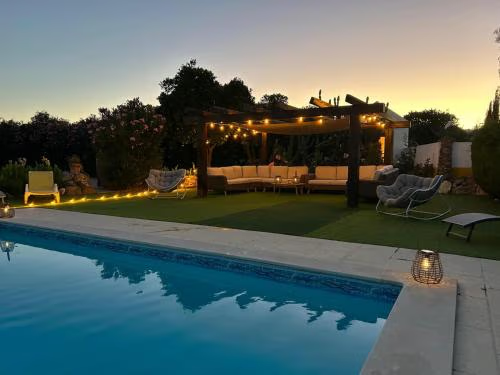
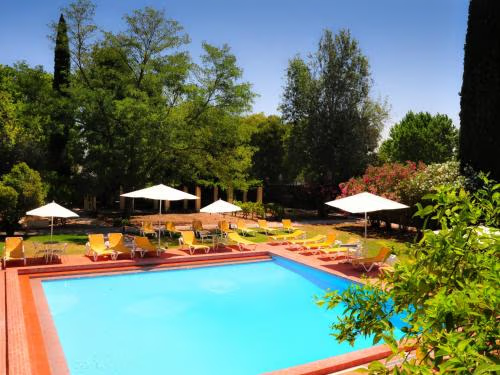
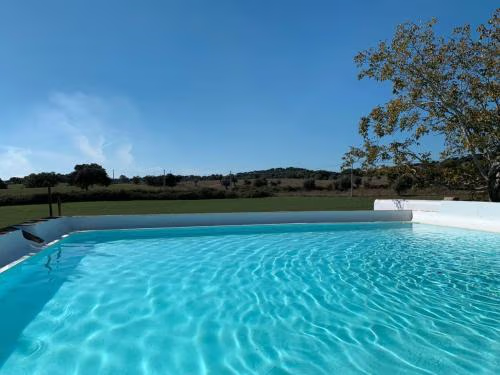
There is no pilgrim hostel in Alvito, whether municipal, church-run or donation-based. You will find a few private guesthouses and an agroturismo farm in and around the town. Phone ahead or book in advance.
Ninja tips
- Look for the Rua das Manhãs. Saramago was so taken with this street name that he praised Alvito for honouring all the mornings of the world on a street corner. There is hardly a better sign for a pilgrim who sets off before sunrise.
- Shop in the afternoon. The town has a café and small shops. Take water and food for the morning, because on the way to Viana there is no village apart from Águas de Peixe.
- Don't just walk through Águas de Peixe. There the path passes the Paço de Água de Peixes, a country house with Gothic, Manueline and Mudéjar forms and its own chapel, a national monument since 2002. It is a private home and you cannot go inside, but it is worth a look from outside.
Onward: via Águas de Peixe to Viana do Alentejo
Beyond Alvito the Via Nascente heads north. After 7.4 kilometres you are in Águas de Peixe, after 13.3 in Viana do Alentejo, where the official Alentejo stage ends. The guide from Turismo do Alentejo e Ribatejo describes the stretch to Águas de Peixe and the last one before Viana as a farm track.
What awaits you tomorrow
Viana do Alentejo is reached tomorrow morning, and a castle of a quite different kind waits there: pentagonal, with five round towers, and the parish church stands right in the middle of it. Viana is home to the sanctuary of Nossa Senhora d'Aires, to which pilgrims come every year, some of them on horseback.
Deep dive: A town that was given away
A short read, in case you want to learn more about Alvito. About 2 minutes' reading.
From hand to hand
When you stand beneath the castle of Alvito, you stand in a town that for centuries was above all one thing: a gift. In 1234 it came to Portugal. The king gave it to his chancellor Estêvão Anes. He died childless in 1279 and left Alvito to an order that ransomed prisoners, the Trinitarians. A good hundred years later, after the Battle of Aljubarrota and the conquest of Évora, King João I rewarded a follower named Diogo Lobo with it.
The first baron
On 24 April 1475 King Afonso V made a jurist, João Fernandes da Silveira, Baron of Alvito. It was the first title of its kind in Portugal. His son began the castle in 1494, and ten years later it was finished. It is a fortress with battlements and a wall walk, but behind the walls windows open with horseshoe arches, as you know them from Islamic architecture, and ornaments from the time of King Manuel I. A home dressed up as a castle.
What came next
The earthquake of 1755 damaged the castle, and the fighting of the Liberal Wars in 1834 damaged it again. In 1887 its sale to the future King Carlos was agreed, and ten years later it was completed. In 1910 it became a national monument. Since 1993 guests have slept in it. The town itself grew emptier in the twentieth century. When José Saramago travelled through Portugal in 1979, he found empty streets and a blaring loudspeaker in Alvito, and praised the town all the same, because of a street sign.
What Alvito gives you
The sign read Rua das Manhãs, Street of the Mornings. Saramago praised the country that honours all the mornings of the world on a street corner. For a pilgrim that is not a bad thought for the night in a quiet town. Tomorrow morning you set off again, in the dark perhaps, and somewhere between Alvito and Viana it gets light.
Where to stay in Alvito
Places to stay in Alvito.
 OpenReservations accepted
Agroturismo Horta Da Vila
 OpenReservations accepted
Pousada Castelo de Alvito
 OpenReservations accepted
Casa Bungavilia - Roots of Alentejo

Town 7 of 25