

Town on the Camino
Apúlia
Distrito de Braga, Região do Norte, Portugal
- places to stay
- 15
- Caminos
- 2
- Elevation
- 13 m
Apúlia is a place made of sand: dunes with windmills, vegetable fields in dug-out sand hollows and beaches where seaweed gatherers once hauled the kelp from the surf. On the coastal route it lies 45.9 kilometers beyond Porto, and the Senda Litoral leads right past the mills. There is no public albergue, one evening is enough.
Right now in Apúlia (as of October 2026)
- Storm damage on the coast: The winter storms of January and February 2026 heavily eroded the beach at the fishing hamlets of Pedrinhas and Cedovém at the northern end of Apúlia. Dune reinforcement and sand replenishment are planned there from January 2028. The municipality has not announced any closed boardwalks; if you come across one, walk on the road alongside.
How long to stay?
One evening is enough. Apúlia is a seaside resort, not a place for a rest day: there is neither a museum nor a church with reliable opening hours. If you sleep here, your evening belongs to the windmills on the dunes and the sunset by the sea. Many keep going after the lunch break; it is just under four kilometers to Fão, six to Esposende.
Apúlia in Ninja numbers
- 45.9 kilometers is the distance on the Caminho Português da Costa from Porto to here, 53.2 on the Senda Litoral.
- 14.1 kilometers is today's walk from Póvoa de Varzim, flat as a table.
- 210.5 kilometers remain to Santiago on the coastal route.
- 1.5 kilometers is how far the windmills lie from the coastal route. The Senda Litoral leads right past them.
- 1834 is when Apúlia's time as a municipality of its own ended. Since then the village has belonged to Esposende.
Arriving: field, wood, church
Beyond Aguçadoura the coastal route leaves the sea. Boardwalks take you past an old windmill, then along the shoulder of the M-501 beside fields and greenhouses. Shortly before the village the arrows lead into a small wood with sports grounds and along Rua do Pinhal to the church of Apúlia. The stretch has several junctions, football pitches serve as landmarks; download the track beforehand.
Apúlia is split in two. The route leads through the old core around the church. Beach, restaurants and accommodation are on Avenida da Praia, a good half kilometer to the west. If you come on the Senda Litoral, you reach the village from this side, over the dune boardwalks by the mills.
In brief: a municipality in the sand
The name is said to go back to the Romans and recall the Italian region of Apulia; that is folk etymology, not evidence. Romans are documented all the same: in the fields of the Campos da Ramalha, the remains of a villa were found during sand extraction, inhabited from the 1st century, with a column shaft, millstones and amphorae. In the Middle Ages Apúlia was a territory of the Archbishop of Braga and later a municipality of its own with a judge and councillors, until 1834. In 2013 the parish was merged with Fão.
What the sand carries
Apúlia lived from its sand. Farmers dug hollows into the dunes, the masseiras, and planted vegetables in them, sheltered from the wind. From June until the end of the year the sargaceiros, the seaweed gatherers, pulled the kelp from the surf, dried it in the sun and carted it to the fields as fertilizer. Their tool sheds stood on the dunes; some of them are holiday homes today. The work has not vanished entirely: on this stage pilgrims still see piles of seaweed drying.
The windmills on the beach also stood on the sand and were meant to hold it in place at the same time. They ground maize, today they are restored and partly private holiday homes. Later came the bathers from Braga, Barcelos and Porto, for the iodine in the air, so the parish tells it. And today the sea is taking the sand back: the storms of 2026 have made the beach in the north narrower.
Between dunes and church: what to see
Two destinations, half a kilometer between them.
- Windmills at Praia de Apúlia: Round mills of granite and schist stand right on the dunes, linked by boardwalks, freely accessible at any time of day. You cannot go inside, most are private. For pilgrims on the Senda Litoral they are on the way; for pilgrims on the coastal route it is just under a kilometer from the accommodation on Avenida da Praia. The evening walk there is the best thing Apúlia has.
- Igreja de São Miguel: The church with two bell towers stands right on the coastal route. The present building dates from 1945 and replaced a plain church from the 17th century; it was extended in 2000. We have not found opening or Mass times.
- Beach and dunes: Praia de Apúlia is part of the Northern Coast Natural Park. Boardwalks protect the dunes, and it is usually windy.
Eating and drinking
Food is mostly at the beach, not on the route: pilgrims reported in 2025 that they had to walk 15 to 20 minutes from the coastal route toward the sea. Opposite the Albergue Santiago da Costa there is a supermarket, and nearby, since 2025, a small bakery with a restaurant that takes cash only. On the coast fish and seafood come to the table; a dish we could attribute to Apúlia we have not found.
Honestly
- No public albergue. The cheap beds are scarce, the small pilgrim albergue has nine places.
- The village is not on the route but beside it. Church on the route, beds and food on the coast. Count on a good kilometer extra.
- The approach is a country road. Before Apúlia you walk on the shoulder of the M-501 past greenhouses instead of by the sea.
- You only see the mills from outside. They are restored, but privately inhabited.
- Out of season it is quiet. All along the coast, beach cafés do not open reliably or early in autumn and winter.
Where pilgrims sleep
There is no public or church-run albergue in Apúlia. The only small pilgrim albergue is the private Albergue Santiago da Costa on Avenida da Praia, with nine beds, kitchen, washing machine and dryer, open year-round, check-in from 14:00 to 19:00, a bed from €16 (as of October 2026). It is about 700 meters from the coastal route and 400 meters from the Senda Litoral. In addition there are private guesthouses with multi-bed rooms from about €15 to 25 per bed, and holiday apartments. If you want it cheaper still, walk just under four kilometers further to the youth hostel in Fão.
Ninja tips
- Call the small albergue ahead. Nine beds go fast, and in 2024 a reservation was once not honored.
- Plan the sunset at the mills. From Avenida da Praia it is just under a kilometer, and the boardwalks are freely accessible.
- Go to the sea for dinner. There is little on the coastal route itself.
- Watch your step on the boardwalks when it is wet. The wooden boardwalks on this coast are slippery then. Do not climb over closed sections and do not detour through the dunes, take the parallel road instead.
- Download the track. Between Aguçadoura and Apúlia there are several junctions where pilgrims go wrong.
Practical tips for pilgrims
- Stamp: We have not found a fixed stamp point in Apúlia. Ask at your accommodation.
- Shopping: Supermarket on Avenida da Praia, bakery that takes cash only.
- Onward travel: It is only six kilometers to Esposende on the coastal route, and there the choice is bigger.
Onward: through the pine forest to Fão
On the coastal route you leave the village on a paved lane, then on a farm track between pines and eucalyptus toward Fão. Behind a football pitch you turn into Rua Santo António da Fonte, pass the cemetery with a colorful figure of Saint Anthony and follow the sidewalk of the N13 to the church of Bom Jesus in Fão: 3.9 kilometers, flat. The Senda Litoral needs 4.1 kilometers to Fão. In Fão the connection from São Pedro de Rates on the Camino Portugués Central joins in; from there on you are no longer alone.
What awaits you tomorrow
Fão and the metal bridge over the Cávado, opened in 1892. Beyond it lies Esposende, a good six kilometers from Apúlia, a town at the river mouth where the choice of beds and restaurants becomes large again.
Deep dive: A village that lived from sand
A short read, in case you want to learn more about Apúlia. About three minutes' reading.
The villa under the fields
Anyone who digs away sand sometimes finds more than sand. In the fields of Ramalha, farmers digging hollows for their vegetables came upon walls, columns and shards. They were the remains of a Roman country estate, inhabited since the first century after Christ. Found were a column shaft, millstones and large storage vessels for wine and oil. The pieces lie scattered today in museums in Braga, Guimarães and Póvoa de Varzim. The Romans already used the bay as a loading place.
A municipality of its own
In the Middle Ages Apúlia belonged to the Archbishop of Braga. Later it was a small municipality of its own, with a judge and two councillors. Only in 1834, when Portugal reorganized its administration, did Apúlia come to Esposende. In 2013 the parish was merged with the neighboring village of Fão.
Seaweed and sand hollows
The people here lived from what the sand and the sea gave. Into the dunes they dug hollows, called masseiras, and grew vegetables in them, where the wind could not reach. The fertilizer they took from the sea. From June to the end of the year the seaweed gatherers pulled the kelp out of the surf, spread it out to dry and carted it to the fields. They kept their tools in sheds on the dunes. Next to them stood windmills, which ground the maize and with their walls held the sand in place at the same time.
Bathers and storms
In the twentieth century the summer guests came. Families from Braga, Barcelos and Porto spent their holidays on this beach, which was known for its iodine-rich air. The seaweed gatherers' sheds became holiday homes, and so did the mills. When this text was written, in autumn 2026, the coast was struggling with the aftermath of the winter storms at the start of the year. The sea had eroded the beach in the north badly, and work to secure the dunes was planned for 2028.
What Apúlia gives you
Apúlia is not a place that pushes itself on you. You can pass through it without seeing much, a church, a few streets, fields. But whoever walks to the mills in the evening stands on the same sand from which this village made its life over centuries. And tomorrow you walk on, on a path that the wind shifts a little every year.
Where to stay in Apúlia
The places pilgrims rate highest in Apúlia come first.
- Top #1
 OpenReservations accepted
Albergue Santiago da Costa
- Top #2
 OpenReservations accepted
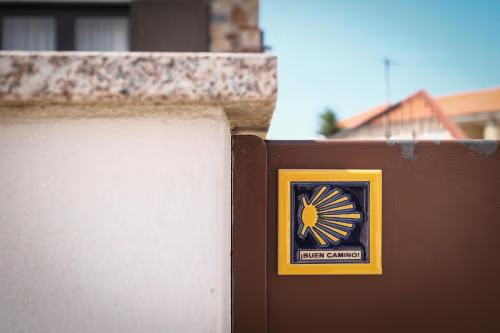
Home of pilgrims d`Apúlia
- Top #3
 OpenReservations accepted
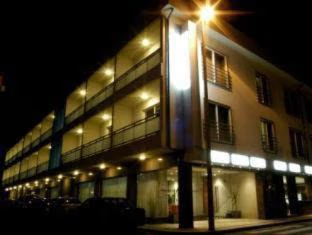
Apulia Praia Hotel


Services in Apúlia
What you can find in town before the next stage.
- ATM
- Café
- Shop
- Medical clinic
- Pharmacy
- Fountain
- Post office
- Bus station
- Restaurant
Source: © OpenStreetMap contributors · updated April 2026
Town 7 of 31