

Town on the Camino
Beja
Portugal
- places to stay
- 14
- Camino
- 1
- Elevation
- 286 m
In Beja the cathedral belongs to the apostle St James: the Sé de São Tiago Maior stands in the middle of the town, and on its tiles the scallop shell recalls the Order of Santiago. Above it rises the 40-metre castle tower. After 175.7 kilometres of the Via Nascente, an afternoon is enough for tower, cathedral and convent.
How long to stay?
An afternoon is enough, and you usually have one. It is only 15.2 kilometres from Cabeça Gorda to here, so you arrive early. That is enough for the castle tower, the cathedral, the convent with the regional museum and the little church of Santo Amaro, all close together in the old town. One catch: the museums are closed on Mondays. If you arrive on a Monday and want to see the convent, stay a night longer or plan your stages so that you are here on another day.
Beja in Ninja numbers
- 175.7 kilometres is how far you have walked since Tavira, according to Camino Ninja. It is another 485.5 to Trancoso, the end of the Via Nascente. A good quarter is done.
- 66.4 kilometres lie between Mértola and Beja. Most people split them, and then the last stretch from Cabeça Gorda, at 15.2 kilometres, is a short day.
- 40 metres is the height of the castle keep, the tallest castle tower in Portugal. 183 steps lead up it.
- Since 1925 the church of St James has been the cathedral of Beja. The town has had a bishopric again since 1770.
- 20.3 kilometres is tomorrow's walk to Cuba.
Arriving: through the olive groves into the town of St James
From Cabeça Gorda the way is flat. It leads along wide farm tracks through the "Vale de Mértola", past rows of olive trees, until Beja appears ahead of you. In town you walk along the Rua Bento Jesus Caraça, where only pedestrians and cyclists are allowed.
After days in villages, Beja is a proper town again: supermarkets, restaurants, a railway station and a bus station. On the Via Nascente you can restock here on everything you ran out of along the way.
In brief: a town of peace that was often fought over
To the Romans, Beja was Pax Julia. According to the region's route guide, it was here that Julius Caesar formalised peace with the Lusitanians, and under Augustus the town was called Pax Augusta. The Visigoths turned it into Paca, and its first bishop was Saint Aprígio, who died in 530. After the Caliphate of Córdoba broke up in 1031, Beja became a Moorish petty kingdom of its own, a taifa. After that the town changed hands between Christians and Moors several times, until it finally passed to Portugal between 1232 and 1234, under King Sancho II.
In the 13th century King Dinis had walls and towers built and, towards the end of his reign, around 1310, the great keep. In 1372 King Fernando ordered the commanders and masters of the Order of Santiago to carry out work on the castle. From 1433 the second, later the third son of the king held the title Duke of Beja. One of them, Manuel, founded the Misericórdia hospital in 1490, five years before he became king.
A cathedral for St James
Many cathedrals in Portugal are dedicated to Mary. The one in Beja is not. It is called Sé Catedral de São Tiago Maior, Cathedral of Saint James the Greater, so exactly the apostle whose tomb you are walking to. The region's route guide dates the church to the 14th century, while a culture portal describes the present building as a new construction from 1590 on the site of the old church of St James. It has only been a cathedral since 1925.
Inside it is a hall church, large, with one unified space, plus gilded and painted altars, paintings by André Reinoso and tile pictures. On some of these azulejos you can see the scallop shell. According to the region's route guide, it shows that the Order of Santiago was present in Beja. In the south of Portugal this knightly order held a lot of land, and in Beja it left its traces on the castle and in the church. More than 485 kilometres before Trancoso, there is already a church here that tells you where you are going.
Under the tower: what to see
Everything important lies in the old town, comfortably on foot in an afternoon. The opening times come from directories without a date. Check them on the spot.
- Castelo and Torre de Menagem: The castle stands on Roman and Moorish remains, walls and towers date from the 13th century. The Gothic keep is 40 metres high, has three storeys with rib vaults and double windows in horseshoe shape, and a spiral staircase with 183 steps leads up. On 13 November 2014 battlements fell down, and in 2016 the tower reopened after repair. From the top you see over the town and the plain of the Alentejo, through which you have come and through which you continue tomorrow. The Posto de Turismo is also housed in the castle.
- Sé Catedral de São Tiago Maior: The cathedral of St James on the Largo do Lidador, with shell azulejos of the Order of Santiago. According to a culture portal it is open on Monday, Tuesday, Thursday and Friday from 10am to 12.30pm and from 3pm to 7.30pm, on Wednesday only in the morning, and on Saturday and Sunday from 10am to 12.30pm and from 5.30pm to 7.30pm. We have not found Mass times. For you this is the most important church in town.
- Museu Regional Rainha D. Leonor in the Convento da Conceição: Infante Fernando, father of King Manuel I, founded the convent in 1459. It became one of the richest of its time. It has been a museum since 1927/28. Cloister and chapter house are covered in tiles from Spain and Portugal dating from the 15th to the 18th century. The nun Mariana Alcoforado is said to have written the "Portuguese Letters" to a French officer here in the 17th century, and the window of her cell has been rebuilt in the museum. Whether she really wrote the letters is doubtful, more on that in the deep dive.
- Igreja de Santo Amaro, Núcleo Visigótico: The little church next to the castle is an outpost of the regional museum and shows Visigothic finds; the columns inside bear geometric ornaments. It is considered one of the oldest buildings in Portugal. For a long time it was dated to the 5th or early 6th century, while more recent research thinks rather of the 10th century and the Mozarabic Christians of Beja. According to a museum directory it is closed on Monday, open on Tuesday from 2pm to 5pm, and Wednesday to Sunday from 9.45am to 12.30pm and from 2pm to 5pm. A pilgrim guide warns that in practice the times are irregular.
- Praça da República and Igreja da Misericórdia: The 16th-century church of the Misericórdia dominates the square. Its open porch was originally a meat market. Next to it stood the hospital that Manuel founded in 1490 as Duke of Beja. A good place to sit after your walk round.
Honestly
- There is no pilgrim hostel. The nearest thing is the youth hostel, and according to a booking portal it is 1.7 kilometres from the centre.
- Check-in only from 6pm. That is what the youth hostel says. If you arrive at midday after the short day from Cabeça Gorda, you have time, but you have to carry your rucksack with you until then or ask at reception whether you can leave it.
- The museums stay closed on Mondays. Convent and Santo Amaro are shut then, and on other days too Santo Amaro is not always open when it should be.
- The nun's letters are probably a novel. The window in the museum is lovely but no proof. Read it as a legend, and then it is a good one.
- The Alentejo is no place for carelessness. The region's route guide advises always carrying water, food, sun protection, a hat and rain gear. From Beja on, the places are small again.
Where pilgrims sleep
Beja has no hostel just for pilgrims. The nearest is the Pousada de Juventude de Beja in the Rua Professor Janeiro Acabado, a youth hostel of the Hostelling International network with four- and six-bed rooms and a guest kitchen. According to its website prices start at €19 a night (as of November 2026), and check-in is from 6pm. It lies outside the old town. In addition there are a municipal campsite and a number of private guesthouses and rooms in the old town, which you will find in the app.
Ninja tips
- Make use of the short day. The 15.2 kilometres from Cabeça Gorda go quickly. Climb the tower first and save the cathedral for later: it reopens after the lunch break at 3pm, on Saturday and Sunday at 5.30pm, and on Wednesday afternoon not at all.
- Look for the shell. In the cathedral, azulejos with the scallop shell recall the Order of Santiago. It is worth walking round the tile pictures.
- Ask at the Posto de Turismo in the castle about opening times of museums and churches and about a stamp. Whether there is one there, we did not find out.
- Buy food in Beja for tomorrow. The region's route guide puts the lunch break at São Matias, 12.9 kilometres on, but a pilgrim guide says the café there is not sure to be open.
- Leave town through the Porta de Avis. The arch has a story: after its demolition in 1893 its stones were thought lost, and 40 years later they were found again, as tables in the fish market.
Practical tips for pilgrims
- Supplies: Supermarkets, restaurants, post office (CTT), bank and cash machine, taxis.
- Getting there and away: Beja has a railway station and a bus station. If you want to get off or on here, you are well connected.
- Information: The Posto de Turismo is in the castle. Camino Ninja describes the ways in the Alentejo together with Turismo do Alentejo e Ribatejo, the tourism authority of the region.
- Emergency: 112, for forest fires 117.
Onward: through the Porta de Avis to the north
You leave Beja through the lanes of the old town and through the arch of the Porta de Avis. After that it becomes flat and rural again. After 12.9 kilometres you reach São Matias, a small village with a 16th-century church, and after 20.3 kilometres Cuba. The region's route guide allows just under five hours for this stage.
What awaits you tomorrow
Cuba is a small place that claims something big: Christopher Columbus is said to have been born here. In the middle of the village, therefore, stands a bronze statue of the seafarer, put up in 2006, and around it, according to the region's route guide, are the most traditional taverns in the Alentejo. If you are lucky, someone will be singing the cante there in the evening.
Deep dive: Peace, walls and a letter
A short read, in case you want to learn more about Beja. About 4 minutes' reading.
Where you stand
When you stand beneath the castle tower of Beja, you stand in a town that owes its name to peace. The Romans called it Pax Julia, after Julius Caesar, who according to tradition sealed peace with the Lusitanians here. Under Emperor Augustus it was called Pax Augusta. That is a nice irony for a town that in the following centuries was conquered, lost and reconquered again and again.
A bishop, a small church and an open question
After the Romans came the Visigoths. They called the town Paca, and its first bishop was Saint Aprígio, who died in the year 530. The little church of Santo Amaro next to the castle is said to date from that time. For a long time it was placed in the fifth or early sixth century, and so it still stands in many guides today: one of the oldest buildings in Portugal. More recent research sees it differently. It thinks rather of the tenth century, of the Christians who lived in Beja under Moorish rule, the Mozarabs. Who is right, you cannot decide in the church. But you can look at the columns with their geometric patterns, and realise that people celebrated their faith here long before there was a Camino, or at least at the time it was just beginning.
Between Córdoba and Lisbon
When the Caliphate of Córdoba broke up in the year 1031, Beja became a small kingdom of its own, a taifa. After that the town passed back and forth between Christians and Moors several times. It only became definitively Portuguese between 1232 and 1234, under King Sancho the Second. King Dinis then had the walls and towers built, and towards the end of his reign, around the year 1310, the great keep. Forty metres high, the tallest castle tower in the country. It was a sign: Portugal stays here.
The knights with the shell
In the south of the country one order played a special role, the Order of Santiago, the Order of Saint James. Its knights received land and castles in the areas taken from the Moors. In Beja too they left their traces. In the year 1372 King Fernando ordered the commanders and masters of this order to build on the castle. And in the town's main church, dedicated to the apostle James, you can still see the shell on the tiles today, the sign of the Order and the sign of the pilgrims. This church has been the cathedral of Beja since 1925. It is called São Tiago Maior, James the Greater. On the Via Nascente it is the first bishop's church, and it belongs to the same saint as the cathedral at the goal in Galicia.
The nun at the window
In the year 1459 Infante Fernando, father of the later King Manuel, founded a convent for women in Beja, the Convent of the Conception. It became one of the richest of its time. Two hundred years later a nun is said to have lived here, Mariana Alcoforado, who fell in love with a French officer, the Count of Chamilly. She is said to have written him passionate letters. They appeared in France as the "Portuguese Letters" and became famous.
That is the story told in Beja, and in the museum, which is in the convent today, they have rebuilt the window of her cell. Scholarship is more sceptical. The originals were never found, and very probably the letters were written as a novel by a Frenchman, the Count of Guilleragues. You can find that disappointing. But you can also marvel that an invented letter marked a town so much that they show you her window. Whether you believe in the nun, you decide yourself.
A duke and a hospital
From the year 1433 a younger son of the king held the title Duke of Beja. One of them, Manuel, founded the Misericórdia hospital on the Praça da República in 1490. Five years later he unexpectedly became king. Under him the Portuguese ships set out for India. The church of the Misericórdia still stands, with a porch that once served as a meat market. That is how close the sacred and the everyday lie together in Beja.
What Beja gives you
You have now walked a good quarter of the Via Nascente. Ahead of you lies a lot more Alentejo, wide open space, heat, small villages. Beja is a town that had many masters and still kept its old name, that of peace. Perhaps that is a good thought for tomorrow morning, when you walk out through the Porta de Avis: peace is not a state that you reach once. You walk towards it, day after day. The shell on the tiles of the cathedral shows you the direction.
Where to stay in Beja
Places to stay in Beja.
 OpenReservations accepted
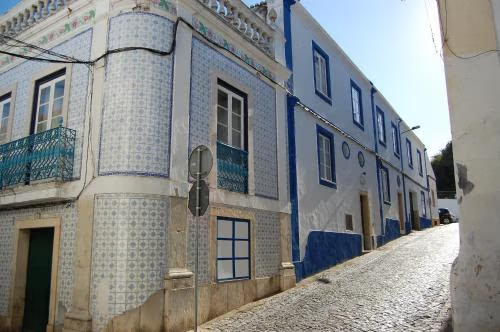
Hospedaria Santa Maria
 OpenReservations accepted
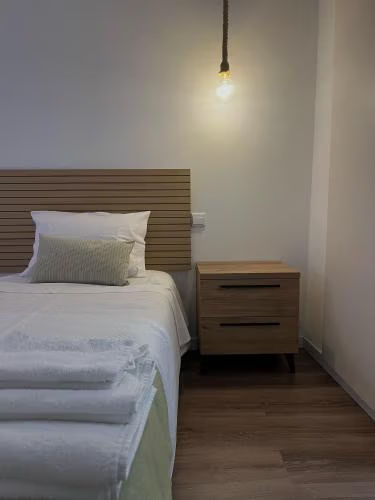
AL44
 OpenReservations accepted
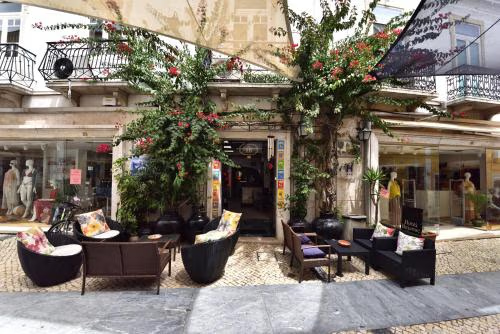
Hotel Bejense




Town 5 of 25