

Town on the Camino
Mértola
Portugal
- places to stay
- 12
- Camino
- 1
- Elevation
- 32 m
In Mértola the centuries lie on top of each other: Roman river port, Islamic town, and from 1239 the first seat of the Order of Santiago in Portugal. The main church was a mosque and has kept its prayer niche. A rest day is worth it, not least because 66.4 kilometres to Beja lie ahead of you, just not on a Monday.
How long to stay?
Worth a rest day, but not on a Monday. Mértola calls itself a Vila Museu, a museum town: the museum is spread over 14 houses and excavation sites all around the place, from the mosque-church and the castle to the Roman remains by the town hall. You can manage the three most important stops in an afternoon, but the rest takes a day. Then there is tomorrow's sum: after 45.1 kilometres from Alcoutim you will be tired, and it is 66.4 kilometres to Beja with long stretches without a shop. Church and castle are closed on Mondays. If you arrive on a Sunday, you are better off not taking your rest day on the Monday.
Mértola in Ninja numbers
- 109.3 kilometres is how far you have walked since Tavira, according to Camino Ninja. It is 551.9 more to Trancoso.
- 1238 is when knights of the Order of Santiago under Paio Peres Correia conquered the town. A year later it belonged to the Order and became its first seat in Portugal.
- 27 metres is the height of the castle keep, commissioned in 1292 by the Order's first Portuguese master.
- 51.2 kilometres lie between Mértola and Cabeça Gorda, and according to pilgrim guides there is no shop in between. It is 66.4 kilometres to Beja.
- 14 stations make up the museum of Mértola, scattered all over the town.
Arriving: the first view over the Guadiana
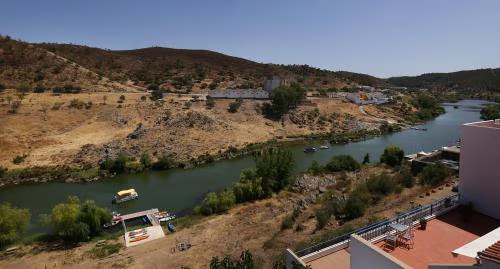
You come from Alcoutim after 45.1 kilometres through the hills, across the Vascão and so out of the Algarve and into the Alentejo. When a pilgrim posted a photo of the first view of Mértola on a forum in 2021, someone wrote underneath that they had gasped out loud. You will see why: castle and church stand high above the Guadiana. In Mértola the GR15 ends, the hiking trail along the river that you have followed since Vila Real de Santo António. From here the markers of the Caminhos de Santiago lead you north through the Alentejo. Mértola is the first big place on this stretch that Camino Ninja describes together with Turismo do Alentejo e Ribatejo.
In brief: Myrtilis, Martulah, Mértola
Around 440 the chronicle of Bishop Hydatius calls the place Mirtilis Julia, a fortification on the river. From the 8th century Muslims ruled over Martulah, as the town was now called. Twice it was briefly the capital of its own small kingdom: after the Caliphate of Córdoba broke up in 1031, and again from 1144 to 1151. Under the Almohads the castle was extended in 1171, and in the same period, the second half of the 12th century, the mosque was built.
In 1238 the troops of King Sancho II under Paio Peres Correia, the commander of the Order of Santiago, took the town. In 1254 Mértola received its town charter, and in 1512 a new one from King Manuel I. After that things went quiet. In 1758 the castle lay in ruins, without a garrison. Around the middle of the 20th century the ruins were declared a national monument and repaired. Today the whole town is a museum.
The Order of Santiago moved into a mosque
For a pilgrim on the way to Santiago, Mértola is a special place. The knights who conquered the town in 1238 belonged to the Order of Saint James, and a year later the king gave them Mértola. Paio Peres Correia became Grand Master, and the castle above the Guadiana became the Order's first seat in Portugal. Above the castle gate the knights built a chapel, Santiago do Castelo. It has vanished, but the tower still stands: in 1292 it was commissioned by João Fernandes, the Order's first master in Portugal.
The knights did not tear down the mosque. They consecrated it to the Virgin Mary and celebrated Mass in it. In 1532 the building got a new roof and the naves were laid out afresh, and on the outside it received battlements and pinnacles under Manuel I. But the mihrab stayed, the niche that showed the faithful the direction of Mecca, with remains of stucco. In the 16th century it was walled up; today it can be seen again, along with four doors with horseshoe arches. One pilgrim guide calls it the only known remnant of a medieval mosque in Portugal. After 1316 the Order moved on, according to the University of Évora to Alcácer do Sal. What it left behind in Mértola is a church where you can see that you can take over someone else's place of prayer without wiping it out.
In layers: what to see
The most important sights lie on the slope between castle and river, all on foot. According to the University of Évora's archaeology guide, church and castle are open Tuesday to Sunday from 9.10am to 12.30pm and from 2pm to 5.20pm, and closed on Mondays. There is also a pilgrim guide that names Sunday as a closing day as well. If in doubt, ask at the Turismo.
- Igreja Matriz: The former mosque from the Almohad period has been a national monument since 1910. For pilgrims it is the heart of Mértola: in 1238 the Order of Santiago turned it into a church and left the mihrab and horseshoe doors standing. According to the University of Évora, entry is free. In a small museum in the basement lie the remains of an early Christian church; it can only be reached by stairs.
- Castelo and Torre de Menagem: Through a gate with a bend, dating from 1171, you enter the castle, and next to it stands a plainer gate from the 9th century. Inside you will find a cistern and the remains of the castellan's house. In the 27-metre keep the museum shows pieces from the time when the Order of Santiago sat here. From the castle you get the widest view over town and river.
- Alcáçova and Casa Islâmica: Below the castle, houses from the early medieval and Islamic periods have been excavated, with 5th- and 6th-century mosaics in the Byzantine manner. Here you understand that the mosque was not a lonely ruin but part of a town.
- Núcleo de Arte Islâmica: In a former granary by the Porta da Ribeira the museum shows Islamic art from Mértola. If you enter only one house of the museum that is not the church or the castle, make it this one.
- Torre do Rio: The tower down on the bank secured the town's access to the water, in floods and in war. It also protected the port. Here you see what Mértola lived from: the river.
Food and drink
Mértola eats what the Alentejo eats: migas and açordas, bread dishes that fill you up, plus game. After two days in the hill country that is just right. Since 2023 there has been a hammam in the town where tea is served the Moroccan way. There are cafés right at the edge of town and restaurants in the town itself.
Honestly
- Monday is a bad day. Church and castle are closed then, and the church is exactly the reason to be here.
- The stage to get here is brutally long. 45.1 kilometres from Alcoutim on hilly paths. If you can, split it at Mesquita; if you walked it in one day, you need the rest day here anyway.
- The way to Beja has long empty stretches. Between Mértola and Cabeça Gorda there is no shop according to pilgrim guides, and even in the village of Vale de Rocins the tavern only sells drinks, despite a sign saying otherwise.
- There is no pilgrim hostel. You sleep in a guesthouse or a holiday flat.
- In summer this is not pilgrim country. The regional tourist board in the south recommends the way for autumn, winter and spring.
Where pilgrims sleep
There is no pilgrim hostel in Mértola. You sleep in one of the guesthouses, holiday flats or private rooms in the town; there is plenty of choice, including cheap places in the centre.
Ninja tips
- Buy food in Mértola for two days. Until Cabeça Gorda, after 51.2 kilometres, there is no shop according to pilgrim guides. Mértola has supermarkets, a pharmacy and a cash machine.
- Split the stretch to Beja. After 28.1 kilometres you reach Amêndoeira da Serra, according to Camino Ninja. There, according to pilgrim guides, the cultural and leisure centre offers food and a bed in a dormitory or room if you call the day before. Ask at the Turismo in Mértola for the contact.
- Take a look at the church in Mosteiro. 25.3 kilometres beyond Mértola stands one of the oldest churches in Portugal, according to pilgrim guides. According to pilgrim guides, a woman in the village keeps the key; call the day before, otherwise the bar can help.
- Go to the castle in the morning, to the river in the afternoon. Church and castle break for lunch at 12.30pm and close at 5.20pm. If you arrive late, see the town from the riverbank and catch up on church and castle the next morning.
- If you are here in 2027, ask about the Festival Islâmico. It takes place every two years in May, in 2025 from 22 to 25 May, and the next edition is planned for 2027. The town is buzzing then, so book early.
Practical tips for pilgrims
- Supplies: Supermarkets, cafés, pharmacy, health centre, post office and cash machine.
- Turismo: The Posto de Turismo also takes bookings for guided tours for groups, telephone 286 610 109.
- Bus: Mértola has a bus station, in case you need to skip a stage.
Onward: through cork oaks to Beja
The Via Nascente leaves Mértola to the north, on quiet roads through cork oak country. According to Camino Ninja you reach Corte Gafo de Cima after 13.1 kilometres, Mosteiro after 25.3, Amêndoeira da Serra after 28.1, Vale de Rocins after 42.4 and Cabeça Gorda after 51.2. You reach Beja after 66.4 kilometres, for most people in two or three days. Plan your nights before you set off.
Deep dive: The mosque of the knights of Santiago
A short read, in case you want to learn more about Mértola. About 3 minutes' reading.
A port far inland
When you stand at the castle of Mértola and look down at the Guadiana, you see the reason this town exists. The town lived from the river and had a port. Around the year 440 Bishop Hydatius mentions it in his chronicle as Mirtilis Julia, a fortification that already stood then. Down on the bank a tower still stands that secured the town's way to the water, in floods and in war, and that protected the port.
Martulah
From the eighth century Muslims ruled the town, and it was now called Martulah. At the end of the ninth century a new fortification was built, and over the following hundred years it became one of the strongest in the area. When the Caliphate of Córdoba broke up in 1031, Mértola briefly became a small kingdom of its own, until the ruler of Seville took the town back. From 1144 to 1151 it was independent once more. Then the Almohads came from North Africa, extended the castle in 1171 and in the second half of the twelfth century built the mosque on the slope, where the main church stands today.
The knights of Santiago
In 1238 the troops of King Sancho the Second came. Their leader was Paio Peres Correia, commander of the Order of Saint James. A year later the king gave the town to the Order, Paio Peres Correia became its Grand Master, and Mértola became the first seat of the Order of Santiago in Portugal. Above the castle gate the knights built a chapel which they called Santiago do Castelo. In 1292 João Fernandes, the Order's first master in Portugal, had the keep completed, twenty-seven metres high. The Order stayed here until 1316, then moved on to the north.
A disputed question: destroy or preserve
When the knights took the town, the mosque stood on the slope. They could have torn it down. They did not. They consecrated it to the Virgin Mary and celebrated Mass in it. In the sixteenth century the space was rebuilt, the roof renewed, the naves rearranged, and the prayer niche, the mihrab, was walled up. Only later did it come to light again, with remains of the old stucco, and with it four doors with horseshoe arches. You can argue about what happened here. Was it respect for a beautiful space, or simply thrift, because they had a finished building? The sources do not say. All that is certain is that the space remained, and that today you stand in a church that was built as a mosque.
Silence and return
After the Order came the long sleep. King Manuel the First gave Mértola a new town charter in 1512, but in 1758 the castle lay in ruins, without soldiers. In the twentieth century the ruins were declared a national monument. Archaeologists found houses from the Islamic period in the ground, mosaics from the fifth and sixth centuries, an early Christian church. The finds became a museum that does not stand in one building but is spread over the whole town, fourteen stations from the castle to the forge. Every two years in May Mértola celebrates an Islamic festival with music by the river and markets in the lanes. When this text was written, in autumn 2026, the next edition was planned for 2027.
What Mértola gives you
You are walking to Santiago, to an apostle whose name was long associated in Spain and Portugal with war against the Muslims. In Mértola you see the other side of that history. The knights of Santiago came as conquerors, and yet their most important legacy stands here in a space that others had built for prayer before them. When you stand in the church in front of the niche, you do not have to make anything of it. Perhaps it is enough to stay for a moment, in a place where people have been praying for more than eight hundred years, first as Muslims, then as Christians. Then walk on to the north.
Where to stay in Mértola
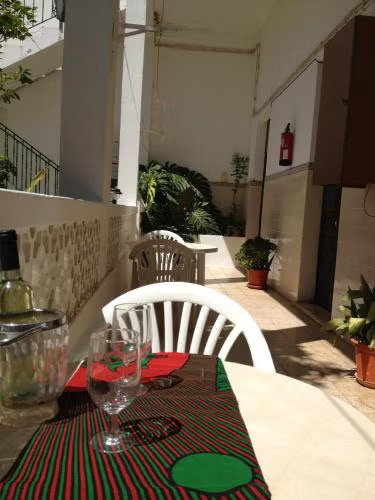
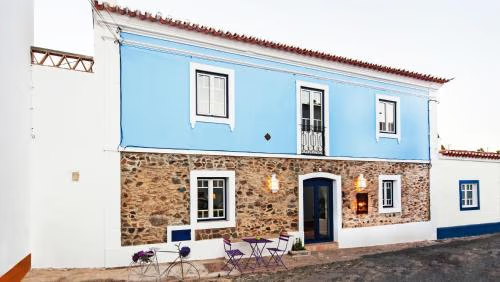
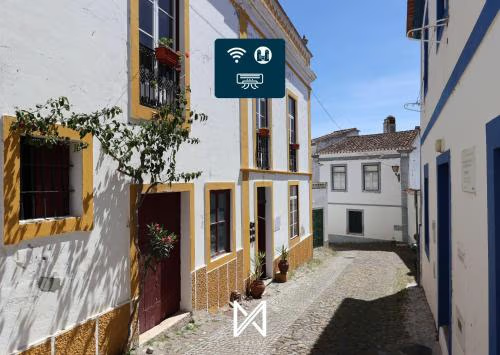
Places to stay in Mértola.
 OpenReservations accepted
Mértola low-cost
 OpenReservations accepted
Casa da Tia Amalia
 OpenReservations accepted
MyStay - A Casa do Visconde



Town 4 of 25