

Stage town on the Camino
Betanzos
A Coruña, Galicia, Spain
- places to stay
- 10
- Camino
- 1
- Elevation
- 24 m
Betanzos is the city of knights on the Camino Inglés, 49.8 kilometres from Ferrol: an old town on an ancient hillfort, built up by the lords of Andrade, with Gothic churches and a tomb that rests on a bear and a boar. An afternoon is enough, and tomorrow brings the hardest stage of the route.
Right now in Betanzos (as of October 2026)
- Hostels in winter: The Albergue Santa María do Azougue is open from 1 March to 15 October, the private Albergue Río Mandeo from 15 March to 31 October. After that, only the Xunta hostel remains, with no reservations.
How long to stay?
An afternoon is enough, but take it. After a good 20 kilometres from Pontedeume you arrive around midday, and the old town is small enough for a few hours. Three Gothic churches, two town gates, a square on the site of the old hillfort and an enchanted park: it is all close together. You need the evening for the tortilla and for an early night, because tomorrow the way goes uphill.
Betanzos in Ninja numbers
- 49.8 kilometres lie behind you since Ferrol, 64.2 remain to Santiago de Compostela. You are roughly halfway along the Camino Inglés.
- 1219 is the year the whole town moved: on 13 February King Alfonso IX allowed the inhabitants to leave their old settlement and move onto the hillfort of Untia.
- 1833 is when Betanzos lost its rank as capital of one of the seven provinces of the Kingdom of Galicia. It had been one for a good 350 years.
- 836 metres of ascent await you tomorrow over 23.5 kilometres to Hospital de Bruma. Shortly before Bruma, at 461 metres, you reach the highest point of the entire route.
Arriving: over the old bridge
Right after Pontedeume the way climbs steeply, then it runs through eucalyptus woods, along the ría and through Miño. Before Betanzos comes one last climb, then the path drops to the Río Mandeo. You enter the town over the Ponte Vella. The old town sits on the hill where a hillfort stood even before the Romans, and the lanes lead up from the bridge to the Praza da Constitución.
In brief: a town moves up the hill
The first Betanzos lay at Tiobre, a few kilometres away, today Betanzos o Vello. At the request of its inhabitants, Alfonso IX moved the settlement in 1219 onto the hillfort of Untia and named it Vila Nova de Betanzos. Because the hill belonged to the monastery of Sobrado, the monks received a quarter of the new town's revenues.
Betanzos grew rich. From 1286 it was the seat of a jurisdiction, from 1480 the capital of a province of the Kingdom of Galicia, until 1833. Little is left of the 14th-century walls, but two gates still stand: the Porta da Ponte Nova, completed in 1500, and the Porta da Vila, rebuilt around 1550. In 1970 the old town was placed under heritage protection.
The knight on the bear and the boar
To understand Betanzos you need to know the Andrade family. In the 14th-century civil war Fernán Pérez de Andrade first sided with Peter I, then switched to Henry of Trastámara and became one of the most powerful lords in Galicia. He struck a deal with the Franciscans: he built churches, a monastery and hospitals, and in return received a burial chapel in the choir of San Francisco. He lies there to this day, in a sarcophagus carried by a bear and a boar, the heraldic animals of his house. That the power of the castle lords also weighed heavily became clear in the 15th century: Betanzos became a centre of the Irmandiño revolt against the nobility.
The city of knights: what to see
Almost everything is on the old-town hill, close together.
- San Francisco: The monastery church with its cross-shaped plan is a national monument and full of knights' tombs. The most famous is that of Fernán Pérez de Andrade on the bear and the boar. For pilgrims it is worth a double look: the Andrade built not only churches but also hospitals.
- Santa María do Azougue: Built between the second half of the 14th and the first half of the 15th century, over an earlier Romanesque church, with three naves. In the altarpiece and on one capital you will find a calendar of the months of farm work. Next to the church is the smaller of the two pilgrim hostels.
- Santiago: The 15th-century church of Saint James was also built by an Andrade; it shows the transition from Romanesque to Gothic. Attached to it is the Torre do Reloxo, the clock tower, from the 16th century. For pilgrims it is the natural place for a moment of silence halfway along the way.
- Praza da Constitución: This is where the hillfort of Untia stood and where the town began. Around the square stand the 18th-century town hall, designed by Ventura Rodríguez, and the 15th-century Pazo de Bendaña.
- The town gates: Betanzos has lost almost all of its walls, but not its gates. The Porta da Ponte Nova and the Porta da Vila still mark the edges of the medieval town.
- Parque do Pasatempo: The brothers Juan and Jesús García Naveira emigrated to America in 1869, came back rich 24 years later and at the end of the 19th century built this park with grottoes, figures and a wall of 41 clocks for the world's time zones. Of the original 90,000 square metres, about a tenth remains. It lies on the edge of town; for tired legs it is a detour.
Food and drink
Betanzos has a dish all of Spain knows: the tortilla de Betanzos. It is cooked only briefly and is almost runny inside, made of potatoes, eggs, olive oil and salt. If you like it firm, better order it elsewhere. With it you drink the local wine, protected as Viño da Terra de Betanzos, traditionally from a white cup, the cunca.
Honestly
- In winter it gets tight. From mid-October only the Xunta hostel remains, with 35 places and no reservations. Arrive late and you will be looking for a room.
- The Xunta kitchen is empty. There is a microwave and a fridge, but no crockery. If you want to cook, bring your own cutlery or eat out.
- The park is not what it was. Only a tenth of the Pasatempo is left. It is still worth seeing, but don't expect a second Versailles.
- Tomorrow is the hardest day. 836 metres uphill, and there is no shop at the end. Plan your shopping today.
Where pilgrims sleep
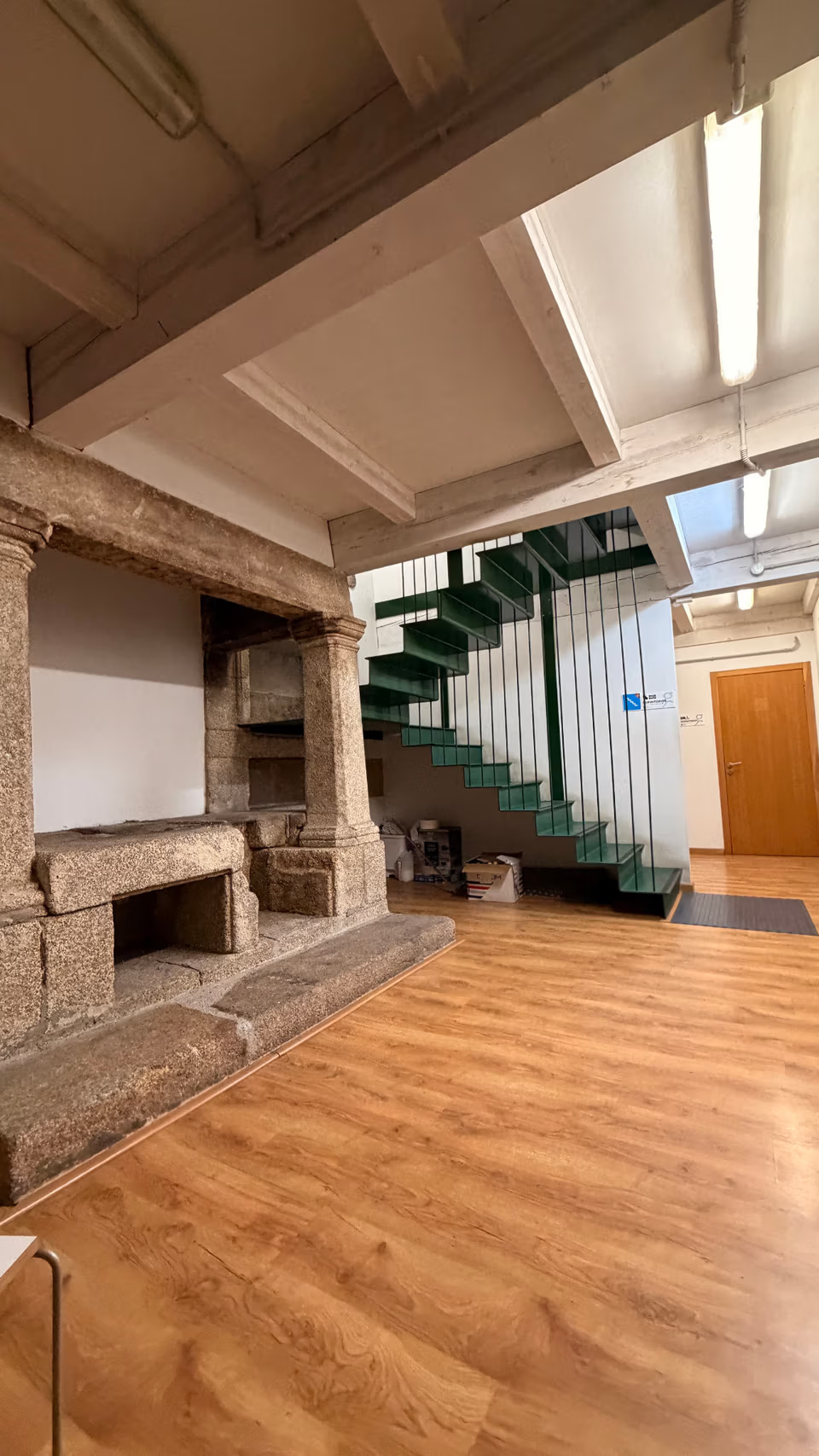
- The Albergue de Peregrinos Casa da Pescadería belongs to the Xunta de Galicia and occupies a restored historic house in the old town, opened in 2013. It has 35 places on several floors, costs €10 and is open all year, from 13:00 to 22:00. You cannot reserve; first come, first served. You have to be out before 08:00 (as of August 2026).
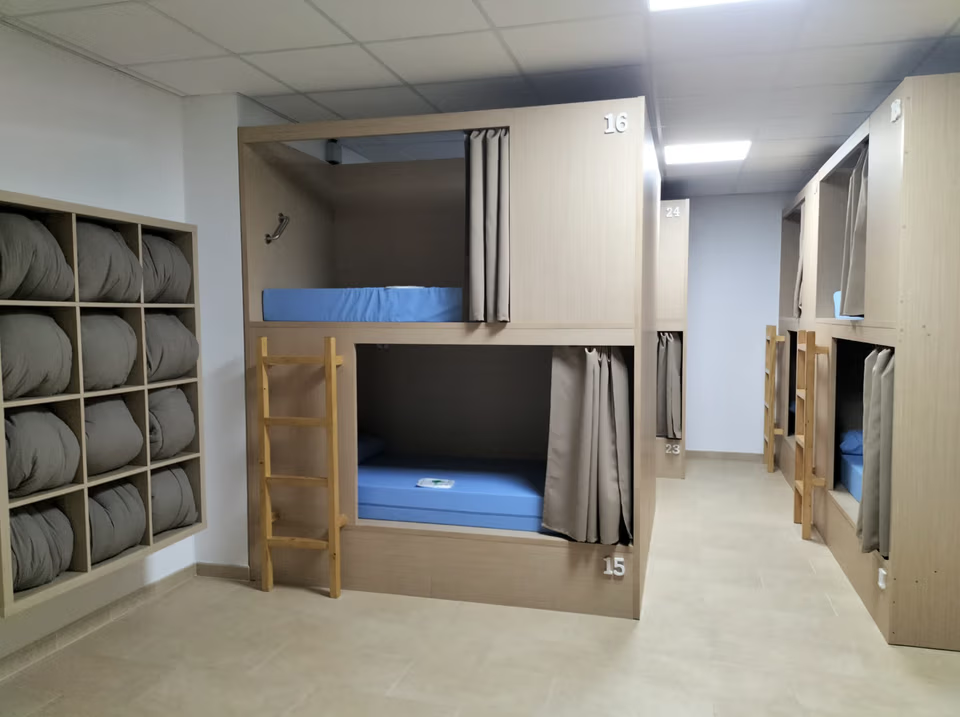
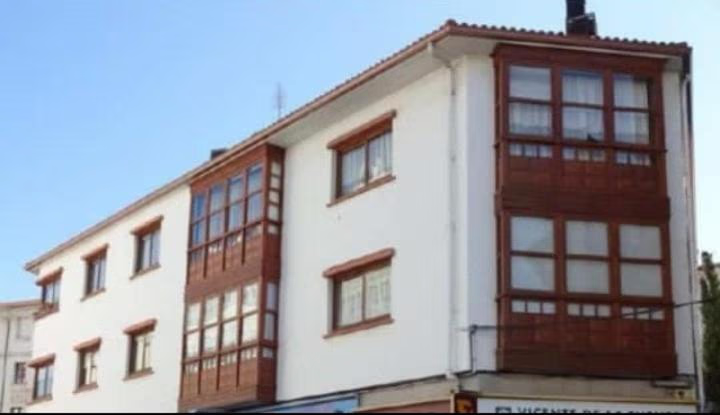
- The Albergue Santa María do Azougue next to the church of the same name belongs to the Archdiocese of Santiago and has been run since 2019 by volunteer hospitaleros of the Saint James association from Mallorca. It has 16 places in two dormitories, takes reservations and is open from 1 March to 15 October. Sources disagree on the price; ask beforehand.
- The Albergue-Hospedería in the Augustinian convent has, according to our data, 23 dormitory places from €15. The Augustinian nuns have lived in this convent since 1681.
- The private Albergue Río Mandeo lies about 400 metres before the old town, with 20 dormitory beds from €18 and some rooms, open from 15 March to 31 October, with reservations (as of August 2026).
- There are also a few guesthouses in town, single rooms from about €40.
Ninja tips
- Eat the tortilla the way it is meant to be: soft, with a cunca of wine. In Betanzos that is not a mistake in the kitchen, it is the whole point.
- Look for the bear. In San Francisco it carries, together with the boar, the tomb of Fernán Pérez de Andrade. For us it is the most impressive spot in town.
- Shop today for tomorrow. In Hospital de Bruma there is only one bar-restaurant and no shop; the nearest supermarket is in Mesón do Vento, just under two kilometres off the route.
- Set off early tomorrow. The Xunta hostel in Bruma has only 22 places and in the summers of 2024 and 2025 was full before opening or almost full by late morning.
- If you are here in August: on the night of 16 to 17 August, during the feast of Saint Roch, a giant paper balloon, the Globo, rises over the town.
- Station in town: Betanzos has trains to A Coruña, Ferrol, Lugo and Santiago. That helps if you need to stop here or reroute your luggage.
Practical tips for pilgrims
- Stamp: in both pilgrim hostels. The Albergue Santa María do Azougue sells credenciales for €4 during its season.
- Shopping: You can get everything in town; until Mesón do Vento just past Bruma this is your last big chance to stock up.
- Tourist information: on the Praza de Galicia.
- Laundry: In the Xunta hostel washing costs €3, drying €1.50 (as of August 2026).
Onward: up to Bruma
The next stage is the hardest of the Camino Inglés: 23.5 kilometres to Hospital de Bruma, 836 metres up and 467 down. From the Mandeo the way climbs out of the river valley via Cos, Meangos and Presedo into the hills. At kilometre 69.9 you reach the highest point of the route at 461 metres. Shortly after, at Herves, the Camino Inglés from A Coruña joins; from here both branches continue together. If you want a shorter day: according to our data there is one place to stay each in Meangos and Presedo.
What awaits you tomorrow
Hospital de Bruma is a hamlet, but not just any hamlet: from the 12th century a pilgrim hospital stood here, the only shelter far and wide, in an area where travellers once met robbers. Today the Xunta hostel stands in its place. So you sleep where pilgrims have slept for almost 900 years.
Deep dive: The town that moved
A short read, in case you want to learn more about Betanzos. About three minutes' reading.
A place on the move
Towns grow, decay, burn down. It is rarer for a whole town to move. Betanzos did. The old settlement lay at Tiobre, some way off, and the inhabitants wanted to leave. On 13 February 1219 King Alfonso IX of León and Galicia granted them a privilege: they could move onto the hill of Untia, where the ramparts of a hillfort had stood for centuries. The new town was called Vila Nova de Betanzos. The hill belonged to the monastery of Sobrado, so the monks received a quarter of the revenues. The old ramparts became the first walls.
Knights and burghers
Betanzos became a market town, a seat of justice and finally the capital of one of the provinces of the Kingdom of Galicia. It was a town of burghers, but for a long time power lay with the lords of Andrade in their castles all around. Fernán Pérez de Andrade, who in the fourteenth century changed sides and won by it, built churches and hospitals and had himself buried in San Francisco, carried by a bear and a boar. A century later the peasants and townsfolk of Galicia rose against the castle lords, and Betanzos was one of their centres. You can see both side by side today: the splendid tombs of the knights and the civic pride of a town that has kept its gates.
Pilgrims in Betanzos
Pilgrims already passed through Betanzos in the Middle Ages, coming from the ports of Ferrol and A Coruña. The town kept a hospital of Saint Christopher that took in the poor and pilgrims until it burned down in 1569. The paths of the seafarers from the north who came ashore here led through these lanes, over the same bridge on the Mandeo, through the same gates.
Those who came back
In the nineteenth century two brothers brought money back from America. Juan and Jesús García Naveira had emigrated in 1869 and came home rich 24 years later. They built schools, charitable works and a park full of strange figures, in which a wall shows the time all over the world. Perhaps they wanted to say that you always bring something back from far away.
What Betanzos gives you
You are halfway along your way, in a town that once set out itself. It left its old place because the new one was better, and there it became rich and beautiful. Tomorrow you climb out of the valley into the hills, to the highest point of the route. You may enjoy the evening before.
Where to stay in Betanzos
Places to stay in Betanzos.
 ClosedReservations accepted
Albergue Río Mandeo
 OpenReservations not accepted
Albergue de Peregrinos Casa da Pescadería de Betanzos
 ClosedReservations accepted
Albergue Santa María del Azogue
Services in Betanzos
What you can find in town before the next stage.
- ATM
- Café
- Shop
- Tobacco
- Medical clinic
- Pharmacy
- Fountain
- Train station
- Restaurant
Source: © OpenStreetMap contributors · updated November 2025
Town 5 of 8