

Town on the Camino
Catedrais
Lugo, Galicia, Spain
- place to stay
- 1
- Camino
- 1
- Elevation
- 14 m
Catedrais is not a village but a beach, and what a beach: at low tide you walk between slate arches about 30 metres high, at high tide everything is under water. If you plan your stage by the tide table, this is the most spectacular stop on the whole Camino del Mar. If you arrive too late, you look down from above.
How long to stay?
A break is enough, but a long one, and at the right time. Down on the beach you need one to two hours to walk through the arches and sand corridors. That is only possible around low water: the two hours before and after are recommended. At high tide you are left with the view from the viewpoints up on the cliff, and a quarter of an hour is enough for that. You don't have to stay the night here, and as a pilgrim you can hardly do so.
Catedrais in Ninja numbers
- 17.7 kilometres is the distance from the start in Ribadeo to here according to Camino Ninja, 6.9 of them from Rinlo.
- 11.8 kilometres still lie ahead of you, according to Camino Ninja, to San Cosme de Barreiros, and 254.3 to Ferrol.
- Around 30 metres is the height of the tallest arches.
- 28.94 hectares is the area of the natural monument (as of August 2026).
Arriving: along the cliff
From Rinlo you follow the coast via Meirengos and A Rochela, on the Camino Natural de la Ruta del Cantábrico. Up on the cliff run paths and viewpoints that are also designed for people with reduced mobility. Down to the sand it's only by steps. For many pilgrims this is the first open bar of the day: a pilgrim who set off from Ribadeo at half past seven on a Sunday found one only at the Praia das Catedrais.
In brief: holy waters, stone cathedrals
The old Galician name is Praia de Augas Santas, beach of the holy waters. "Catedrais" is the name from tourism, and it alludes to the rocks: the arches recall the flying buttresses of a Gothic cathedral. The municipality of Ribadeo therefore advertises with the slogan "from cathedral to cathedral", from the beach to the cathedral of Santiago.
That is nicely put, but the official Camino del Norte doesn't pass here. It turns inland already in Ribadeo. The Camino del Mar, on the other hand, stays on the coast and leads right past the beach. Whether medieval pilgrims already stood under these arches, nobody knows. What is documented is that the traveller Bartolomeo Fontana walked from Ribadeo to Viveiro "per la marina" in 1538, that is, took the coastal road.
Arches and caves: what to see
The Praia das Catedrais is a natural monument, part of the Natura 2000 network and of the Río Eo, Oscos e Terras de Burón biosphere reserve.
- The arches: For centuries the sea has worked its way along cracks in slate and quartzite and turned clefts into caves, tunnels and arches. Some have already collapsed and left individual rock towers behind. Between the blocks run sand corridors through which you walk from bay to bay. At very low water a sandy path opens to the neighbouring beaches. Mind the way back: the beach is flat, and the water returns quickly.
- The viewpoints above: When the tide covers the beach, you are left with the path along the cliff edge. From there you see the rocks from above, without a reservation and without steps.
Honestly
- There is no pilgrim albergue here. Catedrais has just one hotel. The next albergue on the Camino del Mar is in Viveiro.
- No low tide, no cathedral experience. At high tide the water can cover the beach completely for hours. If you arrive at midday and catch high water, you see only sea.
- In summer you need a reservation. During Holy Week and from 1 July to 30 September you only get down with a free permit, and the slots are often quickly gone.
- It's crowded. The beach is one of the best known in Galicia, and that is exactly why the Xunta has limited access.
Where pilgrims sleep
In Catedrais there is no pilgrim bed, and along the whole Camino del Mar no public albergue. If you want to end your stage here, you need a hotel room; most pilgrims walk on towards Barreiros.
Ninja tips
- Plan your day around low water. Check the tide table the evening before. If low tide is early, set off early in Ribadeo; if it's late, take a long lunch break in Rinlo.
- Reserve in good time if you come in season. You can book free of charge through the portal ascatedrais.xunta.gal, 30 days ahead at the earliest. At the entrance a QR code is checked.
- Have your coffee here. On the first kilometres from Ribadeo, the bar on the beach can be the first one that's open.
- Walk along the top once, even at low tide. From the viewpoints on the cliff edge you only understand how big the arches are.
Practical tips for pilgrims
- Reservation: Compulsory and free during Holy Week and from 1 July to 30 September; your time slot lasts about three hours (as of June 2026). Outside these periods access is free. The viewpoints above never need a reservation.
- Swimming: allowed; watch the flags and the lifeguards' instructions.
- Dogs: banned on the beach from the Saturday before Palm Sunday to Easter Monday and from 15 May to 15 September, allowed on a lead up above (as of November 2026).
Onward: to Reinante and Barreiros
Beyond the beach it continues via Reinante and San Miguel de Reinante along a series of beaches, Fontela, Benquerencia, A Pena da Salsa, as far as San Bartolo. After 11.8 kilometres according to Camino Ninja you reach San Cosme de Barreiros, where the path briefly leaves the coast and leads along quiet side roads to the mouth of the Masma.
Deep dive: Cathedrals of slate
A short read, in case you want to learn more about Catedrais. About two minutes' reading.
A beach with two names
The people here called this place Praia de Augas Santas, beach of the holy waters. Where the name comes from, no source we found says. Later the visitors came, and they saw something else in the rocks: tall arches that rise like the flying buttresses of a Gothic church. So the beach of the holy waters became the beach of the cathedrals.
How the sea builds
The cliffs consist of slate and quartzite. The sea seeks out the cracks in the rock, washes them out, makes a cave from a cleft and a tunnel from a cave. In the end only an arch is left standing, and at some point that collapses too and leaves a single rock tower. What you see is therefore not a finished building but a building site where the sea has been working for centuries.
From cathedral to cathedral
Ribadeo likes to link this beach with the cathedral of Santiago. The Camino del Mar turns that into a path: from here it leads you along the coast to Ferrol, and from there on along the Camino Inglés to the tomb of the Apostle. Two cathedrals, one built from stone by the sea, one by people. In between lies a long way by the sea, on which you learn to watch the tides.
Where to stay in Catedrais
Places to stay in Catedrais.
 OpenReservations accepted
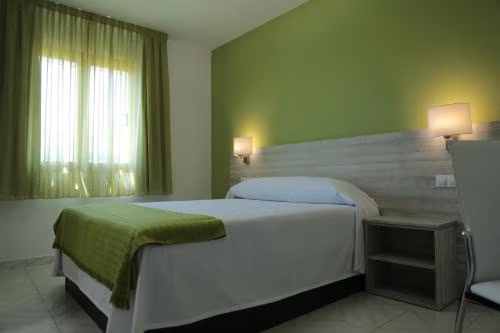
Hotel Playa de las Catedrales
Town 3 of 17