

Town on the Camino
Rinlo
Spain
- places to stay
- 4
- Camino
- 1
- Elevation
- 6 m
Rinlo is the first fishing village after Ribadeo: around 300 people, a small harbour in a rocky cove and old stone pools where lobsters and spiny lobsters once waited alive for their buyers. It's enough for a break, and for a plate of rice with lobster too. After that it's another 6.9 kilometres to the Cathedrals Beach.
How long to stay?
A break is enough. At 10.8 kilometres from Ribadeo, Rinlo is more of a mid-morning stop than a stage destination, and you walk through the village quickly. Still, give yourself half an hour for the harbour and the old pools in the rock, which you will hardly find anywhere else. If you arrive around lunchtime, Rinlo is the place for the long break: its rice with lobster is considered one of the best known in Galicia.
Rinlo in Ninja numbers
- 10.8 kilometres are behind you, according to Camino Ninja, since the start of the Camino del Mar in Ribadeo.
- 6.9 kilometres remain, according to Camino Ninja, to the Praia das Catedrais, and 261.2 kilometres to Ferrol.
- Around 300 people live in Rinlo (as of July 2026).
- 1904 is when the village got a breeding centre for spider crabs and lobsters.
Arriving: at the bay of Areosa
From Ribadeo you follow the coast, for long stretches together with the Camino Natural de la Ruta del Cantábrico, a specially signposted coastal path. Pilgrims report that there are hardly any yellow arrows before Rinlo; stick to the coast and to this coastal path. Then the village lies in front of you, high above a natural bay, the Enseada de Areosa. The houses stand on the eastern slope, the harbour lies in the west. The coast here belongs to the Río Eo, Oscos e Terras de Burón biosphere reserve.
In brief: whales, lobsters, rice
Rinlo has lived from the sea since the Middle Ages, when the bay sheltered boats from the rough water. From the Middle Ages until the 18th century whalers set out from here, as they did from Foz, Burela and San Cibrao further west. Whale oil was expensive and hard to get, the hunt dangerous but profitable. In the 19th century whaling declined, and at the beginning of the 20th century it was over.
Then came the shellfish. Rinlo built pools on the rocky coast, known as cetáreas, in which lobsters and spiny lobsters stayed fresh in seawater until they were sold. They are said to be among the first in Europe built specifically for this, and they made the village a trading post for lobster. The big houses with thick walls still show what the sea brought in. Rinlo's fishermen's guild is among the oldest in Spain.
Harbour and pools: what to see
Rinlo is small, and everything worth seeing lies by the water or a few steps from it.
- Rinlo harbour: The small harbour is still in use, and fishing boats lie along the quay. In winter the waves hit the harbour wall so high that the spray flies over the village's rooftops. A good spot to put your rucksack down and look out to sea.
- Cetárea do Ollo Longo: This ruined complex lies at kilometre 12.2, right on the path, just beyond the village. Walls close off natural rock channels here so that the water could flow in and out with the tides. You can see more pools along the seafront promenade. Don't climb into the ruins, and keep your distance when the waves are high; the structures are not secured.
- Igrexa de San Pedro de Rinlo: The parish church stands in the middle of the village, about 180 metres from the path. We found no reliable information on its building history, and we don't know its opening times. From the outside it is worth a short look before you walk down to the harbour.
Food and drink
Most people who come to Rinlo come to eat: at weekends dozens of guests travel here just for that. The most commonly ordered dishes are goose barnacles (percebes), seafood and rice dishes, above all the rice with lobster for which Rinlo is now known. In summer you should book for it. For pilgrims that means: Rinlo is a sure hit for lunch, but not really for a quick coffee early in the morning.
Honestly
- There is no pilgrim albergue here. Rinlo has only private rooms, holiday homes and a campsite. The next albergue on the Camino del Mar is in Viveiro.
- The waymarking is thin up to here. From Ribadeo on, yellow arrows are largely missing. With the track in the app and the coast on your right, you can hardly get lost.
- Water is scarce. Pilgrims report many broken fountains at the start of the route; the first working one was a few kilometres beyond Rinlo. Fill up in Ribadeo.
- Rinlo is a day-trip destination. At weekends and in summer the village is full at mealtimes. Without a reservation it can get tight.
Where pilgrims sleep
There is no pilgrim albergue in Rinlo, and along the whole Camino del Mar there are no public albergues. If you want to stay the night here, you sleep in one of the private guesthouses or on the campsite; most pilgrims walk on.
Ninja tips
- Plan your break for after high tide. Beyond Rinlo comes the Praia das Catedrais, and you only see its arches at low tide. In Ribadeo in the morning, check the tide table and schedule your breaks accordingly.
- Come for lunch, not for breakfast. Rinlo is known for its rice dishes, and those are served at midday.
- Leave the route briefly at the harbour. The pools along the seafront promenade are what makes Rinlo special, not the through road.
- Fill your bottle wherever you can. Working fountains are rare on the first kilometres.
Onward: to the Praia das Catedrais
Beyond Rinlo the path stays on the coast. At kilometre 12.2 you pass the Cetárea do Ollo Longo, then it goes via Meirengos and A Rochela to the Praia das Catedrais, 6.9 kilometres according to Camino Ninja. The Camino Natural de la Ruta del Cantábrico accompanies you all the way. By the way, the Camino del Norte already left you in Ribadeo and turned inland; you are now on the Camino del Mar, its coastal alternative.
Deep dive: A village that lives from the sea
A short read, in case you want to learn more about Rinlo. About two minutes' reading.
The bay
Rinlo hangs above a small, natural bay. This bay is the reason the village exists at all. On a coast where the sea is often too rough, it sheltered boats as early as the Middle Ages. Fishing boats still lie there today, and in winter you can watch the surf thunder against the harbour wall.
From whales to lobsters
For centuries the men of Rinlo went whaling. That went well until the 18th century, then there were fewer whales and fewer trips, and at the beginning of the 20th century it was over. Rinlo found something new. In the rocks along the shore people built pools where the seawater came and went with the tides. There they kept lobsters and spiny lobsters alive until a buyer came. In an age without refrigerated lorries, that was an advantage. In 1904 a breeding centre for spider crabs and lobsters was added.
What remains
The pools are ruins today. But the village still lives from the sea, only differently: people come from far away to eat rice with lobster here. For you as a pilgrim, Rinlo is the first place where you understand what the Camino del Mar will show you over the next few days. Fishing villages that once lived from whales, then from fish, and today, a little, from you too.
Where to stay in Rinlo
Places to stay in Rinlo.
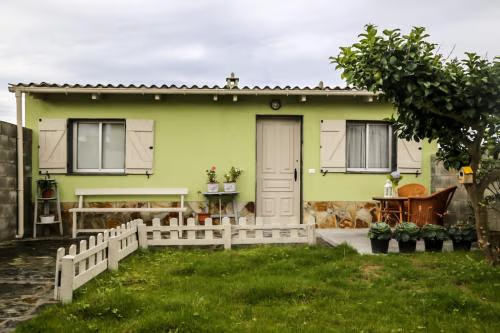 OpenReservations accepted
Casa de Arriba
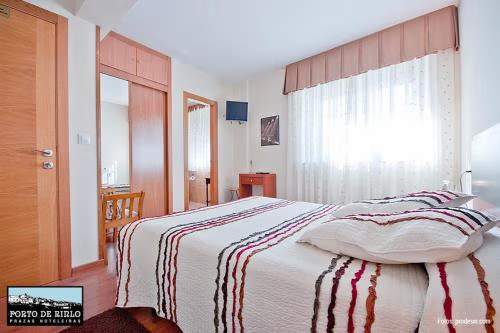 OpenReservations accepted
Porto de Rinlo
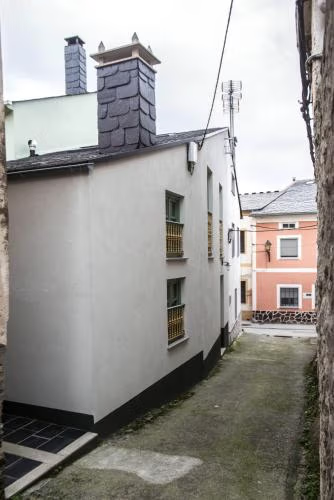 OpenReservations accepted
Casa de Abaixo

Town 2 of 17