

Town on the Camino
Estremoz
Portugal
- places to stay
- 15
- Caminos
- 2
- Elevation
- 418 m
Estremoz is where the road from Badajoz ends, and the Via Nascente carries you on to the north. The white marble town is where Queen Isabel died in 1336, eleven years after she received her pilgrim's staff in Santiago. A rest day is well spent here, ideally on a Saturday.
How long to stay?
Worth a rest day, ideally with a Saturday morning in it. After 74.7 kilometres from Spain, the first route is over, and ahead of you lie 323.6 kilometres of the Via Nascente to Trancoso. Estremoz fills a rest day without effort: up top, the castle with its marble tower and the chapel where the queen died; down below, the museum of clay figures, a tile museum and the big weekly market. The market runs on Saturdays only, and only until noon. If you arrive on another day, you can still do the main sights in an afternoon, but you will miss the square full of people.
Estremoz in Ninja numbers
- 74.7 kilometres is the length of the route from Badajoz to Estremoz according to Camino Ninja. It ends here, and you have reached kilometre 337.6 of the Via Nascente, a little more than halfway between Tavira and Trancoso.
- 323.6 kilometres are left from here to Trancoso, the end of the Via Nascente. After that, the way continues towards Santiago.
- 4 July 1336: On this day Queen Isabel died in Estremoz. Eleven years earlier she had walked to Santiago as a pilgrim.
- 14 scallop shells adorn the pilgrim's staff with which she was buried. Today it lies in Coimbra.
- 118 steps lead up the castle's 27-metre tower. It is made entirely of marble.
Arriving: the end of one road, the middle of another
The last stage from Borba is 14.9 kilometres long, and it runs over the marble ridge that stretches about 40 kilometres from Sousel to Alandroal. Borba, Vila Viçosa and Estremoz are built from this rock, and it is in the nickname the town carries: "cidade branca", the white town. The houses are whitewashed, the ground beneath them is marble. A tourism website counts around 200 quarries along the whole marble belt.
With Estremoz, the route Badajoz - Estremoz comes to an end. Here it meets the Via Nascente, which comes up from Tavira on the Algarve and continues north to Trancoso. From tomorrow you walk with pilgrims who already have a good 337 kilometres from the south in their legs. The town is split in two: below, the wide Rossio, the main square with the market; above, on the hill, the old castle town with tower, palace and church.
In brief: Marble, walls and kings
In 1258 King Afonso III granted Estremoz its first town charter and had the castle built. Queen Isabel died here in 1336, and so did her grandson, King Pedro I, in 1367. In 1384 Estremoz took the side of João of Avis early on, and nearby, at Atoleiros, Nuno Álvares Pereira won the first battle of that uprising, which gave Portugal a new dynasty.
After 1640, in the war of independence from Spain, Estremoz became a fortress. The Flemish Jesuit João Pascácio Cosmander began the new walls and gates in 1642, Luís Serrão Pimentel completed them, and later they were reinforced following the Vauban system. On 17 August 1698 the medieval palace, then used as an arms and powder store, exploded. The tower held. By then, Estremoz marble had long been travelling across the country: according to the Algarve History Association, it stands in the Roman temple of Évora and in the high altar of Évora Cathedral.
The queen with the pilgrim's staff
For pilgrims in Portugal there is hardly a better patron than the woman who died in Estremoz. Isabel of Aragon, widow of King Dinis, set out for Santiago in 1325, a few months after his death, and arrived a few days before the feast of St James on 25 July. Tradition has her dismount in O Milladoiro, about a league from the city. In Santiago, Archbishop Berenguel de Landoria is said to have handed her the staff and bag of a pilgrim of St James. Her tomb, which she commissioned during her lifetime, shows her with exactly these two things.
Eleven years later, in the summer of 1336, she travelled to Estremoz, weakened, to prevent a war between her son Afonso IV and her grandson, the King of Castile. She died on 4 July in her chambers in the castle. Her body reached Coimbra on 11 July, and staff and bag were laid on her coffin. There they were found in 1612, when the tomb was opened. Where she died, a chapel stands today. So you are sleeping in the town where Portugal's most famous pilgrim of St James ended her last journey. The whole story is below in the deep dive.
In the white of the castle town: what to see
The main sights lie close together up on the hill, with the Rossio and the market below. We found reliable opening times for none of the places.
- Torre das Três Coroas: The castle's keep is about 27 metres high and made entirely of white Estremoz marble, inside and out. The name, Tower of the Three Crowns, stands for three kings who worked on it. Which three, the sources do not agree: one names Afonso III, Dinis and Afonso IV, another Afonso IV, Pedro I and Fernando. On the second floor there is an octagonal hall with Gothic columns, and from the top you look across the plain as far as the Serra de Ossa. For a pilgrim, this is the view back over the last few days and ahead to the next ones. The tower stands in the courtyard of the old castle, which is now a pousada; according to a travel blog from June 2026, you used to go up through the hotel foyer, possibly for a small fee.
- Capela da Rainha Santa Isabel: The chapel stands on the spot where Isabel died in 1336. Queen Luísa de Gusmão had it built in 1659, after the victory over the Spanish at the Lines of Elvas, and João V decorated it in the 18th century. The walls are covered with azulejos. Here the queen's pilgrimage ends, and here your next stretch begins. If the door is shut, ask in the Museu Municipal opposite for access.
- Igreja de Santa Maria do Castelo: The town's main church stands in the same castle courtyard as the tower and palace, with marble columns. We did not find Mass times.
- Museu Municipal Professor Joaquim Vermelho: Opposite the castle, in a 17th-century almshouse. It tells the story of the area from the Romans to today's pottery, with a collection of the Bonecos de Estremoz, the colourful clay figures. According to a pilgrim website, this is also where you get the stamp for your pilgrim passport.
- Mercado de Sábado on the Rossio: On Saturdays from about 8 am until midday, the Rossio do Marquês de Pombal fills with stalls: regional produce, crafts, antiques and bric-a-brac. It is considered one of the biggest markets in the Alentejo. For pilgrims, it is the best place to buy supplies for the long stage north, and to see the town as it lives.
- Museu Berardo Estremoz: In the Palácio Tocha, the museum shows 800 years of azulejo history, with more than 4,500 tiles; it is the largest private collection in the country. According to a travel blog, admission cost €3.50 (as of June 2026), and there is a wine tasting at the end. Good for a rest day or a rainy day; check the opening times on the museum's website beforehand.
- Lago do Gadanha: A basin with a statue of Saturn in the middle, the Fonte das Bicas to the west, and opposite it the Igreja de São Francisco with its historic tombs. For pilgrims, a quiet corner with no admission and no opening times.
The Bonecos: clay figures, heritage of humanity
On 7 December 2017, UNESCO inscribed the "Produção de Figurado em Barro de Estremoz" on the list of intangible cultural heritage of humanity. The clay figures are modelled by hand, fired and painted; the technique goes back at least to the 17th century, and more than 100 different figures are inventoried. According to Diário de Notícias, it was the first figurine craft in the world with this title. Early pieces were often variations on the Moringues, porous water jugs that keep water cool. If you arrive after days in the Alentejo sun, you will understand why a water jug came first here, and then a figure. A Centro Interpretativo dos Bonecos lies on the Praça Luís de Camões, and you will find figure-makers' workshops near the castle.
Honestly
- The queen's chapel is often shut. The very room that matters most to you as a pilgrim is not simply open. Allow time to ask in the Museu Municipal for access.
- You have to check opening times yourself. For the tower, museums and churches we found no reliable current times. Ask on the spot or look on the Câmara Municipal's website.
- The market is only on Saturdays, and only in the morning. If you arrive on a Saturday afternoon, you will see an empty square. If you can, make Saturday your rest day.
- The next stretch is long. It is 30.4 kilometres to Fronteira, with only São Bento do Cortiço and Santo Amaro in between. We have not checked whether there are shops there. Buy your supplies in Estremoz and carry enough water.
- Part of the castle hill belongs to a hotel. The Alcáçova is now a pousada, and the way up the tower led, at least in the past, through its foyer. That feels unfamiliar for a pilgrim with dust on their shoes. Go anyway.
Ninja tips
- Get your stamp at the Museu Municipal. A pilgrim guide names the town museum as a stamp point, and while you are there, ask about the queen's chapel.
- Make Saturday your rest day. Then you have the market on the Rossio in the morning and time for castle and museums in the afternoon.
- Shop at the market for the Via Nascente. Regional produce straight from the producer: for the long stage north, the Saturday market is the best larder.
- Climb the tower, even if it costs money. From the top you see the plain you have come through, and the one you are about to walk into.
- Think of Coimbra. The queen's pilgrim staff lies in a silver reliquary with her brotherhood at Santa Clara-a-Nova in Coimbra. If you ever get there later, you can see it.
Practical tips for pilgrims
- Supplies: Estremoz has restaurants, supermarkets and a pharmacy.
- Stamp: in the Museu Municipal, opposite the castle.
- Time: You are in Portugal, an hour behind Spain. If you have just come from Badajoz, you already changed your watch in Elvas.
- Route information: Camino Ninja describes the route from Badajoz together with Turismo do Alentejo e Ribatejo, the region's tourism authority.
Onward: north on the Via Nascente
From Estremoz you follow the Via Nascente towards Trancoso. After 12.5 kilometres you reach São Bento do Cortiço, after 19.3 kilometres Santo Amaro, after 30.4 kilometres Fronteira. For the whole stretch, take water and food from Estremoz. If you have come up the Via Nascente from the south and want to take the way back to Spain from here: Borba is 14.9 kilometres east, Vila Viçosa 21.2.
Deep dive: The pilgrim who arrived in Estremoz
A short read, in case you want to learn more about Estremoz. About three minutes' reading.
Where you stand
When you stand on top of the castle hill of Estremoz, between the white tower and the little chapel, you stand where a pilgrim died. She was a queen, but she was not buried with a crown; she was buried with staff and bag, just as she had arrived in Santiago. Her name was Isabel, and the Portuguese call her the Rainha Santa, the Holy Queen.
The road to Santiago
On 7 January 1325 King Dinis, her husband, died. A few months later, in May or June, Isabel left the court and set out for Santiago. She probably went from Coimbra via Porto, Barcelos, Ponte de Lima, Valença, Tui, Pontevedra and Padrón, the way many pilgrims walk today on the Portuguese Way. She arrived a few days before the feast of St James on 25 July. According to tradition, she dismounted in O Milladoiro, about a league before the city.
What she brought was royal: a crown set with jewels, a mule with gold and silver harness, precious robes and cups, a lot of money. What she took away was simple. Archbishop Berenguel de Landoria is said to have given her staff and bag so that she would be recognisable as a pilgrim of St James. The deeds of this archbishop, however, say nothing of it; we know the story from later biographies of the queen.
One pilgrimage or two?
Some books say Isabel went a second time in 1335, this time on foot and without being recognised. It is a beautiful story, and it suits a saint. The historian Milton Pedro Dias Pacheco examined the sources in 2021 and considers it a mistake: a chronicler, he says, confused the years 1325 and 1335. The most reliable sources know only one pilgrimage. Whether you prefer to believe in the second is up to you.
The last journey
In the summer of 1336 war threatened between her son, King Afonso the Fourth, and her grandson, the King of Castile. Isabel was old and weak, and she travelled to Estremoz anyway, close to the border, to mediate. On 4 July she died here, according to one source of a summer fever, aged sixty-five. Soon afterwards there was peace. Her body was taken to Coimbra and arrived on 11 July. She was laid in the tomb she had ordered years earlier from Master Pero, and on the coffin they placed the staff and bag from Santiago.
What lay in the tomb
On 26 March 1612 the tomb was opened. The staff was still there. It is made of wood, partly clad in silver, set with fourteen scallop shells, and with a T-shaped handle in which a reddish jasper sits. Originally it was about one metre forty-three long. Soon afterwards a silver reliquary was made for it, and so it is kept to this day in Coimbra by the Brotherhood of the Holy Queen. Isabel was beatified in 1516 and canonised in 1625. In 1659 another queen, Luísa de Gusmão, had the chapel built in Estremoz, on the spot where Isabel had died.
What Estremoz gives you
You arrive here and move on tomorrow, like her. Except that your road to Santiago still lies ahead of you, while hers ended here. Perhaps that is the quiet point of this town: Portugal's most famous pilgrim never gave her staff back. She took it with her, to the very end. You may keep yours.
Where to stay in Estremoz
Places to stay in Estremoz.
 OpenReservations accepted
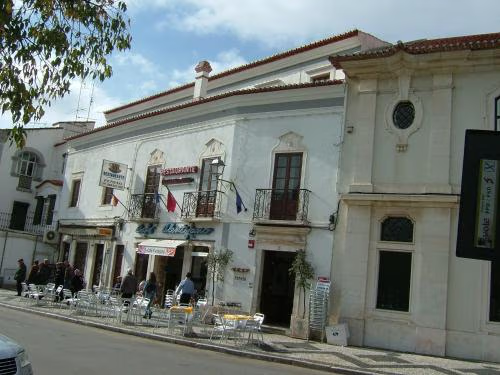
Alentejano Low Cost Hotel
 OpenReservations accepted
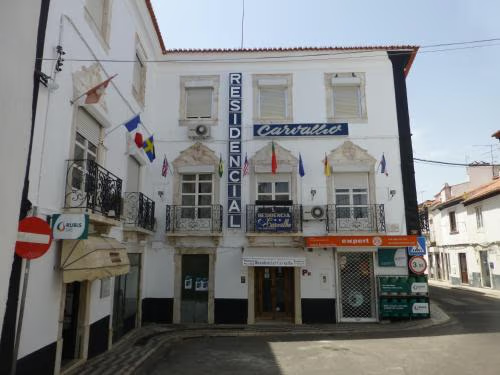
Residencial Carvalho
 OpenReservations accepted
Residencial Miguel José




Town 11 of 25