

Town on the Camino
Évora
Portugal
- places to stay
- 45
- Camino
- 1
- Elevation
- 264 m
Évora is the city that throws nothing away: a Roman temple from the first century, wall rings from Roman and medieval times, a cathedral like a fortress and a chapel made from the bones of around 5,000 people. A World Heritage Site since 1986, and after 264.8 kilometres of the Via Nascente the first big place. Stay a day.
How long to stay?
Worth a rest day, and after the stage from Viana you need it. You arrive after 33.1 kilometres, a long stretch of it along a main road, and it is 47.5 kilometres to Évora Monte. In between lies a city whose entire centre has been a UNESCO World Heritage Site since 1986. The cathedral with its roof terrace, the Roman temple, the bone chapel, the aqueduct and the lanes of the old town fill a day with no effort, and everything lies inside the walls, so on foot and without your rucksack. The cathedral museum is closed on Mondays. If you only have an afternoon, you can manage the Sé, the temple and the Capela dos Ossos, but not at a leisurely pace.
Évora in Ninja numbers
- 264.8 kilometres are behind you since Tavira, according to Camino Ninja, and after days in villages and small towns you are standing in a World Heritage city.
- 396.4 kilometres are still ahead of you from here to Trancoso, the end of the Via Nascente. So you have only just covered two fifths.
- Around 5,000 people lie, by the usual estimate, in the walls and pillars of the Capela dos Ossos. Above the door a sentence waits for you that means exactly that.
- 1537 was the year water first flowed into the city through the Água de Prata aqueduct. After a day in the Alentejo you understand what that meant.
- 4 May 2018: On this day the section of the Via Nascente to Trancoso was presented at Évora cathedral, and the President of the Republic walked the first kilometres with the pilgrims.
Arriving: the wall after the main road
The stage from Viana do Alentejo is long at 33.1 kilometres, and its second part is not the prettiest. After Aguiar the way follows the N254 for about 15 kilometres, a busy road on which pilgrims report barely any verge and tall grass. From Aguiar to Évora it is another 23.8 kilometres, according to Camino Ninja. All the greater is the moment when the city wall appears. At the very top of the city hill stands the cathedral, and almost everything you want to see lies inside the ring of the walls.
The city is built in layers. The Romans called it Liberalitas Julia, after Julius Caesar, then came the Visigoths and, in 715, the Muslims. In 1165 Geraldo Sem Pavor, Gerald the Fearless, took the city for King Afonso Henriques. Under the Avis dynasty Évora was the kingdom's second city, the great buildings went up in the 16th century, and a university in 1559. Since 1986 the historic centre has been on the World Heritage List. You are travelling on the Via Nascente, which runs from Tavira in the Algarve to Trancoso, and Évora is its great intermediate goal.
In brief: temple, bishops, kings
On the highest point of the city stand the columns of a Roman temple from the first century. In the Middle Ages it was converted into a tower, later it served as a slaughterhouse, and in the 19th century it was uncovered. Beside it, from the late 12th century, the cathedral grew, built in the 13th and 14th centuries under King Afonso III and Bishop Durando Pais, half church, half fortress.
After the reconquest Afonso Henriques installed a knightly order in Évora, the Ordem de São Bento de Calatrava. The Order of Avis emerged from these knights, and its master became King João I in 1384. His dynasty made Évora great: from 1531 to 1537 João III had the aqueduct built, in 1559 Cardinal Henrique founded the university and handed it to the Jesuits. When Pombal expelled the Jesuits it closed, and teaching only began again in 1975.
What remains: Évora and the art of remembering
Hardly any city on the way has thrown away so little. The temple survived because it was needed as a tower and a slaughterhouse. The walls lie in rings on top of one another, the old Roman-Arab Cerca Velha inside, the new wall from the 14th century outside. And when the cemeteries became too cramped for the Franciscans in the 16th century, they did not throw the bones away but built from them a chapel for reflection.
Over its entrance it says: "Nós ossos que aqui estamos, pelos vossos esperamos." We bones that are here wait for yours. That sounds like a chamber of horrors, but it is an invitation every pilgrim knows: you are on the way, and not for ever. Whoever has packed a rucksack every morning since Tavira reads this sentence differently from a day tripper. Évora remembers everything, and it reminds you that your way too has an end.
What remains: what to see
Everything that follows lies inside the walls and can be reached on foot. We found reliable current opening times only for the bone chapel, and even those only from a travel portal.
- Sé de Évora: The cathedral stands on the highest point of the city, built of granite as church and fortress at once, in the transition from Romanesque to Gothic. At the portal stand apostle figures from the 14th century, usually attributed to Master Pero of Coimbra, the most important sculptor of his time. For pilgrims that is a nice trace: according to research on Queen Isabel, the same Master Pero made her tomb, which shows her with the staff and bag of a pilgrim to Santiago. Inside are the Baroque main chapel by Frederico Ludovici and a 16th-century organ, plus the Gothic cloister and a museum of sacred art. Go up on the roof as well: from the terrace you look over the white houses to the plain you will cross tomorrow. At this cathedral in May 2018 the pilgrims were blessed who opened the new way to Trancoso.
- Roman temple: The columns from the first century stand right next to the cathedral and cost nothing. Since the 17th century the structure has been called the Temple of Diana, but researchers think it more likely a temple of the imperial cult. That it still stands today it owes to its reuse as a tower and slaughterhouse. It stands in the open air, so you can walk past it in the evening too.
- Capela dos Ossos in the Igreja de São Francisco: Franciscans built the chapel in the 16th century from the bones of the overcrowded monastery cemeteries; eight pillars, walls, arches and ceiling are set with bones and skulls. You already know the inscription above the door. The church itself is freely accessible, and the ticket covers the chapel, the chapter house with its nativity scene, a museum of sacred art, the Royal Tribune and the roof terrace. According to a travel portal it cost €6, reduced €4, open 9:00 to 17:00 in winter and 9:00 to 18:30 in summer, closed on 1 January, Easter Sunday, the afternoon of 24 December and 25 December (as of September 2026). Check on the spot.
- Igreja de São Tiago: The church of St James on the Largo Alexandre Herculano was the parish church of an old parish that was dissolved in 1840. It was rebuilt in the 17th century, and on the south side Manueline battlements can still be seen. Inside is a single Baroque nave, frescoes in the dome and tile pictures with biblical scenes by Gabriel del Barco. For a pilgrim of St James this is the church of his namesake saint in Évora. We did not find out whether and when it is open.
- Aqueduto da Água de Prata: The Silver Water aqueduct was built from 1531 to 1537 under King João III and brought the city its water. For pilgrims who have just walked through the dry Alentejo it is the most honest monument in the city: water was always the most precious thing here.
- Praça do Giraldo: The main square bears the name of the man who conquered Évora in 1165. This is where the city sits in the evening, and from here the lanes run off in all directions.
- Roman baths: At the end of 1987, excavations at the Largo do Sertório came across baths from the second or third century. A short detour if you want the Roman layer of the city complete.
Food and drink
Évora has restaurants and supermarkets in great variety, and according to a pilgrim portal also a vegetarian restaurant with a buffet at lunch and in the evening. After days with little choice in the villages, it is worth eating well here and shopping for the next day.
Honestly
- The stage to get here is unpleasant. Around 15 kilometres on the N254 with traffic and a narrow edge. Set off early, wear light-coloured clothes and walk on the left against the traffic. Some pilgrims take the bus from Aguiar; in 2021 two ran in the morning, so ask at the turismo in Viana for current times.
- There is no pilgrim hostel. All beds are private, and you will find neither a donativo nor a municipal hostel here. The cheapest places are the dormitories of the hostels.
- You have to check opening times yourself. For the cathedral, museums and São Tiago we found no reliable current times. The cathedral museum is closed on Mondays.
- The stage after this is long. It is 47.5 kilometres to Évora Monte, which hardly anyone manages in one day. Plan the stopover before you set off.
Where pilgrims sleep
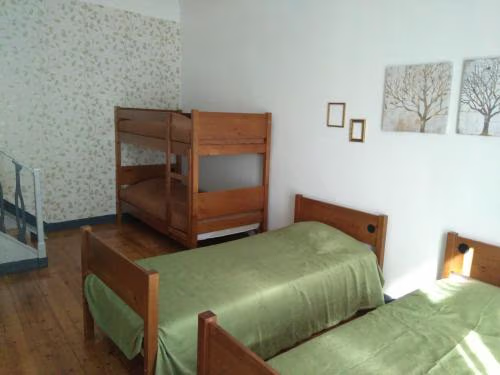
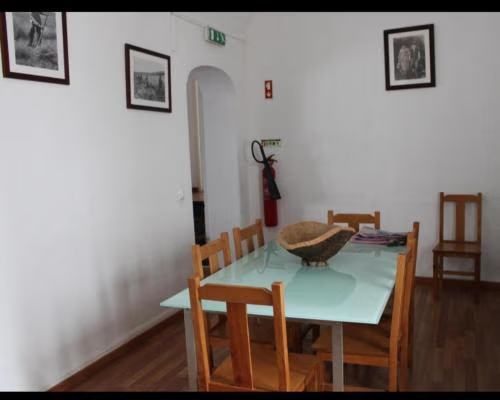
There is no pilgrim hostel in Évora, whether municipal, church-run or donation-based; a pilgrim portal lists all the city's accommodation as private. On the other hand the choice is large, from hostels with dormitories through guesthouses to hotels, most of them inside the walls. Among the hostels are Hostel Raymundo and Mont' Sobro Hostel. The same portal also lists the youth hostel HI Évora – Pousada de Juventude; check beforehand whether it is open at the moment.
Ninja tips
- Go up on the cathedral roof. The terrace is the best view over the city and to the north, where your way leads.
- Read the inscription before you enter the chapel. The sentence above the door of the Capela dos Ossos is the real reason for this room. Take a moment before you raise your camera.
- Look for the church of St James. The Igreja de São Tiago on the Largo Alexandre Herculano is in none of the big tours we read. If it is open, look in: it is the church of your patron.
- Split the stage to Évora Monte. Nossa Senhora de Machede lies after 14.7 kilometres, São Miguel de Machede after 24.2. In Nossa Senhora de Machede a pilgrim in 2021 found two bars open even on a Sunday. In São Miguel de Machede a woman then offered simple donation-based accommodation, arranged through the Junta de Freguesia; ask there beforehand whether it still exists.
- Shop for tomorrow. According to the same report there was no food in the café in São Miguel. Whatever you need for the evening, take it with you from Évora.
- Wear light colours at weekends. Between Évora and São Miguel de Machede hunters are out on Saturdays and Sundays.
Practical tips for pilgrims
- Supplies: According to a pilgrim portal, Évora has every service, from supermarkets to restaurants.
- Stamp: We found no fixed stamp point. Ask in the cathedral or at your accommodation.
- Getting there and away: Évora has a railway station and a bus station. If you join or need a break here, you can get away easily.
- Rest day: The cathedral museum is closed on Mondays; according to a travel portal the bone chapel is open daily.
- Information about the route: Camino Ninja describes the Alentejo section of the Via Nascente together with Turismo do Alentejo e Ribatejo, the region's tourism authority.
Onward: through the olive groves to the north
You leave Évora to the east on the Via Nascente. According to Camino Ninja you reach Nossa Senhora de Machede after 14.7 kilometres, São Miguel de Machede after 24.2, Azaruja after 36.8 and Évora Monte after 47.5. The way leads through olive groves and vineyards. Two stages further on, after 72.8 kilometres, lies Estremoz, where the way from Badajoz joins.
What awaits you tomorrow
Évora Monte is a village with castle walls and a view into the valley, and a pilgrim who had been three weeks in the Alentejo called the landscape there the most beautiful of his whole journey. The 47.5 kilometres to get there are too much for one day, so it will more likely be the day after tomorrow. On the way lies Azaruja, where a small café at the entrance to the village keeps old wine amphorae in a back room.
Deep dive: The city that throws nothing away
A short read, in case you want to learn more about Évora. About 4 minutes' reading.
Where you stand
When you stand on top of the hill of Évora, between the columns of the Roman temple and the façade of the cathedral, you stand on the point around which this city has turned for two thousand years. Here the Romans prayed, here the bishops built, here in May 2018 pilgrims were blessed who opened a new way to the north. Évora has pulled down hardly any of it. It has rebuilt, repurposed and kept things.
The temple that never belonged to Diana
The Romans called the city Liberalitas Julia, in honour of Julius Caesar. Their temple on the acropolis dates from the first century. In the seventeenth century someone came up with the idea that it had been dedicated to the goddess Diana, and the name has stuck to this day. Researchers do not believe it. They take it for a temple of the imperial cult, that is, a place where the emperor was worshipped. That you can see the columns today is almost an accident: in the Middle Ages the temple was walled up into a tower, later it served as a slaughterhouse. Only in the nineteenth century was it uncovered again. Perhaps that is the first lesson of this city. What lasts is often what was needed, not what was revered.
Gerald the Fearless
After the Romans came the Visigoths, and in 715 the Muslims. In 1165 a man conquered the city whom the Portuguese call Geraldo Sem Pavor, Gerald the Fearless. In the twelfth century he took several places and handed Évora to Portugal's first king, Afonso Henriques. The king installed a knightly order here. These knights later became the Order of Avis, and in 1384 its master became King João I of Portugal. With his dynasty began Évora's great age. It was the kingdom's second city, at the end of the fifteenth century around ten thousand people lived here, and in the sixteenth century the great buildings you see today went up.
Silver water and schools
A city on a hill in a dry plain needs water. In 1531 work began on the Água de Prata aqueduct, the Silver Water, and in 1537, under King João III, it flowed into the city. Anyone who walks through the Alentejo these days and refills their bottle in the evening understands why a watercourse is given such a lovely name. In 1559 Cardinal Henrique, with the Pope's permission, founded a university and handed it to the Jesuits. For two centuries they taught here, until the Marquês de Pombal expelled the Jesuits and closed the university. Only in 1975 did teaching begin again. That too is part of Évora: it loses things, but it gets them back.
The monks and the bones
In the sixteenth century the city's monasteries had a problem. Their cemeteries were full. The Franciscans of São Francisco solved it in a way that still draws visitors today and unsettles some. They took the bones out of the earth and built a chapel from them. Eight pillars, the walls, the arches, the ceiling, everything is set with bones and skulls, by the usual estimate those of around five thousand people. Over the door they had a sentence put up: We bones that are here wait for yours.
People can argue about whether that is pious or macabre. The monks wanted you to reflect on transience, not to be afraid. Whether they succeed probably depends on who goes in. A day tripper takes a photo. A pilgrim who has spent two weeks leaving a different town every day may hear something else in it: that all going is a going on, even the last.
A staff for the new way
On 4 May 2018 pilgrims, the archbishop, the minister of culture, the mayor and the President of the Republic, Marcelo Rebelo de Sousa, gathered in front of Évora cathedral. What was presented was the section of the Via Nascente from Évora to Trancoso, waymarked by the pilgrim association Via Lusitana. After the blessing the president walked the first kilometres with them to the edge of the city and said he felt doubly a pilgrim. The pilgrims carried a staff, a replica of the pilgrim's staff of Saint Queen Isabel, who had walked to Santiago in 1325. It travelled from parish to parish until it arrived in Trancoso on 20 May.
At the cathedral portal, in front of which all this happened, stand the apostles attributed to Master Pero of Coimbra. The same master made the tomb of Queen Isabel, which shows her with a staff and a pilgrim's bag. Isabel died in 1336 in Estremoz, two stages north of here. So when you walk on, you walk a little way towards her.
What Évora gives you
This city kept a Roman temple because it was useful as a tower, and the bones of its dead because they were good for reflection. It lost a university and got it back. It throws nothing away. Perhaps that is a good thought for the morning when you pack your rucksack again. You carry only what you need. But what you experience on the way, you may keep.
Where to stay in Évora
Places to stay in Évora.
 OpenReservations accepted
Hostel Raymundo
 OpenReservations accepted
Mont' Sobro Hostel
 OpenReservations accepted
Heaven Inn Suites & Terrace



Town 9 of 25