

Town on the Camino
Castro-Urdiales
Cantabria, Spain
- places to stay
- 13
- Caminos
- 2
- Elevation
- 12 m
Castro-Urdiales is your first evening in Cantabria: a harbour overlooked by the Gothic church of Santa María and a castle with a lighthouse, with the Roman town of Flaviobriga beneath it. From Pobeña it is 20.5 kilometres with 672 metres of ascent, and 648.2 still to Santiago. The hostel has only 16 beds.
Right now in Castro-Urdiales (as of October 2026)
- Hostel at the end of the season: In 2025 the municipal hostel was open from 29 March to 31 October. We have not found dates for 2026. Call ahead: +34 942 782 900. The hostel at the campsite, a few kilometres further along the way, is open all year.
How long to stay?
An afternoon is enough. The old town is small, and the main sights lie close together: church, castle, harbour and the medieval bridge. A rest day would need more than Castro offers. Keep in mind, though, that the hostel is on the edge of town; plan for the walk into the old town and back.
Castro-Urdiales in Ninja numbers
- 648.2 kilometres remain from here to Santiago on the Camino del Norte.
- 257 metres is the highest point of the stage from Pobeña, inland beyond Ontón. By the end of the day you are back at the harbour.
- 16 beds in the municipal hostel. It usually fills up quickly.
- 1978 was the year the Puebla Vieja, the old town, was protected as a historic ensemble.
- 35.7 kilometres to Laredo tomorrow, if you don't split the stage.
Arriving: from the hills to the harbour
After the coast at Ontón the way heads inland: via Otañes, Santullán and Sámano. In Sámano lies the Cueva de Juan Gómez, where Palaeolithic figures were found in the 1970s. Then you follow the CA-520 road over a few roundabouts, cross the river and walk on the riverside path by the Ocharan Mazas park to the harbour. That is where Santa María stands.
In brief: Rome, church and castle
Beneath Castro-Urdiales lies Flaviobriga, the only known Roman colony on the Cantabrian coast. Its remains extend about two metres deep under the whole of today's town. In the Middle Ages Castro became a fortified port town with walls. Between the 13th and the 15th centuries Santa María was built, the most important Gothic building in Cantabria. Next to it on the rock stands the castle, built between the mid-12th and early 13th centuries and later given a lighthouse. Around 1900 money came into town, and architects such as Eladio Laredo and Leonardo Rucabado built villas and houses in the Modernismo style.
Church, castle and harbour: what to see
The old town with its wooden balconies is small; you walk everywhere.
- Iglesia de Santa María de la Asunción: The Gothic church stands right by the sea, built from the 13th century on. Inside there are notable paintings and sculptures. The stone suffers from a "stone disease" and in places is crumbling to sand. For you it is the goal of the day: the way ends right in front of it.
- Castillo-Faro de Santa Ana: The castle behind the church was part of the medieval town defences and is one of the few surviving castles in Cantabria. Later it became a lighthouse, and in the Civil War it served both sides as a prison. Today it shows exhibitions. We have not found opening hours.
- The medieval bridge: Many call it the Roman bridge; the tourist authority calls it medieval. It is part of the walk around church and castle, as is the chapel of Santa Ana.
- Puebla Vieja and harbour: The old town has been protected as a historic ensemble since 1978, with houses with wooden balconies. Down in the harbour lie the fishing boats.
- Palacio de Ocharan and the Modernismo villas: The palace has a castle-like observatory and gardens. You can only get inside on guided visits, for a fee.
Honestly
- The hostel is small and fills fast. 16 beds, no booking. Don't arrive too late, or you'll need a room.
- The hostel is on the edge of town. It stands on the road out by the bullring, around one and a half kilometres from the old town.
- The stage has road sections. Between Pobeña and Castro-Urdiales you also walk along the national road and expressways and through underpasses.
- Bring your own towel and soap. The hostel provides neither.
Where pilgrims sleep
The Albergue de Peregrinos de Castro-Urdiales belongs to the town; a caretaker opens it. It is on the Subida a Campijo, just a few metres from the way. There are 16 places for a donation, only for pilgrims with a credencial, and you cannot book. It is open from 14:00 to 20:00. There is a kitchen, a dining room, a large garden and a bike repair station (as of August 2026). At the end of 2024 the town commissioned works on the hostel, mainly on its enclosure.
A few kilometres further along the way, the Castro campsite has a hostel with 24 beds, open all year, for around €20 (as of August 2026). In town there are also many guesthouses and hotels.
Ninja tips
- Shop in Castro. Here you find a supermarket, bakery, butcher and pharmacy; Pobeña had none of these.
- Plan the stage to Laredo. 35.7 kilometres with 981 metres of ascent is a lot. You can split it in Islares after 10.4 kilometres or in Liendo after 26.2 kilometres.
- If the hostel is full, walk on to the hostel at the campsite. It is on the way to Laredo anyway.
- Go to the harbour in the evening. Church and castle together are the picture Castro is known for, and it is right on the way.
Onward: via Islares to Laredo
The way leaves Castro past the hostel and runs past the campsite and Allendelagua to Islares. Via Ríoseco and Liendo you reach Laredo: 35.7 kilometres with 981 metres of ascent, the highest point at 242 metres shortly before Laredo.
What awaits you tomorrow
Laredo with its long beach and the boat across to Santoña. If the distance is too long for you, sleep in Islares or Liendo.
Deep dive: A town on top of a town
A short read, in case you want to learn more about Castro-Urdiales. About three minutes' reading.
Flaviobriga
When you walk through Castro-Urdiales, you walk over a Roman town. Flaviobriga was the only known Roman colony on the Cantabrian coast, and its remains lie about two metres deep beneath the whole of today's town. A Roman milestone recalls it. The Romans already knew why they built here: a sheltered harbour on a coast that otherwise offers little shelter.
Church and castle on the rock
In the Middle Ages Castro became a fortified town with walls around two quarters. On the rock above the harbour rose the two buildings that still shape its image. The castle was built between the middle of the twelfth and the beginning of the thirteenth century, with round corner towers. Later a lighthouse was set on it. Beside it, from the thirteenth to the fifteenth century, grew the church of Santa María, today called the most important example of Cantabrian Gothic. Between the two lie a forecourt and the old cemetery.
War and wealth
In the Spanish Civil War the castle served as a makeshift prison, for both sides one after the other. Some of its cannons fell into the sea and still lie there; divers visit them. Around 1900 prosperity came to Castro. Architects such as Eladio Laredo, Leonardo Rucabado and Severino Achúcarro built villas and houses in the Modernismo style, and the Palacio de Ocharan got its castle-shaped observatory.
What Castro-Urdiales gives you
Rome beneath you, the Middle Ages before you, the villas of the last century all around. And the church is slowly crumbling, stone by stone turning to sand. You come as a pilgrim to a town that has seen many come and go. It takes you in as it has taken in all of them, and tomorrow morning you walk on.
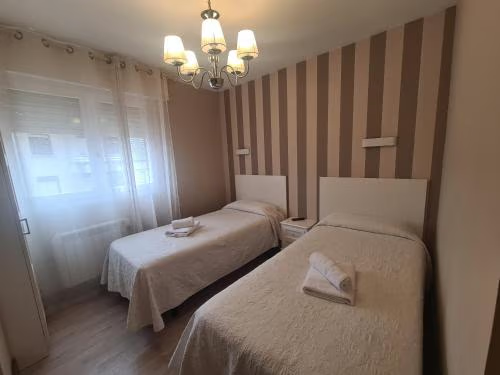
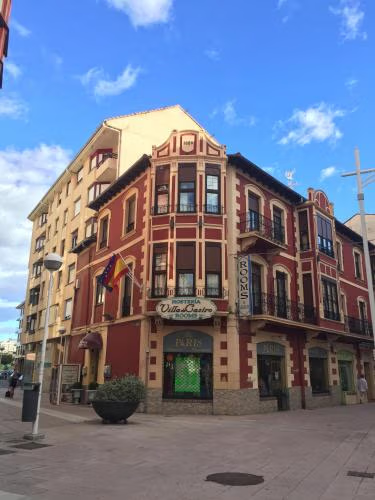
Where to stay in Castro-Urdiales
Places to stay in Castro-Urdiales.
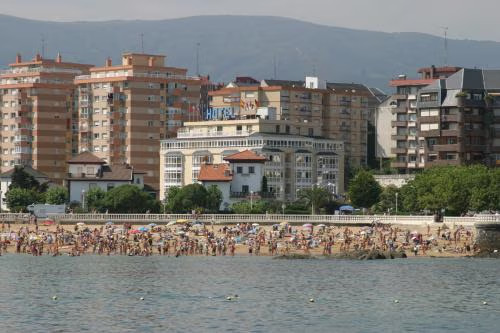 OpenReservations accepted
Las Rocas Playa Hotel
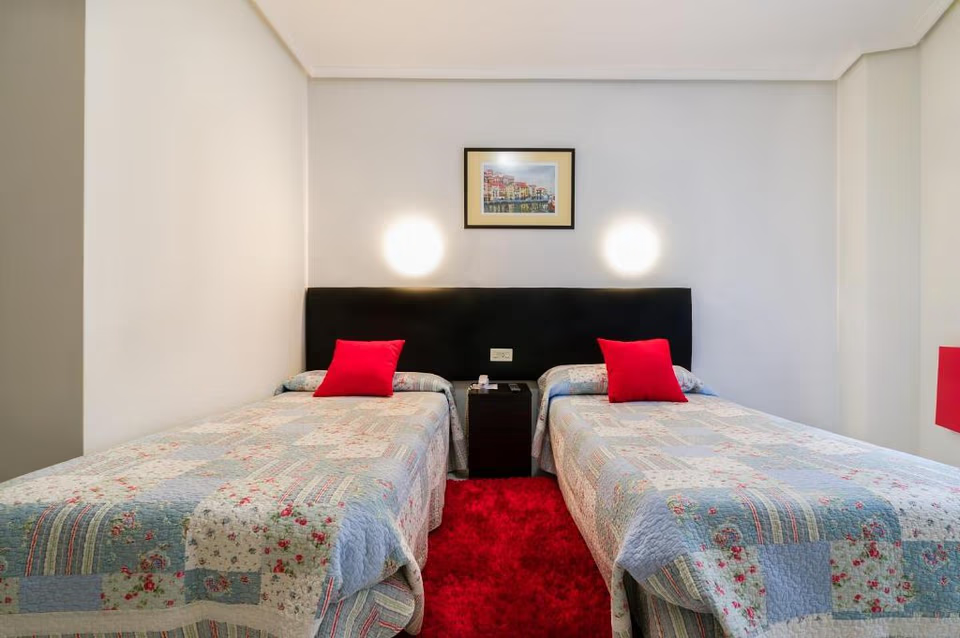 OpenReservations accepted
Pension La Mar
 OpenReservations accepted
Castro Sun And Beach


Services in Castro-Urdiales
What you can find in town before the next stage.
- Café
- Shop
- Tobacco
- Medical clinic
- Pharmacy
- Fountain
- Post office
- Train station
- Restaurant
Source: © OpenStreetMap contributors · updated February 2026
Town 16 of 49