

Town on the Camino
Neda
A Coruña, Galicia, Spain
- places to stay
- 4
- Camino
- 1
- Elevation
- 13 m
Neda is the first pilgrim hostel on the Camiño Inglés, 16.7 kilometres from the quay in Ferrol, at the head of the ría. For centuries the town has lived from bread: its ovens baked ship's biscuit for the Spanish fleet, and its church holds a Christ that an English refugee brought in 1550. An afternoon is enough.
How long to stay?
An afternoon is enough. Neda is small, and after the short first stage you arrive early. There is time for the Rúa Real with its clock tower, the two churches and a walk over the bridge on the Belelle. Many walk on to Pontedeume on day one; if you stay here, you start the Way more gently.
Neda in Ninja numbers
- 16.7 kilometres lie behind you since the Curuxeiras quay in Ferrol, with no big climbs along the shore of the ría.
- 97.3 kilometres are still left from here to Santiago on the Camiño Inglés.
- 3,130 overnight stays were counted at the pilgrim hostel in 2025, the third year in a row above 3,000.
- Around 20 days in 2025 it was full, one of them the day of the Festa do Pan.
- 1500 is when the Hospital of the Holy Spirit was founded. Its clock tower still stands, right on the Way.
Arriving: across the river to Neda
The last kilometres from Ferrol run along the water. If you take a detour, you see the O Ponto tide mill, which ground with the ebb and flow. Over the Xubia bridge you come into Neda. Next to the bridge stand the remains of the Fábrica de Xubia, which at the end of the 18th century made copper blanks for coins and later weapons, money and textiles. The hostel is on the waterfront promenade.
In brief: bread for the fleet
In the 16th century Felipe II chose Neda for the royal provision ovens. The reasons were the road to Ferrol and the water of the Belelle, which was considered especially pure. For about a century Neda baked ship's biscuit for the Spanish fleets. Many water mills stood along the river, and the town became the wheat capital of Galicia. Pan de Neda still carries a quality seal today.
Neda also lies at a crossroads: here the Camiño Inglés meets the old pilgrimage route to San Andrés de Teixido.
Around the Rúa Real: what to see
Everything is close together and on the Way.
- Igrexa de Santa María: The large baroque church on the Belelle was built from 1720 onwards, on an older predecessor. In the walled forecourt stand a cruceiro and a fountain. Inside hangs the Cristo de la Cadena, a Christ in the English style of the Tudor period. John Dutton brought it in 1550 when he fled religious persecution in England. Legend says the cross was washed ashore and chained to the altar. An Englishman who arrived here: on the Camiño Inglés, that fits.
- The bridge over the Belelle: Just past Santa María a footbridge crosses the river into the Rúa Real.
- Rúa Real and Torre do Reloxo: The old arcaded street is the heart of the town. The clock tower is the only remnant of the Casa Hospital y Capilla del Santo Espíritu, founded in 1500. It stands by today's town hall.
- Igrexa de San Nicolás and its cruceiro: The late Gothic church from the middle of the 14th century is first mentioned in 1397. In front of it stands a Gothic stone cross from the 14th century, perhaps one of the oldest in Galicia. On Mondays the faithful come, often three Mondays in a row, and light candles.
Honestly
- For most people Neda is too early. In 2025 only about one in ten of those who started in Ferrol stayed here; the others walk on to Pontedeume. Stay if you want to start slowly, not out of duty.
- The hostel fills up on some days. It was full on about 20 days in 2025, mainly in August and September. You cannot book; beds go in order of arrival.
- Bring cutlery. The hostel kitchen has no equipment.
Where pilgrims sleep
The Albergue de peregrinos de Neda belongs to the Xunta and is on the waterfront promenade. It is open all year, beds are given out in order of arrival, and two of them are accessible. A bed costs €10 (as of October 2026). There is heating, hot water, a dining room and a kitchen without crockery. Beyond that there are only a few private rooms in town.
Ninja tips
- Allow a buffer in August and September. That is when the hostel is most likely to be full, and Pontedeume is still 12.8 kilometres further on.
- Take the detour to the tide mill. It is on the shore just before Neda and shows how people here used the sea.
- Buy Pan de Neda for tomorrow. The bread with the quality seal is the pride of the town.
- Look at the Christ in Santa María. It tells the English side of this Way in its own way.
Onward: over the hill to Pontedeume
Right after Neda comes the only climb of the day, with a view back over the ría. Through Fene, where you find everything you need, and via Cabanas you reach Pontedeume: 12.8 kilometres with 345 metres of ascent, the high point at 182 metres at kilometre 24.6.
What awaits you tomorrow
Pontedeume at the mouth of the Eume. Its bridge has 15 arches today. Once there were 70.
Deep dive: The bread and the Christ
A short read, in case you want to learn more about Neda. About two minutes' reading.
Water, wheat and biscuit
Neda lies at the head of the ría of Ferrol, on the river Belelle. In the sixteenth century the Crown was looking for a place for its provision ovens. Philip the Second chose Neda, because of the road to Ferrol and because of the river water, which was considered especially pure. For about a hundred years ship's biscuit was baked here for the Spanish fleets. Many mills turned on the Belelle, and Neda became the wheat capital of Galicia. As late as 1917 a study confirmed how pure the water of the Belelle was. The bread has remained, and once a year the town celebrates it with the Festa do Pan.
A hospital on the Way
Around 1500 Margarida Fernández and Pero García founded a hospital with a chapel dedicated to the Holy Spirit. Route descriptions today call it the old pilgrims' hospital. Only the clock tower of the building remains. It stands today by the town hall, right on the Way.
The Christ from England
The finest story of the town hangs in the church of Santa María. In the year 1550 an Englishman called John Dutton came to Neda. He was fleeing religious persecution at home, in the years after England's break with Rome. He brought a crucifix with him, in the English style of the Tudor period. The legend tells it differently: the cross drifted across the sea and came ashore in Neda, and so that it would stay, it was chained to the high altar. That is why it is still called the Cristo de la Cadena, the Christ on the chain.
What Neda gives you
The medieval pilgrims from England came across the sea to walk to Santiago. A century later one of their countrymen came because at home he could no longer believe as he wished. On the first evening of your Way, both stand side by side here: the road you choose to walk, and the one you are sent down.
Where to stay in Neda
Places to stay in Neda.
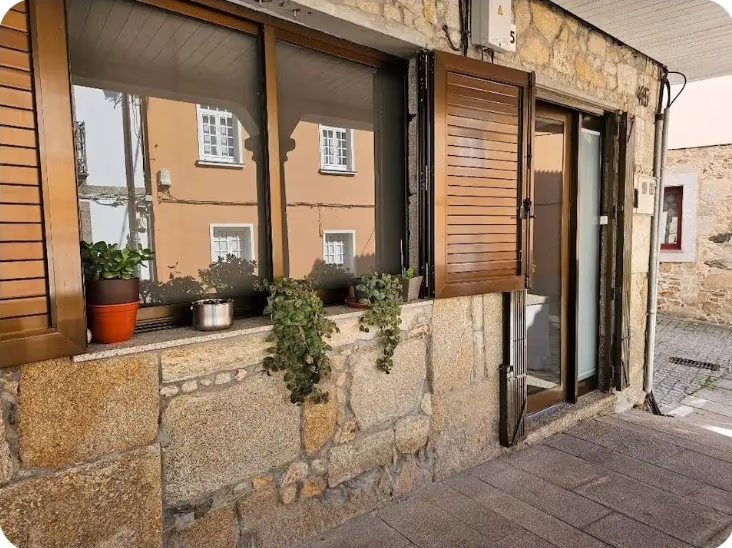 OpenReservations accepted
Real 43 *Casa Neda*
MicrowaveRefrigeratorCotton Sheets & Pillowcases OpenReservations accepted
A Casiña do Río
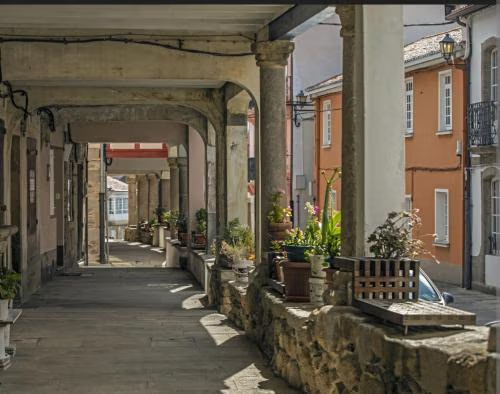 OpenReservations accepted
Real 49 camiño Santiago

Services in Neda
What you can find in town before the next stage.
- Café
- Shop
- Pharmacy
- Fountain
- Train station
- Restaurant
Source: © OpenStreetMap contributors · updated November 2025
Town 2 of 8