

Stage town on the Camino
Ferrol
A Coruña, Galicia, Spain
- places to stay
- 16
- Caminos
- 2
- Elevation
- 6 m
Ferrol is the port where the Camiño Inglés begins: from the Curuxeiras quay it is 114 kilometres to Santiago, just enough for the Compostela. In the Middle Ages pilgrims from England, Ireland and Scandinavia landed here by ship; today almost every Inglés pilgrim starts in this naval town. An afternoon is enough, so plan it before day one.
Right now in Ferrol (as of October 2026)
- Pilgrim hostel: In October 2026 Gronze lists the Xunta hostel in the Casa do Mar as "temporarily closed", with no date or reason. Pilgrims were still praising it in July 2026. Check before you travel whether it is open, and otherwise plan on a room.
- Exponav shipbuilding museum: closed from 1 to 15 November.
How long to stay?
An afternoon is enough, but take it before you start. If you arrive the day before, there is time for the old town by the harbour, the bastion above the ría and the stamp at the starting point. If you are interested in ships, visit the Exponav shipbuilding museum. Next morning you set off.
Ferrol in Ninja numbers
- 114.0 kilometres from the Curuxeiras quay to Santiago, only 14 more than you need for the Compostela. That is why almost everyone starts here.
- 22,951 pilgrims started in Ferrol in 2023, a record. From A Coruña, the other starting port, came 577 that same year.
- 30,205 pilgrims walked the Camiño Inglés in 2025, 8 percent more than the year before. Most came from Italy and the USA.
- 37 of 84 ships in the port of A Coruña flew the English flag in 1456, as counted by the pilgrim William Wey.
- More than 400 versions of Velázquez's "Meninas" hang as street art in the Canido district.
Arriving: to the Curuxeiras quay
The Camino begins where the ships used to dock: at the Muelle de Curuxeiras on the edge of the old town. A monolith marks the official start, and opposite it is the tourist and pilgrim office under the arcades of the Paseo da Mariña. There you get your credencial and your first stamp. From here the shells lead right through the city, first through old Ferrol, then through the La Magdalena district with its long, straight streets.
In brief: a city that lives from the sea
Ferrol is a port and naval town. In the 16th century Felipe II had the castle of San Felipe built at the entrance of the ría; in the 18th century came the arsenal, the shipyards and the La Magdalena district with its grid of streets. Then followed the long decline of the 19th and 20th centuries. The city has famous children: the lawyer and writer Concepción Arenal, Pablo Iglesias, founder of the Socialist Party, and Francisco Franco. From 1938 to 1982 its official name was "El Ferrol del Caudillo".
The sea route: why the Camino starts here
From the 12th to the 15th century, pilgrims from England, Ireland, Wales, Scotland, Brittany, the Netherlands, Germany and Scandinavia did not walk across Europe; they came by ship. Shipowners sold them packages of passage, food and a guide who spoke their language. Most ships docked in A Coruña, but many also in Ferrol, Neda or Pontedeume. From there the pilgrims walked the short distance to Santiago.
With the Reformation this stream dried up. Henry VIII banned pilgrimages, and England and Spain went to war. Only in the 1990s did associations and councils waymark the route again. That almost everyone now starts in Ferrol rather than in larger A Coruña has a sober reason: from A Coruña it is, according to our database, only just over 73 kilometres, too few for the Compostela.
Along the harbour: what to see
The main sights are close to the start or right on the Way.
- Muelle de Curuxeiras: The old quay is your kilometre zero. Boats used to land here; today the monolith and the pilgrim office stand here. Get your stamp and take the photo before you set off. For a route that began with ships, this is the right start.
- Baluarte de San Juan: The bastion is about 200 metres from the starting point. It gives one of the best views over the ría through which the pilgrim ships came.
- Ferrol Vello and the Concatedral de San Xiao: Old Ferrol stands on a prehistoric castro. The co-cathedral from the end of the 18th century is neoclassical and austere, with two towers and a large dome. It replaced a Romanesque church by the harbour. The Way passes close by, and it also issues credenciales.
- Igrexa de San Francisco and the Herrera gardens: The neoclassical church of 1757 stands on the site of a 14th-century convent. Right next to it, about 20 metres from the Way, are the Jardines de Herrera with a view of the ría.
- Exponav, the shipbuilding museum: It occupies the "Herrerías" building of the arsenal, designed by Julián Sánchez Bort in 1765, on the Cantón de Molíns. Downstairs you see the wreck of the frigate Magdalena, which sank off Viveiro in 1810. Admission €2 (as of October 2026). Outside high season it is closed on Mondays, usually open Tuesday to Saturday 10:00 to 19:00 and on Sunday mornings.
- Castelo de San Felipe: The 16th-century fortress guards the entrance of the ría, about five kilometres from the centre. It is not on the Way. Only worth it if you have a full day in Ferrol.
Honestly
- The first day is urban. You cross the whole city and then walk a long way along the shore of the ría, past the Polígono da Gándara industrial estate.
- The hostel situation is uncertain. In October 2026 the Xunta hostel was listed as temporarily closed, and a small donativo hostel that still appears in some lists is, according to our sources, probably no longer operating.
- The hostel has no kitchen equipment. Pilgrims agree: just a microwave, no crockery, no pots.
- There are road stretches on the Way. Since the 2017 rerouting, some sections of the Inglés run along narrow road shoulders and blind crossings. Walk in single file and stay visible.
Where pilgrims sleep
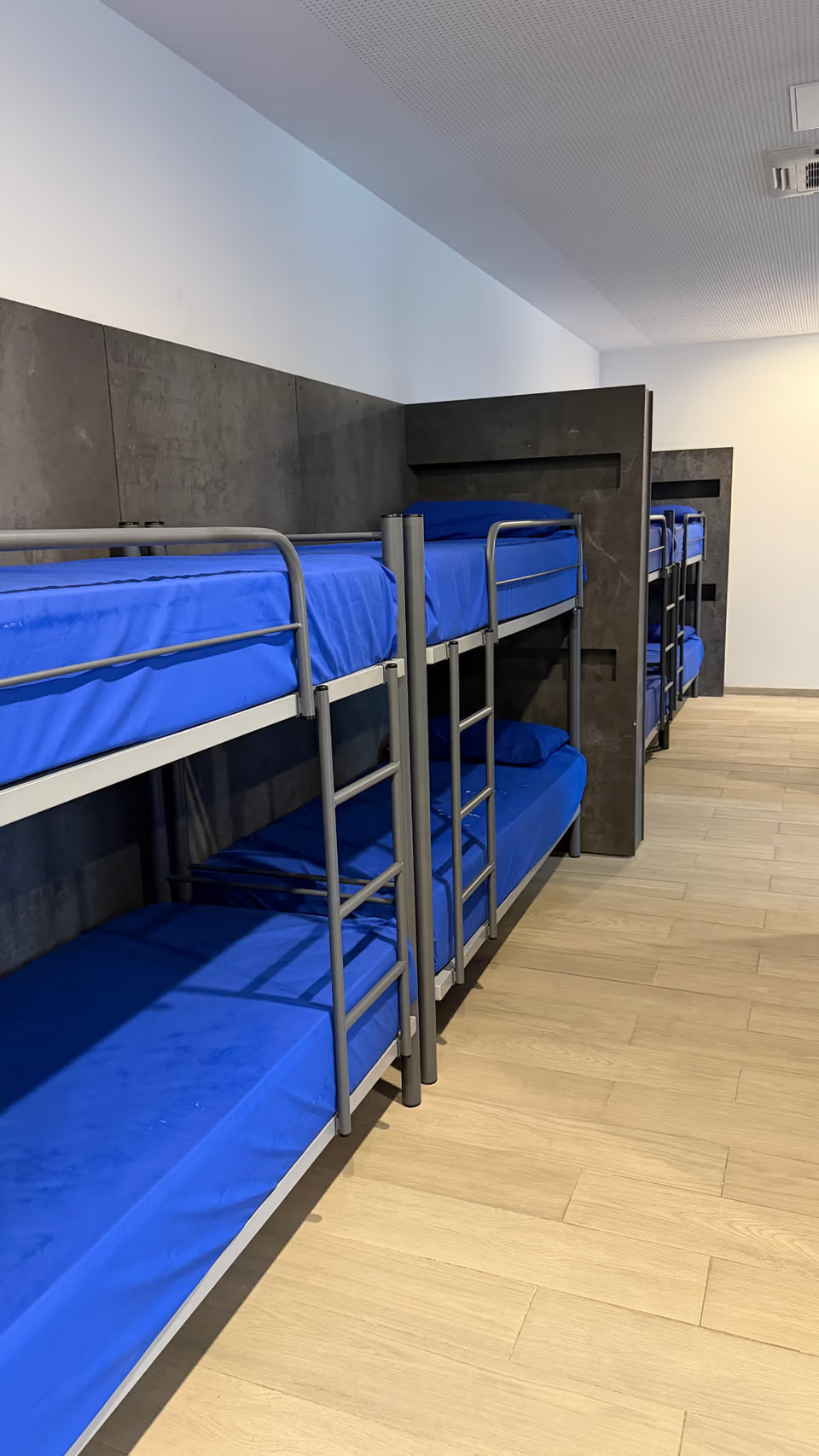
The Xunta pilgrim hostel is in the Casa do Mar, overlooking the harbour. It opened on 1 July 2023, has 60 places, two of them accessible, and costs €10 (as of October 2026). In our database it is listed as New Pilgrim Hostel of Ferrol. Pilgrims praise the new beds and clean bathrooms; the showers are in a row. Check beforehand whether it is open (see above).
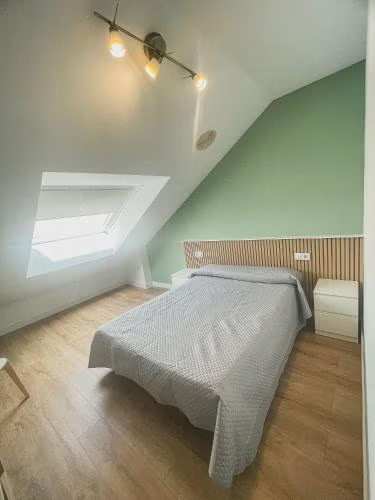
There is no donativo or parish hostel with reliable operation in Ferrol. Otherwise there are simple hostales and guesthouses in the old town and on the road out, single rooms mostly from around €30 to €50 (as of October 2026).
Ninja tips
- Get your first stamp at the quay. The monolith and the pilgrim office face each other, and the photo at kilometre zero is part of it.
- Get a blessing if you like. At the Santuario de las Angustias there is a pilgrim blessing every day at the 9:00 Mass. You just start a little later.
- Pack cutlery. The Xunta hostels on the Inglés often have no kitchen equipment at all.
- Go to the bastion, not just the quay. From the Baluarte de San Juan you see the ría the ships came through.
- If you have time, walk both branches. A bus runs hourly between A Coruña and Ferrol. Add the Coruña branch and you see the main port of the medieval pilgrims.
- Split the stretch to Pontedeume. 29.5 kilometres with a good 600 metres of climbing is a lot for day one. In Neda, after 16.7 kilometres, there is a pilgrim hostel.
Practical tips for pilgrims
- Credencial: at the tourist and pilgrim office on the Paseo da Mariña, and also at the Concatedral de San Xiao, the Igrexa do Socorro and the bishopric.
- Pilgrim welcome: At the Igrexa do Socorro, about 50 metres from the tourist office, a Christian welcome point receives pilgrims Monday to Friday from 17:30 to 19:00 (as of October 2026).
- Compostela: From Ferrol the distance is enough. From A Coruña only with exceptions, for example if you have already walked a stamped stretch in your home country.
Onward: along the ría to Neda
The Way crosses the city and circles the Caranza peninsula close to the water. Beyond it stands the monastery of San Martiño do Couto with a baroque façade and Romanesque apses, an open sarcophagus at the entrance. A short detour leads to the O Ponto tide mill, which ground with the ebb and flow. Over the Xubia bridge you reach Neda after 16.7 kilometres. If you continue, it is 29.5 kilometres to Pontedeume, with the day's high point at 182 metres at kilometre 24.6.
What awaits you tomorrow
Pontedeume, where most people end their first day. Its bridge over the Eume has 15 arches today. Once there were 70.
Deep dive: By ship to Santiago
A short read, in case you want to learn more about Ferrol. About three minutes' reading.
A quay as a beginning
Most Ways of Saint James begin at a church or a city gate. This one begins at a quay. Boats used to land at the Muelle de Curuxeiras; today a stone stands here where your Way begins. It fits, because the story of the Camiño Inglés begins at sea.
Pilgrims from the north
In the twelfth century devotion to the Apostle James grew, and with it the number of pilgrims. For people from England, Ireland, Scotland, Wales, Brittany, the Netherlands, Germany or Scandinavia, the overland route across France was long and dangerous. So they took the ship. Shipowners offered fixed packages: the passage, the food and a guide who spoke the pilgrims' language, paid in advance. The whole journey took two to three weeks, and the ships lay at anchor for seven or eight days until the pilgrims were back from Santiago.
A report from the year 1456 shows how busy the traffic was. The English cleric William Wey sailed from Plymouth to A Coruña in four days. In the harbour he counted eighty-four ships, thirty-seven of them under the English flag. Most landed in A Coruña, but the ports of the ría of Ferrol, Neda and Pontedeume also took in pilgrims.
The end of a route
In the sixteenth century this stream came to an end. The Reformation made pilgrimage a suspicious matter in England, Henry the Eighth banned it, and from 1585 England and Spain were at war for almost twenty years. In the eighteenth and nineteenth centuries the route was largely forgotten.
A city of shipyards
Ferrol itself became something else in this time: a navy town. Philip the Second had the castle of San Felipe built at the entrance of the ría. In the eighteenth century came the arsenal, the shipyards and the La Magdalena district with its straight streets, a city drawn on the drawing board. Then came a long decline.
Ferrol also has uncomfortable names. Francisco Franco was born here in 1892, and from 1938 to 1982 the city officially carried his title in its name: El Ferrol del Caudillo. But Ferrol is also the home town of the writer and lawyer Concepción Arenal and of Pablo Iglesias, the founder of the Spanish Socialist Party.
The return of the pilgrims
In the 1990s associations and councils waymarked the old route again. In 2009 about 1,500 people walked it; in 2025 there were more than 30,000. The great majority start here, for a practical reason: from Ferrol it is a little more than the hundred kilometres the pilgrim office in Santiago requires for the Compostela. A Coruña, the great medieval pilgrim port, lies closer to Santiago and is too close for that.
What Ferrol gives you
You begin where others before you came ashore after days at sea. You arrive differently today. But the first step is the same: away from the water, into the land, towards Santiago.
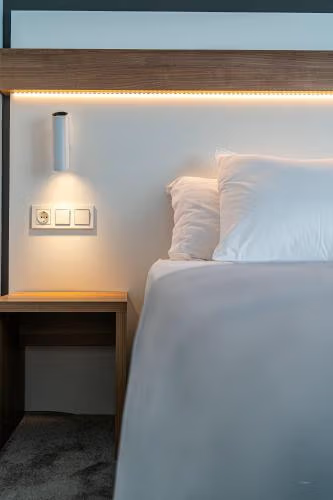
Where to stay in Ferrol
The places pilgrims rate highest in Ferrol come first.
- Top #1
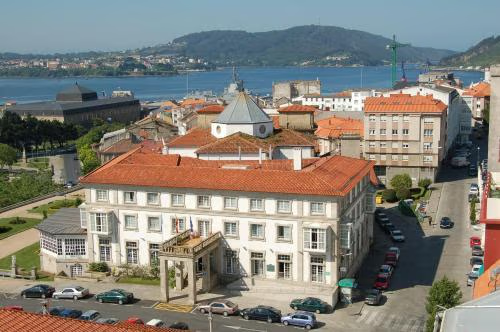 OpenReservations accepted
Parador de Ferrol
- Top #2
 - Juan Jose Faraldo.JPG?tr=w-960,c-at_max,f-avif,q-85) OpenReservations accepted
Hostal Choyo2
- Top #3
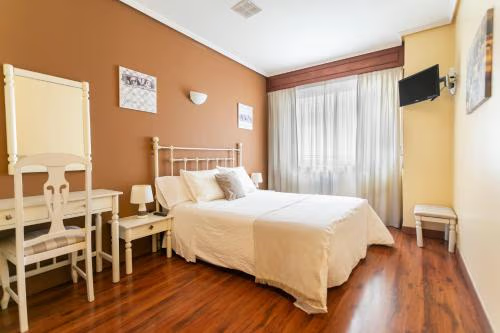 OpenReservations accepted
Hotel América

Services in Ferrol
What you can find in town before the next stage.
- ATM
- Café
- Shop
- Tobacco
- Medical clinic
- Pharmacy
- Fountain
- Post office
- Train station
- Bus station
- Restaurant
Source: © OpenStreetMap contributors · updated November 2025
Town 1 of 8