

Stage town on the Camino
São João da Madeira
Distrito de Aveiro, Região do Centro, Portugal
- places to stay
- 9
- Caminos
- 2
- Elevation
- 225 m
São João da Madeira is the workshop of the Camino Portugués Central: a small industrial town that grew big on hats and shoes, 341.0 kilometres from Lisbon. In an old hat factory stands a museum that is unique on the Iberian Peninsula. After a long day you sleep at the Misericórdia; tomorrow you head towards Porto.
How long to stay?
An afternoon is enough. You arrive after almost 30 kilometres, usually in the afternoon. The town is compact and has two museums that match its history: hats and shoes. If you still have the energy, visit one of them. For a rest day, Porto, a day and a half further on, is the better place.
São João da Madeira in Ninja numbers
- 341.0 kilometres lie behind you since Lisbon, and 278.3 remain to Santiago on the Camino Portugués Central.
- 29.6 kilometres from Albergaria-a-Velha, with 451 metres of ascent. The last kilometres went uphill: you are standing at 225 metres, the highest point of the day.
- More than 120 roundabouts were counted in the town back in 2016, on a tiny area. São João da Madeira is the smallest municipality in Portugal by area.
- 500 shoes are on show in the shoe museum, from prehistory to the 20th century.
- 34.4 kilometres remain to Porto. The usual stage ends in Grijó.
Arriving: up into the factory town
After Bemposta the way drops to 99 metres at km 329.5, climbs again to Oliveira de Azeméis and ends with a final climb beyond Vila de Cucujães. At the end you are in a town that feels quite different from the villages before it: dense, urban, full of former factory buildings. The Misericórdia's pilgrim lodging is at the entrance to town, about 200 metres from the way and 700 metres from the centre.
In brief: hats, shoes and a railway
The town is mentioned as early as the 11th century, but it only grew big with industry. From the early 19th century, factories were built here for hats, shoes, pencils, dairy products, textiles and metal goods. In 1908 King Manuel II opened the Vouga railway, which sped up the town's rise. Hat-making became the town's most important activity. Today some old factories house museums, cultural venues or business incubators, and the town promotes itself with industrial tourism.
A town at work: what to see
- Museu da Chapelaria: The hat museum stands in an old hat factory and was completed in 2005. It is the only one of its kind on the Iberian Peninsula and honours the women and men who worked in the hat industry. For pilgrims, it is a glimpse of what people lived on in the places you walked through today. We have not found reliable opening hours.
- Torre da Oliva and Museu do Calçado: The tower belonged to the former Oliva sewing-machine factory and is now one of the town's landmarks. Since 2016 the shoe museum here has shown around 500 shoes and 20 replicas of historical models. The tower also houses the visitor centre for industrial tourism. If you have been walking in the same shoes for weeks, you will look around here with different eyes.
- Santuário de Nossa Senhora dos Milagres: This neo-Romanesque pilgrimage church was built in the first third of the 20th century, paid for with donations from the townspeople. We have not found Mass times.
Honestly
- No real pilgrim hostel. The Misericórdia has a few beds for pilgrims, nothing more. If it is full, you are left with the hostel and guesthouses.
- A town, not a village. After days through woods and fields, São João da Madeira feels loud and dense. All those roundabouts do not make walking any nicer.
- A long stage before it. Almost 30 kilometres with road sections and a climb at the end. If you arrive tired, you won't manage a museum.
Where pilgrims sleep
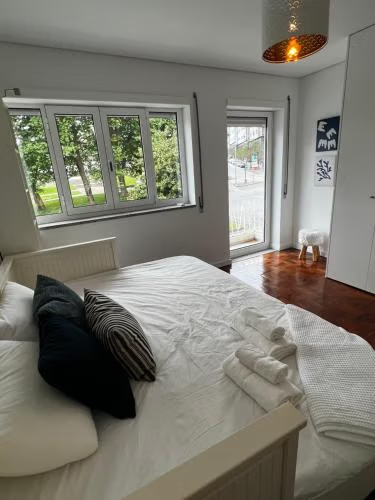
The Acolhimento da Santa Casa da Misericórdia is a simple pilgrim lodging run by the Misericórdia, a Catholic lay brotherhood that also cares for the sick and people with disabilities here. It is at the entrance to town on Avenida Manuel Luís Leite Júnior, open all year, and costs around €5 (as of October 2026). You cannot book, and you need your credencial. There are only a few beds; mattresses are laid out when needed. There is heating and somewhere to do laundry. Phone: +351 256 837 240.
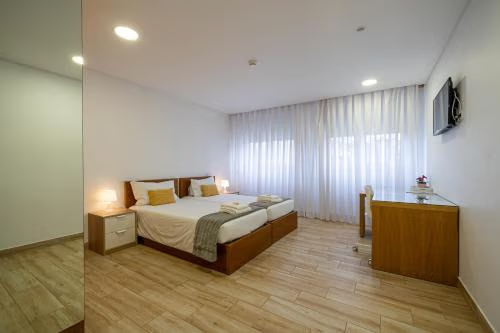
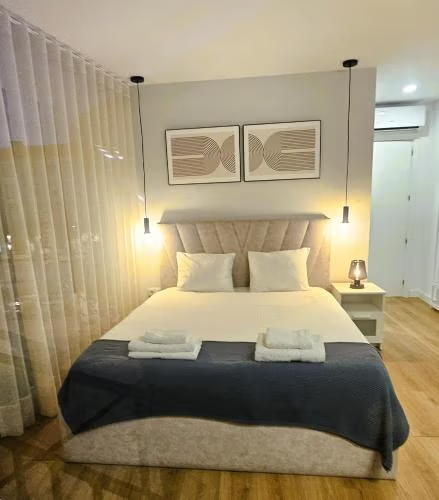
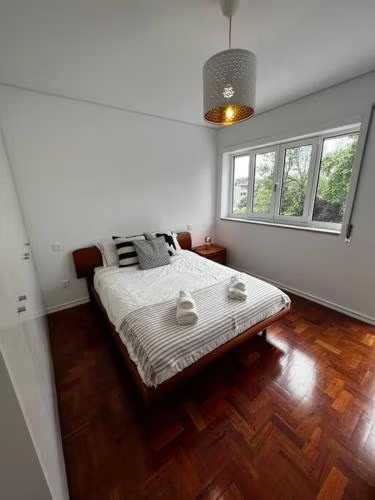
If there is no room, the 888 Hostel & Suites in the centre has dormitory beds for a little over €20. There are also several guesthouses.
Ninja tips
- Call the Misericórdia before you set off. There are few beds and they cannot be booked, but you will find out whether someone is there.
- Split the walk to Porto. The 34.4 kilometres to Porto are a lot. Grijó, after 19.1 kilometres, is the usual stop.
- If you manage one museum, make it the hat museum. It exists only here.
Practical tips for pilgrims
- Credencial: required for the Misericórdia lodging.
- Shopping: With a little over 21,000 inhabitants, São João da Madeira is a proper town; you can shop in the centre.
- Shortening the stage: If you don't walk the stage from Albergaria-a-Velha in one go, you will find accommodation in Oliveira de Azeméis and Vila de Cucujães.
Onward: over the hill to Grijó
Beyond the town the way keeps climbing via Arrifana; at km 348.3 you reach the highest point of the section at 305 metres. Then the way descends via Malaposta, Airas and Lourosa to Grijó (km 360.1). The stage is 19.1 kilometres, with 201 metres of ascent and 305 metres of descent. If you want to go further, continue via Vila Nova de Gaia to Porto, 34.4 kilometres in total.
What awaits you tomorrow
Grijó with its monastery, and a day later Porto: the first big city since Coimbra and the gateway to the last third of the way.
Deep dive: The town of hats
A short read, in case you want to learn more about São João da Madeira. About two minutes' reading.
A small place with factories
São João da Madeira is the smallest municipality in Portugal, measured by area. The town is mentioned as early as the eleventh century, but for a long time it was just a village on the road to Porto. That changed in the nineteenth century. Factories sprang up, for hats, shoes, pencils and textiles. In 1908 the railway came through the Vouga valley, opened by the king himself. Hat-making became the town's most important work.
From the factory to the museum
Some of these factories no longer work. The town has given some of their buildings a new use. In 2005 a museum opened in an old hat factory, honouring the people who made hats here. Since 2016 a museum in the tower of the former Oliva sewing-machine factory has shown shoes from many centuries. The town calls this industrial tourism. You could also say: it tells its own story by showing how it worked.
What São João da Madeira gives you
When this text was written, in autumn 2026, pilgrims walked through this town every day, many in shoes that looked tired after hundreds of kilometres. Shoes were once made here, pair by pair, by people whose names nobody knows. Perhaps this is a good place to think about the work that goes into the things that carry you.
Where to stay in São João da Madeira
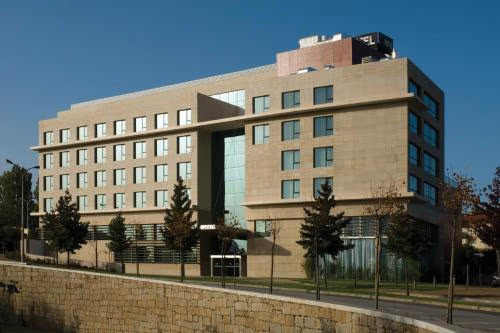
Places to stay in São João da Madeira.
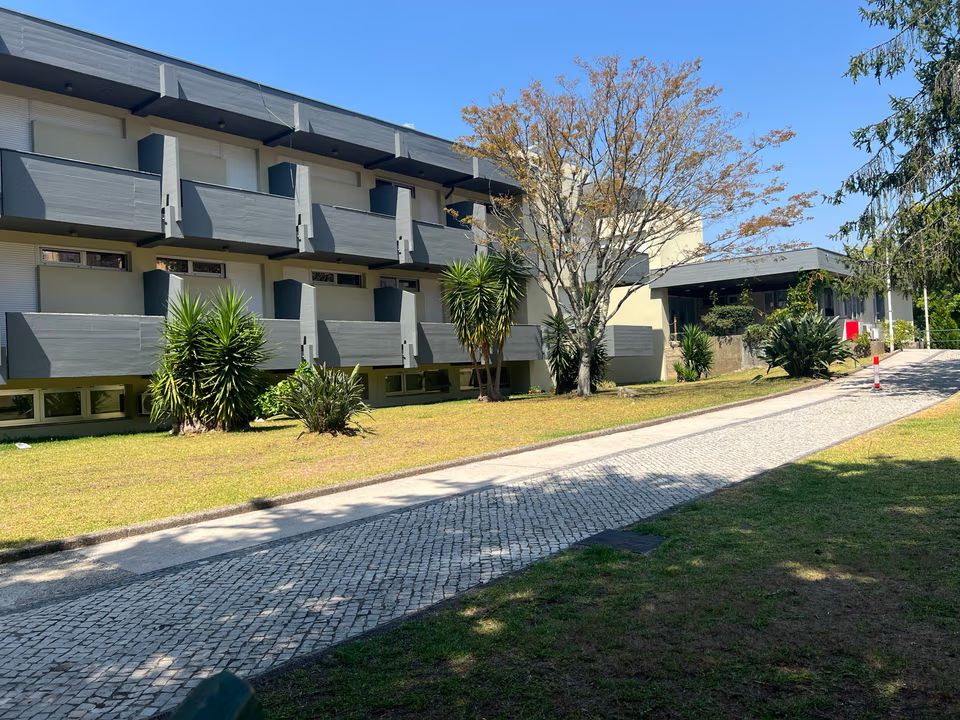 Open
Acogida da Santa Casa da Misericórdia de São João da Madeira
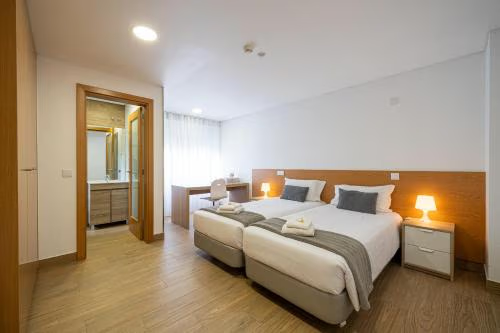 OpenReservations accepted
Central Suites 3
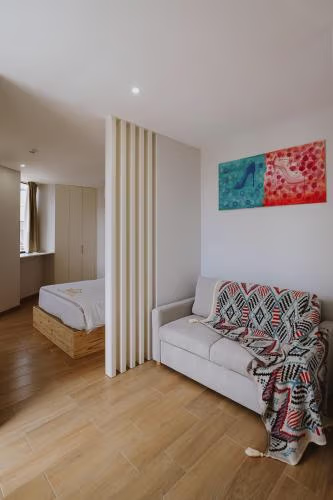 OpenReservations accepted
888 Hostel&Suites
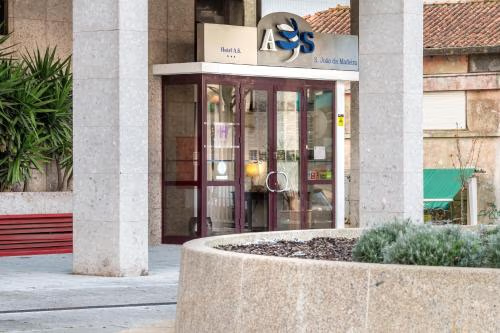
Services in São João da Madeira
What you can find in town before the next stage.
- ATM
- Café
- Shop
- Tobacco
- Medical clinic
- Pharmacy
- Fountain
- Post office
- Train station
- Restaurant
Source: © OpenStreetMap contributors · updated January 2026
Town 19 of 43