

Town on the Camino
Rabanal del Camino
León, Castilla y León, Spain
- places to stay
- 13
- Camino
- 1
- Elevation
- 1,153 m
Rabanal del Camino is the last village before the mountain: 1,153 meters high, around 60 residents, a Templar church from the 12th century and monks who sing Gregorian chant in the evening and bless pilgrims. Here you gather yourself for the climb to the Cruz de Ferro. One evening is enough; if you seek more silence, stay two nights at the monastery.
How long to stay?
One evening is enough, but take all of it. You can walk through the village in half an hour. What makes Rabanal special only begins in the evening: Vespers at 19:00, Compline with the pilgrim blessing at 21:20. If you need a break from walking, you can live along at the monastery for at least two nights.
Rabanal del Camino in Ninja numbers
- 1,153 meters is Rabanal's altitude, almost 300 meters higher than Astorga, which you left this morning.
- 5.6 kilometers and 293 meters of climbing is the stretch to Foncebadón tomorrow morning.
- 1,512 meters is the highest point of the entire Camino Francés, 12.9 kilometers beyond Rabanal.
- 17:00 is tea time at Refugio Gaucelmo, with homemade pastries in the garden.
- 244.9 kilometers remain from here to Santiago.
Arriving: up into the Maragatería
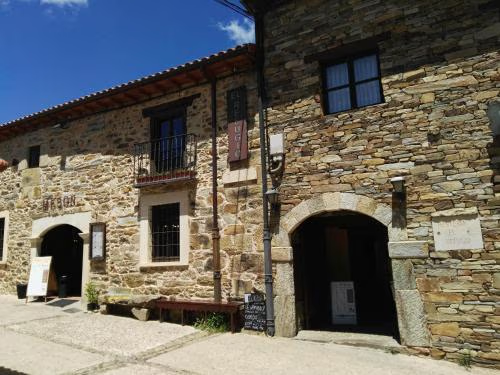
From Astorga the path rises almost imperceptibly through the Maragatería, past the stone villages of Murias de Rechivaldo, Santa Catalina de Somoza and El Ganso. After 19.8 kilometers and 330 meters of climbing you arrive in Rabanal, past the Ermita del Bendito Cristo at the entrance to the village. The main street, the Calle Real, leads uphill through the village; along it and on the square beside it lie the albergues, the church and the monastery.
In brief: Raphanellus
The Codex Calixtinus, the pilgrim guide from the 12th century, already names the place: for it, Raphanellus is the end of the ninth stage. The parish church belonged to the Order of the Templars until 1287. In one of the stone houses, the Casa de las Cuatro Esquinas, King Philip II is said to have stayed overnight, and according to tradition the pilgrim hospital San Gregorio stood there too. Today's pilgrims have brought new life: in 1991 British pilgrims opened the Refugio Gaucelmo, and in 2001 Benedictines founded a monastery here.
Gathering before the mountain
On February 2, 2001, monks of the Archabbey of St. Ottilien in Upper Bavaria moved to Rabanal and founded the monastery San Salvador del Monte Irago opposite the church. Their task is simple: they pray, and they invite pilgrims to pray along. They sing the Liturgy of the Hours in Latin and Gregorian chant, in the Romanesque church that once belonged to the Templars. After Vespers you can go to confession, and if you want to talk, you will find a monk who listens.
In the evening, at 21:20, the day ends with Compline and the blessing for the pilgrims. Tomorrow you climb to the Cruz de Ferro, where many lay down a stone they brought from home. Here, at the foot of the mountain, is the place to think about what this stone means. Rabanal is not a place where you see much. It is a place where you gather yourself.
Gathering: what to see
Three places are enough, and all lie on the Calle Real.
- Iglesia de Nuestra Señora de la Asunción: The Romanesque church from the end of the 12th century belonged to the Templars until 1287 and was rebuilt in the 18th century. The monks sing Vespers and Compline in it. For you it is the evening in Rabanal; go in for Vespers at 19:00.
- Monasterio San Salvador del Monte Irago: The small monastery opposite the church is a house of the Benedictines of St. Ottilien, founded in 2001. It has a shop where you can ask about a stay at the monastery. The prayer times: Lauds 7:30, Mass 9:00, on Sundays 12:30, midday prayer 13:45 except Sundays, Vespers 19:00, Compline with pilgrim blessing 21:20.
- Ermita de San José: The restored chapel is considered one of the best examples of Astorga Baroque, with a main altar. We found no opening hours.
Food and drink
Rabanal has several bars and restaurants with a pilgrim menu, astonishingly many for such a small village. The more important thing is shopping: buy for tomorrow here. Until Molinaseca there is little, and the path leads over the mountain.
Honestly
- Tomorrow will be hard. The climb to Foncebadón is stony, muddy in spring, full of flies in summer; pilgrims found it very strenuous in 2026. After that it goes down almost 1,100 meters.
- Supplies run out. Beyond Rabanal, until Molinaseca, there are only Foncebadón, Manjarín and El Acebo. We found no documented cash machine in Rabanal.
- Not every shop is friendly. Pilgrims reported curt treatment in one shop in 2023 and 2025. There are several; you have the choice.
- The donation albergue is strict. At the Gaucelmo there is no Wi-Fi, the door is locked at 22:00, and you have to be out before 8:00.
Where pilgrims sleep
The Refugio Gaucelmo is one of the best-known albergues on the Camino: open since 1991, built up by British pilgrims of the Confraternity of Saint James, in a house of the Diocese of Astorga, run by volunteer hospitaleros. You pay a donation, you cannot reserve, admission from 12:30, open from March 29 to October 31. At 17:00 there is tea with homemade pastries in the garden, in the morning a simple breakfast. Pilgrims on foot have priority.
The Albergue municipal de Rabanal del Camino belongs to the village community, costs €10 with a sheet (as of September 2026), can be reserved, has heating and a garden and is said to be open all year; in winter call ahead: +34 722 612 275.
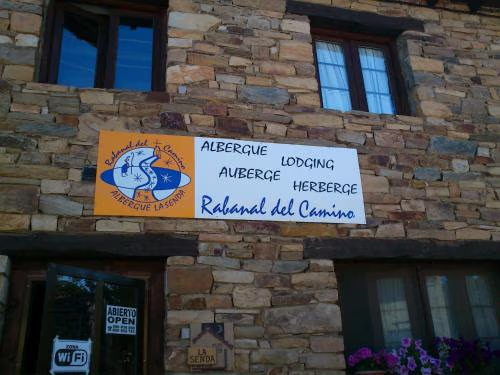
In addition there are two large private albergues for €13 to €15, the Albergue Nuestra Señora del Pilar with bar and restaurant (closed from January 8 to the end of February) and the Albergue La Senda. If you want to come to rest, ask in the monastery shop about a stay with the monks: at least two nights, from May to October, for a donation and with help in the house, without reservation.
Ninja tips
- Go to Compline at 21:20. At the end the monks bless the pilgrims. Keep in mind that the Gaucelmo closes at 22:00.
- Shop today for tomorrow. Water and provisions for the mountain, and cash too.
- Start early. It is only 5.6 kilometers to Foncebadón, but 293 meters of climbing, and the Cruz de Ferro is quieter in the morning.
- Get your stone ready tonight. If you are carrying a stone for the Cruz de Ferro, in Rabanal you will find the calm to think about what it stands for.
Practical tips for pilgrims
- Credencial and stamp: in the albergues; the Gaucelmo takes only pilgrims with a credencial.
- Prayer times: Lauds 7:30, Mass 9:00, Vespers 19:00, Compline 21:20.
- Monastery stay: ask in the monastery shop for the hospitalero or prior.
- Shopping: several small shops, after that hardly any supplies until Molinaseca.
Onward: over the Monte Irago
The path climbs steeply out of Rabanal through heather and broom and reaches Foncebadón after 5.6 kilometers at 1,440 meters. A good two kilometers further stands the Cruz de Ferro, then come Manjarín (km 540.9) and, at km 544.1, the highest point of the Camino Francés at 1,512 meters. After that it goes steeply downhill through El Acebo (km 548.0) and Riego de Ambrós to Molinaseca: 24.6 kilometers, 500 meters up and 1,067 down. It is 32.2 kilometers to Ponferrada.
What awaits you tomorrow
Foncebadón, the mountain village at 1,440 meters, and shortly beyond it the Cruz de Ferro, an iron cross on a wooden pole above a hill of stones that pilgrims from all over the world have laid down there.
Deep dive: The village the pilgrims brought back
A short read, in case you want to learn more about Rabanal del Camino. About three minutes' reading.
Raphanellus
When the Codex Calixtinus came into being in the twelfth century, the book that described the way to Santiago for pilgrims, it named this place too. Raphanellus it was called there, and it was the end of a day's journey, the ninth. Whoever arrived here still had the climb over the Monte Irago ahead. Rabanal was a place where you stopped before the mountain, and it still is.
Templars and kings
The church you see in the village was built at the end of the twelfth century, Romanesque, from the stone of the region. Until 1287 it belonged to the Order of the Templars, the knight monks. In the eighteenth century it was rebuilt. In one of the houses on the main street, the Casa de las Cuatro Esquinas, King Philip the Second is said to have stayed overnight, and the hospital San Gregorio, where pilgrims were cared for, is said to have stood there too. This is not documented, but it is told that way here.
Silence and return
Today Rabanal has around sixty residents. What keeps the village alive are the pilgrims. In 1991 the Refugio Gaucelmo opened in a house of the Diocese of Astorga, rebuilt by British pilgrims of the Confraternity of Saint James. Ten years later, on the second of February 2001, Benedictines from St. Ottilien came and founded a small monastery opposite the church. Since then they have sung the Liturgy of the Hours in Latin, and every evening they bless those who will cross the mountain the next morning.
What Rabanal gives you
When this text was written, in the autumn of 2026, around sixty people lived in Rabanal, and every evening pilgrims joined them. The village lives from those who stay only one night. You are one of them. Tomorrow morning the mountain lies ahead of you, and at the top the cross. Rabanal does not ask what you want to lay down there. It only gives you one evening to think about it.
Where to stay in Rabanal del Camino
The places pilgrims rate highest in Rabanal del Camino come first.
- Top #1
 ClosedReservations not accepted
Refugio Gaucelmo
KitchenCooktopsMicrowaveAnd more - Top #2
 OpenReservations accepted
Hostal El Refugio
- Top #3
 ClosedReservations accepted
The Pilgrim Stone




Services in Rabanal del Camino
What you can find in town before the next stage.
- Café
- Shop
- Fountain
- Restaurant
Source: © OpenStreetMap contributors · updated November 2025
Town 31 of 49