

Town on the Camino
Rúa de Francos
A Coruña, Galicia, Spain
- places to stay
- 2
- Caminos
- 4
- Elevation
- 90 m
Rúa de Francos is a hamlet in Teo, 13.6 kilometres before Santiago, with a Gothic wayside cross from the 14th century. Right next door is the Castro Lupario, where legend places the pagan Queen Lupa, whom the disciples asked for a grave for the Apostle. A stop with history, just before the finish.
How long to stay?
An afternoon is enough. Rúa de Francos is small: a few houses, a cross, a chapel. Sleeping here or in the hostels just before it splits the last day to Santiago into two halves, and you arrive the next morning. With a free afternoon you can make the detour to the Castro Lupario, about four kilometres there and back.
Rúa de Francos in Ninja numbers
- 13.6 kilometres are left from here to Santiago on the Camino Portugués Central, with 276 metres of ascent.
- 11.7 kilometres lie behind you since Padrón, with 139 metres of ascent.
- 14th century: that is the age of the wayside cross on the Way, one of the oldest in the area.
- 164 metres is what you climb tomorrow on the first 5.9 kilometres to O Milladoiro.
- Since 2009 the Castro Lupario has been protected as a cultural monument.
Arriving: out of the Sar valley
From Padrón you walk via Iria Flavia through the villages of the Sar valley, past the pilgrimage church of A Escravitude, with wide views over the land. The last stretch before Rúa de Francos is a little more demanding, and on the way the path crosses the railway at an unguarded level crossing: look left and right. Just before the hamlet, in O Faramello and Vilares, are the pilgrim hostels; then you come to the cross of Rúa de Francos.
In brief: a cross for the pilgrims
Rúa de Francos belongs to the municipality of Teo. The wayside cross here dates from the 14th century and marked the old pilgrim road. It is a Gothic cross with a relief of the Crucified. Beside it stands the chapel of San Martiño. The real treasure of the place, though, lies in the woods beyond the stream: the remains of an Iron Age hill settlement, the Castro Lupario, to which the legend of Saint James is linked.
Cross and castro: what to see
- Cruceiro de Rúa de Francos: The Gothic wayside cross from the 14th century shows the Crucified in relief and stands right on the Way. It is considered one of the most interesting and oldest crosses in the area.
- Capela de San Martiño: The hamlet's small chapel stands on the Way. We did not find opening hours.
- Ponte de Paradela: On the way to the castro you cross the Río Tinto. On both banks of the bridge you can see remains of a Roman road.
- Castro Lupario: An Iron Age settlement on a hill, with visible remains of walls and an open area with a view. Until the early 17th century a parish church stood here. Since December 2009 the site has been protected as a Bien de Interés Cultural.
Honestly
- A hamlet, not a town. We did not find verified shops or bars in Rúa de Francos. Do your shopping in Padrón.
- The detour is not trivial. The path to the castro is poorly marked, with yellow and white rectangles, and very slippery in the rain. Allow two hours there and back.
- There is little to see at the castro. An old wall, scattered stones, the view. What makes it special is the story.
Where pilgrims sleep
In Rúa de Francos itself there are country houses such as the Casa Rural Parada de Francos, single rooms from 75 € (as of October 2026). The pilgrim hostels are just before it, about 800 metres back in O Faramello and Vilares: the Xunta de Galicia's Albergue de peregrinos de Teo for 10 € and the private Albergue La Calabaza del Peregrino from 20 € (as of October 2026).
Ninja tips
- Do the detour in the afternoon, not in the morning. Tomorrow you want to get to Santiago. Today you have time.
- Don't walk to the castro in the rain. The path gets slippery quickly.
- Stop at the cross for a moment. It has stood on the same road as you for more than six hundred years.
Onward: uphill to O Milladoiro
Beyond Rúa de Francos the Way climbs almost without a break. Via Ameneiro (km 607.8) and Raíces (km 609.1) you reach O Milladoiro, the last town before Santiago, after 5.9 kilometres and 164 metres of ascent. From there it is still 7.7 kilometres to the cathedral.
Deep dive: Queen Lupa
A short read, in case you want to learn more about Rúa de Francos. About three minutes' reading.
A queen in the legend
In the Liber Sancti Jacobi, the great book about the Apostle from the twelfth century, there is a ruler named Lupa. She is a pagan queen in this region. When the disciples of James landed on the Galician coast with his body after his death, they looked for a place to bury him. The legend has them go to Lupa. The book places her residence here, on the hill that today is called Castro Lupario.
An Iron Age castro
What you find on the hill is older than any legend of the Apostle. It is the remains of a fortified Iron Age settlement, of which there are hundreds in Galicia. Walls can still be seen. Perhaps this was the main settlement of a people of the region. Later a parish church stood on the hill, until the early seventeenth century. Around 1610 a scholar drew the castle on a map, in connection with the legend of the translation of the body. In 2009 the site was put under protection.
What Rúa de Francos gives you
You are almost there. Tomorrow you will stand at the tomb around which this whole story revolves. Here, in the woods above the Río Tinto, it begins, or so the legend tells it: with strangers asking for a place for a dead man. You too are a stranger in this land. And tomorrow you will be received, in the city that grew out of that request.
Where to stay in Rúa de Francos
Places to stay in Rúa de Francos.
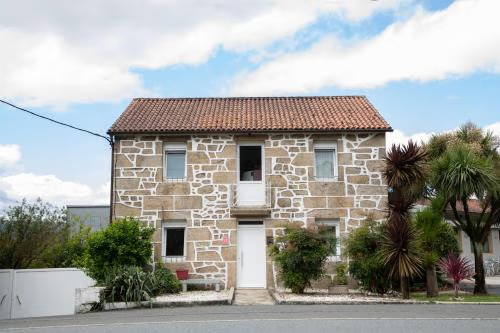 OpenReservations accepted
Casa Rural San Martiño
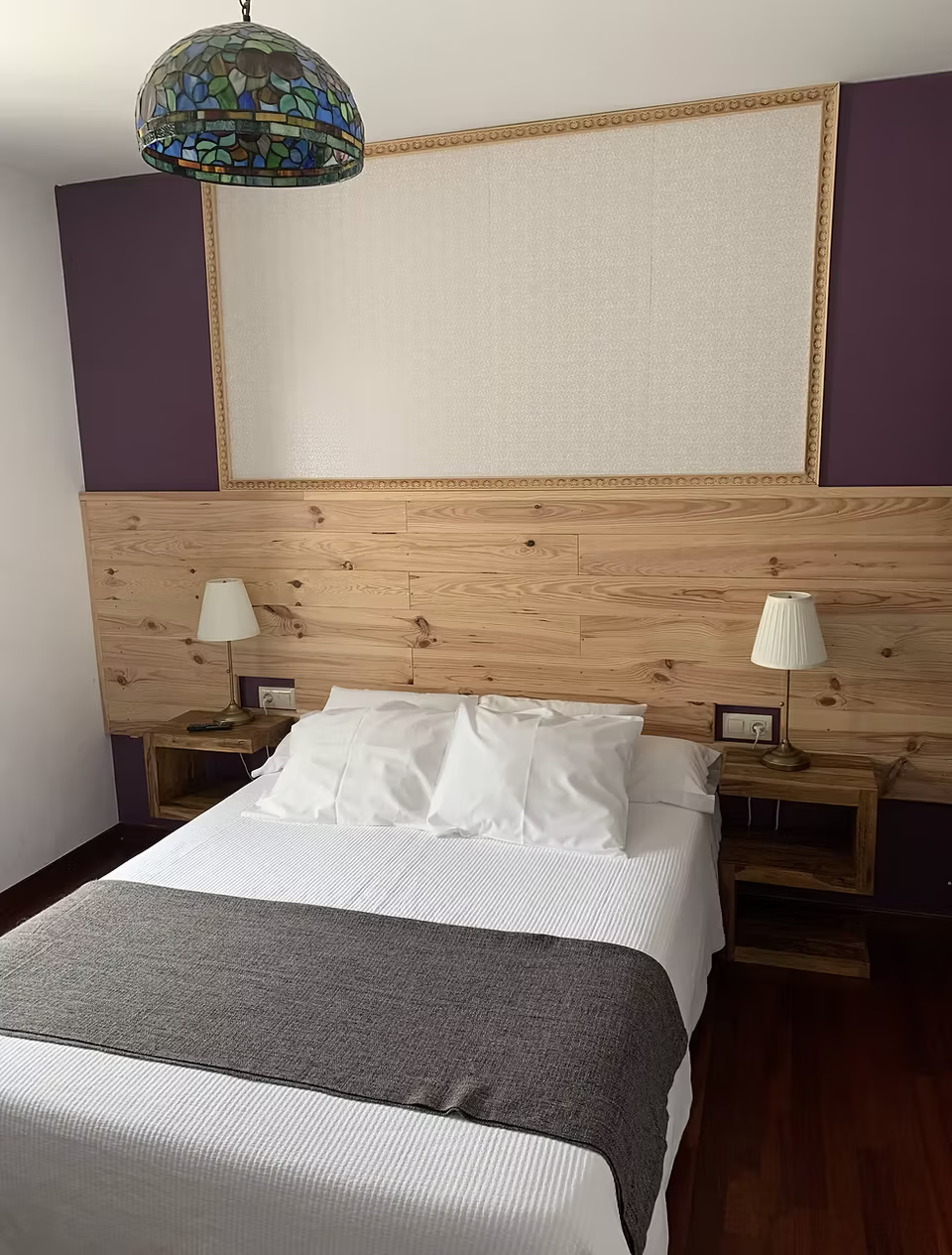 OpenReservations accepted
Casa Rural Parada de Francos
Services in Rúa de Francos
What you can find in town before the next stage.
- ATM
- Café
- Shop
- Tobacco
- Pharmacy
- Fountain
- Train station
Source: © OpenStreetMap contributors · updated April 2026
Town 29 of 31