

Town on the Camino
São Domingos
Setúbal, Portugal
- places to stay
- 3
- Camino
- 1
- Elevation
- 79 m
São Domingos is the larder before the loneliest stage of the way: a village with a shop, a cash machine, a public shower and an old mill that now houses a flour museum. After 28.1 flat kilometres from Fornalhas Velhas you sleep here, and tomorrow brings almost 21 kilometres with no services at all.
How long to stay?
An afternoon is enough, and you mainly need it for supplies. Behind you lie 28.1 kilometres from Fornalhas Velhas or, if you pushed on, 43.3 from Messejana. An hour is plenty for the church on the square and, if it's open, the flour museum. What matters more is what you pack into your rucksack tonight: according to the regional guide, there is no service point for almost 21 kilometres tomorrow between São Domingos and Aldeia dos Chãos.
São Domingos in Ninja numbers
- 203.0 kilometres is how far you've walked since Faro, according to Camino Ninja.
- 28.1 kilometres from Fornalhas Velhas, and according to Camino Ninja it's only 117 metres of ascent. Long, flat, quiet.
- 20.2 kilometres lie between São Domingos and Aldeia dos Chãos tomorrow, the first village after this one. Almost the whole way without a café or a shop.
- 1982 is when the village's mill fell silent, and 2014 is when it reopened, as a museum for the flour it had ground for half a century.
Arriving: through the eucalyptus to the Junta
The last stretch of the stage from Fornalhas Velhas leads through Foros da Casa Nova, 7.1 kilometres before the finish. According to the guide, there is a single café there, which also serves lunch. After that you walk into São Domingos through eucalyptus woods. The stage ends at Largo 25 de Abril in front of the Junta de Freguesia, right next to the old church. That's handy, because the search for a bed runs through the Junta here.
São Domingos lies on the Caminho Português Central do Sul, belongs to the municipality of Santiago do Cacém and shares a joint parish administration with Vale de Água.
In brief: a saint who didn't want to move
The church was built at the end of the Middle Ages, when São Domingos was a chaplaincy of the Order of Santiago, in other words a small parish post of the knights whose patron you are walking towards. A holy-water stoup from the time of King Manuel I has survived, altars and paintings were added in the 17th and 18th centuries, and the bell tower only in the 20th.
A legend explains why the church and village stand exactly here. The villagers venerated an image of Saint Dominic and wanted to move it to another place. But the image kept reappearing, as if by miracle, at its original spot. So they built there.
Flour and faith: what to see
Two things, both close to the end of the stage.
- Igreja de São Domingos: The parish church belongs to the Diocese of Beja and stands next to the Junta on Largo 25 de Abril. Look out for the Manueline holy-water stoup, the oldest piece in the room. For you it is the church of a village the knights of Santiago looked after, and so one of the many traces of the Order on this way. We couldn't find opening or service times.
- Museu da Farinha: In the 1920s José Mateus Vilhena had a mill built here, it stopped working in 1982, and in 2014 it reopened as a museum. A large part of the original machinery is still there. For a pilgrim who has to carry his bread for the whole day tomorrow, it makes a fitting evening visit. The sources contradict each other on opening hours: the Alentejo tourist board gives Tuesday to Sunday, 10 am to 6 pm, while a museum portal says only Wednesday and Thursday afternoons. Call ahead, on +351 961 388 217 according to Alentejo tourism.
Honestly
- A pilgrim bed isn't a given. São Domingos has no hostel. Call the Junta de Freguesia two days ahead, on +351 269 903 158 according to the guide.
- The information on services isn't fresh. The shop, cash machine, post office and shower come from the regional guide of 2021. We couldn't check whether everything is still the same.
- The museum is a gamble. If you arrive after 28 kilometres in the late afternoon, you may find the door locked. Don't count on it without a phone call.
- Tomorrow will be hard. The stage to Santiago do Cacém is considered one of the toughest on the way, because you're on your own for almost 21 kilometres.
Where pilgrims sleep
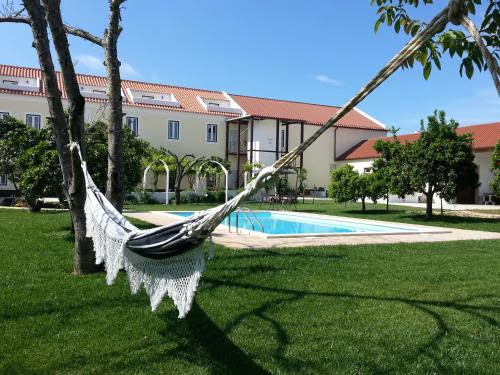
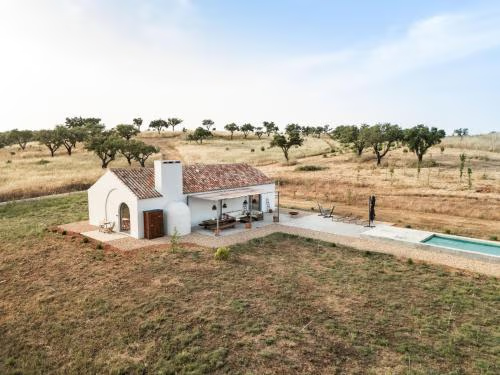
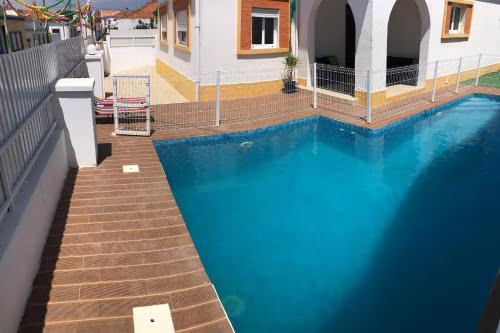
There is no pilgrim hostel in São Domingos. According to the guide, the Junta de Freguesia looks after pilgrims who are looking for a bed. Our data also lists a few private country houses and holiday homes in the village and the surrounding area, which you should book beforehand.
Ninja tips
- Pack for 21 kilometres. Two to three litres of water is standard on this way from Almodôvar onwards, tomorrow rather more. Plus food for the whole day, bought this evening.
- Public showers are an option. The guide of 2021 mentions a public bath in the village.
- Remember the emergency farms. Along the way there are only a few scattered inhabited farms, according to the guide for example Taboeira and the Casais do Paiol de Santiago. You can ask for help there in an emergency.
- Set off early. Tomorrow is one of the toughest stages on the way, and the Alentejo gets hot at midday. Every hour before the heat counts.
Onward: along the canal to Santiago do Cacém
You leave São Domingos along the road and walk about 500 metres to the N261. Then the way turns onto a sandy track that runs beside an irrigation canal for roughly four kilometres, and after that leads through hilly country with cork and holm oaks. After 20.2 kilometres you reach Aldeia dos Chãos, the first village since São Domingos, and after 24.1 kilometres Santiago do Cacém. According to Camino Ninja, you climb 285 metres on this stage. Camino Ninja describes the way through the Alentejo together with Turismo do Alentejo e Ribatejo.
What awaits you tomorrow
Santiago do Cacém, the town that carries the name of your destination in its own. Shortly before you enter the town, you pass very close to the ruins of Miróbriga, a Roman city. After a day almost without people, that is a grand welcome.
Deep dive: The image that came back
A short read, in case you want to learn more about São Domingos. About 2 minutes' reading.
A village that wouldn't give up its place
When you stand on Largo 25 de Abril, you are standing on a square that, according to the village's own legend, the villagers did not choose themselves. The villagers, so the story goes, venerated an image of Saint Dominic and wanted to set it up somewhere else. But the image kept returning to its old place, as if it knew better where it belonged. In the end the people gave in and built their church where the image wanted to stay. It's a legend of the kind you find in many villages. But it says something true about places like this one: they stay where they are.
The knights of the Apostle
The church was built at the end of the Middle Ages, when São Domingos was a chaplaincy of the Order of Santiago. The knights of Saint James held this part of the Alentejo, and on the way north you meet them again and again, in Messejana, in Santiago do Cacém, in the villages in between. From the time of King Manuel the First, a holy-water stoup remains in São Domingos.
Bread for the way
The mill came in the 1920s. José Mateus Vilhena had it built, and it ran for over five decades. In 1982 it fell silent. In 2014 it opened again, this time as a museum, with a large part of the old machinery.
What São Domingos gives you to take along
Tomorrow you walk almost twenty-one kilometres without a shop or a café. What you need, you carry yourself. Perhaps that is the lesson of a village with a mill and a saint who wouldn't move: provide today for tomorrow, and then set off.
Where to stay in São Domingos
Places to stay in São Domingos.
 OpenReservations accepted
Casas da Moagem
 OpenReservations accepted
Monte De Santiago
 OpenReservations accepted
villa são domingos
KitchenCooktopsMicrowaveAnd more
Town 10 of 24