

Town on the Camino
Sines
Setúbal, Portugal
- places to stay
- 5
- Caminos
- 2
- Elevation
- 4 m
Sines is the town of Vasco da Gama and also Portugal's biggest cargo port. Above the fishing harbour stands the church of Nossa Senhora das Salas, which according to legend arose from a vow and was rebuilt by Gama in thanks for India. At the portal of the main church waits the sword cross of the Order of Santiago. 25.1 kilometres still to go to Santiago do Cacém.
How long to stay?
An afternoon is enough, just not on a Monday. The old town is small. The castle, the main church, the Gama statue and the church above the fishing harbour all lie close together, and the stage from Porto Covo, at 15.7 kilometres, is short enough that you arrive early. The museum in the castle is open Tuesday to Sunday and closed on Mondays. Tomorrow there are only 25.1 kilometres left to Santiago do Cacém, so you don't have to set off at dawn and can spend the evening by the bay.
Sines in Ninja numbers
- 110.4 kilometres is what you have walked since Castro Verde, according to Camino Ninja, with 25.1 still to go to Santiago do Cacém. The last stage of this Way begins here.
- 24 November 1362: On this day King Pedro I made Sines a vila and separated it from Santiago do Cacém. The condition was a castle.
- Around 1469 Vasco da Gama was born, so tradition has it, here in Sines. No document proves it. The oldest evidence is a sacrament he received in Sines as a boy.
- 1529 is the year on the foundation inscription of the church of Nossa Senhora das Salas. By then its builder, Vasco da Gama, had been dead for five years.
- Until 1960 there were houses on the coast for the pilgrims who made their way to Nossa Senhora das Salas. You are not the first to come here on foot.
Arriving: from the bathing beaches into the port town
From Porto Covo you follow the Fishermen's Trail along the coast. After 7.0 kilometres you reach the beach at São Torpes. Here the Caminho Central Via Atlântico leaves the Fishermen's Trail, and the landscape changes its tone. São Torpes is the busiest beach in the area and a meeting place for surfers. It is known for its warm water, which was put down to the nearby thermal power station.
Sines is no longer a village. Since 1970 a large industrial and port complex has grown up here, with a refinery and the country's biggest port by cargo volume. Around 14,200 people lived in the municipality in 2021. The old town, though, lies tightly packed above the bay. Besides the Camino, the Fishermen's Trail also runs through Sines.
In brief: castle, bay and a seafarer
The Romans already used the bay. In the 1st century they salted fish here and shipped preserves and fish sauces across the sea in amphorae. One of these salting works, right by the castle wall, has been restored and can be visited. In the Middle Ages Sines belonged to the territory of the Order of Santiago. In 1362 it became independent, and the castle went up in the course of the 15th century on the rock above the bay.
Its alcaide was Estêvão da Gama, the navigator's father. Vasco da Gama was born around 1469, tradition says in Sines. In 1498 he reached India by sea. The place he came from he never received for it, although the king had promised it to him. The reason, of all things, was the Order after whose saint you are walking.
A seafarer in the Order of Santiago
Gama himself was a member of the Order of Santiago. The town's visitor guide tells how, as a boy, he received the first tonsure in the main church of Sines and entered the Order. The Order's emblem, a cross that is also a sword, is still to be seen above the main doorway of this church. It is the cross you know as the red cross of St James from waymarks and credenciales.
After his return from India, King Manuel I wanted to give him Sines as a lordship. But the town belonged to the Order, and the Order under Dom Jorge de Lencastre refused. When Gama's servants clashed with the castle commander's men, the king expelled the Gama family from Sines. Gama could only return with the permission of the Grand Master, and that never came. In 1520 Gama instead became Count of Vidigueira, and he died in 1524. The pilgrim saint and the seafarer: here they stood on opposite sides.
In the old town above the bay: what to see
Everything lies close together above the bay. The town describes a tour of the historic centre with 24 stations, as a leaflet on its website, also in German.
- Igreja de Nossa Senhora das Salas: The church above the fishing harbour is the reason to stop in Sines. In the first half of the 14th century, probably around 1320, Vataça Lascaris founded a small chapel here, the same Byzantine princess who later ruled over Santiago do Cacém. After his return from India, Vasco da Gama had it rebuilt three times the size. His coat of arms and an inscription with his titles adorn the portal of Arrábida breccia; inside, the furnishings mostly date from the 18th century, with an azulejo panel from the life of Mary. The church has been a national monument since 1922. In 2025 and 2026 it was restored for €450,000 and was due to reopen in summer 2026 (as of July 2026). A small room shows the church treasury, above all jewellery that was put on the statue of Mary for the feast on 15 August. For you as a pilgrim this is a place of pilgrimage: the cult goes back to at least the 14th century, and until 1960 romeiros came here on foot. We did not find opening hours.
- Castelo and Museu de Sines: The castle on the rock is the centre of the old town. Since 2008 it has housed the Museu de Sines and, in the keep, the Casa Vasco da Gama. The museum's most important piece is the Tesouro do Gaio, a gold hoard from the 7th century BC. Open Tuesday to Sunday and on public holidays 10:00–13:00 and 14:00–17:00, in summer afternoons 14:30–18:00, closed at Christmas, New Year and Easter (as of July 2026). We did not find an admission price.
- Igreja Matriz de São Salvador: The main church stands by the castle wall. The old church, where Gama received a sacrament as a boy, was demolished in 1730; the present one is plain, in the style of the 18th century, with azulejos from the middle of that century. What counts for you is the main doorway: above it is the coat of arms of the Order of Santiago. We did not find opening or Mass times.
- Statue of Vasco da Gama: About 20 metres south of the main church, by the south-west tower of the castle, the seafarer stands in stone. The sculptor António Luís Branco de Paiva made it in 1970 for his 500th birthday.
- Roman fish-salting works: Just below the castle wall lie the restored tanks of a factory from the 1st century. Fish was salted here and turned into preserves and sauces. It shows that Sines lived from the sea even 2,000 years ago.
Food and drink
- From the sea: Typical dishes are açorda de marisco, a bread stew with seafood, and feijoada de búzios, a bean stew with sea snails.
- Vasquinho: An almond cake named after the town's most famous son. Try it before you head inland tomorrow.
- Supplies: Stock up in Sines for the last stage. We could not find out reliably whether there is anything to buy in Ribeira de Moinhos or Relvas Verdes.
Honestly
- Industry first, then the old town. Sines is a port and industrial town with a refinery and a container port. If you expect a fishing village like Porto Covo, you will be disappointed. The old town on the rock is small, but it is worth it.
- No pilgrim hostel. Our data lists mainly hotels and guesthouses.
- The birthplace is a legend. The house in Rua Vasco da Gama, which a plaque of 1898 names as his birthplace, is private and cannot be visited. The town's own guide thinks it more likely that Gama later began a palace there, which was never finished.
- The museum stays closed on Mondays. If you arrive on a Monday, you will only see the castle from outside.
- Don't swim on the north coast. The coast north of Sines is exposed and not recommended for swimming. For bathing there is the town beach, Praia Vasco da Gama, on the bay.
Where pilgrims sleep
There is no pilgrim hostel in Sines. Our data lists only private accommodation, mainly hotels and guesthouses in the town. Booking ahead is advisable, especially in summer and during the Músicas do Mundo festival at the end of July.
Ninja tips
- Look for the sword cross. Above the main doorway of the Igreja Matriz hangs the coat of arms of the Order of Santiago. A cross that is a sword: the sign of your Way, in the middle of the seafarer's town.
- Go to Nossa Senhora das Salas first. The church lies in the west of the old town above the fishing harbour. The town also ends its Vasco da Gama route there.
- Read the inscription at the portal. It names Gama as Count of Vidigueira, Admiral and Viceroy of India, with the year 1529. In 1605 the Order wanted the coat of arms removed again.
- Ask at the Turismo for the stamp. The Posto de Informação Turística is at Rua Francisco Luís Lopes 78, telephone 269 860 097. We did not find out whether there is a pilgrim stamp there.
- Join the celebrations in August. On 14 August a procession winds through the old town in the evening, and on 15 August the statue of Mary goes out to sea with the decorated fishing boats.
Practical tips for pilgrims
- Turismo: Rua Francisco Luís Lopes 78, telephone 269 860 097, turismo@mun-sines.pt. We did not find opening hours.
- Centro de Artes: The cultural centre of 2005, designed by the architects Aires Mateus, has a public library, open Mon–Fri 10:00–20:00, Sat and public holidays 12:00–18:00 (as of July 2026). A dry place for a rainy day.
- Festivals: The Músicas do Mundo festival takes place at the end of July, in 2026 from 17 to 25 July, partly in the castle. On 14 and 15 August Nossa Senhora das Salas is celebrated.
Onward: inland to Santiago do Cacém
The last stage of the Caminho Central Via Atlântico leads away from the sea. After 7.7 kilometres you come through Ribeira de Moinhos, after 19.2 kilometres through Relvas Verdes, and after 25.1 kilometres you reach Santiago do Cacém. There you meet the Caminho Português Central do Sul again, the one you branched off from at Castro Verde.
What awaits you tomorrow
Santiago do Cacém carries your Way's saint in its name, and in its main church St James has been fighting in stone since the 14th century. Vataça Lascaris also lived there, the princess who founded the first chapel above the bay of Sines. So tomorrow you walk from her chapel to her castle.
Deep dive: Two vows above the bay
A short read, in case you want to learn more about Sines. About three minutes' reading.
A princess in a storm
Above the fishing harbour of Sines stands a church whose story begins with a storm. So at least the legend goes. Vataça Lascaris, a woman from the Byzantine imperial house and confidante of Queen Isabel of Aragon, is said to have been caught in a severe storm on her journey to Portugal. She vowed to build a chapel wherever she came safely ashore. In the first half of the fourteenth century, probably around 1320, a small chapel for Nossa Senhora das Salas arose above the bay of Sines. Nobody knows for sure where the name comes from. Some think of the word for salvation, others of the salting of fish that had been practised here since Roman times. Vataça received the lordship of Santiago do Cacém from the Order of Santiago and lies buried in the Old Cathedral of Coimbra.
A seafarer returns
Around 1469 Vasco da Gama was born, tradition says in Sines, where his father Estêvão was alcaide of the castle. No document about his birth exists. The oldest evidence is a sacrament he received as a boy in the main church of Sines. What exactly it was, the sources do not agree. Some speak of baptism, others of confirmation, the town's visitor guide of the first tonsure, with which he was admitted to the Order of Santiago.
In 1498 Gama reached India by sea, and in 1499 he came back. His family had already showered the statue of Mary in the chapel with gifts. Now he had a church built in its place, three times the size of the old chapel, probably in thanks for the successful voyage. A historian quoted by the newspaper Observador in September 2026 puts it cautiously: that is what we think.
The Order says no
Then came the quarrel. King Manuel the First wanted to give Gama the lordship of Sines. But Sines belonged to the Order of Santiago, and its master Dom Jorge de Lencastre refused. When Gama's servants clashed with the men of the castle commander, the king expelled the family from the town. Without the Grand Master's permission Gama could not go back, and the permission never came. Work on the church stopped. In 1520 he became Count of Vidigueira, and in 1524 he died in India. The foundation inscription at the portal bears the year 1529. The church could only be consecrated once its builder was dead. And as late as 1605 members of the Order demanded that his coat of arms be removed from the façade, because the veneration had, after all, been founded by Vataça.
The pilgrims from the coast
The church survived the quarrel, and it remained what the chapel had been: a destination for pilgrims. The veneration of Senhora das Salas goes back to at least the fourteenth century. Until 1960 there stood on the coast the houses of the romeiros, where the pilgrims on their way to Sines found shelter. To this day the statue of Mary is carried through the old town on the fourteenth of August and goes out to sea with the fishing boats on the fifteenth. In 2025 and 2026 the church was restored. An architect from the heritage authority said shortly before the reopening: it has already lasted five hundred years, and we want it to last at least five hundred more.
What Sines gives you
When this text was written, in autumn 2026, only a few pilgrims came through Sines. And yet the town is full of people who promised something on the road. A princess who, in a storm, vowed a place for a chapel. A seafarer who, after two years at sea, built a church and never saw it consecrated. Pilgrims who for centuries walked along this coast to reach it. What you have set yourself for your Way, only you know. Sines reminds you that a vow sometimes takes longer than a lifetime, and holds all the same.
Where to stay in Sines
Places to stay in Sines.
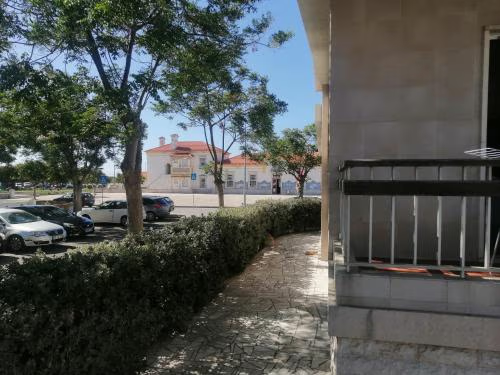 OpenReservations accepted
Casa da Estação
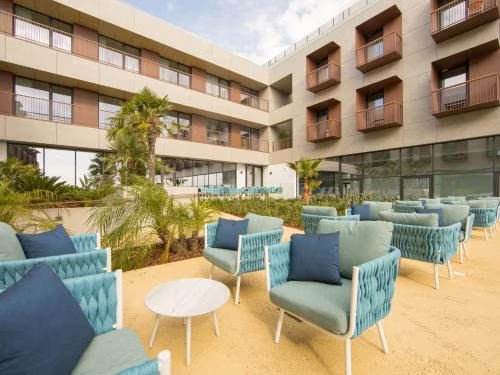 OpenReservations accepted
Sines Sea View Business & Leisure Hotel
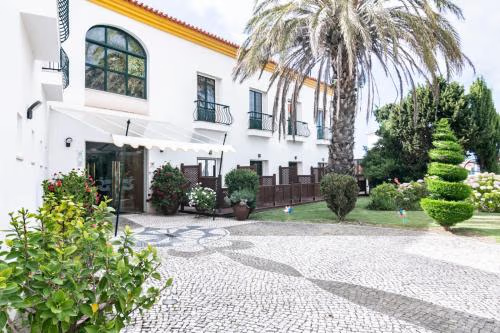 OpenReservations accepted
Hotel Dom Vasco


Town 1 of 2