

Town on the Camino
Fronteira
Portugal
- places to stay
- 11
- Camino
- 1
- Elevation
- 249 m
Fronteira means border, and in front of its gates in 1384 knights climbed down from their horses and won on foot the first battle that kept Portugal independent. Today pilgrims sleep at the fire station on Avenida Heróis dos Atoleiros, free of charge according to one pilgrim guide. An afternoon is enough, for the museum of the battle and a rest after 30.4 kilometres.
How long to stay?
An afternoon is enough. After 30.4 kilometres from Estremoz, you mostly need it for resting. The one place you should have seen in Fronteira is the Centro de Interpretação da Batalha de Atoleiros, the museum of the 1384 battle. We haven't found its opening times, so ask as soon as you arrive. Tomorrow it is only 11.3 kilometres to Cabeço de Vide or 25.4 to Alter do Chão; so you can also set off late in the morning.
Fronteira in Ninja numbers
- 30.4 kilometres is what Camino Ninja measures from Estremoz to here, with São Bento do Cortiço and Santo Amaro as the only places in between. Santo Amaro is 11.1 kilometres before Fronteira.
- Kilometre 368.0 of the Via Nascente. It is another 293.2 kilometres to Trancoso, so the halfway point is behind you.
- 6 April 1384: On this day Nuno Álvares Pereira defeated a Castilian army near Fronteira. He was not yet 24 years old.
- Around 2.5 kilometres from the town lay the battlefield, on a gentle slope above the Ribeira das Águas Belas.
- 1,696 people lived in the town of Fronteira in 2021.
Arriving: a town called Border
From Estremoz you have walked north through the Alentejo, and with Fronteira you are in the Alto Alentejo, in the district of Portalegre. The name says what the place once was: Fronteira is the Portuguese word for border. Arriving here, you read the name of the battle on the street sign: the fire station with the pilgrim quarters stands on Avenida Heróis dos Atoleiros, the Avenue of the Heroes of Atoleiros, in the south of the town.
In brief: the battle that was won on foot
In the spring of 1384 Juan I of Castile besieged Lisbon, claiming the Portuguese crown. Into the Alentejo he sent his admiral Fernão Sanches de Tovar together with the Master of the Order of Alcántara, to lay waste to the land. The army advanced via Crato and wanted to besiege Fronteira. Against them stood Nuno Álvares Pereira, appointed in March by the Master of Avis as frontier captain between the Tagus and the Guadiana. In Estremoz he had gathered about 300 horsemen, just under 100 crossbowmen and a good 1,000 foot soldiers; Fernão Lopes called it "few men of war".
Nuno had all the knights dismount, in the English manner, and placed them among the foot soldiers, with the crossbowmen on the flanks. The Castilians charged on horseback, lances levelled. A hail of bolts, stones and javelins broke their front before they reached the Portuguese. The battle was short. The Master of Alcántara fell, the admiral was wounded, and Nuno slept that night in Fronteira. An opinion piece for the 640th anniversary calls Atoleiros the first battle of the War of Independence and the road to Aljubarrota.
Barefoot after the victory
For pilgrims the story has an afterword. According to tradition, Nuno Álvares walked barefoot the day after the battle to the church of Nossa Senhora dos Milagres in Assumar, to give thanks. The man who later died as a monk and a saint turned his first victory into a pilgrimage. The scholarly literature on the battle doesn't mention this walk; it belongs to tradition. But it fits: his men had won on foot, and on foot he went to give thanks.
On the trail of Atoleiros: what to see
Fronteira is a small town, and what you are here for is a single story. We haven't found opening times for anything.
- Centro de Interpretação da Batalha de Atoleiros: The museum of the battle opened in April 2012, built by the Câmara Municipal to plans by the architect Gonçalo Byrne. The building, of rough-finished concrete tinted red, stands in a park that recalls the battlefield and is also the entrance. An open passage divides it from façade to façade. Here you understand why you are sleeping on an avenue of heroes and why a victory on foot meant so much for Portugal. We haven't found opening times or entry fees; ask at the fire station or at the Câmara Municipal.
- The battlefield: About half a legua, some 2.5 kilometres, from the town, on a gentle slope above the Ribeira das Águas Belas. One pilgrim guide mentions a sign to the battle monument at the railway line before Fronteira. Where exactly it stands and whether the path passes it, we haven't checked.
Honestly
- The stage from Estremoz is long and empty. 30.4 kilometres with only two small places. Whether there are shops there, we don't know. Anyone arriving in Fronteira is tired, and that is fine.
- Fronteira doesn't have much to show beyond the battle. We found no reliable information on churches and other buildings in the town.
- Of all places, the museum has no opening times we could find. If you want to see it, it is best to ask right after you arrive.
Where pilgrims sleep
The pilgrim hostel of Fronteira is the Bombeiros Voluntários de Fronteira - Pilgrim Annex, an annex of the volunteer fire brigade at Avenida Heróis dos Atoleiros 54, opposite the station in the south of the town. According to one pilgrim guide there are twin rooms with private bathrooms, simple but adequate, and the night is free of charge; we haven't had that confirmed recently (as of November 2026). The fire brigade has an official stamp. We don't have a phone number or the number of beds. Besides that there are private guesthouses in the town and the surrounding area.
Ninja tips
- Report to the fire station. That is where you get the bed and the stamp. If you sleep for free, a donation is a nice gesture.
- Don't take the railway embankment blindly. Before Fronteira, one pilgrim guide warns of two kilometres of gravel on an old railway bed, hard going, and advises staying on the road until then. Whether your track runs there, you can see in the app.
- Read up on the battle before you move on. Atoleiros also explains the next section: you will pass through Crato, where the Castilians advanced from in 1384, on the coming stages.
- Split the next stage by feel. Cabeço de Vide is only 11.3 kilometres away, Alter do Chão 25.4. After the long day from Estremoz, the next one may be shorter.
Practical tips for pilgrims
- Supplies: According to one pilgrim guide, Fronteira has cafés, a small supermarket and a pharmacy.
- Stamp: at the Bombeiros Voluntários.
- Route information: Camino Ninja describes the Alentejo section of the Via Nascente together with Turismo do Alentejo e Ribatejo, the region's tourism authority.
Onward: to Cabeço de Vide and Alter do Chão
On the Via Nascente you continue north. After 11.3 kilometres you reach Cabeço de Vide, a small spa town with thermal baths, and after 25.4 kilometres Alter do Chão. From there it is 15.9 kilometres to Crato.
What awaits you tomorrow
Tomorrow you walk to Alter do Chão, 25.4 kilometres further on. On the way lies Cabeço de Vide with its thermal baths, which according to one pilgrim guide serve health more than pleasure. If you are tired, you stay there; if you walk on, you will have earned the longer rest in the evening.
Deep dive: Dismounting
A short read, in case you want to learn more about Fronteira. About two and a half minutes' reading.
A border and a young man
When you arrive in Fronteira, you arrive in a town whose name means border. In the spring of 1384 this border was not a line on a map but a question: who would become King of Portugal? The King of Castile was besieging Lisbon and claiming the crown for himself. The Master of Avis held out against him, and in the Alentejo he had a man not yet twenty-four years old: Nuno Álvares Pereira.
An army comes via Crato
A Castilian army marched through the Alentejo, led by an admiral and the Master of the Order of Alcántara. Nuno's own brother rode in the army too. They came via Crato and wanted to besiege Fronteira. In Estremoz Nuno gathered what he could get: about three hundred horsemen, just under a hundred crossbowmen, a good thousand men on foot. The chronicler Fernão Lopes later wrote that it was few men of war. When the Castilians heard that Nuno was coming, they gave up on Fronteira and marched to meet him.
Dismounting
On 6 April they met on a gentle slope above a stream, half a legua before the town. And Nuno did something that was not a matter of course for a knight of his time: he had all the knights climb down from their horses. They took up position on foot among the foot soldiers, lances planted in the ground. The Castilians charged on horseback. Before they arrived, bolts, stones and spears flew at them, and their line broke. It didn't last long. The Master of Alcántara fell, the admiral was wounded, and the Portuguese pursued the fleeing until dusk. The chronicles claim not a single Portuguese died. The historian who has studied the battle thinks that unlikely, and it is good that he says so. That night Nuno slept in Fronteira.
Barefoot
The next day, as tradition has it, he walked barefoot to a church of Our Lady in Assumar to give thanks. Whether it happened that way, we don't know. But Nuno Álvares did indeed end his life later as a monk, and Portugal venerates him today as a saint. A year after Atoleiros he won the battle at Aljubarrota that decided the war.
What Fronteira gives you
The first great lesson of Fronteira is a pilgrim's lesson: some things are won not on horseback, but only when you dismount and stand with both feet on the ground. Today you have walked thirty kilometres. You know what is meant.
Where to stay in Fronteira
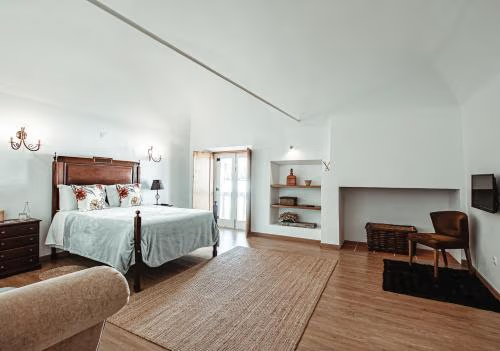
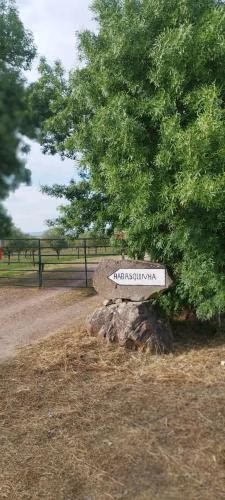
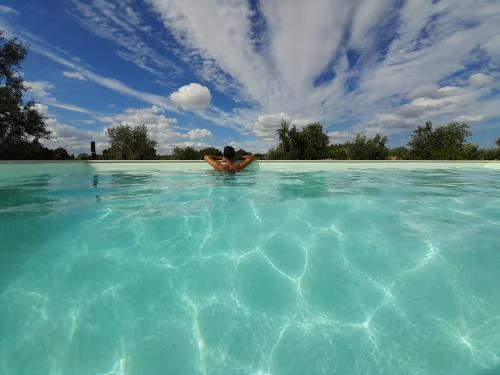
Places to stay in Fronteira.
 OpenReservations accepted
Segredo d'Alecrim
 OpenReservations accepted
Cantinho das Andorinhas
150€- OpenReservations accepted
Casa da Viajante


Town 12 of 25