

Town on the Camino
Vila Nova da Barquinha
Portugal
- places to stay
- 3
- Caminos
- 2
- Elevation
- 22 m
Vila Nova da Barquinha is a port town without a port: in the 17th century it grew up around a landing place on the Tagus, and its name speaks of boats. The Camino only brushes past it. By boat you reach, upriver, the Templar castle of Almourol from 1171. For a break the town is enough; for the castle you need an afternoon.
How long to stay?
A break is enough, unless you want to take the boat to Almourol, then you need an afternoon. From Golegã you have walked only 8.2 kilometres, and to Tomar there are still 22.3. An hour is enough for a coffee, a look at the river and the sculpture park on the bank. But Almourol Castle lies some four to five kilometres upriver on a rock island and can only be reached by boat. If you want to see it, you are better off splitting the long stretch Golegã to Tomar and sleeping here.
Vila Nova da Barquinha in Ninja numbers
- 132.7 kilometres is what you have behind you since Lisbon according to Camino Ninja, and 486.6 still lie ahead of you to Santiago.
- 0.9 kilometres separate the town centre from the Way. The Camino runs past at the edge; for the river you have to turn off.
- 1171 is the year above the gate of Almourol: in that year the Templars completed the castle.
- About 38 kilometres is the distance from here to Fátima if you switch to the Caminho do Médio Tejo.
Arriving: at the edge of a port town
From Golegã you approach via São Caetano. The Camino crosses the main road and then the railway line and goes on, passing the town. To reach the centre by the river you go a little way to the right. There you will find a cash machine, bars, a grocery shop and the railway station.
Two ways cross here. Besides the Camino Portugués Central, the Caminho do Médio Tejo – Rota de Abrantes runs through Barquinha, a Fátima route that comes along the Tagus from Abrantes and leaves the river beyond Barquinha towards Fátima. The section of the Camino Central from Vila Franca de Xira to Tomar is the responsibility of the tourism board Turismo do Alentejo e Ribatejo.
In brief: the town of the little boats
In the 12th century the Tagus here was a frontier between Christian and Muslim land, and the Templars guarded it. When the Reconquista was over at the end of the 13th century, the castles lost their purpose, and the villages on the bank became ports that shipped grain and fruit to Lisbon. At first Tancos was the most important; in 1517 King Manuel I gave it a town charter.
Vila Nova da Barquinha only came into being in the 17th century, around a river port. The name tells of it: a barquinha is a little boat. In the 18th and 19th centuries the town was the most important in the area, and in 1836 it became the seat of the county. Then came the railway, and trade on the river declined. So the railway line you cross at the edge of town is a piece of the history that made the port unnecessary.
On the river: what to see
On the bank the most important things lie close together. For Almourol you need the detour and the boat.
- Parque de Escultura Contemporânea Almourol: A sculpture park on the Tagus bank, laid out by the landscape architects Hipólito Bettencourt and Joana Sena Rego. The works were mostly made between 2010 and 2012, and the artists include Alberto Carneiro, Joana Vasconcelos, Pedro Cabrita Reis, José Pedro Croft and Rui Chafes. The park is open daily and free of charge. For a pilgrim who is only taking a break, this is the best way to experience the town at the water without having to put down the rucksack.
- Centro de Interpretação Templário de Almourol (CITA): On the first floor of Barquinha's Centro Cultural, the centre, opened in 2018, tells the story of the Templars on the Tagus. The ticket for the castle includes the centre. Opening times vary by season and day of the week; ask at the Centro Cultural or the council. If you want to go to the castle, it is best to see the centre beforehand, so that you understand on the island what you are looking at.
- Castelo de Almourol: The castle stands on a rock island in the Tagus, some four to five kilometres upriver. The Templars rebuilt it under their master Gualdim Pais, who also founded Tomar, and completed it in 1171. It has been a national monument since 1910 and belongs to the army. Boats for 20 people cross from the Cais de Almourol directly opposite the castle, with no reservation. According to a report from July 2026 they run from March to September daily 9:30 to 13:00 and 14:30 to 18:30, according to a consumer portal in winter 10:00 to 13:00 and 14:30 to 17:00; the last boat goes 40 minutes before closing. In high water or storm the crossing is cancelled. According to the portal the ticket costs €4 from age seven and also covers the CITA; it gives no date for the price. For pilgrims on the way to Tomar, Almourol is the sister of the Templar castle there, built by the same master.
- Igreja Matriz de Atalaia: Less than three kilometres further on lies Atalaia, right on the Way. Its main church dates from the early 16th century, and portal and interior are in the Renaissance style. We found no opening times.
Honestly
- The Way goes past the town. The town centre lies just under a kilometre from the Camino. Without a deliberate detour you see only road and railway tracks of Barquinha.
- Almourol costs time. Going to the Cais de Almourol and back adds a good eight kilometres, plus waiting time and the crossing. That does not fit into a stage day Golegã to Tomar. If you want the castle, you sleep in Barquinha.
- The castle is not always reachable. In bad weather or high water no boats run. Do not plan it as a fixed goal, but as a gift if it works out.
- There is no bed of its own for pilgrims. Barquinha has no pilgrim hostel, only guesthouses and pensions.
Where pilgrims sleep
There is no pilgrim hostel in Vila Nova da Barquinha. You sleep in private guesthouses and pensions; most pilgrims walk on from Golegã to Tomar anyway.
Ninja tips
- Turn right at the main road. That brings you into the old quarter by the river with the park; the detour costs little and is worth it for the break.
- First the CITA, then the castle. The ticket is valid for both, and with the exhibition in your head you read the walls on the island differently.
- Split the long stretch. Golegã to Tomar is 30.5 kilometres. If you are tired or want to see Almourol, stop in Barquinha and tomorrow you have only 22.3 kilometres left.
- Watch for the turn-off to Fátima. Here the Caminho do Médio Tejo leaves the river. If you are heading for Fátima, you will find the crossover in Barquinha.
Onward: via Atalaia to Tomar
Beyond Barquinha come Moita do Norte and, after 2.9 kilometres, Atalaia with its Renaissance church. After 11.0 kilometres you reach Asseiceira, after 22.3 kilometres Tomar, the town of the Templars and the Order of Christ. If you were at Almourol today, you arrive at the headquarters of the same knights.
Deep dive: the castle you have to cross to
A short read, in case you want to learn more about Vila Nova da Barquinha. About 2 minutes' reading.
A stone in the stream
In the middle of the Tagus, a few kilometres upriver from Barquinha, a rock rises out of the water. On it stands a castle with high walls and nine round towers. Anyone who wants to get across must get into a boat. There is no bridge. How old the place is as a fortress, nobody knows exactly. Roman coins from the first century BC have been found, and later Alans, Visigoths and Muslims lived here. Where the name Almourol comes from is unexplained.
The Templars and their master
In 1129 Afonso Henriques, later the first king of Portugal, conquered the castle and gave it to the Templars. They were to settle the land between the Mondego and the Tagus and protect Coimbra. The knights rebuilt the castle in their own manner, with a square plan, high walls and a keep in the middle. Above the main gate a Latin inscription says that the work was finished in 1171, two years after Tomar. It names the builder, Gualdim Pais, master of the Templars in Portugal, and lists his castles: Pombal, Tomar, Zêzere, Cardiga and Almourol. From the island the order controlled the trade in oil, wheat and timber on the river to Lisbon.
Legends for a place with no road
A castle that can only be reached by boat attracts stories. One legend tells of the daughter of a Moorish castellan who fell in love with a Christian knight and betrayed to him how to get into the castle. He used the secret for a raid, and father and daughter are said to have preferred to throw themselves from the walls into the river rather than surrender. Another tale has ghosts appear at the keep on Saint John's Night. A chivalric romance even made the island the seat of a giant named Almourol. All of this is legend, but it shows how much the place has occupied people's minds.
From the order to the army
After the end of the Templars in 1311 the castle passed to the Order of Christ, and gradually lost its importance. The earthquake of 1755 damaged it. In the nineteenth century the Romantics gave it the even battlements you see today, and the army took it over. Under the Estado Novo it was rebuilt as an official residence of the Republic. Today it still belongs to the army. Since 2019 the army and the council have sold a joint ticket, and the crossing is included in it.
What Almourol gives you to take along
You have been walking since Lisbon, step by step over solid ground. Almourol is a place your feet cannot take you to. You must wait, climb in and let yourself be carried for a few minutes. Perhaps that is the loveliest break on the way to Tomar.
Where to stay in Vila Nova da Barquinha
Places to stay in Vila Nova da Barquinha.
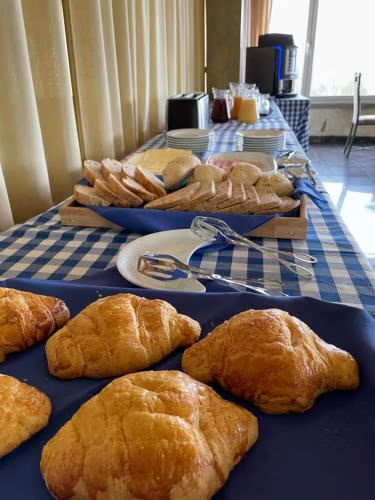 OpenReservations accepted
Soltejo
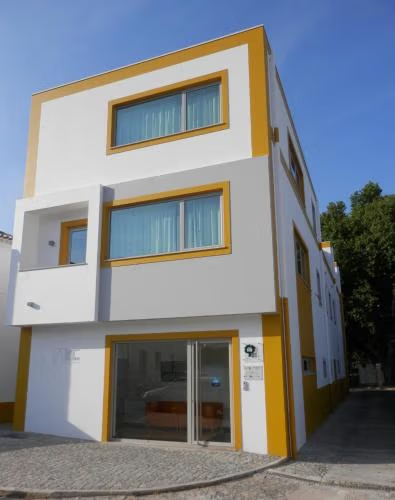 OpenReservations accepted
Barquinha River House
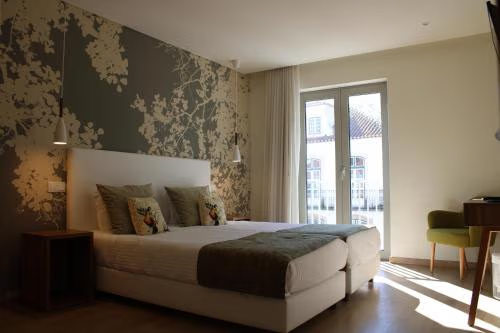 OpenReservations accepted
Barquinha Nature House
Town 6 of 43