

Stage town on the Camino
Vila Nova de Cerveira
Distrito de Viana do Castelo, Região do Norte, Portugal
- places to stay
- 21
- Caminos
- 2
- Elevation
- 13 m
Vila Nova de Cerveira is the art town on the Minho: since 1978 the oldest art biennial still running on the Iberian Peninsula has been bringing sculptures into its streets, and an iron stag keeps watch over the town. The 24th Biennial runs until 30 December 2026. According to Camino Ninja, Santiago is just under 136 kilometres away.
Right now in Vila Nova de Cerveira (as of October 2026)
- Biennial on: The XXIV Bienal Internacional de Arte de Cerveira runs from 18 July to 30 December 2026. Its theme is "Territórios sem Fronteira", territories without borders.
- Albergues closing: Casa Gwendoline is open until 30 October, Pilgrim's Rest until 31 October. After that, the youth hostel, open all year, is what remains for pilgrims on a small budget.
- Castle without a hotel: The pousada in the castle has been closed since 2008. A hotel project from 2019 was never built, the town doesn't want it, and in May 2026 the ministry declared the concession still valid.
How long to stay?
An afternoon is enough. The old town with its castle is small, and you'll pass the Biennial's art anyway as you walk through the streets and along the riverbank. If you arrive early, you can still fit in the Aquamuseu by the river, which is closed on Mondays. You can see the iron stag on the mountain from below; climbing up to around 300 metres takes time and legs that still have something left after the day.
Vila Nova de Cerveira in Ninja numbers
- Just under 136 kilometres to Santiago from here, according to Camino Ninja. Galicia is right across the river.
- 4,957 pilgrims from 51 countries passed through Cerveira in 2022, according to the municipality. Cerveira is a classic stage town, 16 kilometres after Caminha.
- 1978 saw the first Biennial. That makes it the oldest art biennial still running on the Iberian Peninsula; 2026 brings the 24th edition.
- 0 public albergues here (as of October 2026). A municipal albergue with 32 places in an old village school has been planned for years.
Arriving: through the villages along the Minho
From Caminha you come along the Portuguese Coastal Way via Seixas, Lanhelas and Gondarém, 16 kilometres according to Camino Ninja. The first part is hilly; between the fifth and ninth kilometres you walk on forest paths, the most beautiful part of the stage. Towards Cerveira it gets flatter. The two private pilgrim albergues are right at the edge of town on the Camino, a good kilometre before the centre. In the centre lies the Praça da Liberdade with its cafés, and from there you walk into the castle. If you prefer it flat, take the Ecovia from Caminha, a cycling and walking path along the river that is poorly marked but easy to follow.
In brief: a border fortress on the river
King Dinis founded the "new town" of Cerveira in the early 1320s and gave it a town charter. The castle guarded the crossing over the Minho into Galicia. In 1385 Nuno Álvares Pereira, later Portugal's national hero, spent a night here on a pilgrimage to Santiago. In the war after 1640 the town was turned into a fortress and withstood a Spanish attack in 1643, and Napoleon's troops in 1809. From 1982 to 2008 the castle was a hotel. Since 1978 the Biennial has turned the little border town into a "Vila das Artes", a town of the arts.
The art town: how a biennial transformed a border town
In 1978 mayor João Lemos Costa asked the painter Jaime Isidoro to bring contemporary art to the countryside and see what people made of it. Together with the sculptor José Rodrigues and the painter Henrique Silva, Isidoro invited artists to the first Biennial in August 1978. They worked in an open studio. It became a tradition that has never been broken. Today one edition shows more than 600 works by around 400 artists from over 30 countries.
What remains is everywhere: sculptures on squares, in the streets and in the riverside park. Since 2002 the Museu Bienal has collected prize-winning and donated works, around 700 pieces by now. In 2019 it was named Portugal's best museum. The theme of the 2026 Biennial suits a place from which you'll soon cross into Spain: "Territórios sem Fronteira", territories without borders. And the stag on the mountain is art too. José Rodrigues made it from iron in 1985.
Between castle and river: what to see
Everything important is close together, between the old town and the bank of the Minho. Only the stag sits high above.
- Castle and Capela da Senhora da Ajuda: The fourteenth-century castle has an oval plan with eight towers and is protected as a National Monument. You enter through the town gate, above which the little chapel of Senhora da Ajuda was built in 1650. Inside are the Misericórdia church, the old town hall from the sixteenth century and the pillory. In this castle Nuno Álvares Pereira spent a night in 1385 on his way to Santiago, a few months before his great victory at Aljubarrota. He has been a saint since 2009. So you're entering the same castle as one of Portugal's most famous pilgrims. The hotel inside has been closed since 2008; there's not much more to see than the courtyard and the view from the walls.
- Biennial art: Until 30 December 2026 the Biennial fills the old town with installations; the foundation's exhibition hall is just outside the centre on Avenida das Comunidades Portuguesas. Permanent sculptures stand in the town and in the Parque do Castelinho by the river all year round. As a pilgrim it's worth keeping an eye out for the works, since you walk past them anyway. We didn't find opening hours for the hall.
- The stag on Monte do Crasto: High above the town, on the highest mountain of the municipality, around 300 metres above sea level, stands José Rodrigues' iron stag sculpture from 1985. It recalls the stag king of the legend, after whom the land is said to be called "Terras de Cervaria", and the golden stag in the town's coat of arms. You can see it from more than ten kilometres away. If you still have energy in the afternoon, hiking trails and a paved road lead up. From the top you look out over the Minho, the Ponte da Amizade, Galicia and as far as the river mouth at Monte Trega.
- Aquamuseu do Rio Minho: The Minho has been with you since Caminha; here you get to know it. The riverside museum, opened in 2005, shows the river's fish in aquariums, keeps otters and explains traditional fishing methods. These include the pesqueiras, stone fish traps in the river used for generations to catch lamprey. It's open Tuesday to Sunday, from April to October 10:00 to 12:30 and 14:00 to 18:00, in winter until 17:00. We didn't find the admission price.
Food and drink
Around the Praça da Liberdade and the square in front of the parish church there are cafés and restaurants. On the Minho, lamprey season, the lampreia, runs from mid-January to mid-April, and Cerveira dedicates its own festival programme to it. There's a weekly market on Saturdays.
Honestly
- Pilgrim beds are scarce. There's no public albergue. The two private pilgrim albergues each have just one dormitory with four beds. Book ahead, especially in summer.
- Winter gets thin. From November to March both pilgrim albergues are closed. Then you're left with the youth hostel, a guest room or walking on to Valença.
- The albergues are outside town. From the pilgrim albergues at the edge of town it's a good one to one and a half kilometres to the centre. You walk to dinner and back.
- The castle is an empty promise. Since the pousada closed in 2008 it has stood largely unused, and the town and the investor are at odds. There's little to see inside; the view from the walls is the nice part.
- Tomorrow your feet will hurt. Beyond the town an old cobbled road waits in the woods, more uneven than usual. If your feet are sensitive, take the Ecovia along the river.
Where pilgrims sleep
- Casa Gwendoline: privately run by a pilgrim couple with dogs and cats, at the edge of town right on the Camino, about one and a half kilometres before the centre. One dormitory with four beds for €20, plus private rooms. Big kitchen, garden, washing machine. Pilgrims especially praise the shared dinner at the big table, by donation. Open late March to 30 October, bookable.
- Pilgrim's Rest: also run by a pilgrim couple; Tom and Michaela restored an eighteenth-century house. One dormitory with four beds for around €20, plus private rooms, communal dinner for €15. Open early April to 31 October, bookable.
- Pousada de Juventude de Vila Nova de Cerveira: the state youth hostel in a former school, about 300 metres from the Camino and the centre. Four-bed rooms from about €25 with breakfast, open all year, self-catering kitchen. Check-in officially from 18:00, earlier is possible.
- Casa da Mota: a place to stay at the edge of town which, according to a 2024 report, is run by a local community. We didn't find prices or bed numbers.
A municipal albergue with 32 places in the old primary school of Loivo, a few kilometres before the centre, was approved in 2022 and was due to open in 2025. We couldn't find out whether it's open yet. There are also guest rooms and holiday houses in the old town, mostly from about €50 (as of October 2026).
Ninja tips
- Look for the stag: As you arrive, look up at the mountain above the town. The iron stag can be seen from more than ten kilometres away.
- Art instead of a museum: Many of the Biennial's sculptures stand outdoors and cost nothing. Walk through the Parque do Castelinho by the river in the evening; some stand there among the benches.
- Dinner in the house: You can eat together in both pilgrim albergues. Sign up when you arrive and you'll save yourself the walk into the centre.
- The Ecovia to Valença: If the cobbles get too much tomorrow, follow the Ecovia, flat along the river. It leads up to Valença or straight to the bridge to Tui.
- A bridge with a footpath: The Ponte da Amizade from 2004 to Goián in Galicia has footpaths. If you want to cross the border once more in the evening, you can walk over.
Practical tips for pilgrims
- Shopping: A Minipreço supermarket is right on the Camino, with a bakery next door. Stock up here for the next stage.
- Monday: The Aquamuseu is closed on Mondays.
- Saturday: Weekly market in town.
- Winter: Between November and March, plan your accommodation in advance; the pilgrim albergues are closed then.
Onward: via Valença into Galicia
On the Portuguese Coastal Way you continue upriver along the Minho. First you walk on a pavement beside the road, then on old cobbles through the woods, via São Pedro da Torre to Valença, 14.5 kilometres according to Camino Ninja. In Valença the Coastal Way joins the Camino Portugués Central. Across the iron bridge it's about three more kilometres to Tui, 17.6 kilometres in total from Cerveira according to Camino Ninja.
What awaits you tomorrow
Tomorrow you walk through the fortress of Valença with its bastions and over the iron bridge of 1886 into Spain. On the other side you put your watch forward an hour and climb up to the cathedral of Tui, which has stood like a castle above the Minho since 1225. From Tui you need two stamps a day.
Deep dive: The stag, the castle and the art
A long read, in case you want to learn more about Vila Nova de Cerveira. About fifteen minutes' reading.
A stag above the river
If you came along the Minho from Caminha, you may already have seen it from afar. On the mountain above the town stands a stag. It is made of iron and has been up there since 1985. Down by the river lies a small town with a castle, a few lanes, a square full of cafés and an astonishing amount of art. Opposite, only a stone's throw away, Galicia begins.
Vila Nova de Cerveira is a place that tells two stories. One is old and is about borders, walls and sieges. The other is young and is about how a few artists decided in the summer of 1978 that contemporary art didn't belong only in Lisbon and Porto, but also in a little town at the very edge of the country. Both stories meet in this stag.
The stag king
First the legend, and it really is only a legend. Long ago, so the story goes, a brave stag no longer wanted to flee from the hunters. He set out with his herd to find a land where they could live free and without fear. They found a mountain in the Alto Minho, with a wide view, with grass and water, and with a position from which any intruder could be seen early. The herd grew and lost its fear of people. The stags began to stand up to the hunters and called their land Terra de Cervaria, the land of the stags.
They drove out, the story continues, Romans, barbarians, Celts and Moors. But the fighting took its toll. In the end only the stag king was left, alone, to guard his land. Then a young, bold Portuguese knight came and challenged him. The stag was weakened and without his herd, but he accepted the fight, and he won. His reign became immortal, and some believe to this day that he guards his kingdom.
Whether the name Cerveira really comes from the stags, nobody knows for sure. One explanation is simply that there used to be a great many deer here. In any case, there is a golden stag in the town's coat of arms, and the people of Cerveira have never let it be taken from them.
A new town for King Dinis
The documented history begins in the thirteenth century. There was already a fortification here then, perhaps little more than a defensive tower. It was part of the dowry of Mécia, the wife of King Sancho the Second. In 1229 a man named Pedro Novães appears in a document as its keeper. In 1258 the officials of King Afonso the Third wrote down the duties of the inhabitants, among them work on the castle.
Why "new town"? The historian Carlos Alberto Ferreira de Almeida thought the old Cerveira had lain up in the mountains, perhaps near Cornes. The settlement by the river was the new Cerveira, the Vila Nova. King Dinis, the great founder of towns in Portugal, had it settled and gave it a town charter, a foral. A third of the dues was to go towards maintaining the castle. Exactly when this happened varies in the sources between 1320 and 1321; the town celebrates the 1st of October as its holiday.
The king had planned big. Around a hundred houses were to fit inside the castle, but the courtyard within the walls was too small for that. So a second settlement grew outside the walls. At the beginning of the sixteenth century Duarte d'Armas drew Portugal's border castles in his Book of Fortresses, and in his picture the settlement outside is already more complete than the one inside, with two churches.
A commander on the way to Santiago
For you as a pilgrim, one night in the spring of 1385 is perhaps the most beautiful story of this castle. Portugal was in a deep crisis. The king had died in 1383 without leaving a son, and Castile claimed the throne. Many castles sided with Castile, including that of Cerveira with its castellan.
On the other side stood a young man named Nuno Álvares Pereira, born in 1360, commander of the Portuguese party. In the spring of 1385 he took the castle of Neiva, south of here. Then he moved on, and in Vila Nova de Cerveira he stopped and spent the night. He was, as the history of the castle records, on a pilgrimage to Santiago de Compostela.
Imagine it. A commander in the middle of a war, a few months before the most important battle of his life, sets out for the Apostle's tomb. On the 14th of August 1385, at Aljubarrota, with about 6,500 men he defeated a Castilian army of more than 30,000. Portugal remained independent. Nuno Álvares Pereira became a national hero. Later he entered the Carmelite order, called himself Frei Nuno de Santa Maria and died in 1431 in his monastery in Lisbon. In 2009 he was canonised in Rome.
So when you walk through the gate into the castle today, you are entering a place where one of Portugal's most famous pilgrims spent a night. He came from the south, like you, and wanted to go north, like you.
The lords of Cerveira
In 1476 King Afonso the Fifth made a nobleman named Leonel de Lima the first Viscount of Vila Nova de Cerveira, as a reward for his services in North Africa. Leonel lived from 1403 to 1495, an exceptionally long life for his time.
King Manuel the First had already had the castle renewed, but the real transformation came only with the war after 1640. At that time a Viscount of Vila Nova de Cerveira was military governor of the province between the Douro and the Minho. He had the fortress of Valença rebuilt, the one you will walk through tomorrow. And a viscount, the seventh, also had his own town walled in.
War on the Minho
In 1640 Portugal broke away from the Spanish crown, under which it had stood for sixty years. Almost three decades of war followed, and the Minho became a front again. On the 25th of September 1643 troops of King Philip the Fourth attacked Vila Nova de Cerveira. The governor Manuel de Lima e Abreu organised the defence, and the attackers were driven back.
After that they armed. The seventh viscount had the whole town surrounded with walls, small watchtowers and four bastions named after saints: São Miguel, Espírito Santo, Conceição and Almas. In 1650 the chapel of Senhora da Ajuda, Our Lady of Help, was built over the outwork of the gate. You walk through this gate into the castle today. A prayer for help, built into a defensive work: that suited those times.
In Lovelhe, on a hill above a ford in the Minho, the Fort of São Francisco was built from 1642, an elongated pentagon with five bastions. It was finished in 1663, the town's fortifications in 1667. It did not help entirely. In September 1658 a Spanish army under the Marqués de Viana defeated the Portuguese troops of the Count of Castelo Melhor near Vila Nova de Cerveira. The following January, Monção upriver fell. Only in 1668 did peace bring calm to the river.
Napoleon's army on the other bank
War came one last time in 1809. In February Marshal Soult stood with a French army on the Galician bank of the Minho and wanted to enter Portugal. In Cerveira the colonel Gonçalo Coelho de Araújo organised the defence, a man of 77. The garrison held out and blocked the crossing. The fort in Lovelhe, too, poorly armed, repelled several attempts to cross the river.
The French failed at the Minho and had to swerve east, as far as Ourense, where there was a bridge. By this detour they did reach Portugal in March and took Porto. In May they were driven out again. The fort of Lovelhe they did eventually take and partly destroyed, and it was never rebuilt. Today it is a ruin you can enter freely.
Walls fall, a castle becomes a hotel
In the nineteenth century nobody needed walls any more. The town grew, and the fortifications were in the way. In 1844 the keep was torn down, in 1875 the state allowed the fortifications to be demolished. A large part of the seventeenth-century works was lost. Only in 1905 did repairs to cracks in the walls begin, and from 1969 the state monuments authority secured the castle.
Then it got a new task. On the 6th of September 1982 the Pousada de Dom Dinis opened in the castle, a hotel named after the town's founder. Travellers slept within the old walls where soldiers and prisoners once lay. In 2008 the hotel group running it closed the pousada, allegedly for renovation. It never reopened.
In 2019 the state awarded the castle to an investor in a programme to revive historic buildings. A four-star hotel was to open in 2021, for around three million euros. Nothing was built. Mayor Rui Teixeira does not want a hotel in the castle today; it is the emblem of the municipality, he says, and there are three other hotel projects in the municipality. Company and town have traded accusations. In May 2026 the economy ministry declared that the contract was still valid. When this text was written, in the autumn of 2026, the question was open. What should become of a castle that belongs to the state and is at the same time the emblem of a town? A hotel brings money and life; an empty castle stays open to everyone and yet decays. Both sides have their reasons.
Art for the countryside
And now the second story. In 1978, four years after the Carnation Revolution, the mayor of Cerveira, João Lemos Costa, had an unusual idea. He asked the painter Jaime Isidoro to bring contemporary art to the provinces and see how people would react.
Isidoro then organised the fifth edition of his International Art Encounters in Cerveira, and it became the first Biennial. From the 5th to the 31st of August 1978 artists worked in an open studio in the town, among them Henrique Silva, who created a landscape of Cerveira there. Alongside Isidoro and Silva, the sculptor José Rodrigues is regarded as the third founder. Two years later, in 1980, Rodrigues won the sculpture prize.
From then on the Biennial took place every two years. Today it is considered the oldest art biennial still running on the Iberian Peninsula. Well-known names appear early in its history. Helena Almeida won the photography prize in 1984, Pedro Cabrita Reis a purchase prize for painting in 1986. In 2002 a museum of its own was founded, which today owns around 700 works, and in 2010 a foundation that runs the Biennial. In 2019 the Portuguese museums association named the Museu Bienal the best museum in the country.
The art has not stayed in the museum. Sculptures stand on squares, in parks and by the river. During a Biennial, installations hang above the lanes. That is why people call their town the Vila das Artes, the town of the arts. For a place with around nine thousand inhabitants in the whole municipality, that is an astonishing legacy.
The iron stag
It was José Rodrigues, too, who gave the town its emblem. In August 1985 his sculpture was inaugurated on Monte do Crasto, the highest mountain of the municipality in the Serra da Gávea. A stag made of iron, a monument to the stag king of the legend and to the deer that once lived here. In 1988 a path was built up to it, and the summit became a viewpoint.
From up there you can see the Minho, the bridge to Galicia, the Spanish bank at Tomiño, the river islands of Boega and Amores, the river mouth and Monte Trega, around which the Senda Litoral runs. The stag itself can be seen from more than ten kilometres away.
José Rodrigues died in September 2016, aged 79. Shortly afterwards the mayor of the time announced that the town wanted the stag classified as a monument of national interest. A sculptor who co-founded a biennial thus gave the town an image that seems older than it is. The stag has only stood up there since 1985, but it seems always to have been there.
The river, the traps and the lamprey
If you walked here from Caminha, the Minho has been with you. On the bank at Cerveira there has been a museum devoted entirely to this river since 2005, the Aquamuseu do Rio Minho. It came about because surprisingly little was known about the river's wildlife.
In the aquariums swim the fish of the Minho, otters live in an area of their own, and a small fishing museum shows the gear people here have fished with for generations. This includes the pesqueiras, stone fish traps built into the river. With them people mainly catch lamprey, the lampreia, an ancient-looking fish that swims up the river in spring. How it is caught rests on knowledge of its behaviour passed down from generation to generation. From mid-January to mid-April it's lamprey season on the Minho, and Cerveira dedicates its own festival programme to the fish.
Bridges
For a long time the Minho was above all a border. Today it is also a place of connection. In 2004 the Ponte da Amizade, the Bridge of Friendship, opened between Vila Nova de Cerveira and Goián on the Galician side, with footpaths on both sides. Downriver in Caminha there is still no bridge to Galicia, only a boat.
And another bridge is planned. A bridge just for pedestrians and cyclists between Goián and Cerveira, with a single span of 330 metres, designed by an architecture firm from Madrid. It is meant to be light and almost invisible, so that the view of the fortresses on both banks stays open. A cross-border park of about 25 hectares goes with it. When it will be built is open.
It is no coincidence that the 2026 Biennial is titled "Territórios sem Fronteira", territories without borders. It asks what a border is, geographically, socially, in the mind and in politics. In a place where for centuries people fired at each other across the river and today walk over a bridge to the other side, the question is an obvious one.
Pilgrims today
For the Camino, Cerveira is a stage town on the Portuguese Coastal Way. The route runs for a good fourteen kilometres through the municipality. In 2022 the tourist office counted 4,957 pilgrims from 51 countries. There is still no public albergue. The town wants to change that: in the village of Loivo, a few kilometres before the centre on the Coastal Way, the old primary school from 1937 is to become a municipal albergue with 32 places. There is to be a room for volunteer hospitaleiros, four electric bikes for the way into the old town and information in braille. Whether the albergue is already open when you pass through, we couldn't find out.
Until then, pilgrims mostly sleep with pilgrims. The two small albergues at the edge of town are run by couples who have walked the Camino themselves. One of the couples restored an eighteenth-century house. In the evening you sit at one table and eat together, as pilgrims have done for centuries.
What Cerveira gives you
Vila Nova de Cerveira is a town that has transformed itself. It was a border fortress, built to keep strangers out. Its walls were torn down, its castle became a hotel and then a bone of contention. And in the middle of this history a mayor and three artists decided that art belongs here. What came of it has lasted almost fifty years.
Perhaps you take this thought with you. A place doesn't have to stay what it was built for. A gate in a fortress wall can become a gate for pilgrims, a border river a place over which bridges are built. And a stag from a legend can stand in iron on a mountain and watch over everyone who passes by.
Tomorrow you cross the river. Turn around once more along the way. You'll probably still see him up there, the stag king of Cerveira.
Where to stay in Vila Nova de Cerveira
The places pilgrims rate highest in Vila Nova de Cerveira come first.
- Top #1
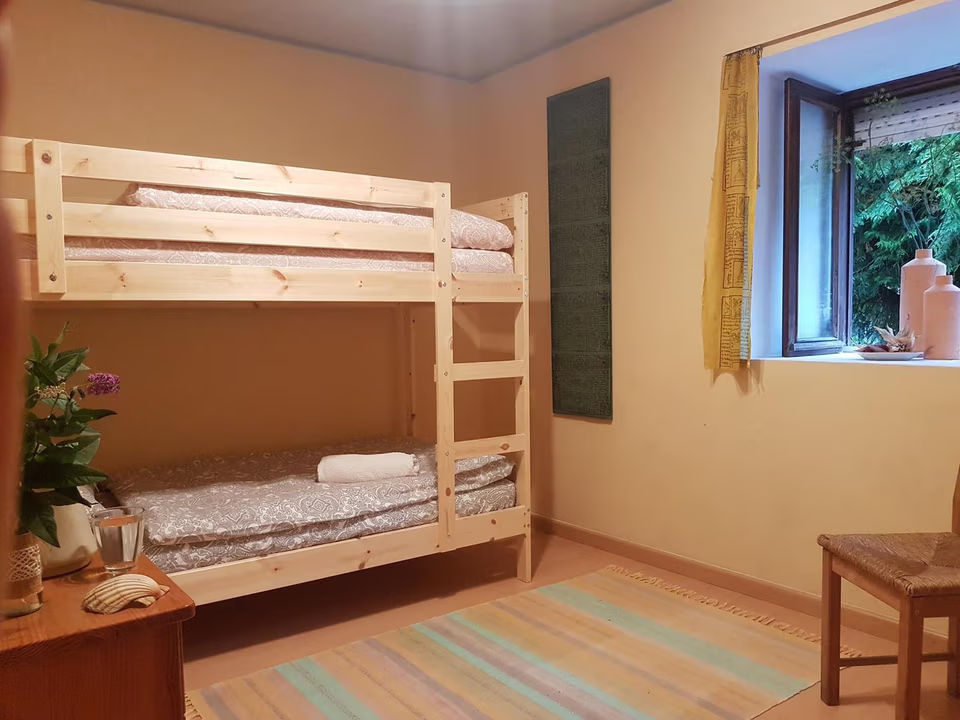 ClosedReservations accepted
Pilgrims Rest
- Top #2
 ClosedReservations accepted
Casa Gwendoline
- Top #3
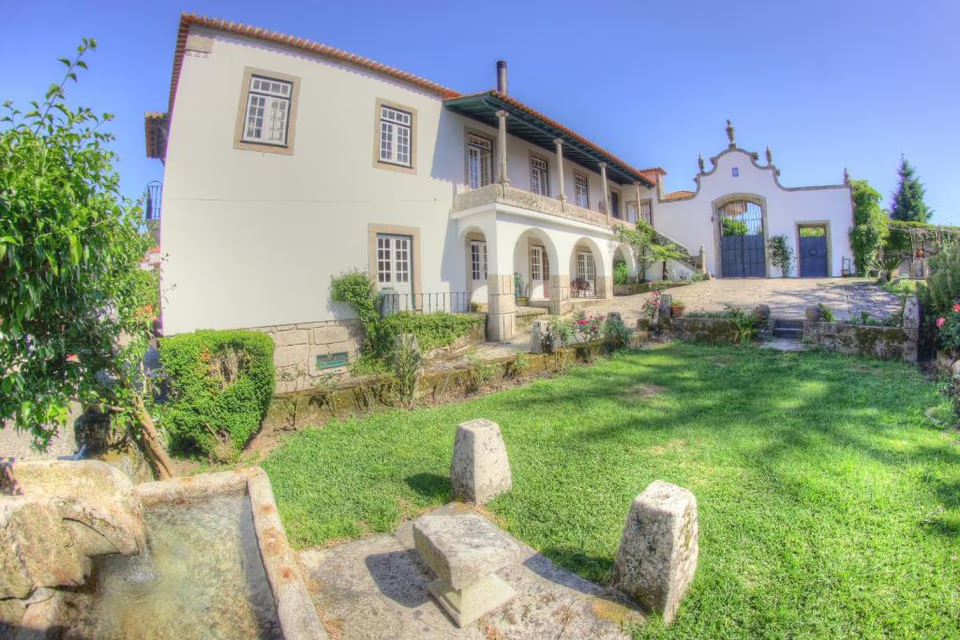 OpenReservations accepted
Quinta de São Roque




Services in Vila Nova de Cerveira
What you can find in town before the next stage.
- ATM
- Café
- Shop
- Pharmacy
- Fountain
- Train station
- Bus station
- Restaurant
Source: © OpenStreetMap contributors · updated November 2025